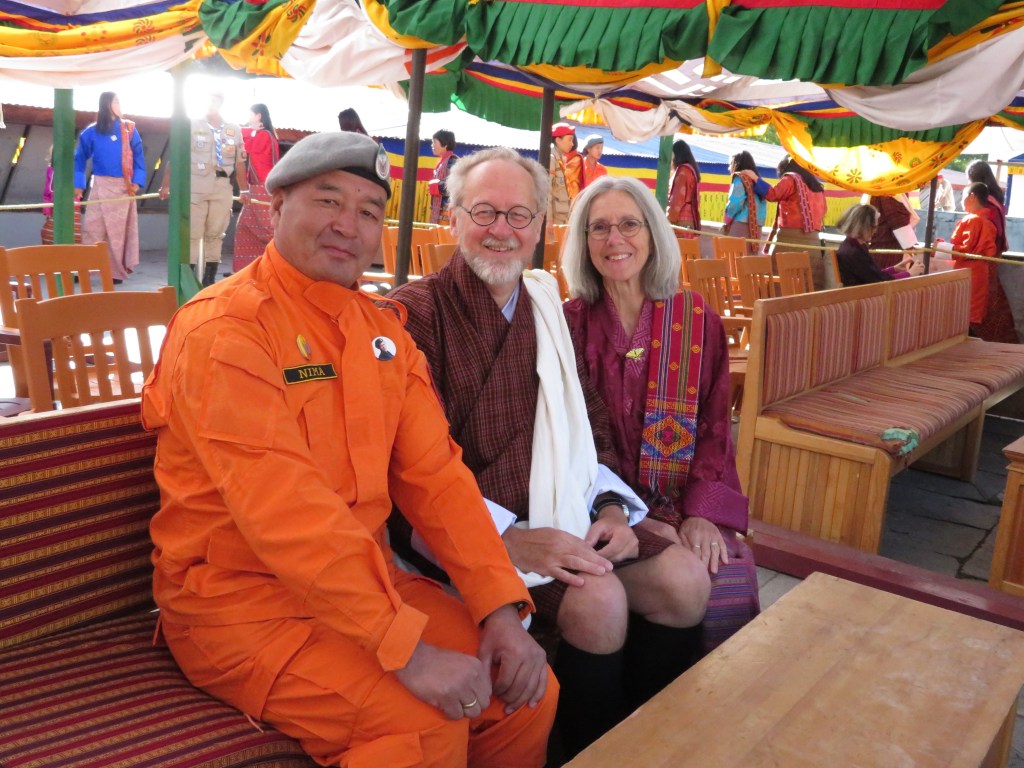
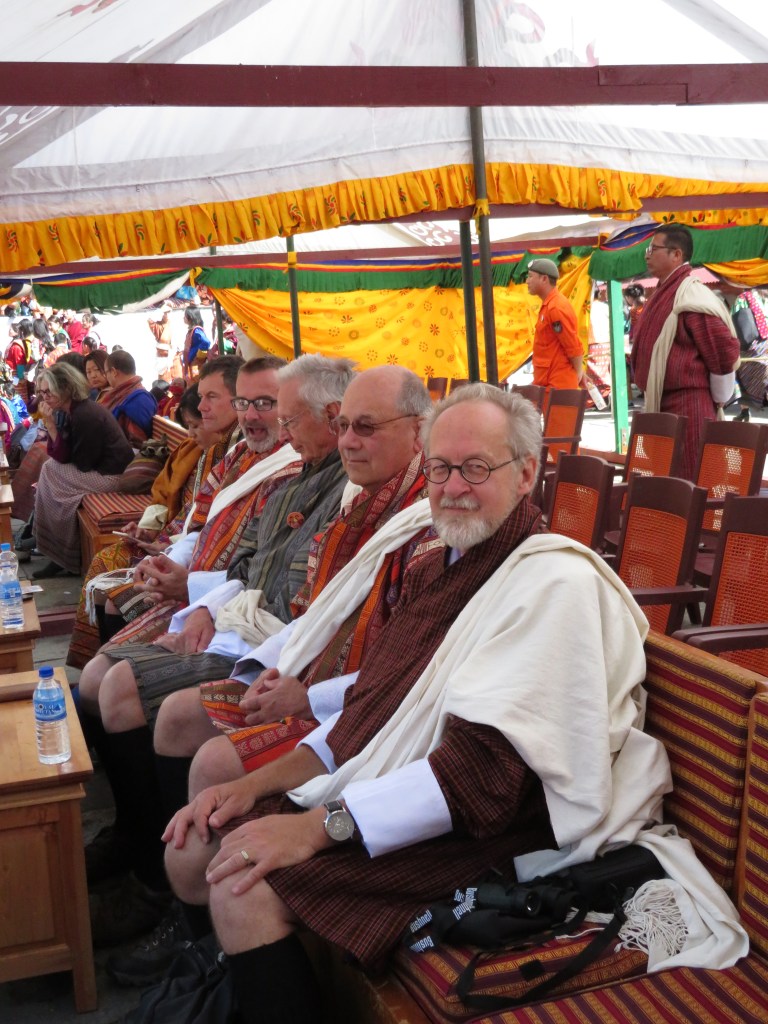
Nema, our benefactor from the Desuung, the Guardians of Peace and Harmony-also known as the King’s Guard. On learning we were HVO volunteers, Nema ensured that we had a place of honor in the VIP tent. While there, we chatted with the Ambassador from Bangladesh, the the charge d’affaires from the Kuwaiti Embassy and his wife (an expert baker), and four builders from Montana on their twelfth visit to Bhutan, building a log style State Guest House and hoping to modernize building methods in Bhutan. Once the guests were seated, the remainder of the tent was opened to other fortunate Tshechu attendees. I know we could not have had the patience and stamina to sit crowded in the rain and sun for the entire Tshechu as thousands of others did. So, we were truly blessed.

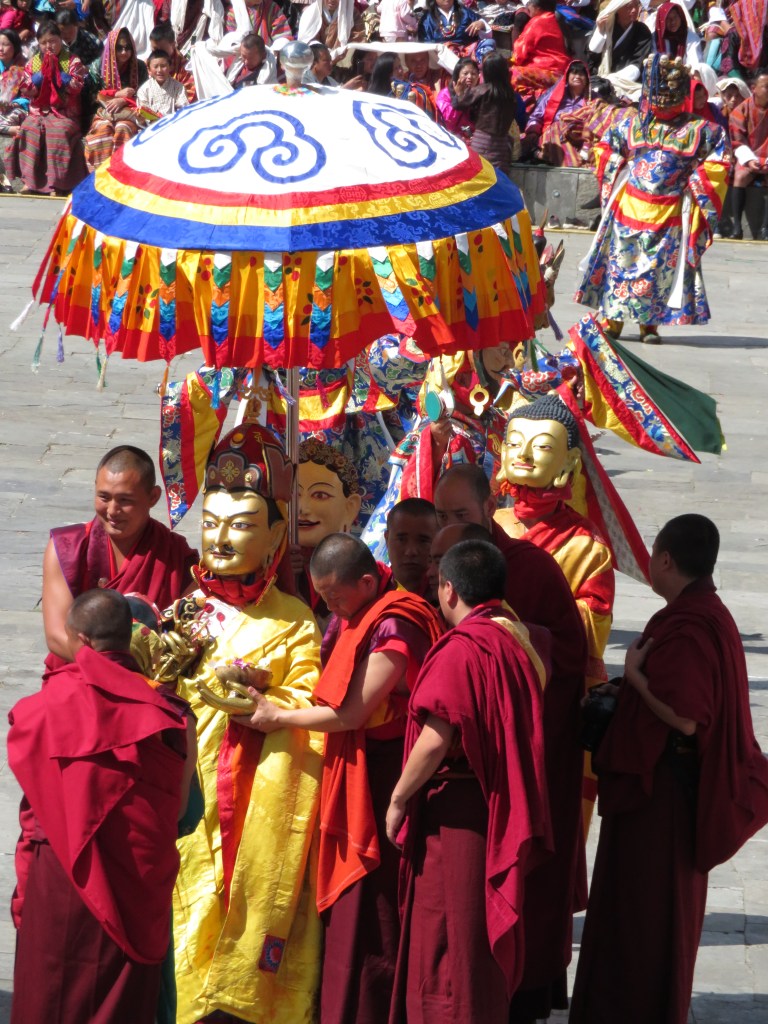
Guru Rinpoche followed a procession to the dias on the far side of the stadium, where, once seated, he blessed a steady stream of pilgrims as they filed by throughout the entire day, the line snaking nearly around the inside perimeter of the stadium.

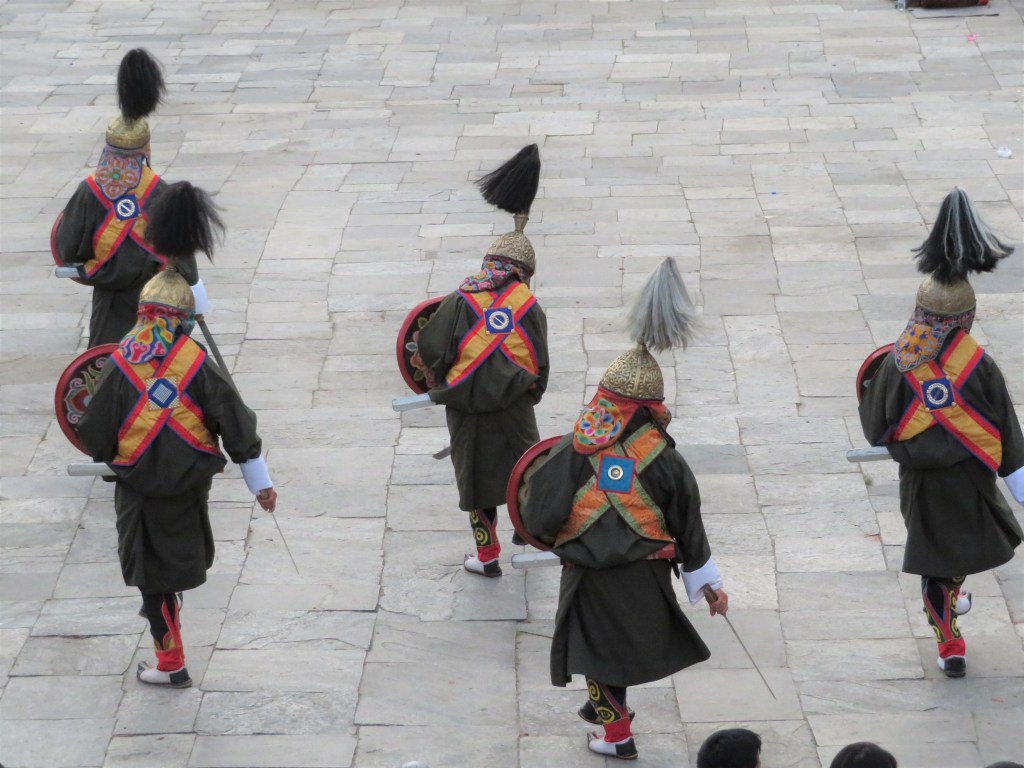
The Heroic Dance. Performed by laity, this dance is performed to invoke and welcome Guru Rinpoche and his entourage. Instead of masks, they wear ornate crowns adorned with the syllables of the Five Buddha Families. These include Om, Hum, Tram, Hri and Ah.


Ging dancers. When propitiated properly, these wrathful guardian deities prevent outbreaks of disease, famine or war in their territories. After their dance, they run throughout the crowds, striking the heads of those wishing blessing.

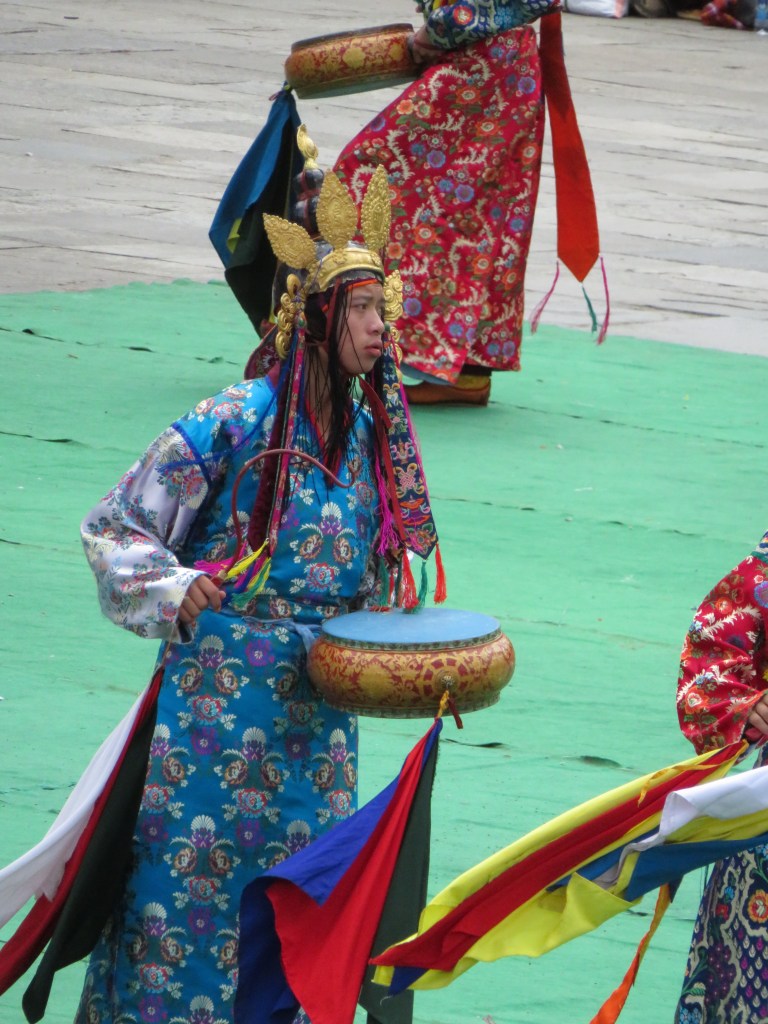
Performed to further honor Guru Rinpoche, these dakinis are enlightened goddesses, embodying all female Buddhas and the wisdom-emptiness that is the source of good qualities and knowledge. When the dancers rattle the smaller hand drum or ring the bell, their actions encourage all sentient beings to awaken from ignorance. When they bang the larger drum, it emphasizes to all living beings that victory over delusion is possible with earnest practice.
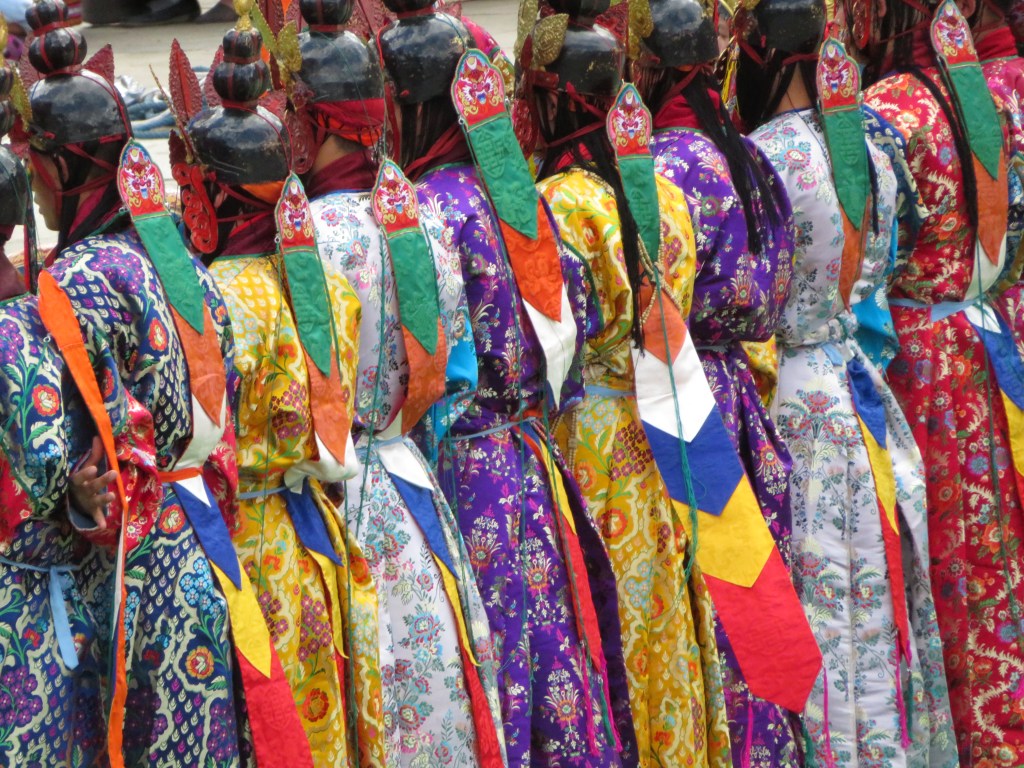
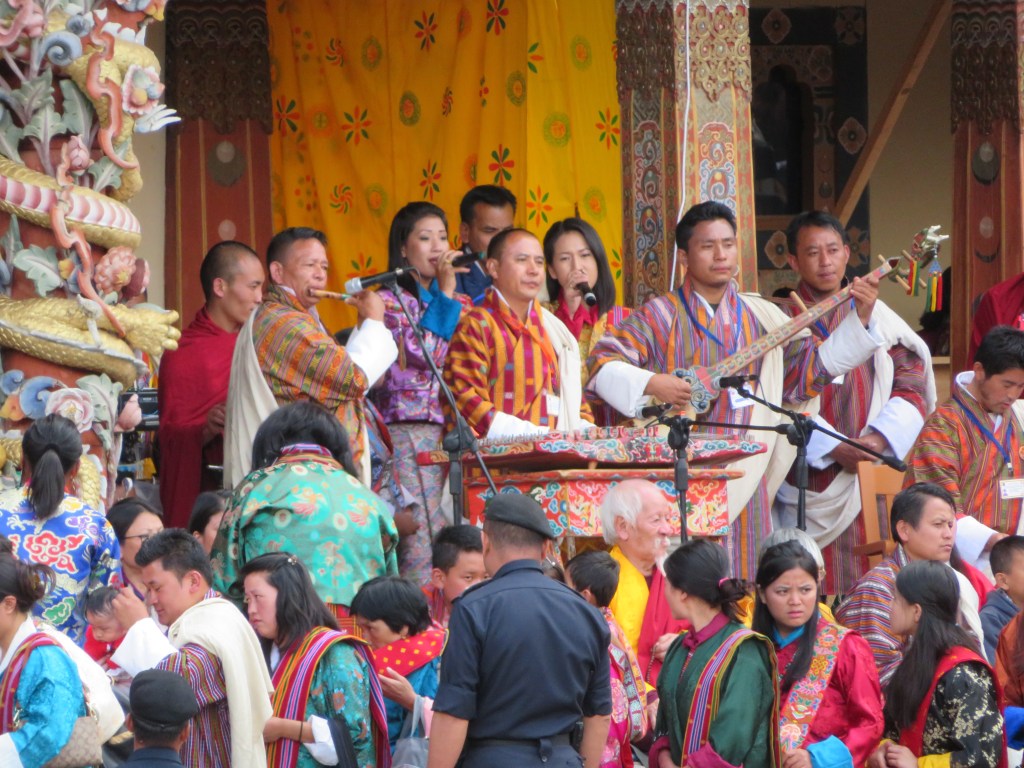
Musicians for the dances and songs
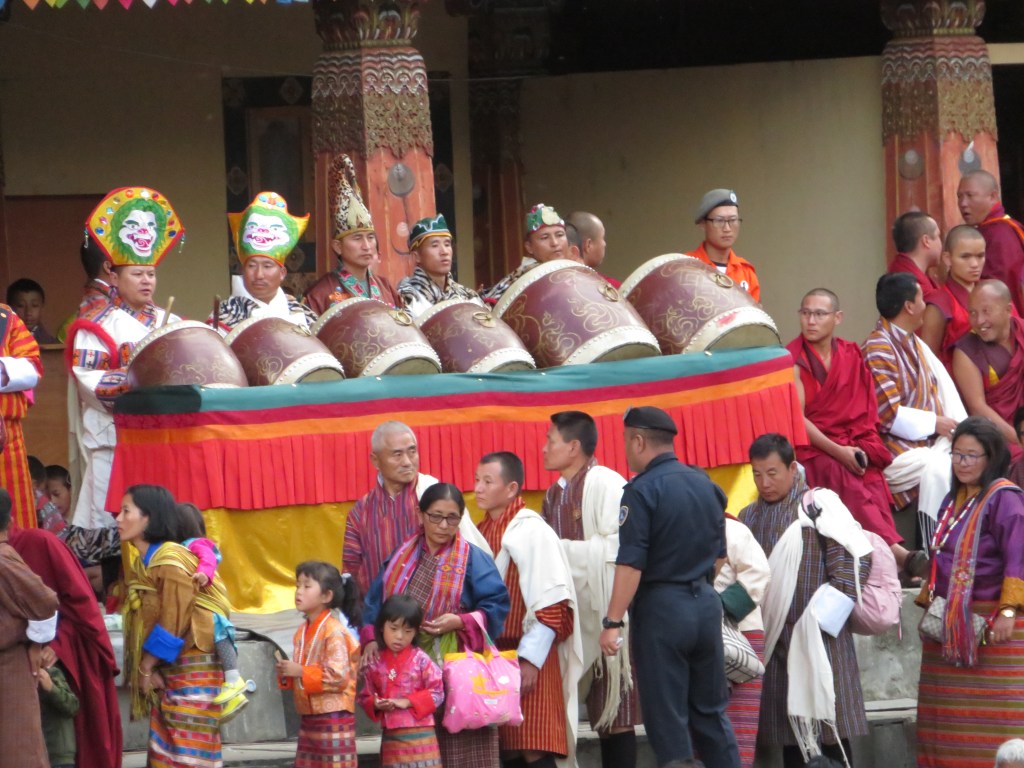


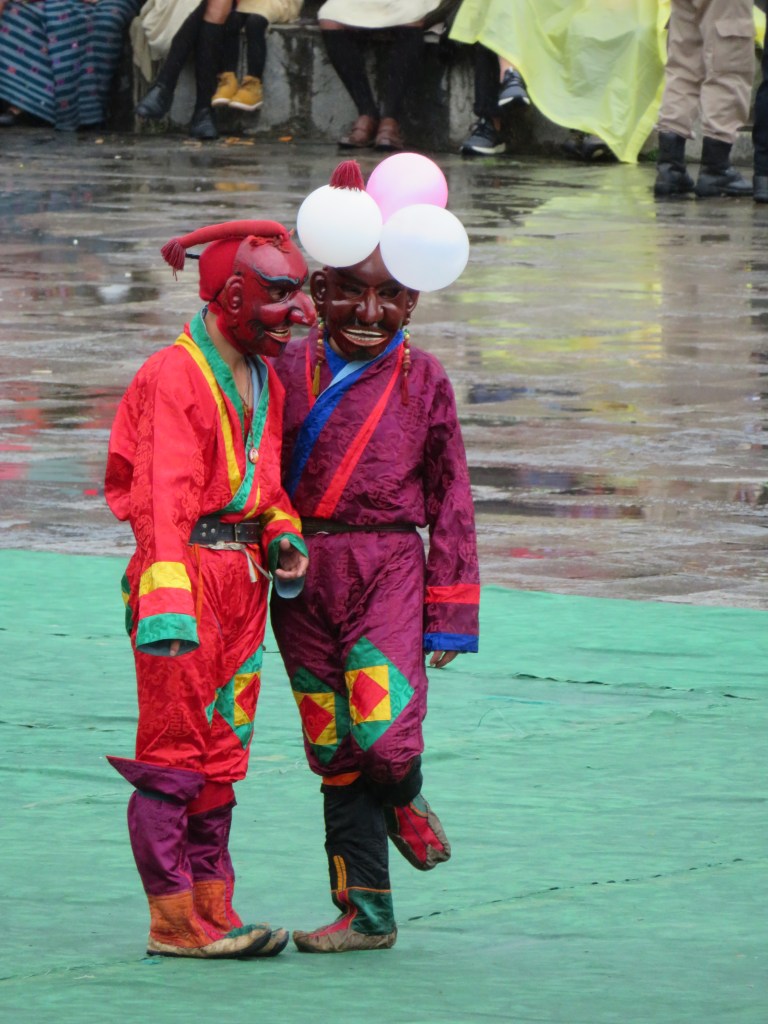
Although humorous, they play very important roles in the dances. They are actually accomplished masters, knowledgeable regarding dance movements and steeped in the nuances of every ritual performance. If the dancers happen to make a mistake in their movements or steps, The Atsara is on hand to guide the performers back on track. If there is a problem with a dancer’s custom or mask, the Atsara can assist him immediately. Look for Atsaras throughout the pictures from all three days of Tshechu.

We’re told by authoritative sources (well, sort of authoritative) that everyone must attend a full Tshechu once in their lifetime to remove the obstacles to enlightenment. We are so happy to have had the opportunity and we sincerely hope you have enjoyed our reporting and benefited a bit yourselves.
Again, descriptions are paraphrased and quoted freely from “Invoking Happiness.” An invaluable guide if you ever attend a Tshechu, we’ll be happy to loan it to you.
 Our Seasons in Shangri la