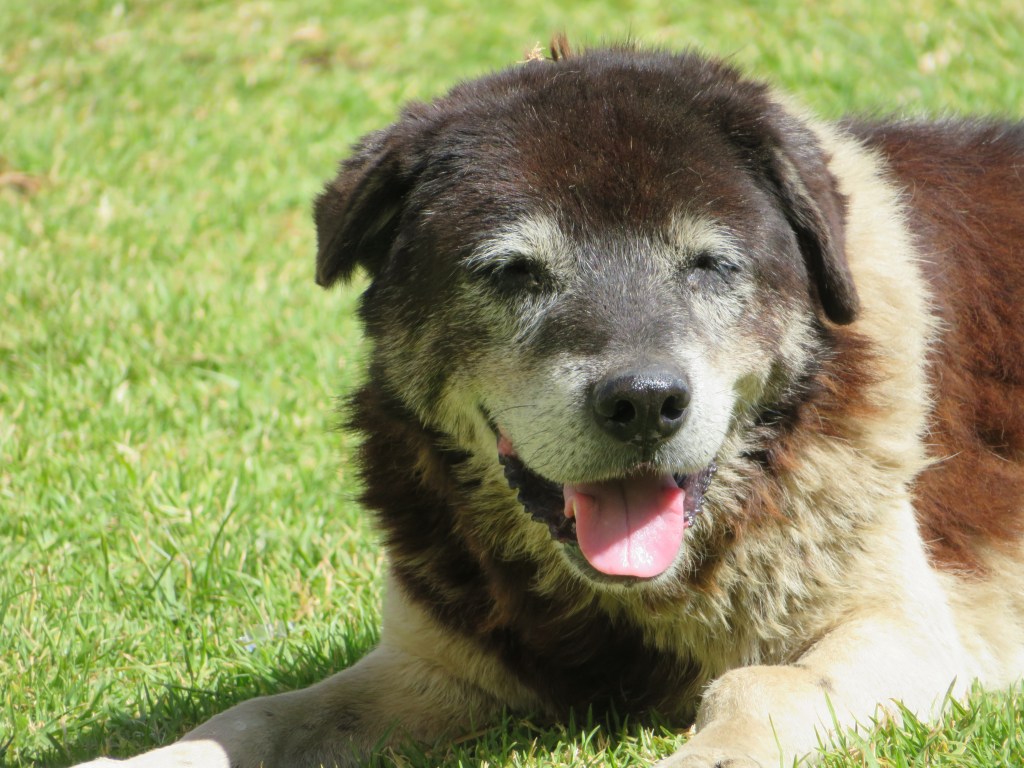
Dogs were everywhere. Sometimes I felt that we were their guests as they lived in a society parallel to our own. In Thimphu, every neighborhood had their own canine culture. Individual neighborhoods seemed almost to have a breed specific to them.
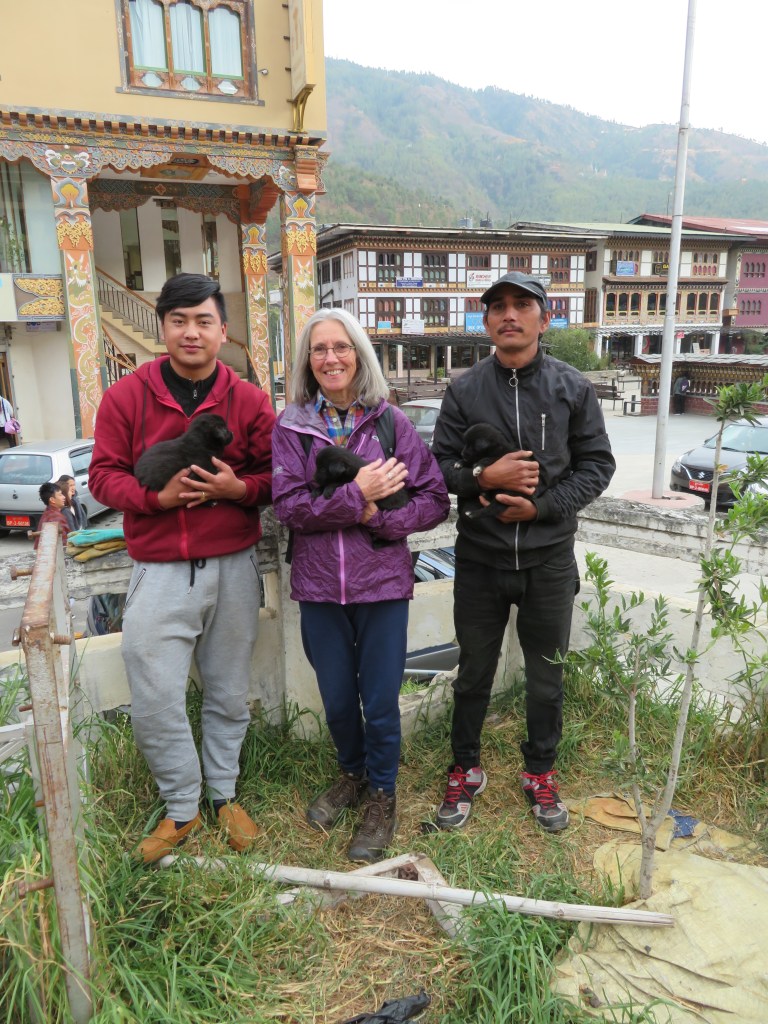
In Clocktower Square, nearly all the dogs were small black versions of labs, occasionally with white markings. We kept track of six black puppies there who nursed one day with one mother and with a different one the next, sharing maternal responsibilities. In our neighborhood of Changzumtog, golden retriever genes predominated, maybe with a little chow mixed in. Solar dogs, we learned they were called, sleeping all day in the sun, barking, howling and mixing it up all night long. Somehow the racket was reassuring, lulling us into happy dreams.
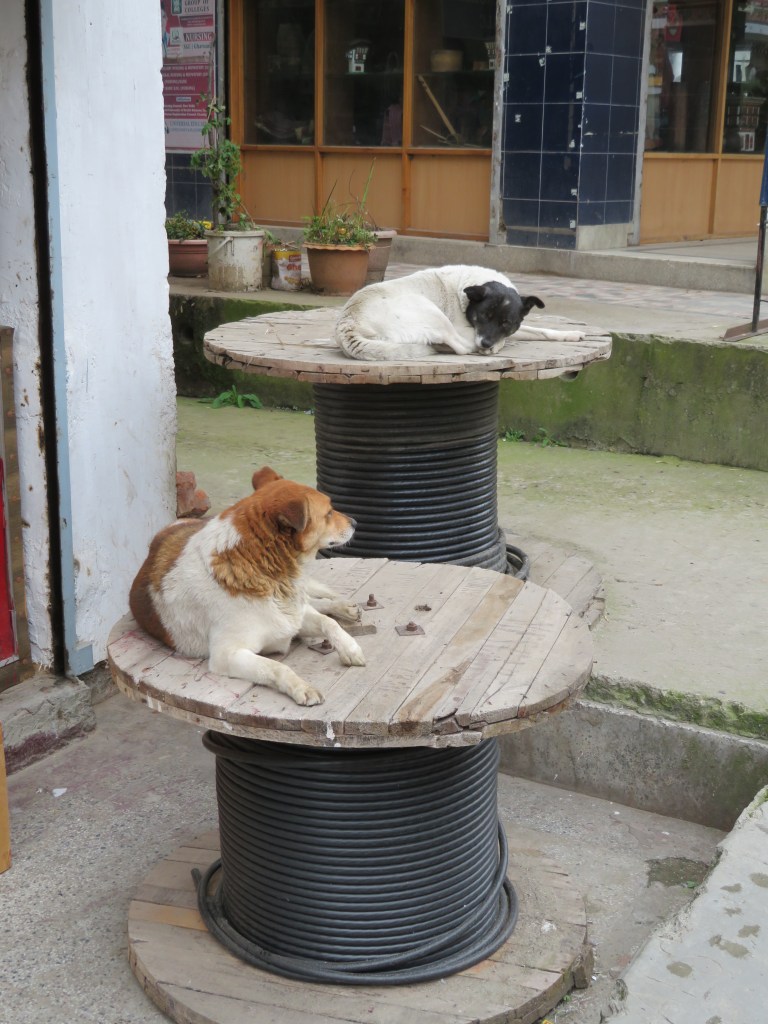
Although some dogs were kept by individuals, the vast majority were community dogs, fed and cared for by their human neighbors. This accounts to a large extent to their flourishing, unlike the rural dogs who have to fend for themselves, with a high puppy mortality rate.
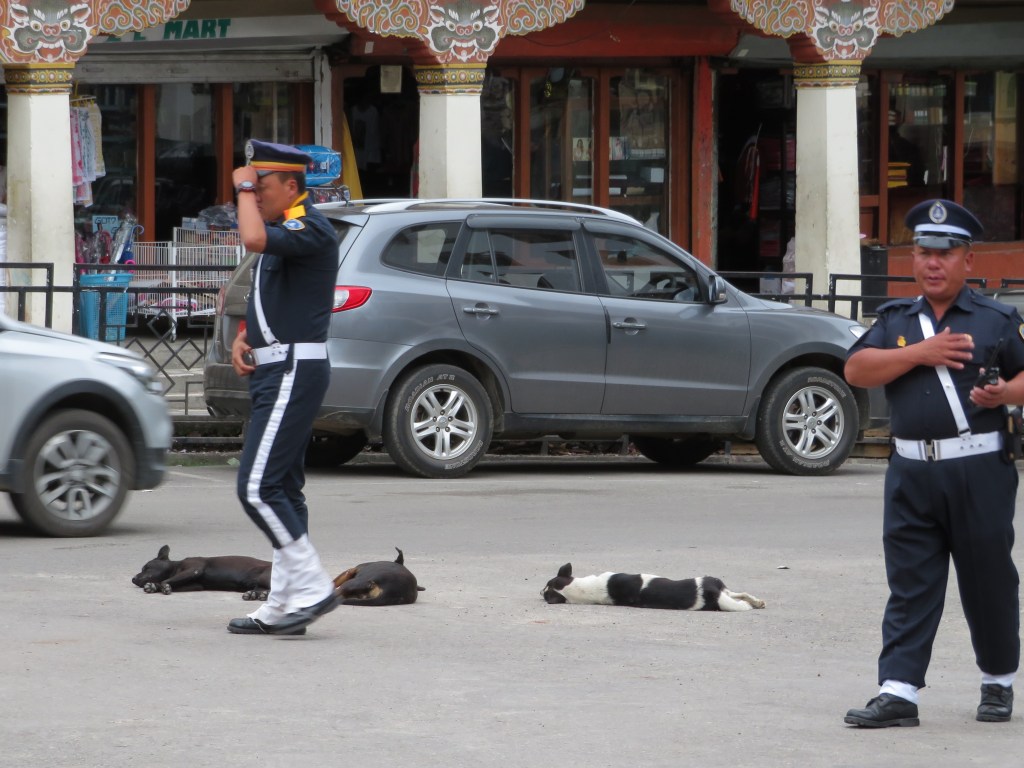
Dogs took rest wherever they wished. Often, here at main intersection of Chorten Lam and Norzin Lam, there would be as many as seven or eight dogs relaxing during rush hour as drivers carefully threaded their way through the challenging canid course. We never once saw an officer shoo them away.


The Bhutanese love their community dogs and believe that caring for them provides at least as much benefit to the carer. Below is a moving account of one woman’s relationship to her dog, one that genuinely reflects the impact of a deeply Buddhist culture on our relationship to sentient beings other than ourselves.
While we were in Bhutan, Margaret volunteered the the Royal Society for the Protection and Care of Animals, founded by Madam Tashi Payden. Please note, it is not the society for the prevention of cruelty, but the society for the protection and care, the emphasis on the positive being a universal trait among the Bhutanese. A highway sign might suggest you “be considerate of other drivers.”
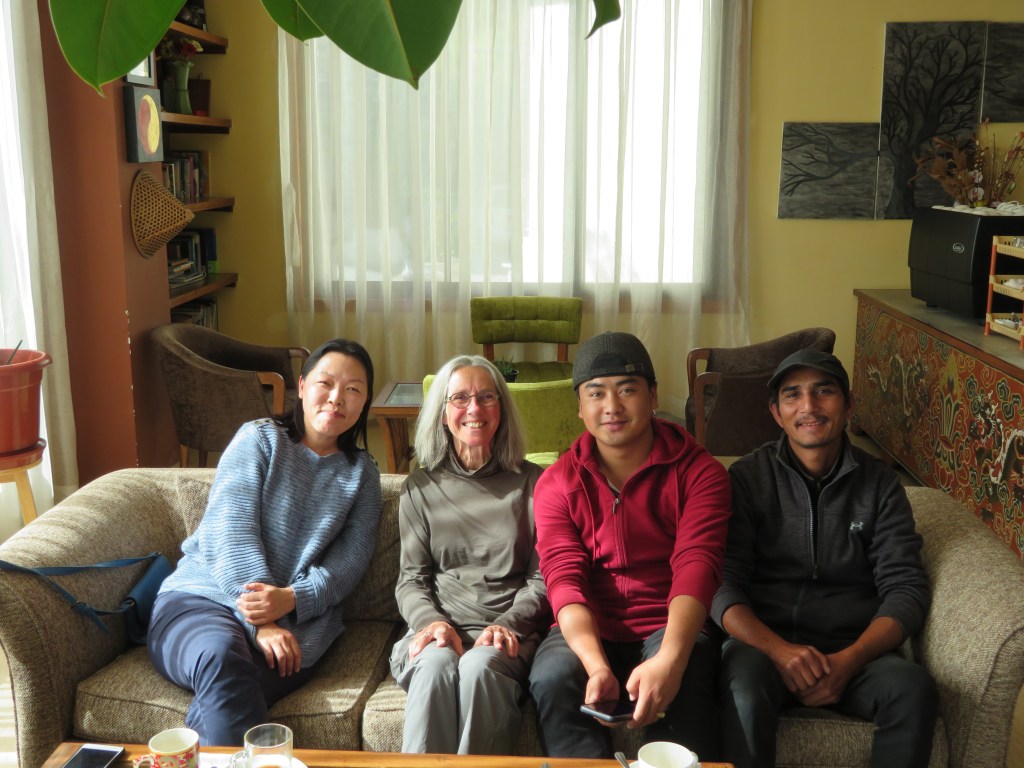
Not all is rosy of course with the dogs of Bhutan. In the 70’s and 80’s, Indian hunters were hired to poison, shoot and beat stray dogs to death. An uproar resulted and efforts were then made to impound dogs. Dogs accustomed to freedom and an established social order languished. Madam Tashi worked tirelessly to change this and when she succeeded, she was given over 2000 dogs to care for in her newly established center. She has spearheaded a national effort to identify, capture, sterilize and release dogs back into their own communities. On a shoestring budget, the RSPCA employs six staff and a veterinarian is provided by the Brigette Bardot Foundation. The RSPCA has programs for sterilization in six cities in Bhutan.
Dogs who have been injured and even paralyzed by car accidents, are cared for at the center in a separate compound. Dogs brought for sterilization are kept a week or so. Another 100 or so are permanent, relatively healthy residents who are abandoned, unable to care for themselves and without a pack to safely return to. No dog, no matter how ill, is euthanized.
Here is a link to a great article on Bhutan’s humane approach to dog population control:
https://thebark.com/content/saving-dogs-bhutan-innovative-approach
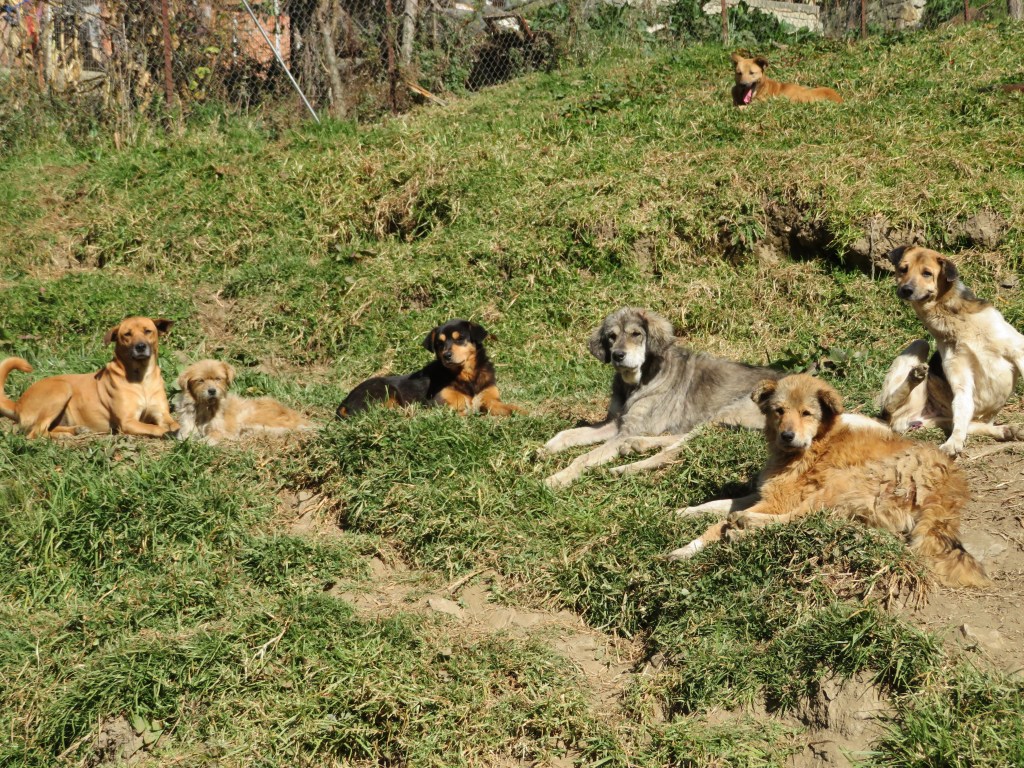
Although dog houses are scattered across the compound, the shelter dogs are street dogs, unaccustomed and even threatened by confinement. They are much happier in the great outdoors.
The RSPCA provides care in a markedly resource poor setting. But every dog deserves a home and every dog in need is entitled to help. So it is given.
If you would like to donate, you can do so through The Bhutan Foundation, 21 Dupont Circle NW, Suite 755, Washington, DC, 20036, (202) 609-7363. Please specify that the donation is for the Bhutan Royal Society for the Protection and Care of Animals.
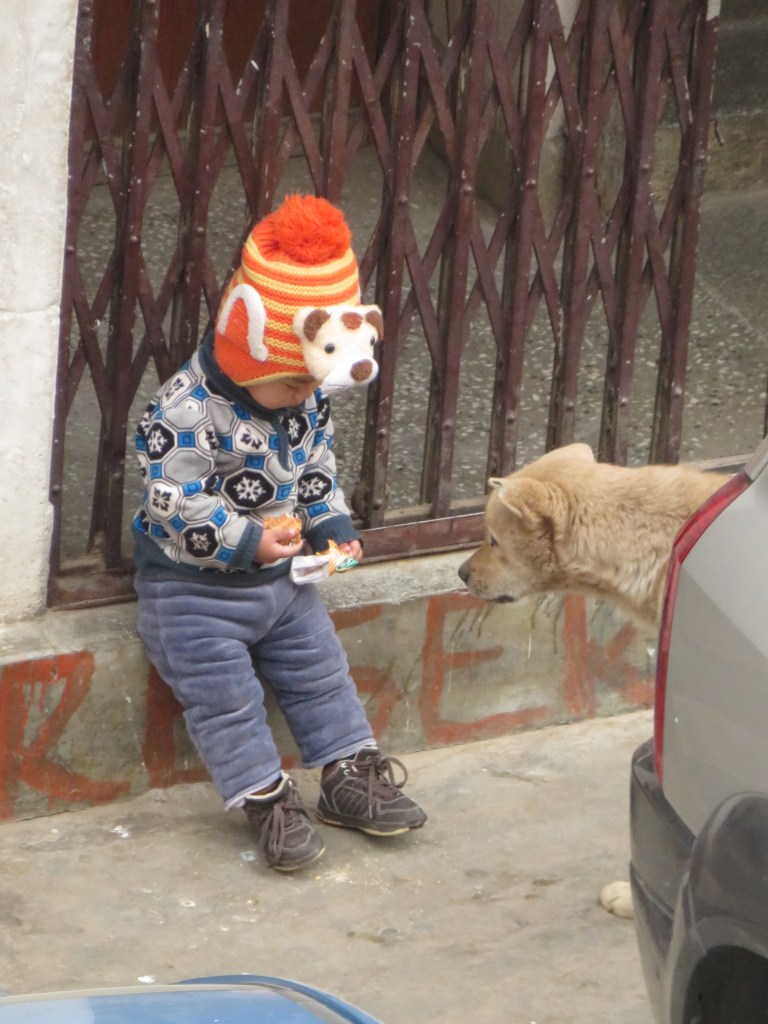
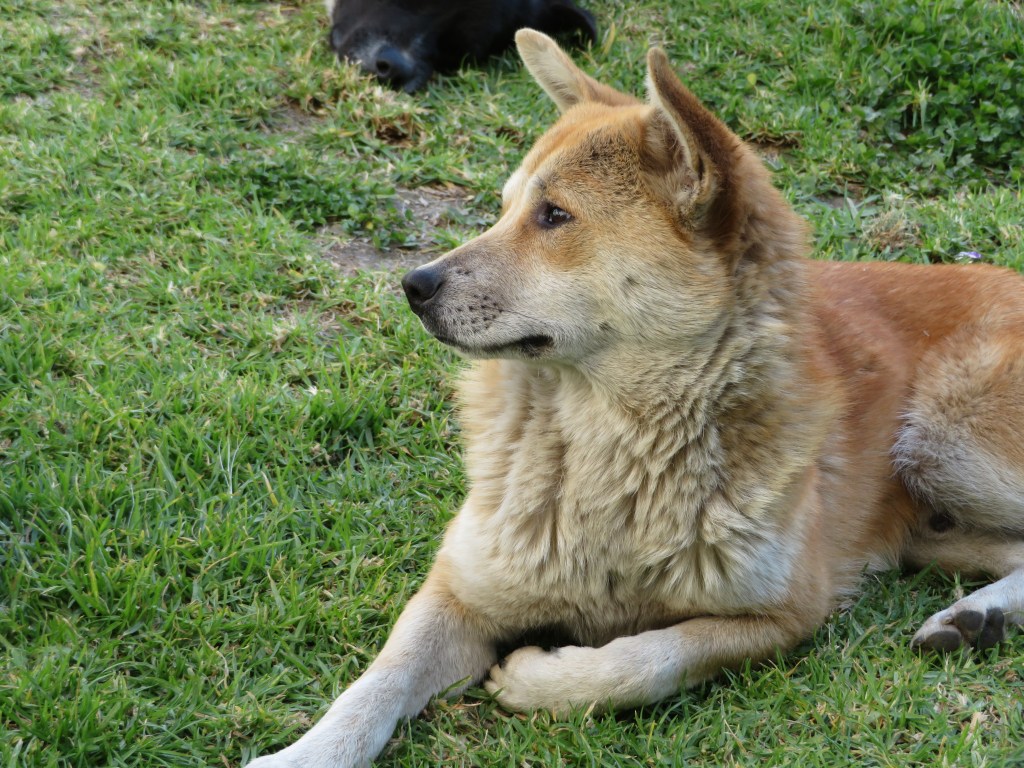
Frank was our apartment dog. He had a nest of grass at the gate where he snuggled up while recharging. We named him Frank, after Sinatra, as he led the local pack in their nightly sonatas. Frank became ill, as did several other neighborhood dogs, with what was felt to be distemper. His story reflects the Bhutanese attitude to community dogs.
Frank was skittish around adult humans and not easily approached. Nonetheless, the local shopkeepers rounded him and the others up every afternoon for five days to take them to the veterinarian for antibiotic injections to hopefully help them survive. Frank did survive, though he had weakened and dropped in social status and authority, but he’s still there, hanging with his buds. This photo was taken from our third story apartment window. We had never seen Frank engaged with a human this directly and were quite moved by the intimacy as the little boy fed him cookies one at a time.
Next post: Rural dogs
 Our Seasons in Shangri la
Soon you’ll have a sweet pup of your own!
LikeLike
So maybe these posts will keep coming for a long time! Yay!
LikeLike
This is an amazing post. It makes me weep and makes my heart ache. I want one of those pups. Did you shoot the videos? The first one with the woman and her dog was so visceral. Dogs and their relationships with humans is ancient and I often think innate.
LikeLike
No. These are YouTube videos from the RSPCA. I was moved as well.
LikeLike