Tang Valley, day two.

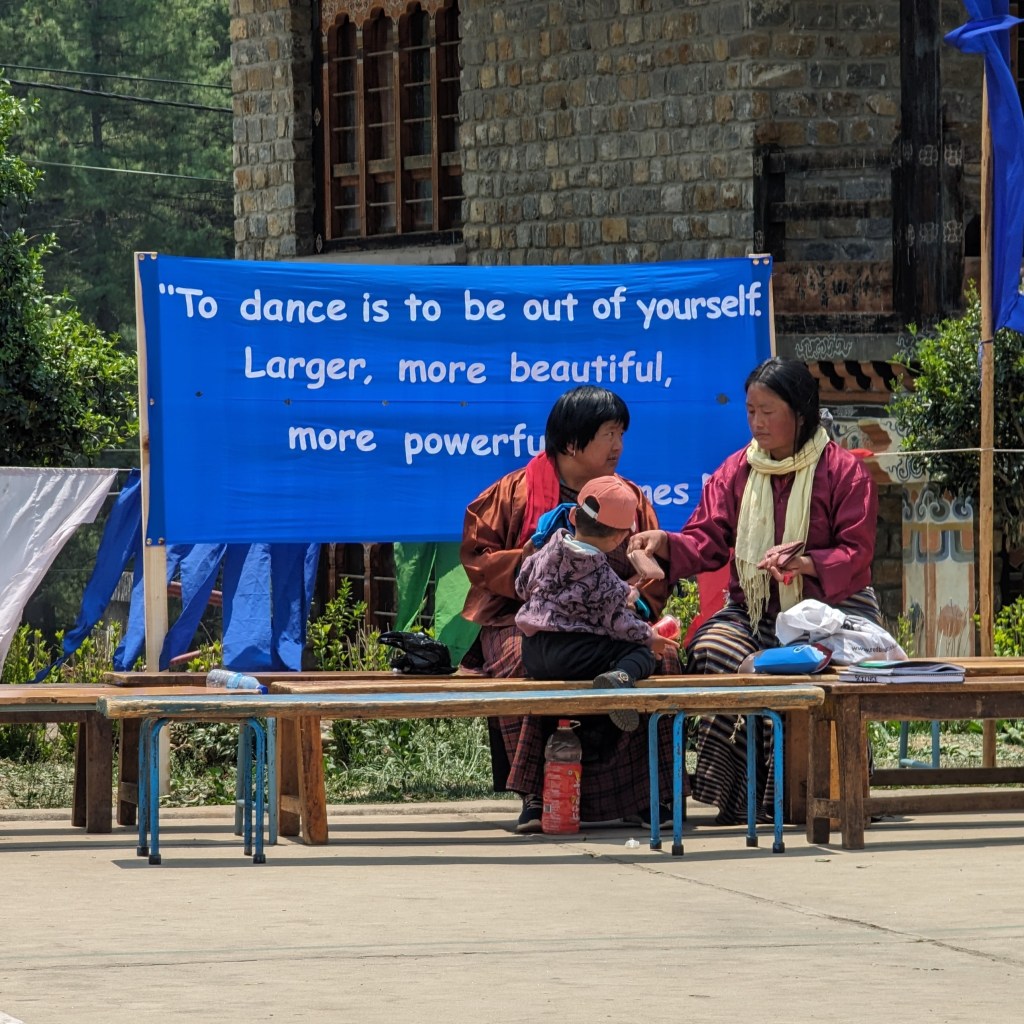
Having coincidentally stumbled upon dance practice at the Tang Valley Central School our first day in Tang valley, we made it a point to return the next day for the performances. Dance is an integral part of cultural education in Bhutan, beginning even in preschool, and attending competitions has been a highlight of our visits here. Academic competitions completed the previous week, the cultural competition begins. Students were divided into four demographically similar groups one month in advance to begin preparations. Each group was assigned three dances, one zhundra, one boedra, and one rigsar, teachers assisting with choreography. Independent judges, including a former teacher, a successful former student and the local traditional medicine doctor, assigned points in numerous categories, all tabulated by computer. The scoring was remarkably close.
Zhungdra is a traditional Bhutanese dance form that originated in the central regions of the country. This particular dance from Trongsa, known as a Zhey for the head ring, was historically performed to celebrate a victory. There are a fixed number of steps in each dance, and each step has its own significance. Variations can be seen at archery competitions whenever a target is hit, though with more spontaneous shouting and enthusiasm.
Boedra is another traditional dance style in Bhutan. Boedra means “music of the highlands.” Dancers often perform in groups, showcasing intricate footwork and rhythmic patterns, colorful and traditionally accessorized silk kiras and ghos. In this particular dance, the central student is dressed as Guru Rinpoche, the bringer of Buddhism to Bhutan in the eighth century.
Rigsar is a contemporary style of dance, incorporating traditional dance movements, fusion and even hip-hop choreographed to modern Bhutanese pop music.
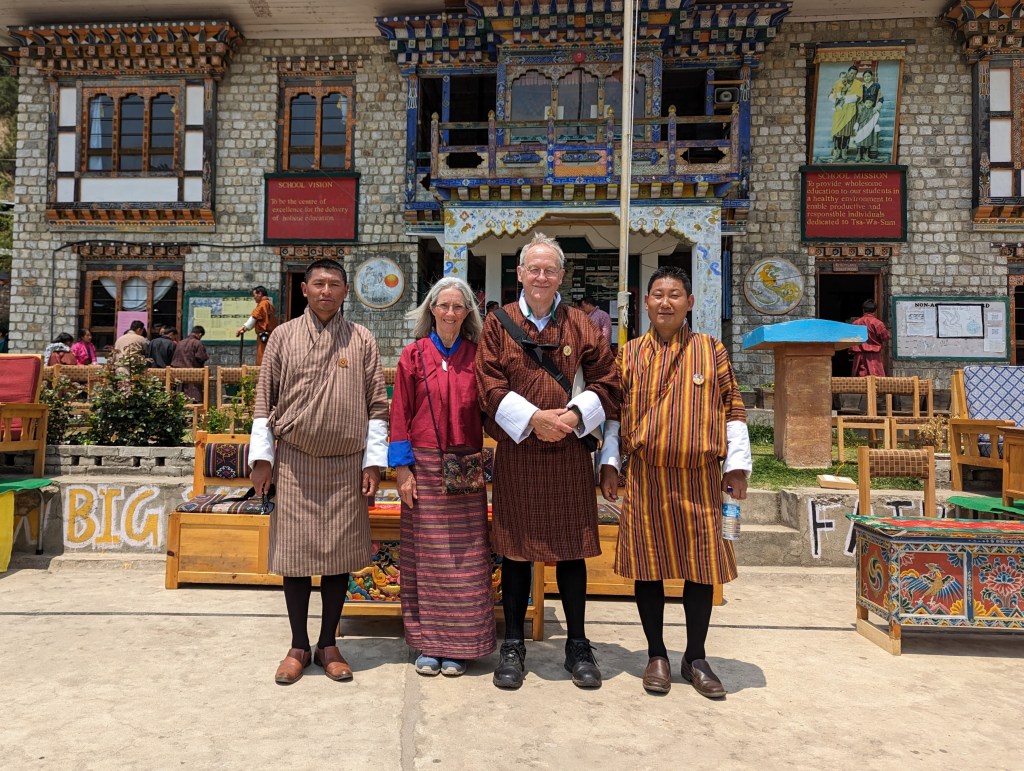
Flanked by the cultural administrator and the school principal, we were treated as surprise guests of honor, with front row seats, milk tea and biscuits. Tang Valley Central School has about 400 students, primarily boarding students. Given the low population density and limited road accessibility, boarding schools are the historical norm in Bhutan. Lasting bonds are built that have played a significant role in decades past unifying the country. An extension of family in a way, it further solidifies a national identity and the importance of community. Out of respect we wore the national dress but, unfortunately, I forgot the sunscreen for my knees. Ouch! The sun at altitude burns quickly.

Next stop, Tang Pema Choden Nunnery
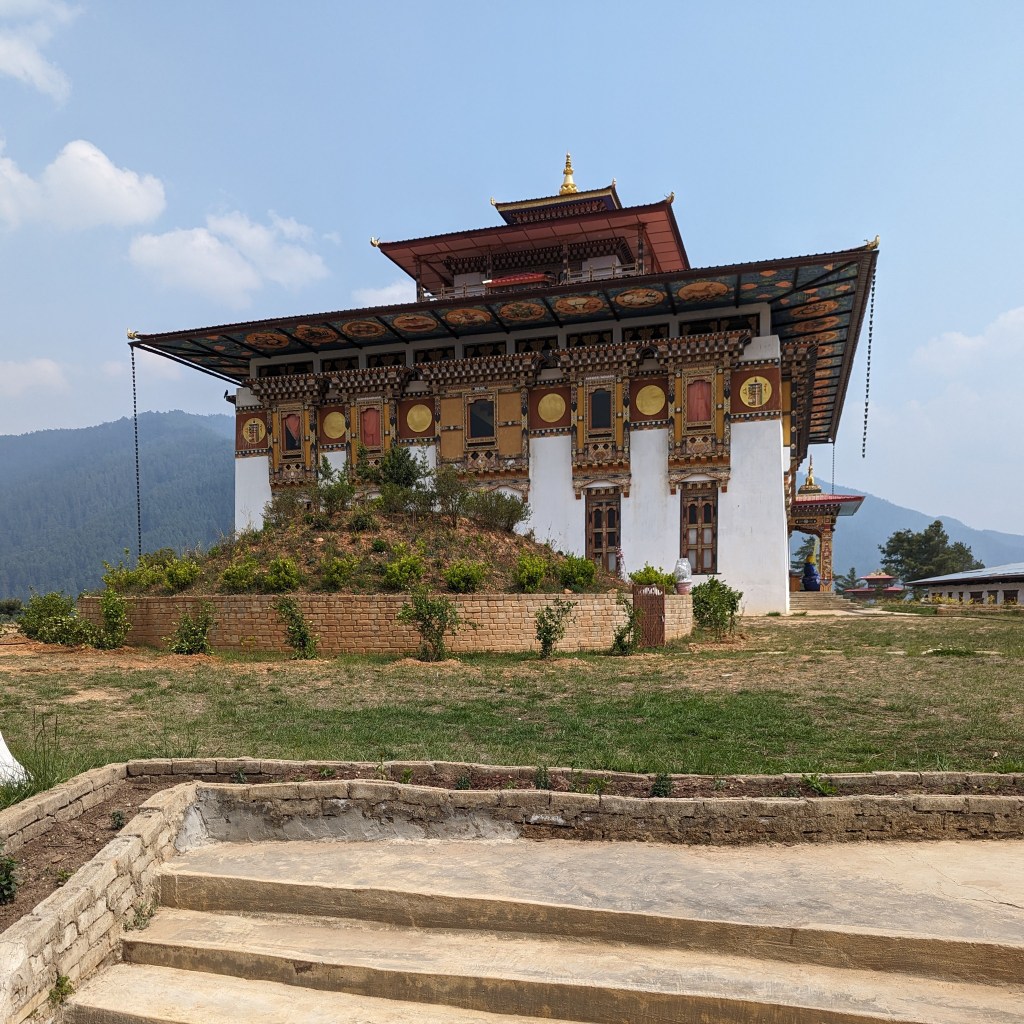
The lhakhang or temple. Established in 2001, Pema Choden Nunnery had an enrollment of about 160 nuns at the time of our visit with a capacity of up to 400 as it expands. Though nuns may start at a very young age, Pema Choden is also the first Buddhist college where women can complete a nine-year masters course of study in Buddhist philosophy while pursuing the spiritual path.
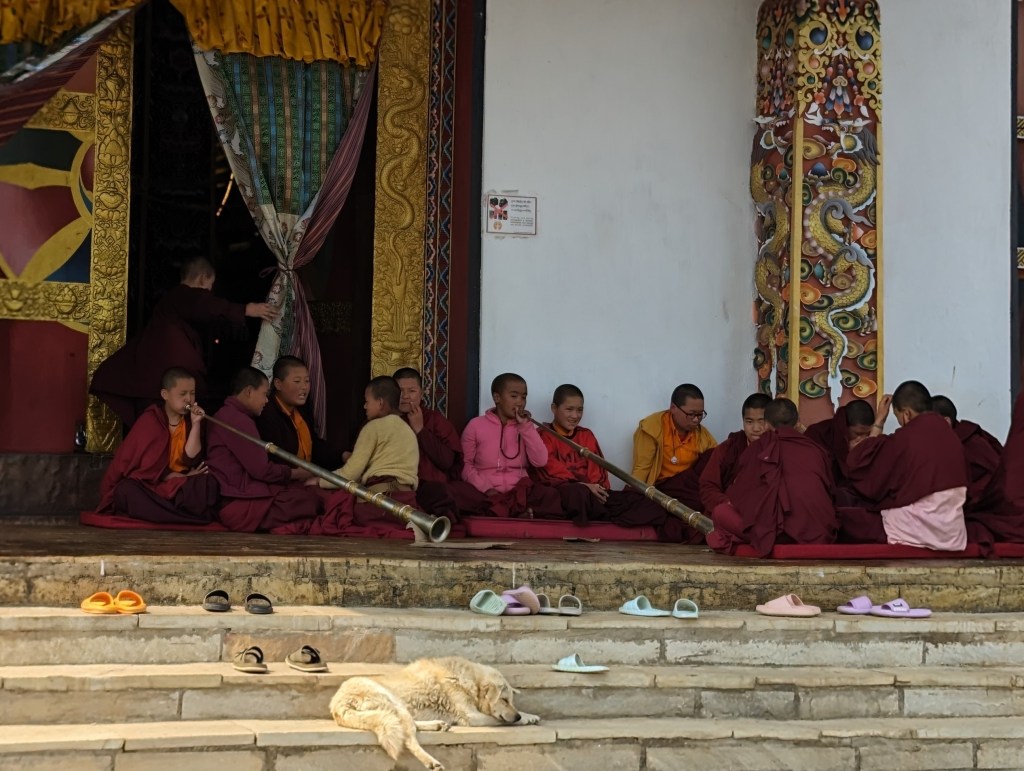
Young nuns learning the art of dungchen, the Tibetan horn used in prayers and rituals. Lots of giggles and laughs as they did so. The congregation hall is new, not yet complete. A map at the entrance to the nunnery shows plans for a retreat center, yoga hall, amphitheater, guest houses and classrooms.
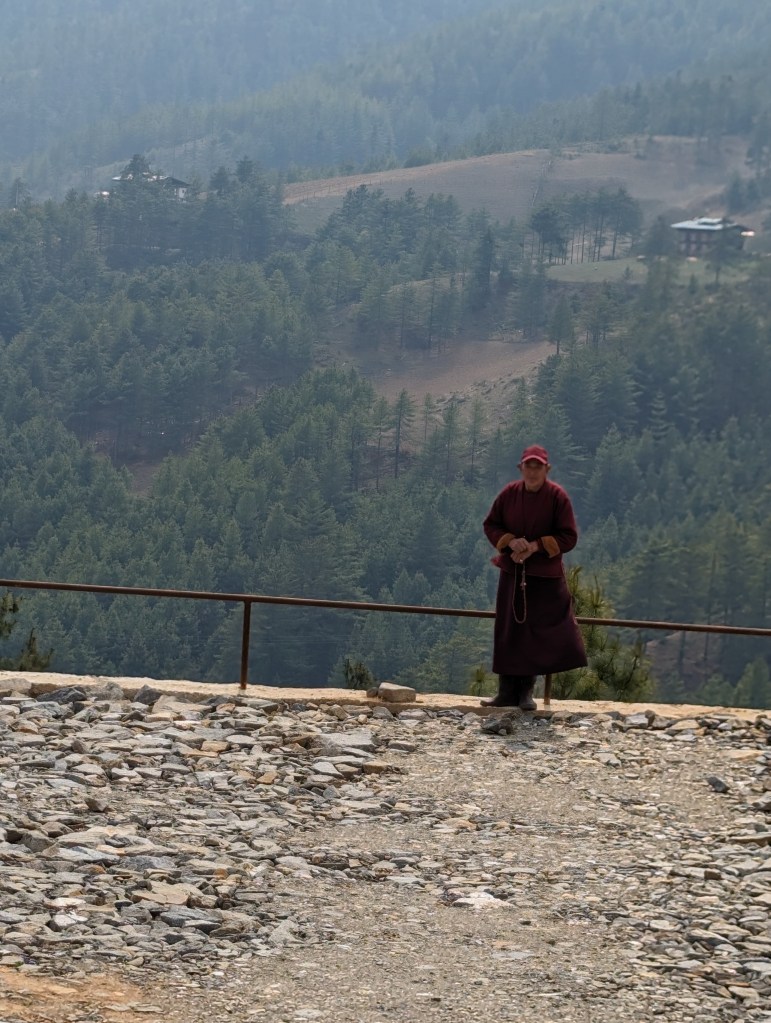
Along the way, we gave a lift to this gentleman. He was concluding a two-month pilgrimage, returning to his meditation cave in the north to start his fourth retreat of three years, three months, three weeks and three days each. In retreat, he will remain throughout each day in prayer and sitting meditation in a cave so small he cannot stand up and sleep at night in a small hut, his only nourishment a single meal of rice per day with an occasional curry. We were happy to share our buckwheat pancakes and a banana with him and he was happy to receive it and to be relieved of a day’s journey by foot. Through our guide, we discussed shared aspects of our respective Buddhist practices. He volunteered to offer prayers and rituals for our rebirth as humans in the time of a Buddha, to move us a bit closer to enlightenment, asserting it to be the only legitimate goal of our life as humans. He also agreed to perform the pertinent rituals for the longevity, good fortune and health of our families.
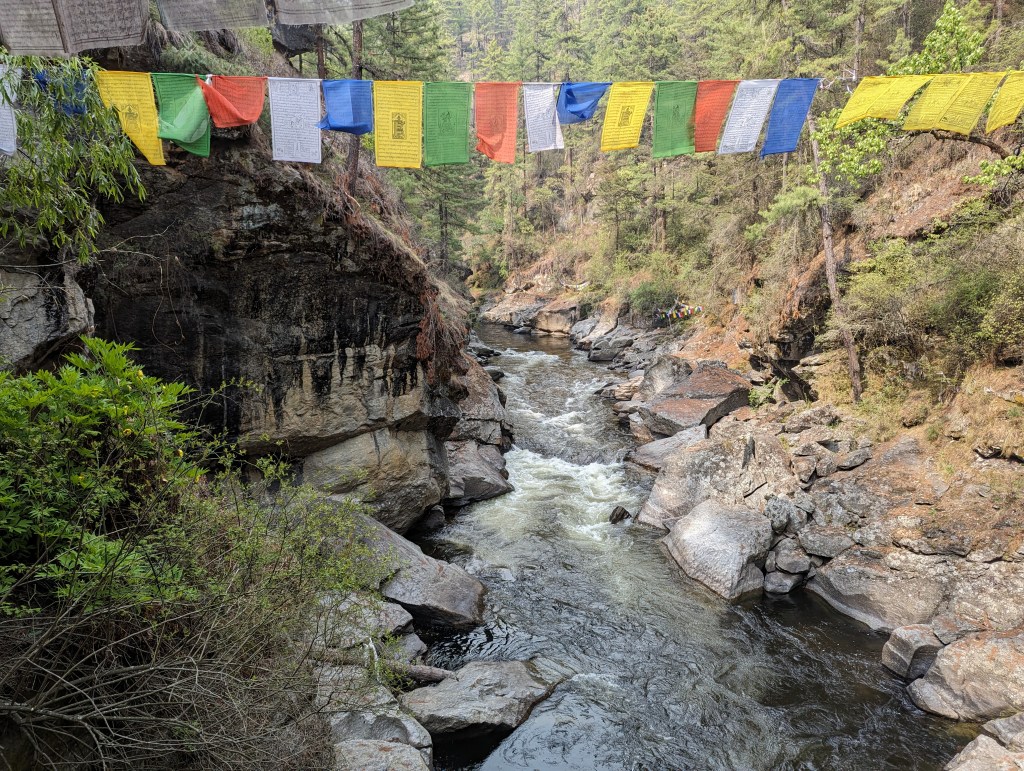
No visit to Tang Valley is complete without a visit to Membar Tsho, the Burning Lake. Our second visit, additional photos and information can be found in the dragonkingdom.blog post of November 11, 2019.
Pema Lingpa, born in 1450 in the Tang Valley, is one of the most important figures in the Buddhist history of Bhutan and Tibet. In a visitation by Padmasambhava, aka Guru Rinpoche, the eighth century introducer of Buddhism to Bhutan, Pema Lingpa was given an inventory of 108 termas, or treasures of teachings, to be revealed over time by himself, then other tertons, or treasure revealers. Pema Lingpa is considered by many to be second only to Padmasambhava in importance.
At Membar tsho, the Burning Lake, to address the skepticism of a regional governor, Pema Lingpa dove into Membar tsho holding a burning butter lamp. He told the witnessing crowd that if his was a false spirit, the lamp would be extinguished, and he would be drowned. Disappearing into the deep gorge and feared drowned, he re-emerged with a fist sized statue, a treasure casket under one arm, and the lamp still burning.
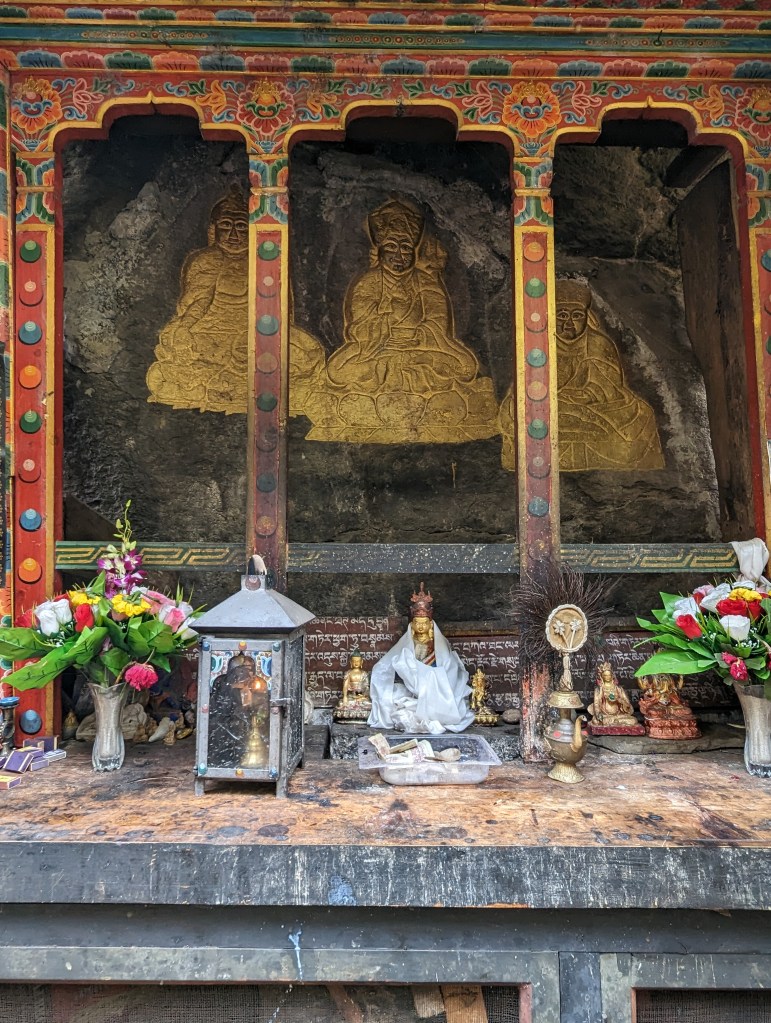
Pema Lingpa spent his life revealing the precious treasures of Padmasambhava, giving empowerments and teachings, meditating in isolated locations, building and restoring monasteries, and establishing a tradition that endures to this day. A multi-talented individual, he is believed to be responsible for the stone carvings above.
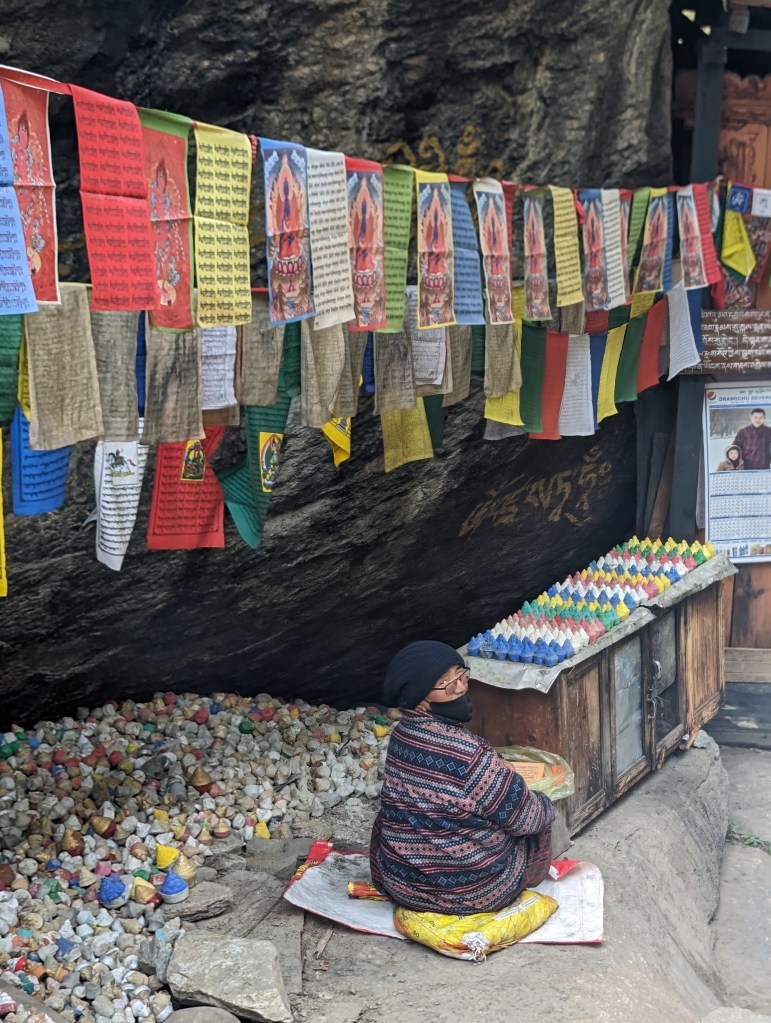
Reading prayers and blessing tsa tsas at the entrance to the burning lake. There is a tunnel to the left of the tsa tsas that one can crawl through to cleanse themselves of sins, but the drop on the other end was a bit too precipitous for our tastes. We’ll try a few extra prayers instead.
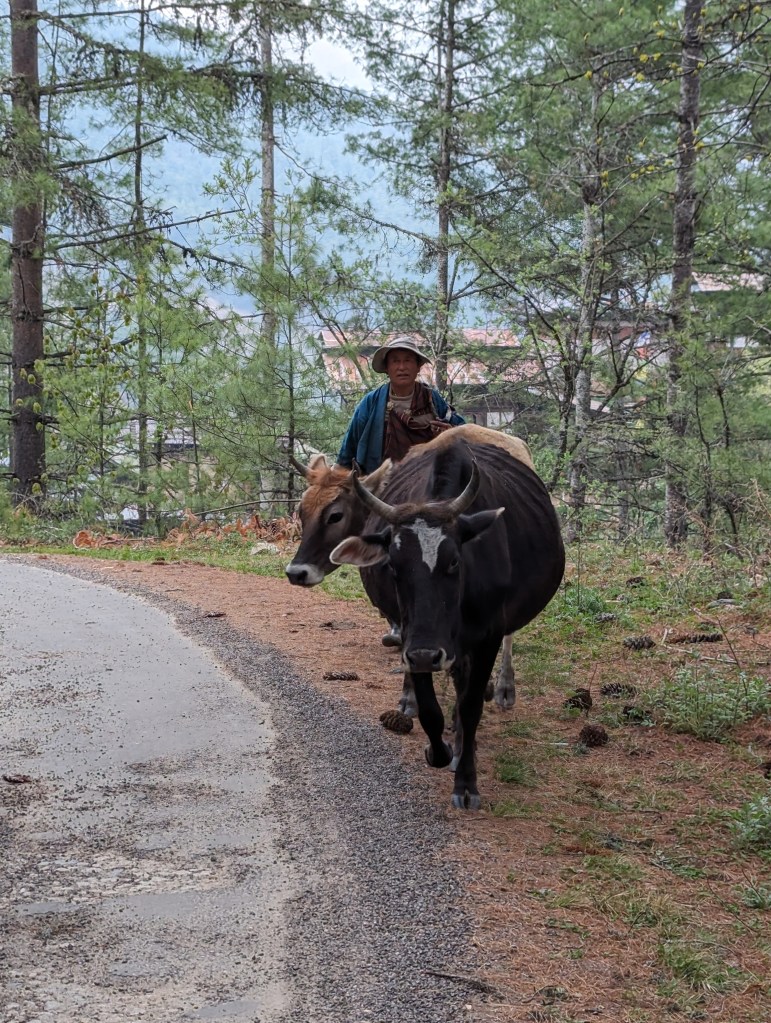
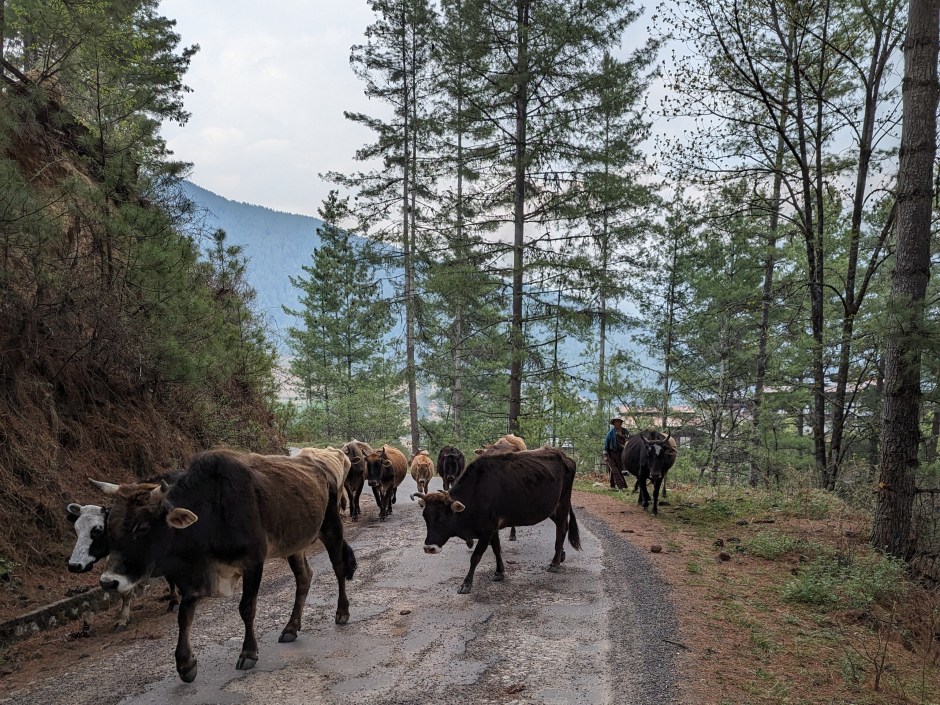
By day’s end we weren’t the only ones eager to head home. Contemporary access to the Tang Valley is by a roughly paved single lane road, shared by motor vehicles of all shapes and sizes, along with humans, horses, cattle and dogs.
Rigsar Bonus Track. Enjoy! We sure did.

Videos recorded and posted with the permission of the principal of Tang Valley Central School.

2 Comments

  1. I love the dances, how wonderful! Thank you for chronicling your journeys with all the fascinating details. I’m enjoying it all so much.

    Like

Leave a comment