Global Peace Prayer Festival

From November 4th through the 10th, hundreds of lamas and thousands of monks from all schools of Buddhism, from Bhutan and across the Buddhist world are gathering, uniting their voices for the healing of humanity.
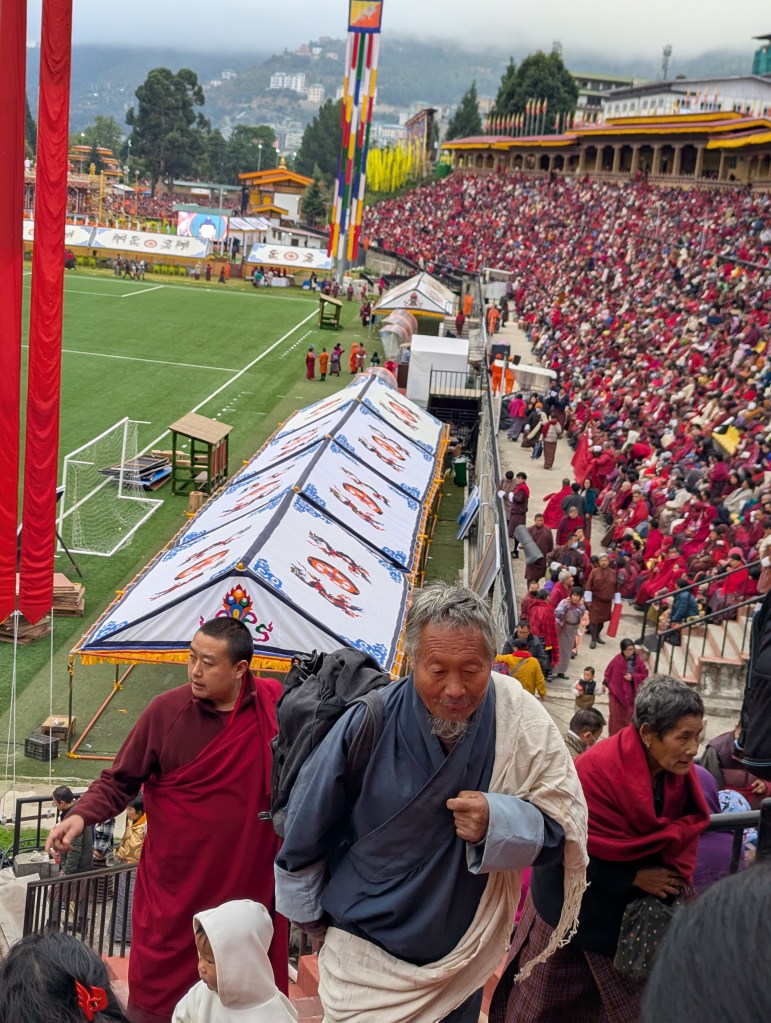
We arrived at Changlimithang Stadium at 7 a.m. the first day and it was already packed with Bhutanese citizens eager to watch the proceedings, happening on the neighboring festival grounds, on a video screen as the royal families, followed by the fourth King, the fifth King, Queen and their children arrived for the opening of the festival.
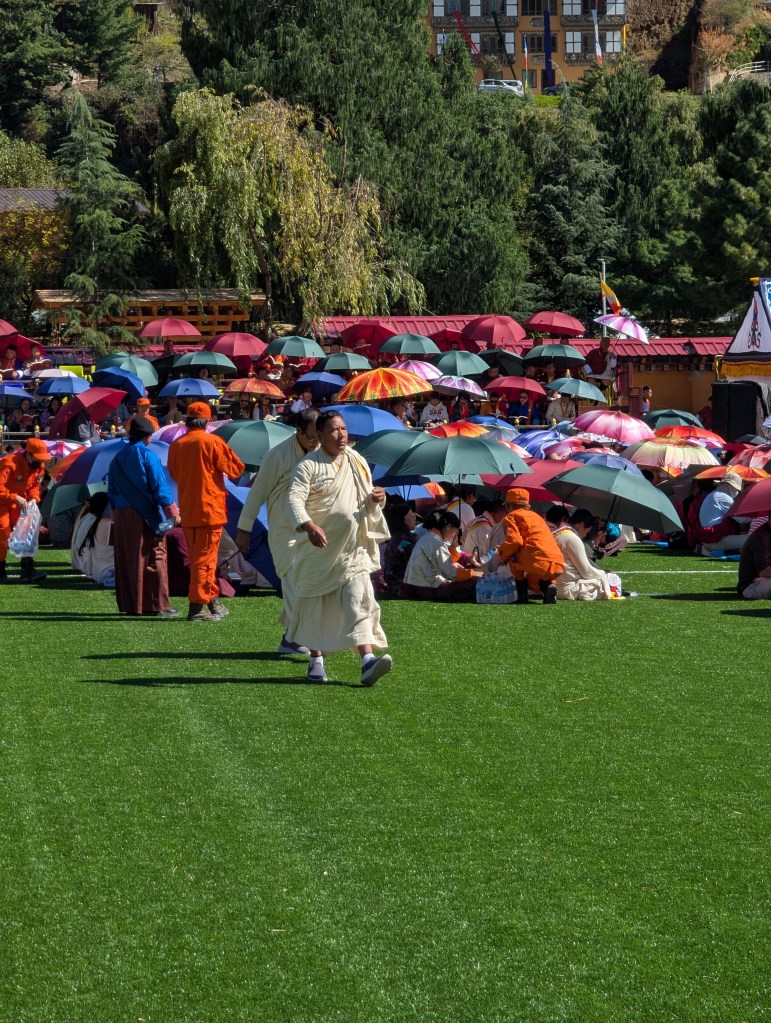
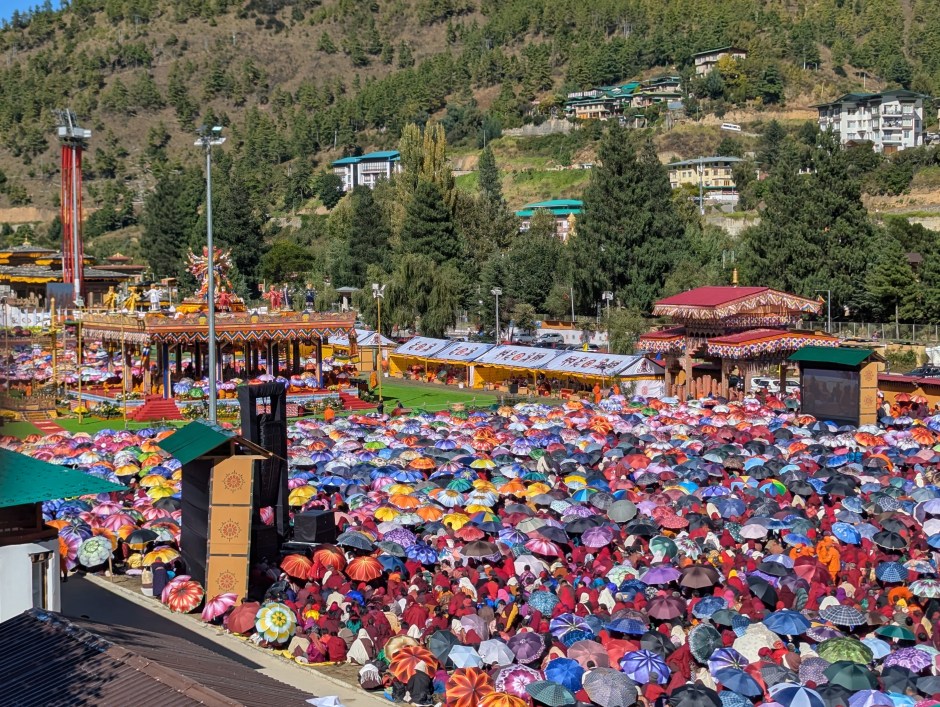
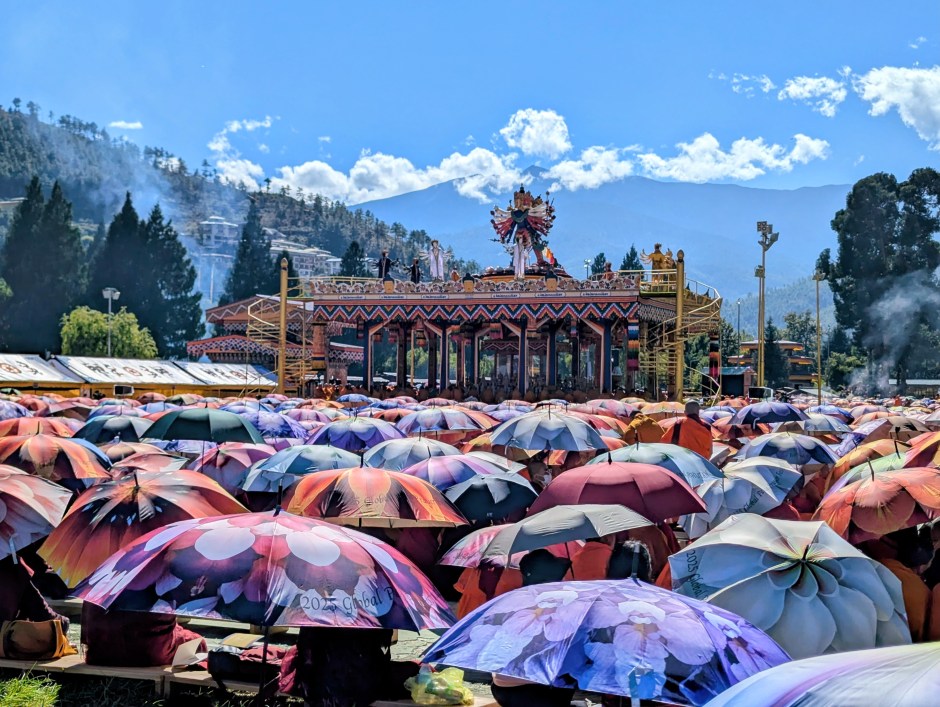
The neighboring festival grounds. Five thousand umbrellas were provided for protection from the harsh winter sun as we sat for hours of chanting. On November 8th alone, 85,000 people occupied and surrounded the venue. The population of Thimphu is only 149,000!
The Global Peace Prayer Festival, the first of its kind, brought together an unparalleled assembly of eminent lamas from all schools of Buddhism to harness the transformative power of loving-kindness and compassionate awareness to create a future rooted in peace and happiness. What a wonderful coincidence that the focus of my teachings in the Psychiatry Department at JDWNRH this visit is mindfulness meditation for professional and personal development.
Vajrayana Buddhist masters from Bhutan, Nepal, and India presided over prayers on days specific to their varied traditions, as did Hindu and Theravadan. Prayer books were handed out physically and available virtually, both with translations in Dzongkha, Sanskrit and English. Many side events for teaching were also scheduled.
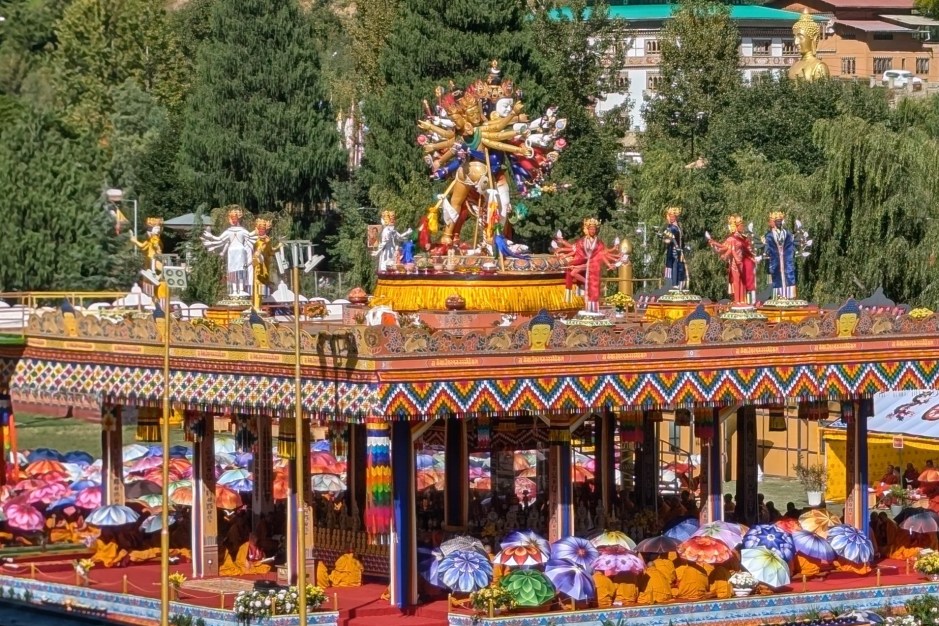
The newly constructed festival temple, the statues on the roof all rotating in the sun
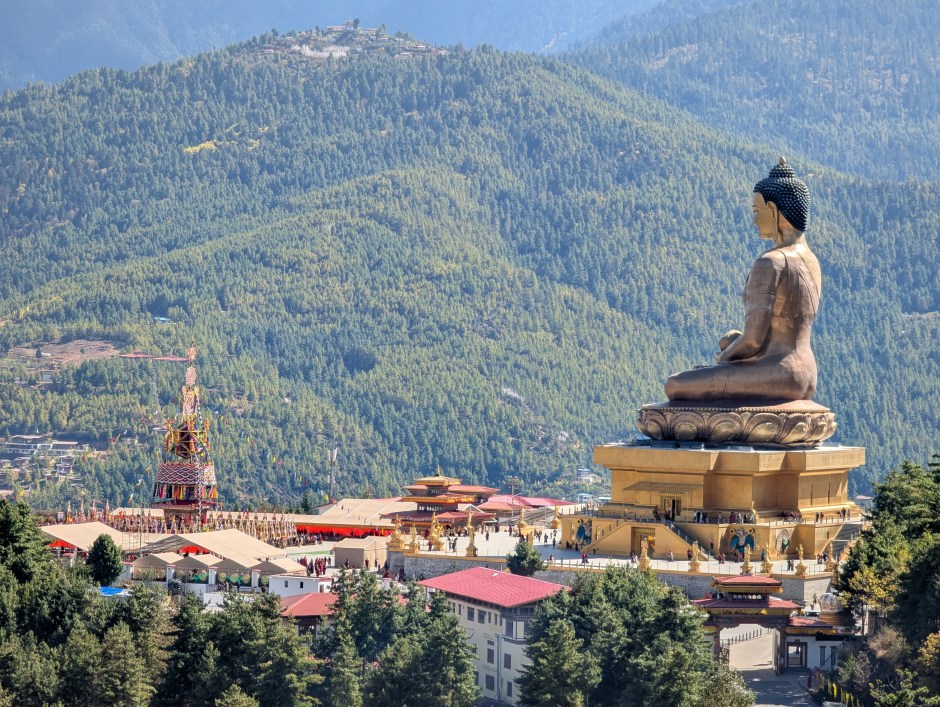
Buddha Point at Kuenselphodrung, was a second, simultaneous location for the Global Peace Prayer Festival. Rather than walk up the open road under the blazing sun, Margaret and I hiked the four mile trail through the forest from the neighborhood where we live, approaching the festival site from above. For the entirety of our walk, we were accompanied by the deep, rhythmic chanting of prayers broadcast from the festival site in the city below, at times able to view the stadium and primary festival grounds through breaks in the pines and rhododendrons.
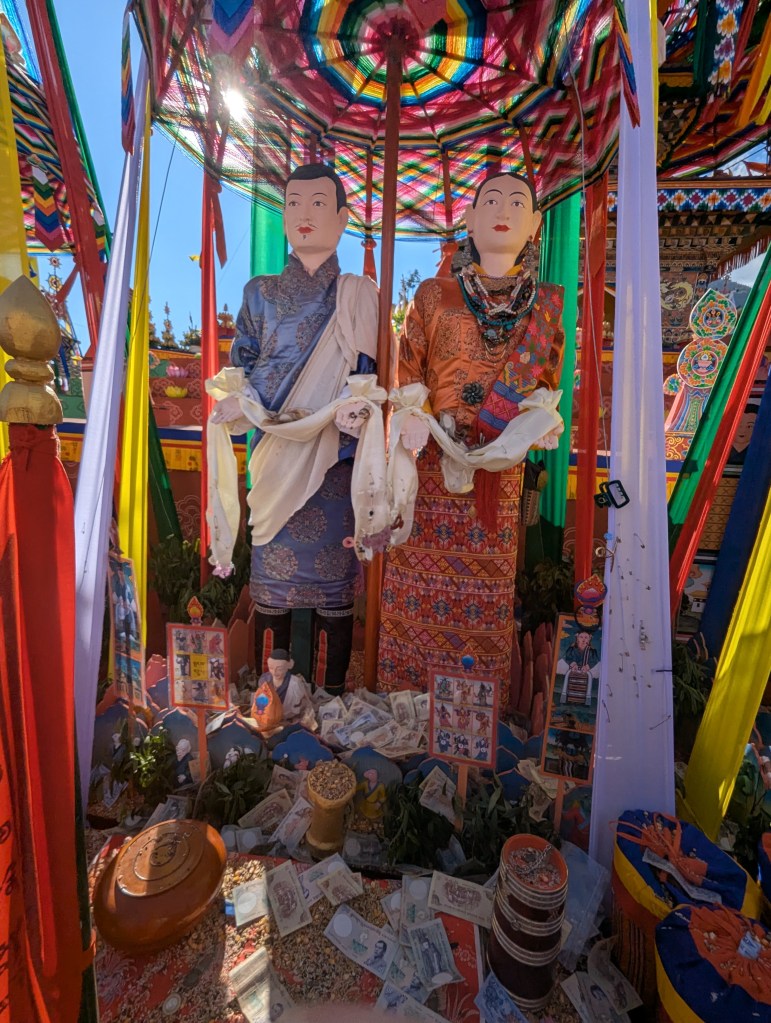
The plaza at the Buddha Dordenma was transformed as the location for the Jabzhin Doechog ritual portion of the festival. Devotees arrived by the thousands, day after day to participate.
Monks chanted and prayed as those seeking blessings from the ritual stood in line for hours waiting for the opportunity to walk through the ritual construction.

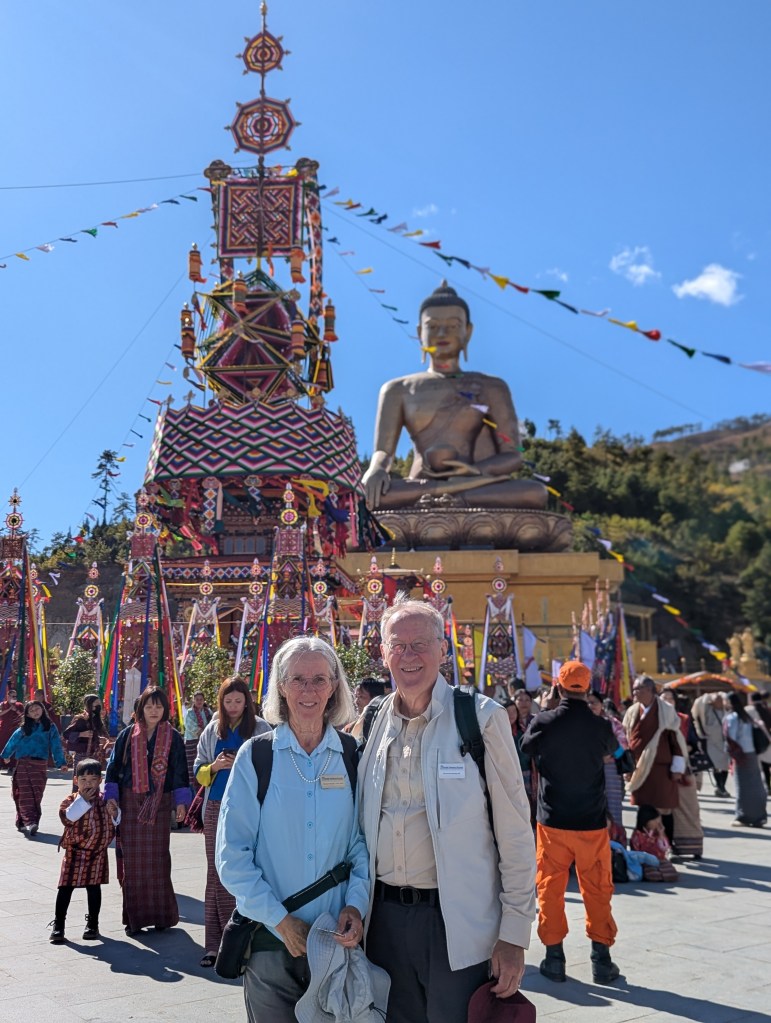
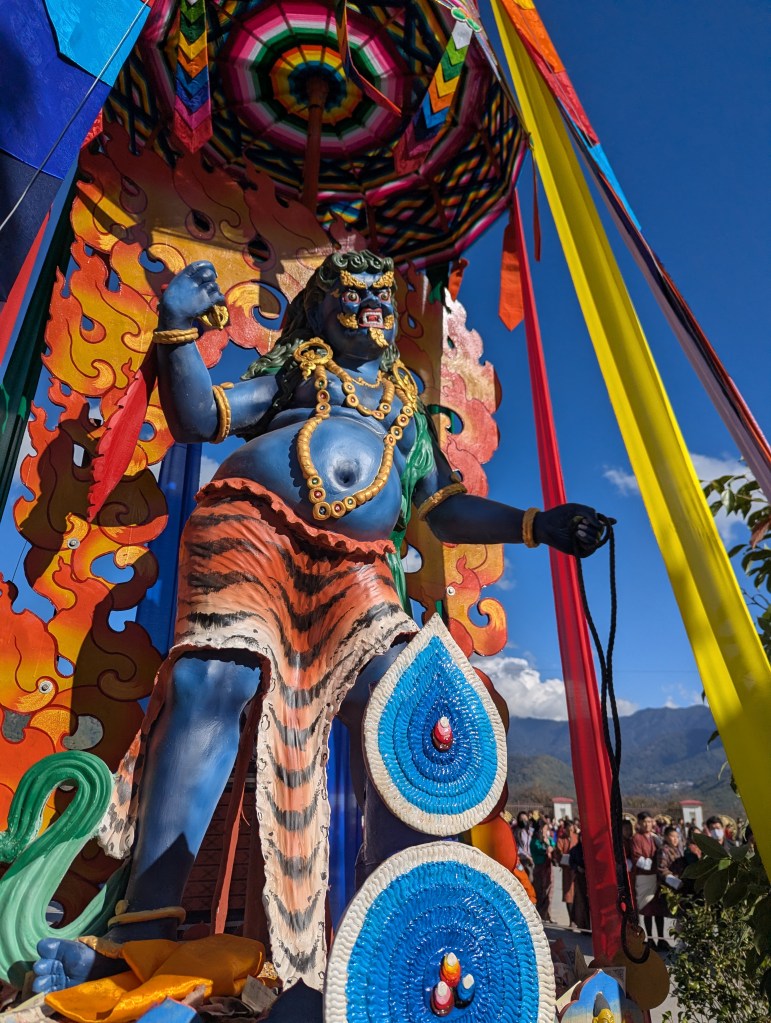
The Jabzhi Doechog ritual is rarely celebrated on a scale this large. The large central structure and the dozens of smaller surrounding structures are of colorful woven yarn. Participants circle the structures and, starting with a stack of small bills, add a donation at the foot of each of the individual effigies, both peaceful and wrathful. In return, they receive protections for the healing, cleansing, and purification of body, speech, and mind from negative karma.
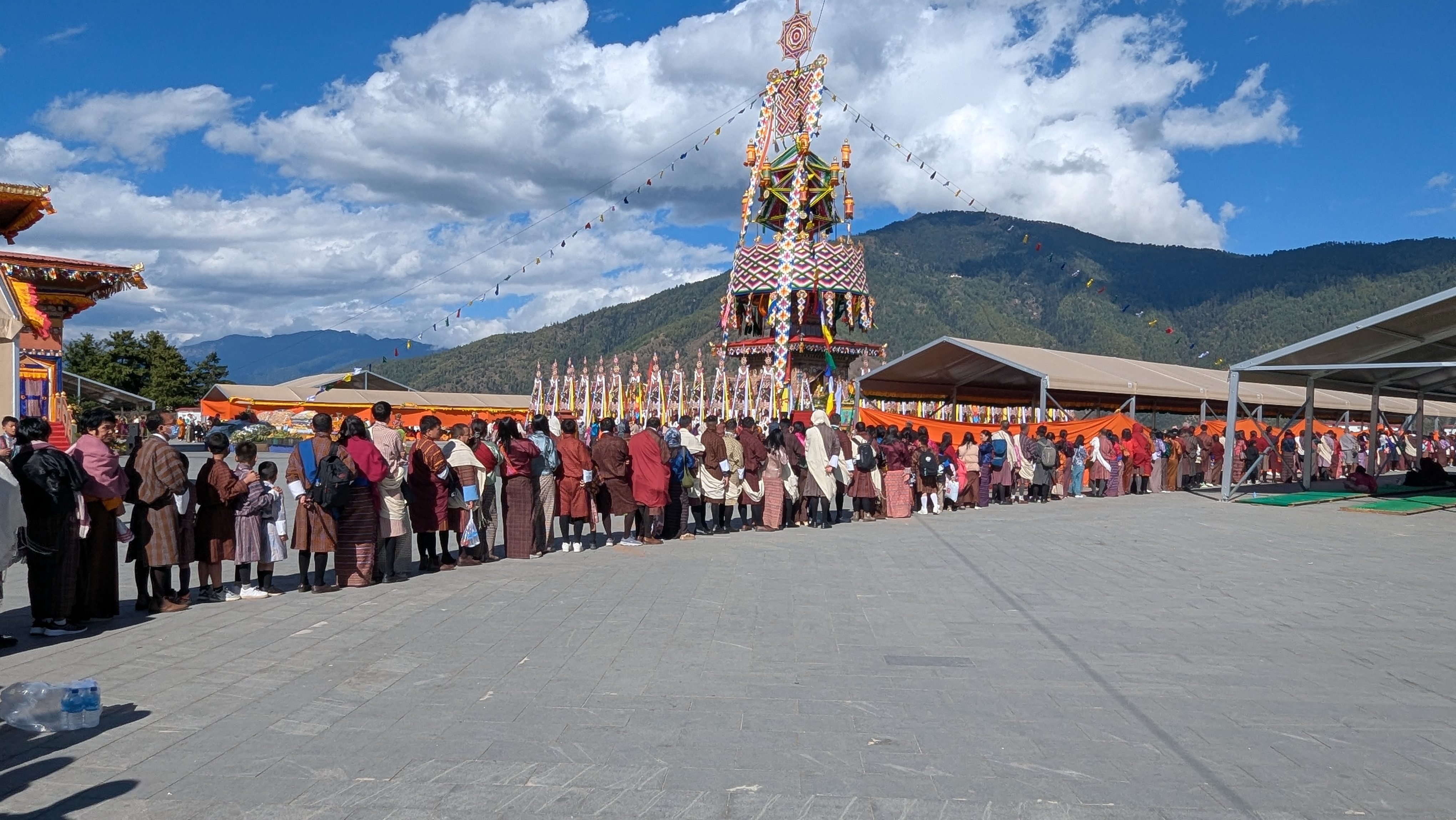
The line of worshipers snaked through the enormous plaza after waiting for hours on the road below and climbing the nearly 300 stairs leading to the plaza. Remarkable to me, in a country that has a 110% cell phone penetration, not a single person in line was on their phone as they prepared to participate. And there was not a hint of impatience. The historic spiritual import of the ritual event was palpable.
When we finished our devotions at 3 p.m., the line continued down the stairs, through the parking lot and another quarter mile down the road, taxis and buses full of new worshipers were still arriving and continuing to do so until well after dark. Remarkably, as we passed people on our return trip down the road to the city, everyone was in good spirits, patiently waiting their opportunity, greeting us with warm smiles and the traditional hellos of kuzuzangpola.
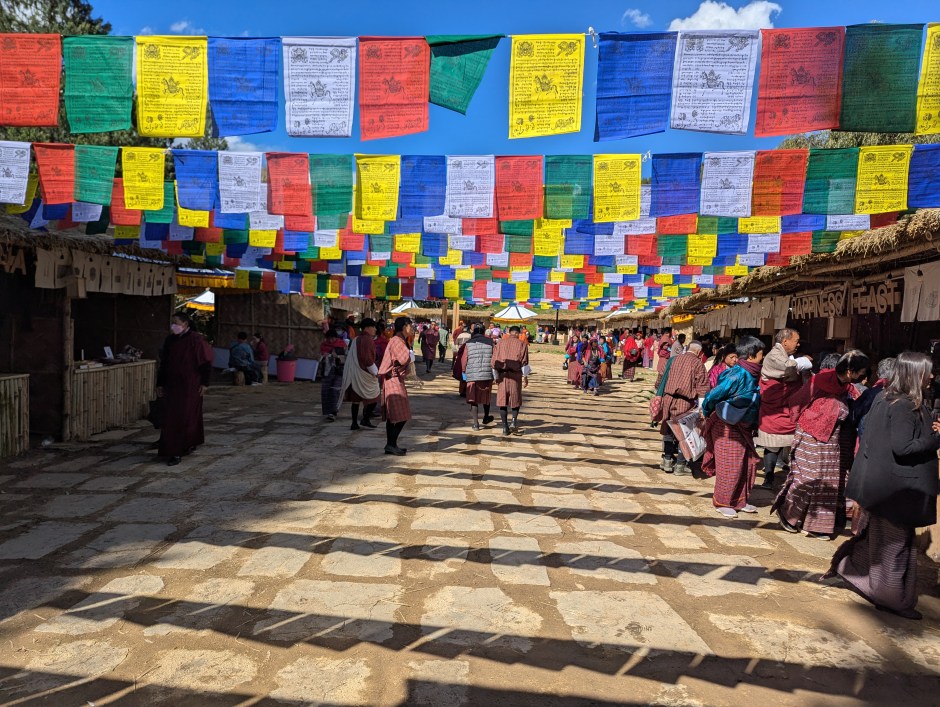
Both the Buddha Dordenma plaza and Centenary Park, opposite the stadium were miraculously transformed, a testament to Bhutan’s ability to host an international event of this proportion. Dozens of new structures, including kitchens to serve the participants, dozens of new bathrooms and kiosks for food and souvenirs were constructed in very short order, despite setbacks with some of the worst Autumn rains in recent memory.

For more information on the Golden Buddha, see our post of September 14, 2019.

As has always been the case, we recognize that, even after nearly a year in Bhutan, we are still newbies here, far from experts, and we welcome any corrections of or clarifications to our posts.

Leave a comment