Padmasambhava, also known Guru Rinpoche, an 8th century Indian saint and teacher, is credited with introducing the people of Tibet and Bhutan to Tantric Buddhism and founding the Nyingma tradition of Tibetan Buddhism. He is revered in Bhutan as the second Buddha. Although a historical figure, legend describes his flying on the back of a tiger from Tibet to the Paro region of Bhutan and meditating in a cave on a precipitous cliff, the cliff where the famous Tiger’s Nest monastery was subsequently built. According to the beliefs of the Nyingma school, there exist hidden valleys throughout the Himalaya that Padmasambhava blessed as refuges, places where the spiritual and physical worlds overlap, protected by deities manifest in natural phenomena, such as snowstorms, avalanches and snow leopards, perhaps even Yeti. These refuges are revealed by religious treasure texts and described as reachable only with great hardship and risk of death. Known as beyuls, ancient texts suggest that they will only be discovered when the planet is approaching destruction and is too corrupt for spiritual practice. If you have read Lost Horizon, the connection between Shangri La and Padmasambhava’s beyuls is inescapable.
“ ‘The Last Shangri La’ is a phrase much used (and overused) in tourist brochures about Bhutan. Most Bhutanese, however, have no idea what Shangri La means—the word was invented by James Hilton in his book Lost Horizon, to describe a hidden paradise in the Himalayas. What Hilton didn’t invent is the fact that these hidden paradises do exist. But we have another name for them—we call them beyuls.” “They are indeed idyllic places, of great serenity and beauty. But unlike James Hilton’s Shangri La, where no one ever grows old, the beyuls I have been to certainly have their share of old people, who have experienced the sorrows and burdens of human existence. Nevertheless there is an intangible quality about beyuls that sets them apart from other beautiful places—people who live there seem to have an instinctive understanding of the true art of living, a healthy detachment from purely material pursuits, an ability to recognize and enjoy the gifts of nature, and the wisdom to accept and face life’s vicissitudes.” From Treasures of the Thunder Dragon, A Portrait of Bhutan, by Ashi Dorji Wangom Wangchuck, Fourth Queen of Bhutan.
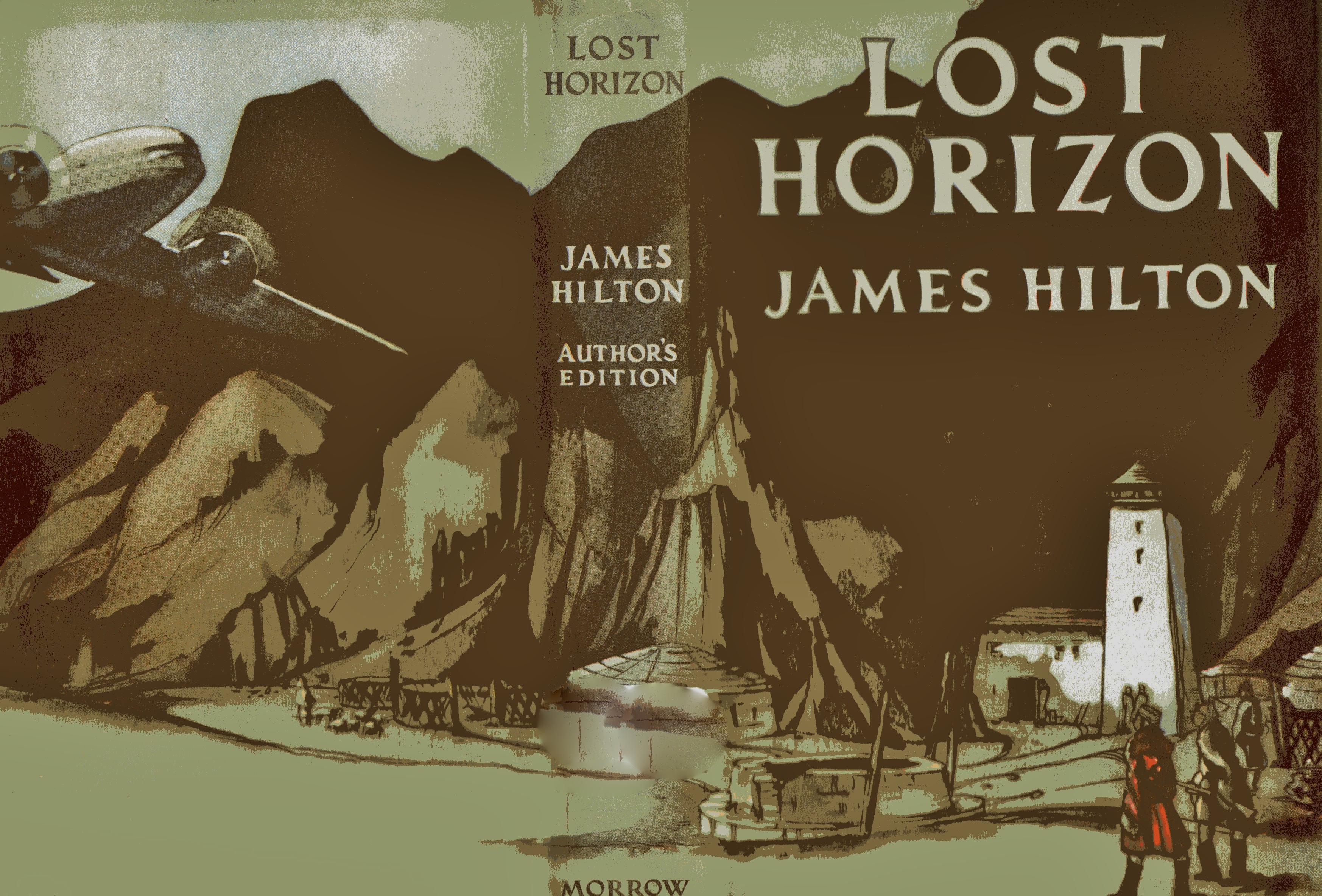
Lost Horizon, written by James Hilton in 1933, takes place during a time of immense upheaval and uncertainty internationally. The US was struggling with the Great Depression. World War I had devastated Europe and World War II was on the horizon. Fleeing a revolution in Afghanistan and India, the story’s protagonist has his airplane hijacked and flown deep into the unknown Himalaya, the pilot dying in the crash, the protagonist and his party rescued and taken to the fictional valley of Shangri la, a utopia where all of occidental and oriental culture is to be preserved while the world order crumbles. Hilton may have taken as his starting point the Tibetan myth of Shambala. I won’t go further in my description as it would provide too many spoilers. Although dated and not culturally sensitive, it’s still a great read. And don’t miss the movie of the same title, directed by Frank Capra.
 Our Seasons in Shangri la
Thanks for posting this. There are ‘legends’ of westerners going to these sacred places and returning with sacred teachings. Christ often mentioned as one of them.
LikeLike