Wangdi, our trusted taxi driver and guide, swung by the apartment at 9 a.m. to gather up Margaret, our friend, Sally Kennedy, myself and our gear, with the plan to start out for Dochula Pass which, at 3100 meters is the highest motor-able pass in Bhutan.

In 2003, as Bhutan prepared for war for the first time in 138 years, the Fourth Queen, Ashi Dorji Wangmo Wangchuck, had built a large Chorten as a visible symbol of her prayers to the deities to protect her country. The day the Fourth King and his son left Punaka to personally lead the army south, the Queen again climbed above Cheri Monastery. Meditating in a cave used by Zhabdrung, the 1unifier of Bhutan, she resolved to build an additional 108 smaller chortens surrounding the original.
The second Duar War of 2003 swiftly concluded as the tiny Bhutanese army led by the King and Prince, routed thirty camps of militants from northeast India who had been entrenched in the southern Bhutanese jungles for fourteen years. The battle took only one and one half days. A temple was subsequently built at Dochula, dedicated to the eleven Bhutanese soldiers who lost their lives in the conflict.
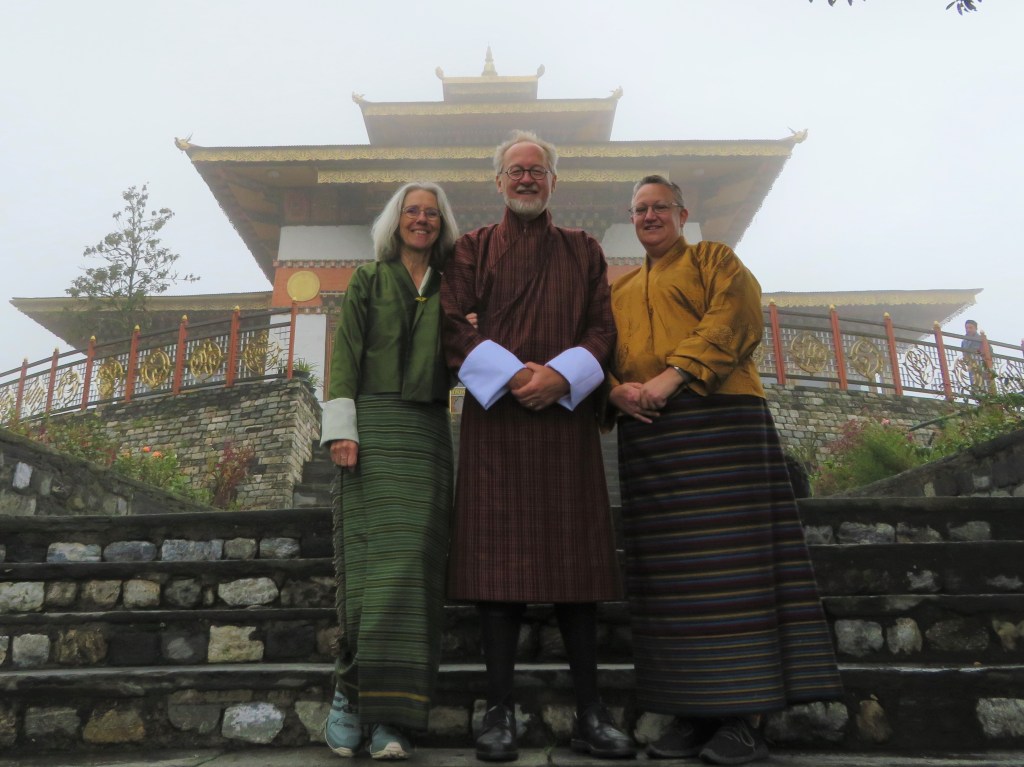
On a clear day, the highest peaks of the Himalayas can been seen from Dochula Pass. The pass was shrouded in cloud and light rain so we’ll have to try again. For now, here are our three hardy protagonists below the temple.
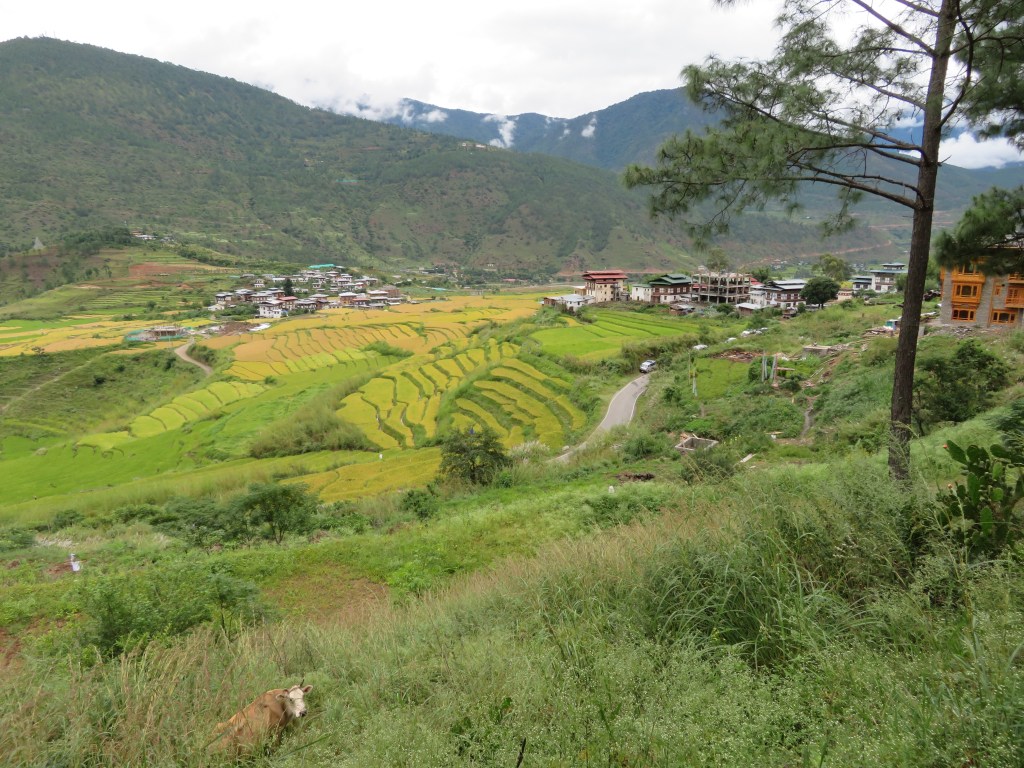
The altitude changes from 3100 meters to 1200 meters as we descend into the Punaka Valley en route to the amazing Punaka Dzong
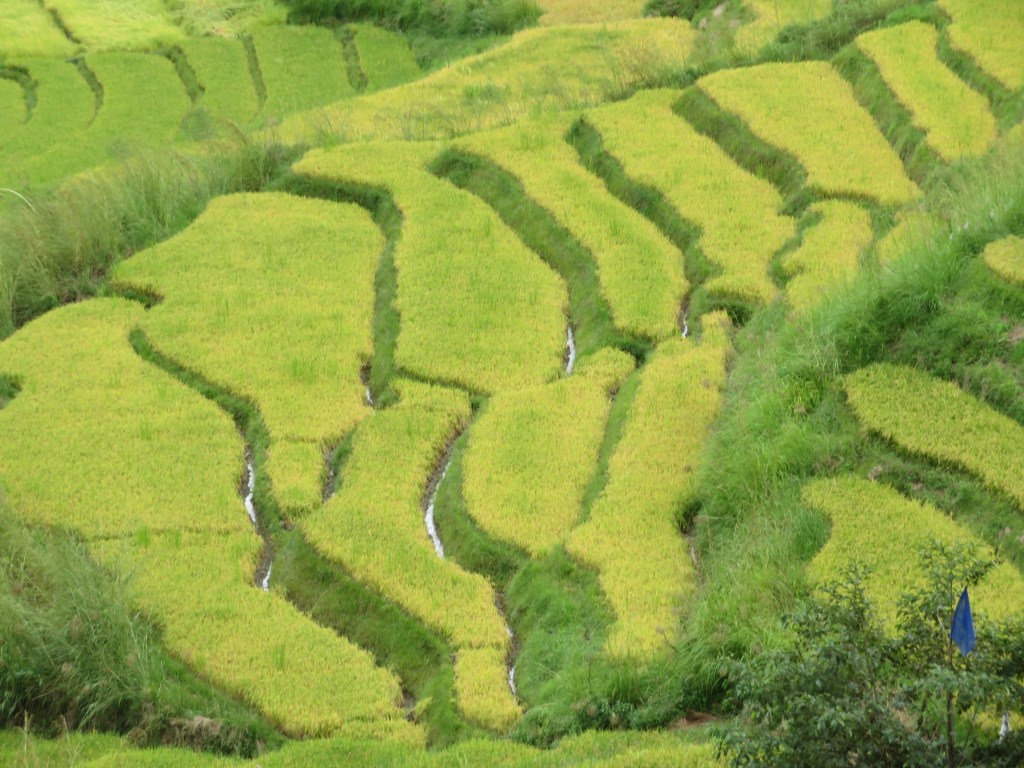
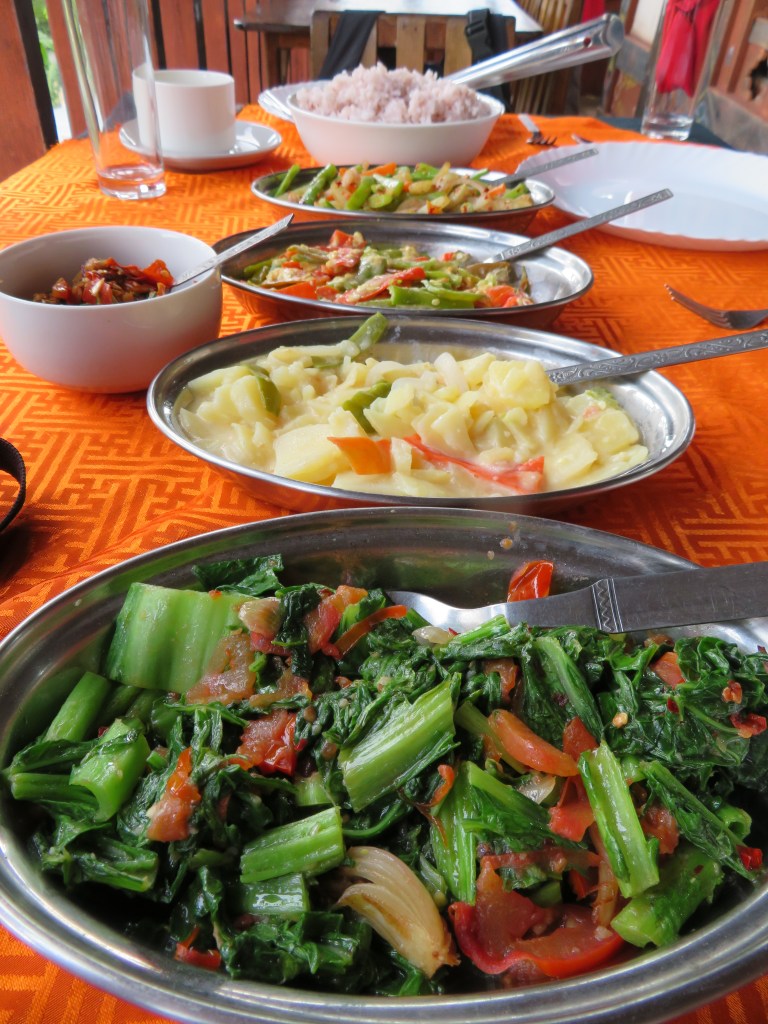
Red rice
Mixed vegetables with chili flakes
Ema Datshi (chilies and datshi cheese
Kewa datshi (potatoes, chilies and datshi cheese)
Spinach and chilies
Extra chilies on the side
Butter tea and milk tea not shown
We’re actually starting to appreciate the local dishes
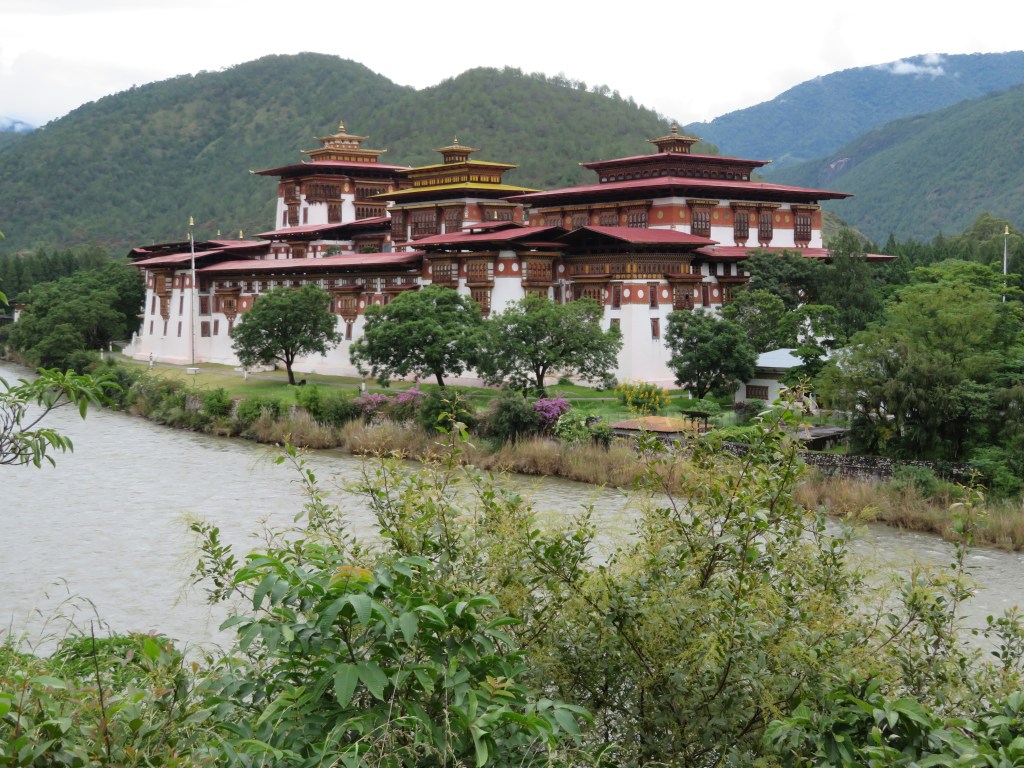
For centuries, Bhutanese governments have consisted of an administrative body and a monastic body. Each district or Dzongkhag in the country, has it’s own Dzong. Built originally as fortresses, the administrative government and monastic body occupy separate wings. Punaka served as the capital of Bhutan for 300 years. Its Dzong is unique with its three towers and three courtyards. Sitting at the confluence of two rivers, the Mo Chu (mother) and Pho Chu (father), it is defended and accessed by a cantilevered bridge.
Built in 1637, of stone, packed mud and timber without nails, it has been repaired and rebuilt by traditional methods several times in response to flood, fire and earthquake. A smaller Dzong, still intact on the site, was completed in 1326. The Punaka Dzong has been a critical factor in deterring the many attempts at invasion by Tibet over the centuries. It is considered the most beautiful and photogenic in all of Bhutan.
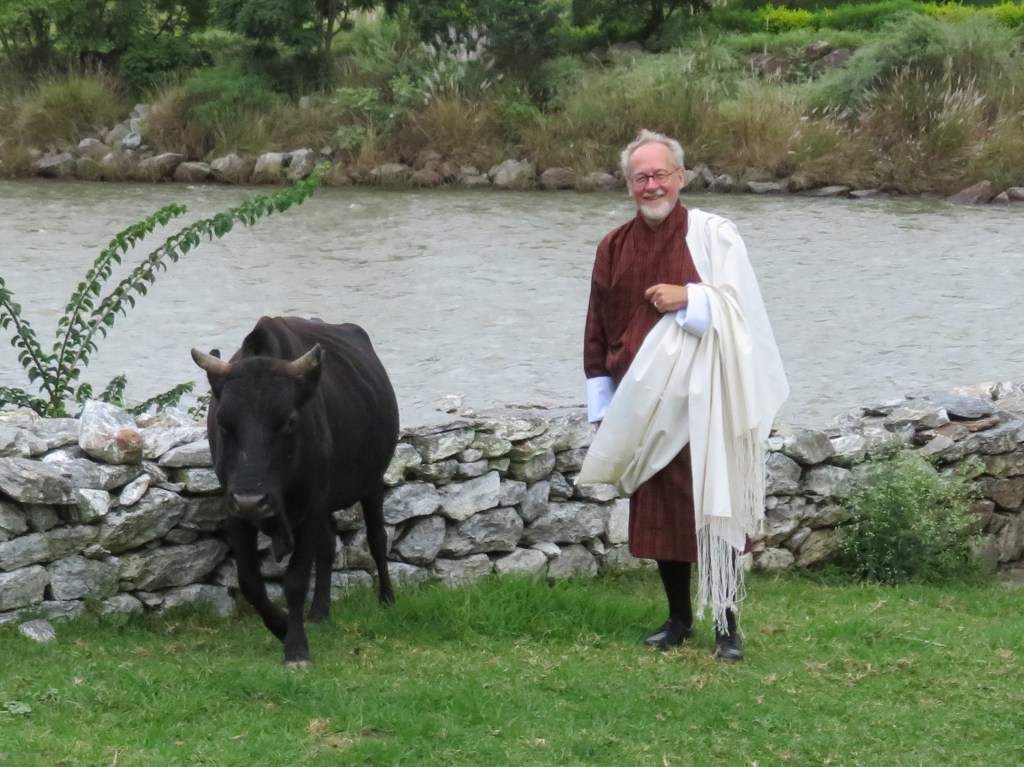
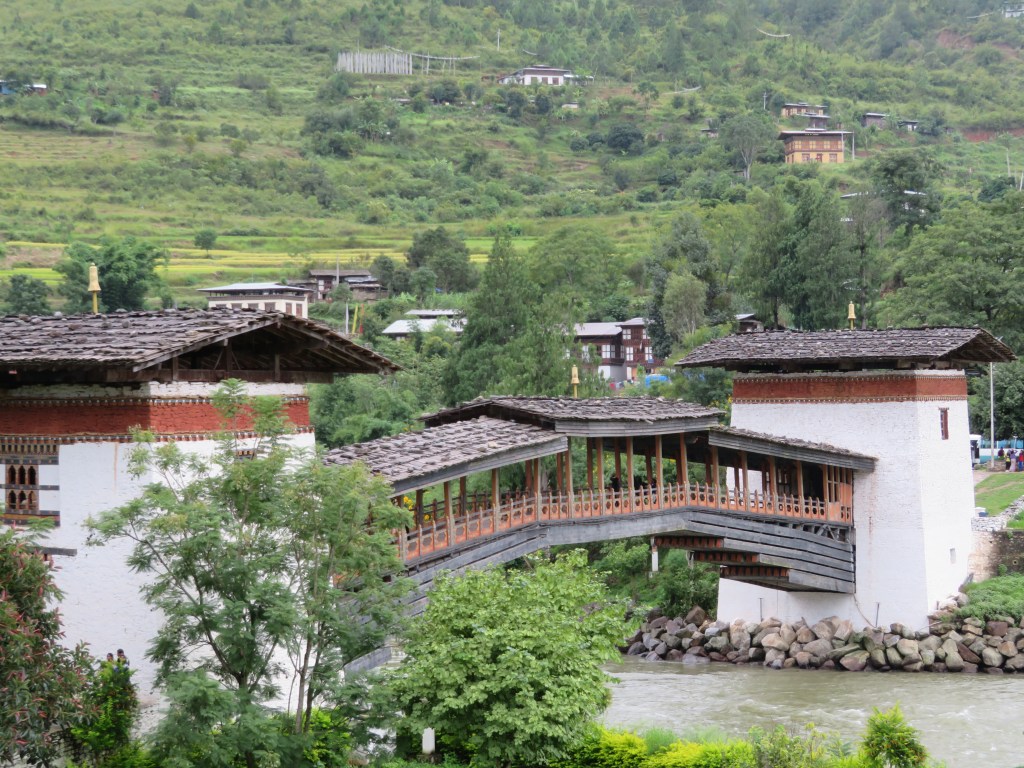
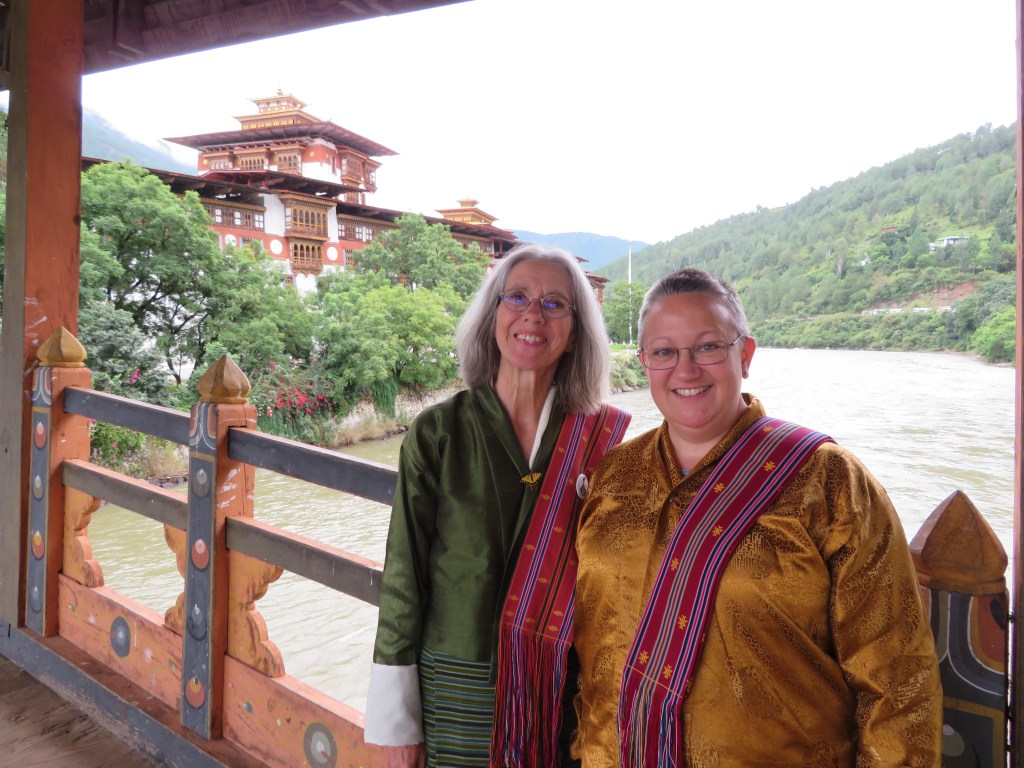
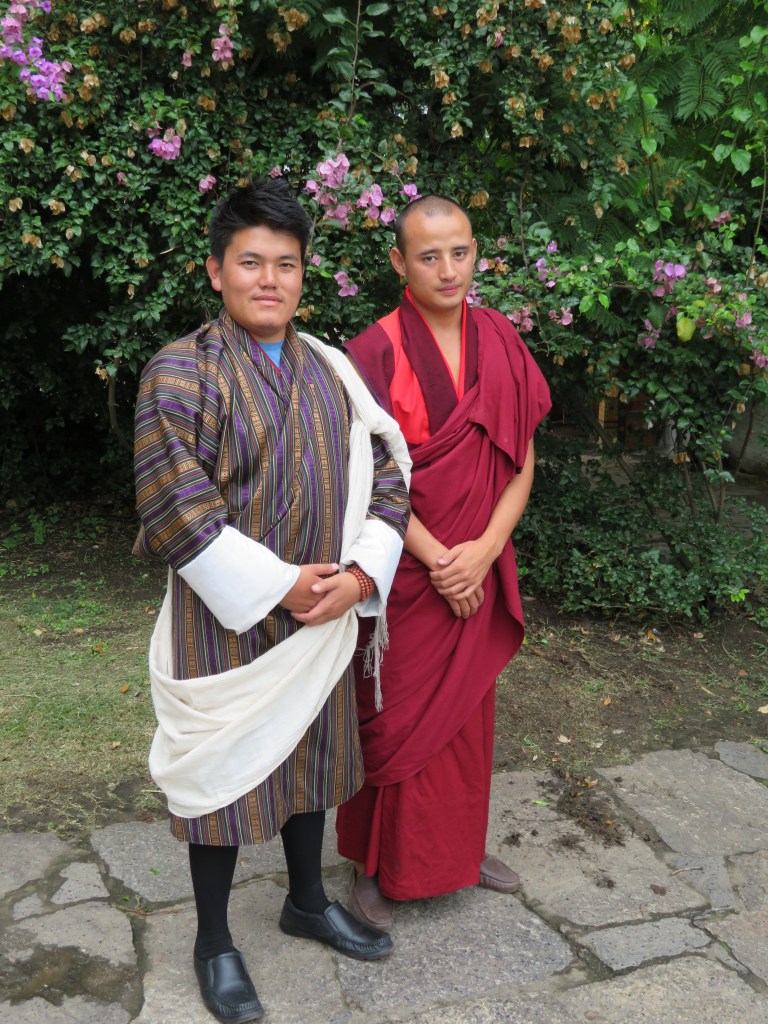
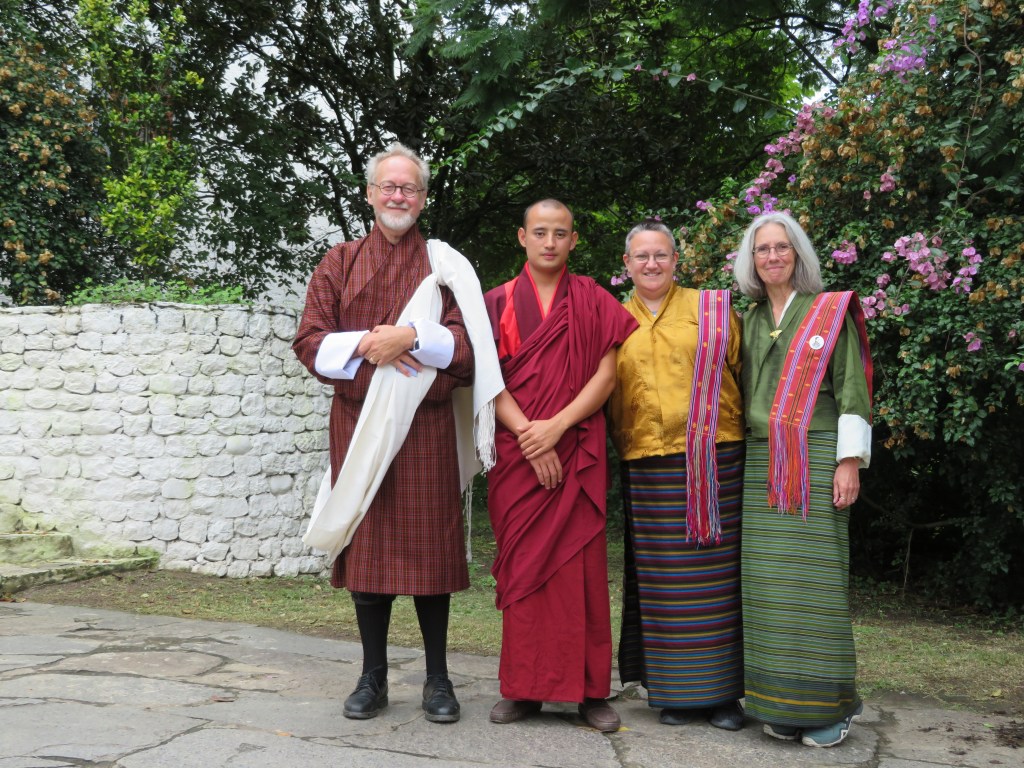
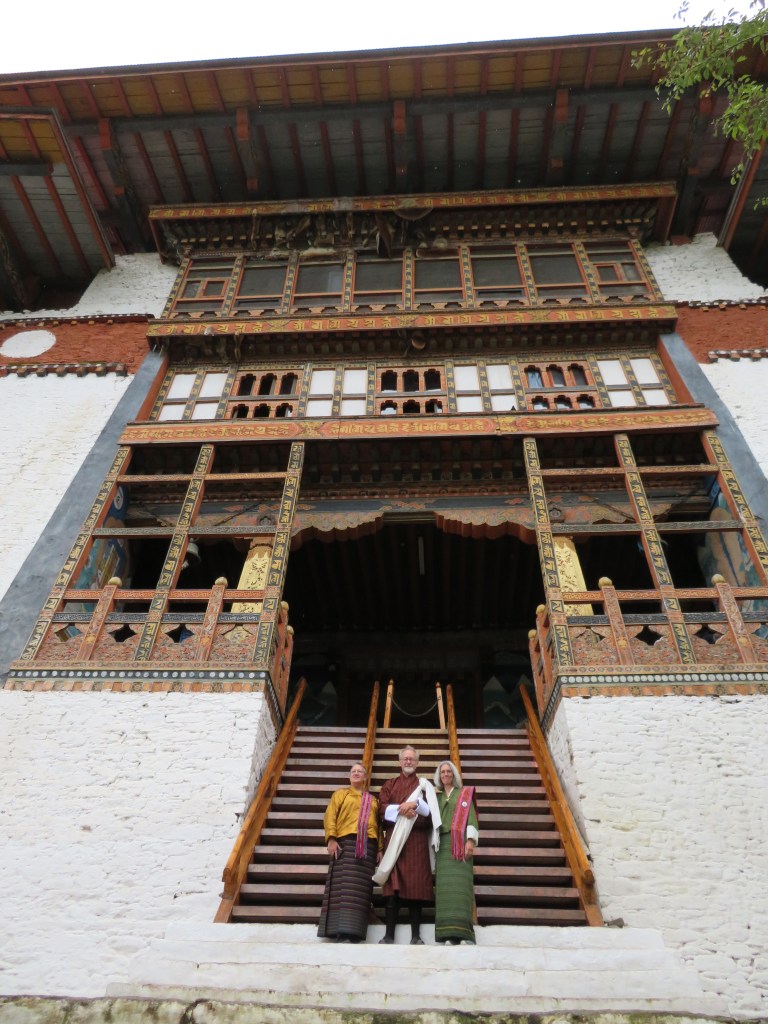
In ancient times, Bhutan had three regional governors. The central stair was for the the most powerful, stage left for the wealthiest, stage right for the third.
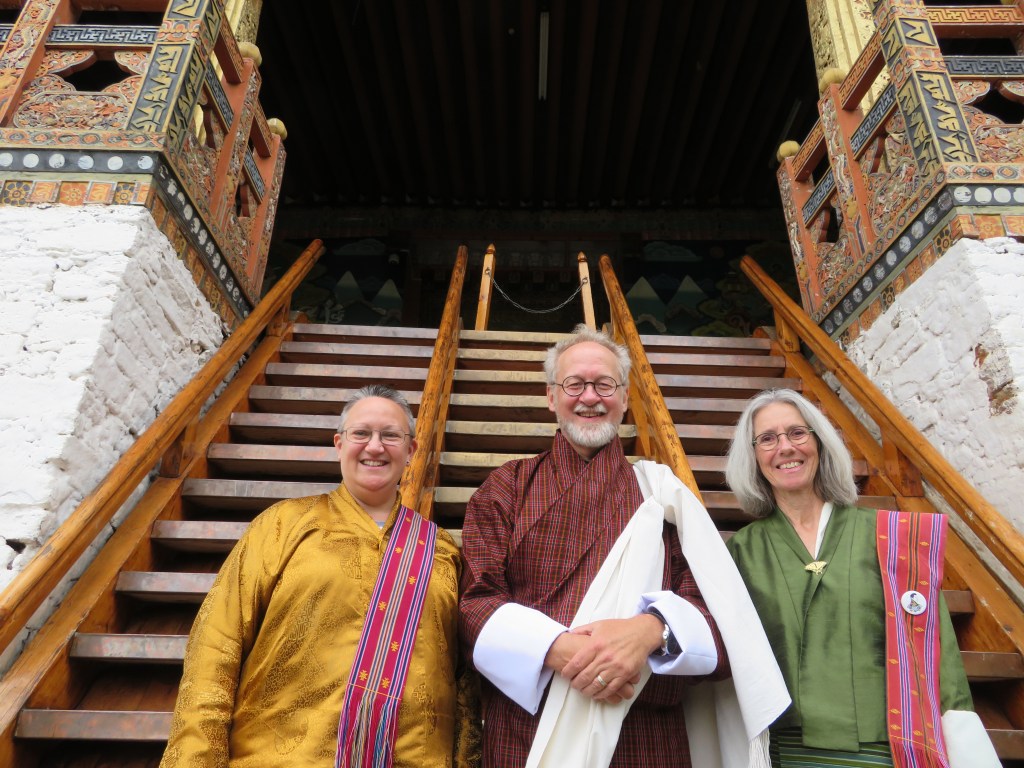
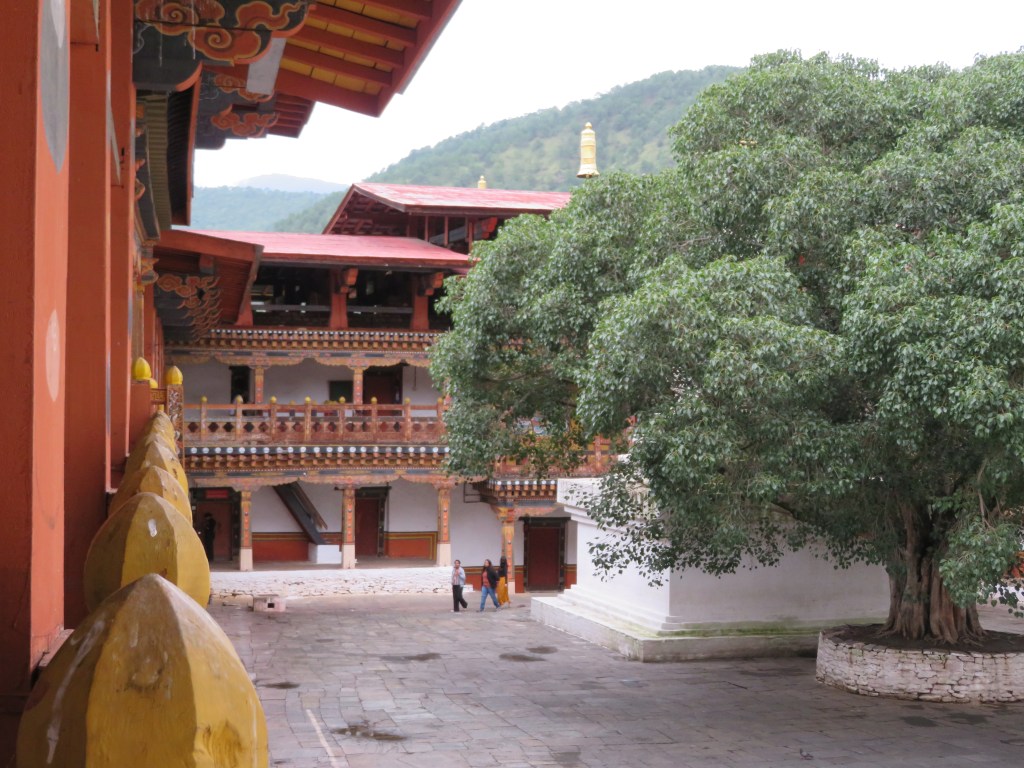
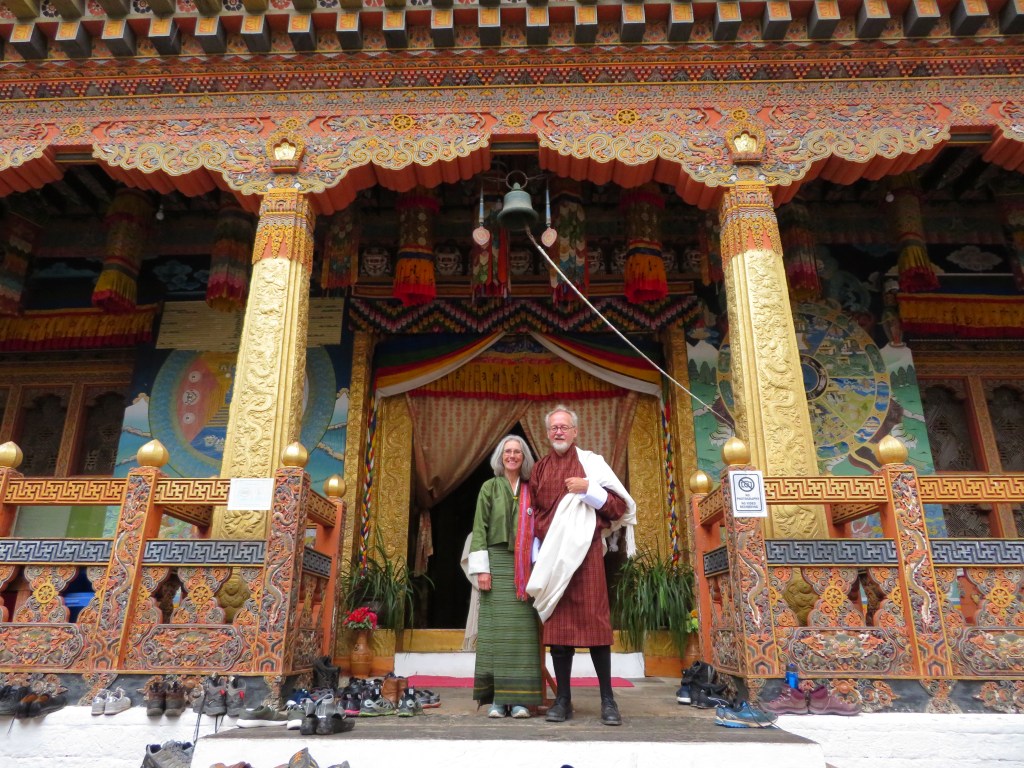
The temple holds massive statues of Sakyamuni Buddha, Guru Rinpoche (Padmasambava) who brought Buddhism to Bhutan and Zhabdrung, the 17th century unifier of Bhutan, as well as innumerable other figures and extensive murals depicting the life of the Buddha
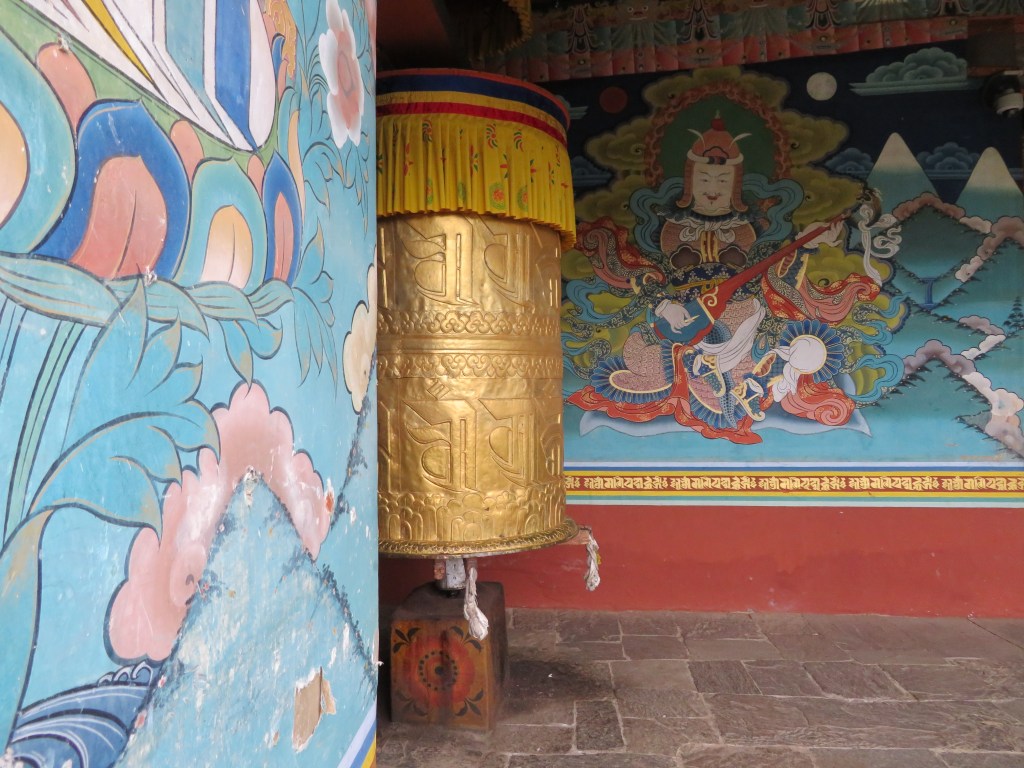
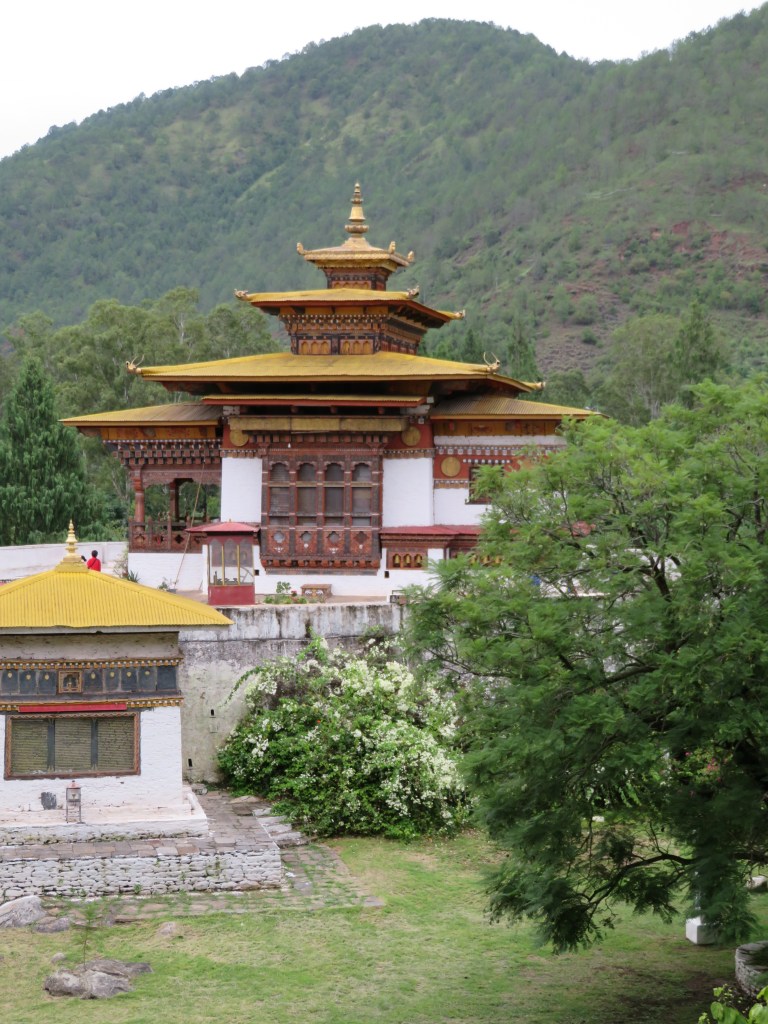

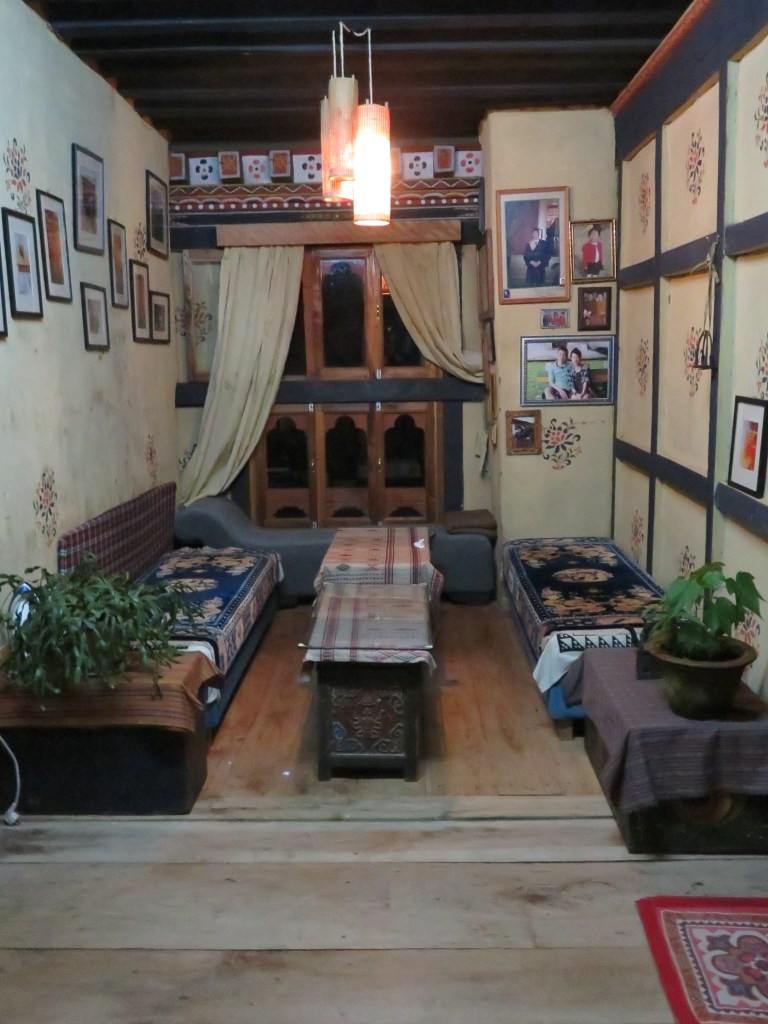
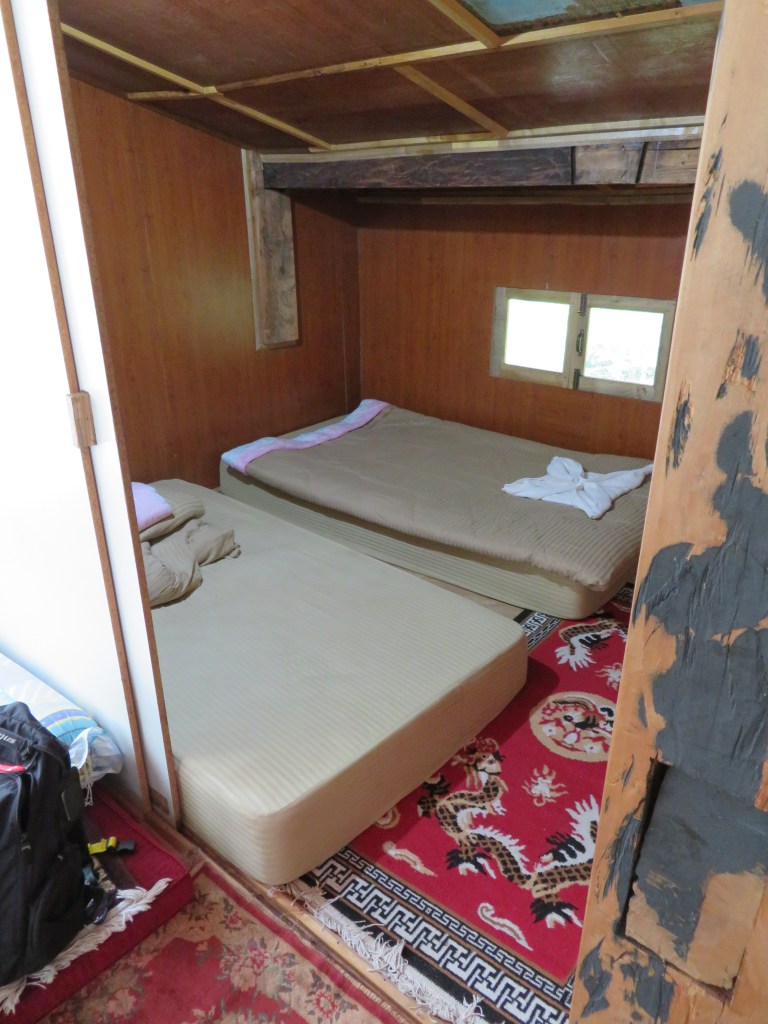

More to come in our next installment.
 Our Seasons in Shangri la
Steve and Margaret, please email me your snail mail address. I’d like to write. I’m enjoying the posts. Thanks for the postcard. Pat Wiley
LikeLike
So sorry. We would love to hear from you but I don’t believe they have mail delivery here.
LikeLike
So amazing. Thanks for sending all of this!
LikeLike