
“The Tshechu of Bhutan specifically honor Guru Rinpoche and celebrate his deeds through the performance of sacred dances and songs.” “These dances assist in cultivating faith and understanding of the importance of the Guru’s deeds, and as such both honor and educate the attendees.”
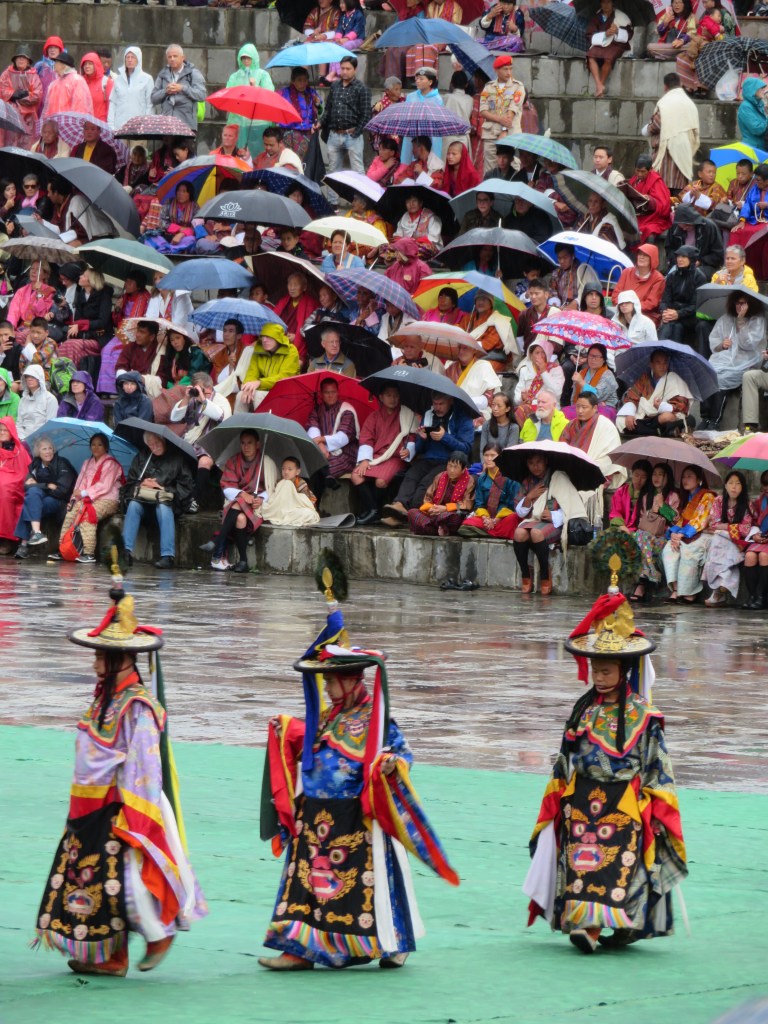
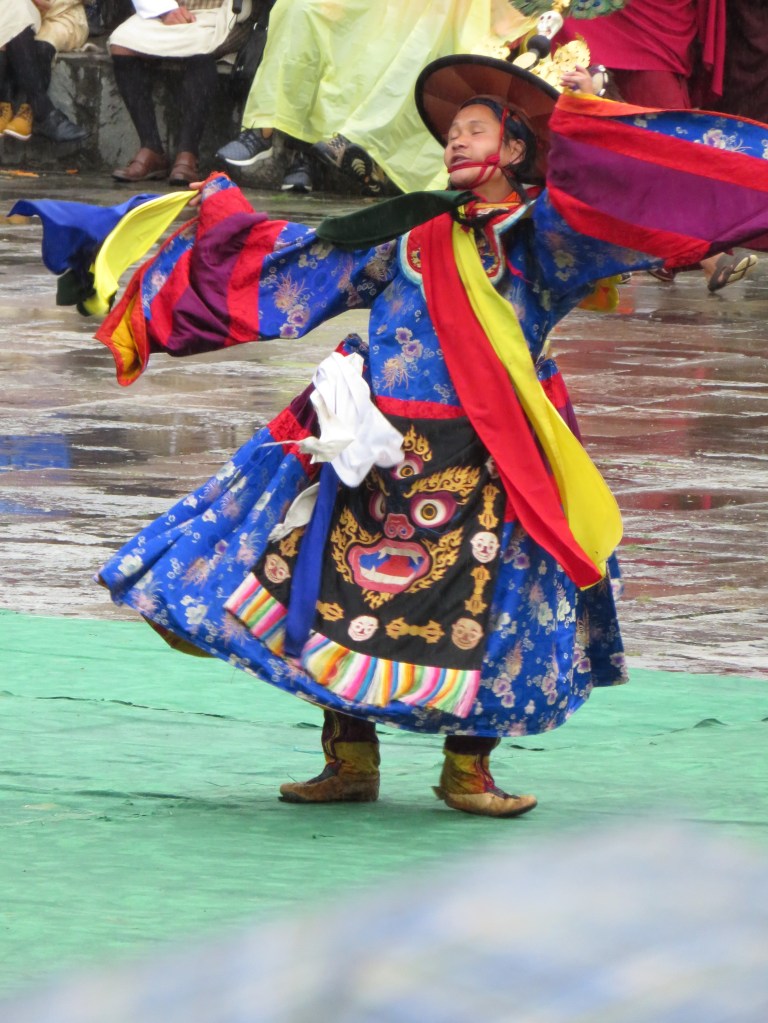
The Black Hat Dance. First performed by Guru Padmasambhava in the 8th Century. Ever since, it has been performed throughout Bhutan and Tibet. Performed by monks, the dancers “represent accomplished Tantric masters who can subjugate and dispatch evil forces to enhance peace and tranquility on earth. After witnessing the Black Hat Dance, the five outer forces, five inner illness and the five secret delusions of obstacles are removed.” From “Invoking Happiness.”
Dances and songs continue without interruption throughout the three days of Tshechu, some lasting as long as two hours.
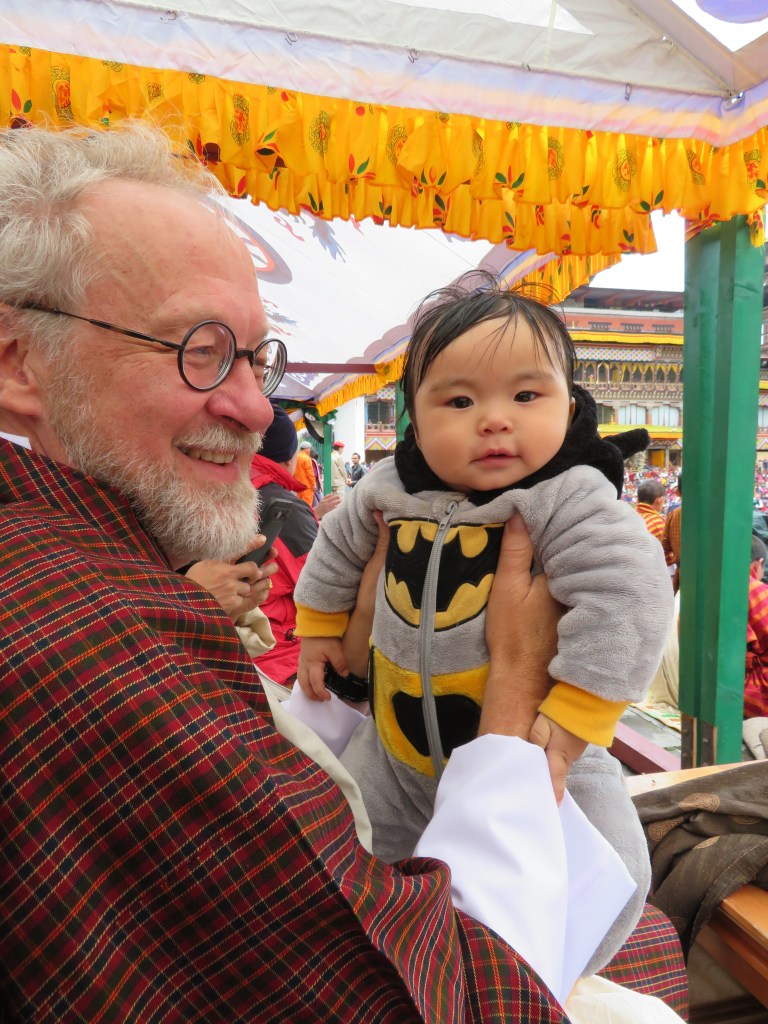

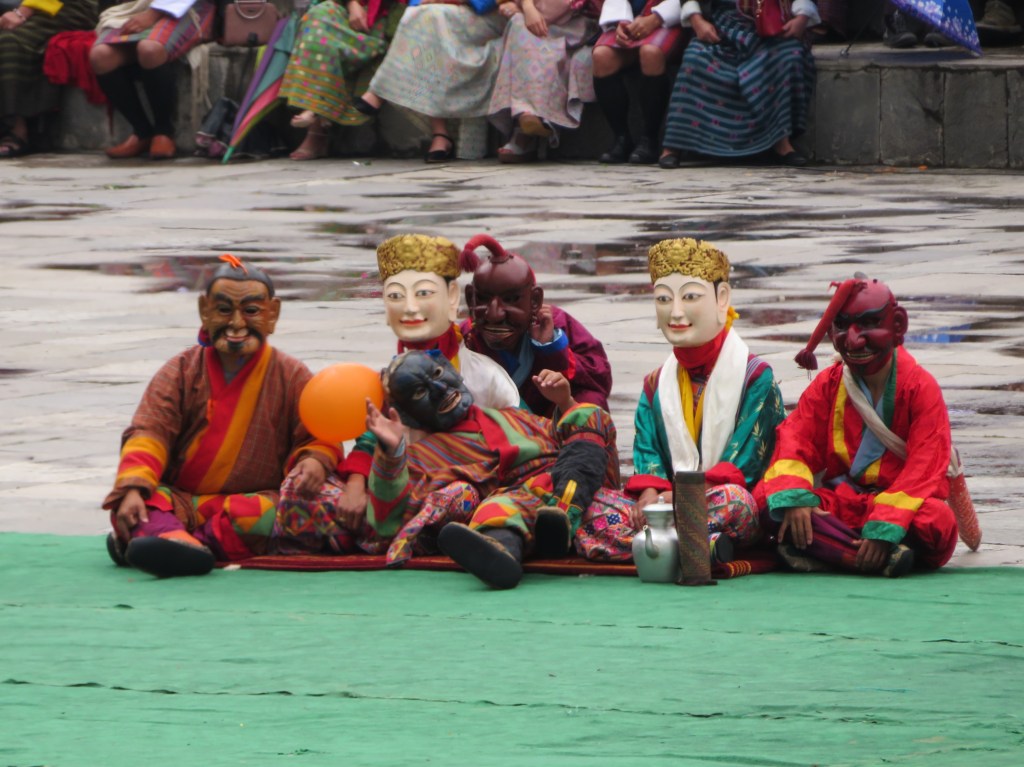
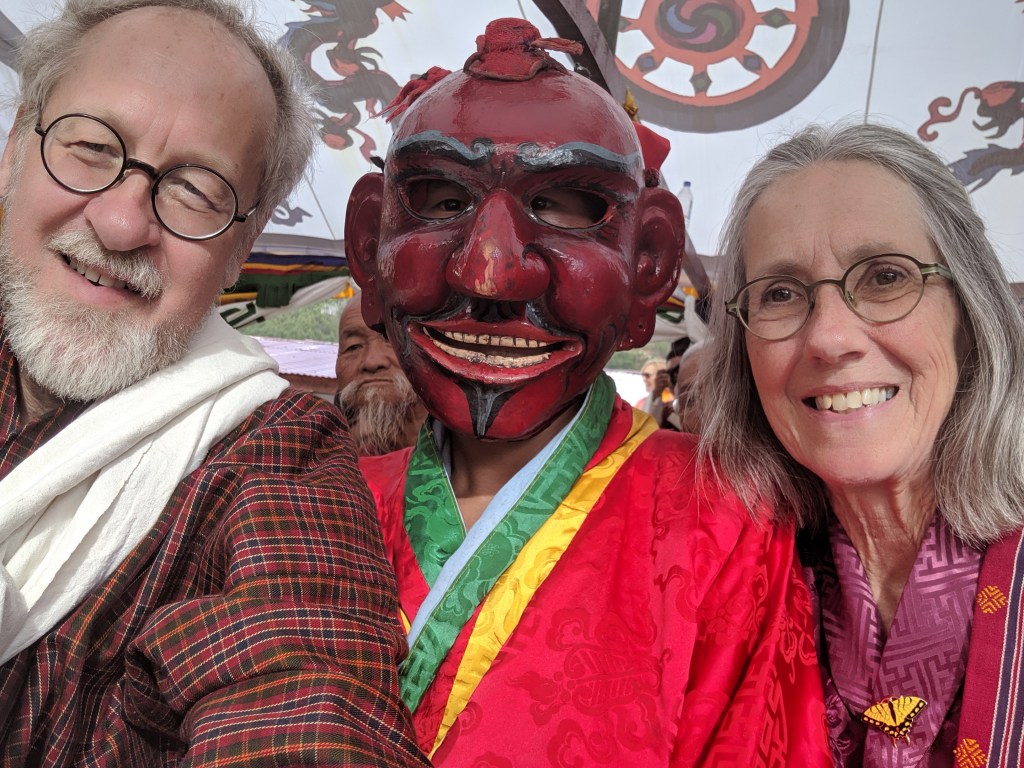
We were extremely fortunate to be treated as guests and seated under an awning throughout the rainy day.
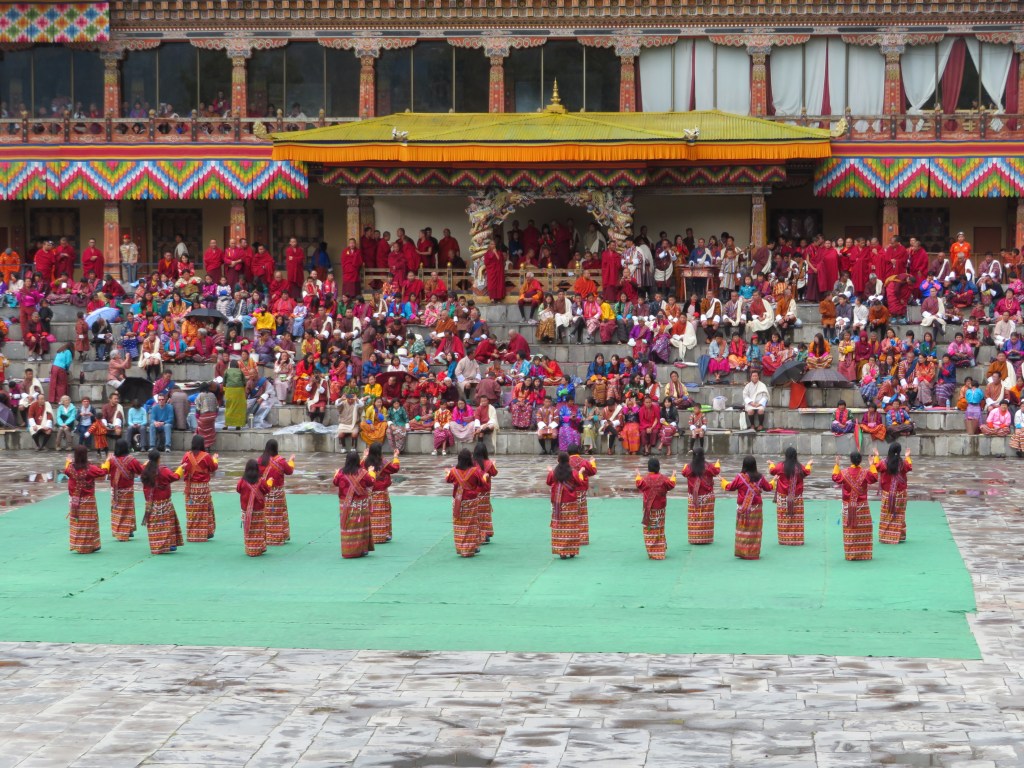
Some traditional songs and dances are performed by members of the Royal Academy of Performing Arts.
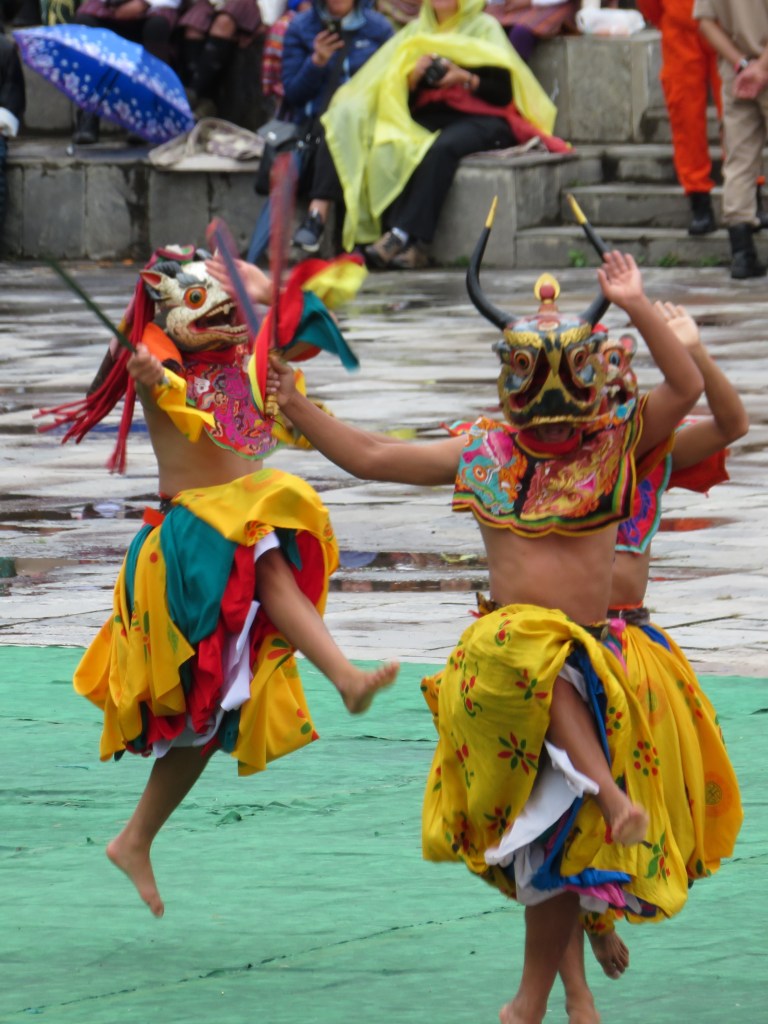
The stick dance. Established by Pema Lingpa in the 15th Century. Leaping and pointing in all directions with their sticks, ultimately the dance leader points to the heart three times to indicate the evil spirit is within and not without.
Much more to come on Day Two
 Our Seasons in Shangri la
Is there a Black Bat dance for the little ones???
Becky
Sent from my iPhone
LikeLike
10/15
Beautiful photos. It must have been an exciting day.
Received MSW postcard dated 9/12/19 a week or so ago. Much appreciated – and quite a relief. Thanks for sending.
LW
LikeLike