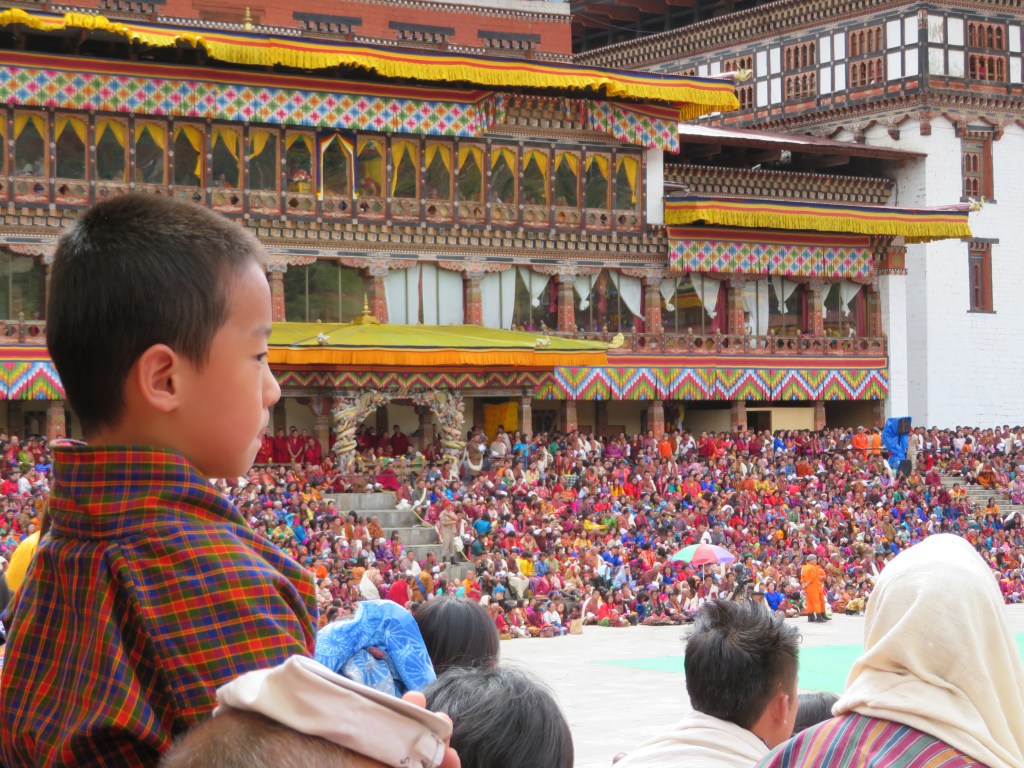
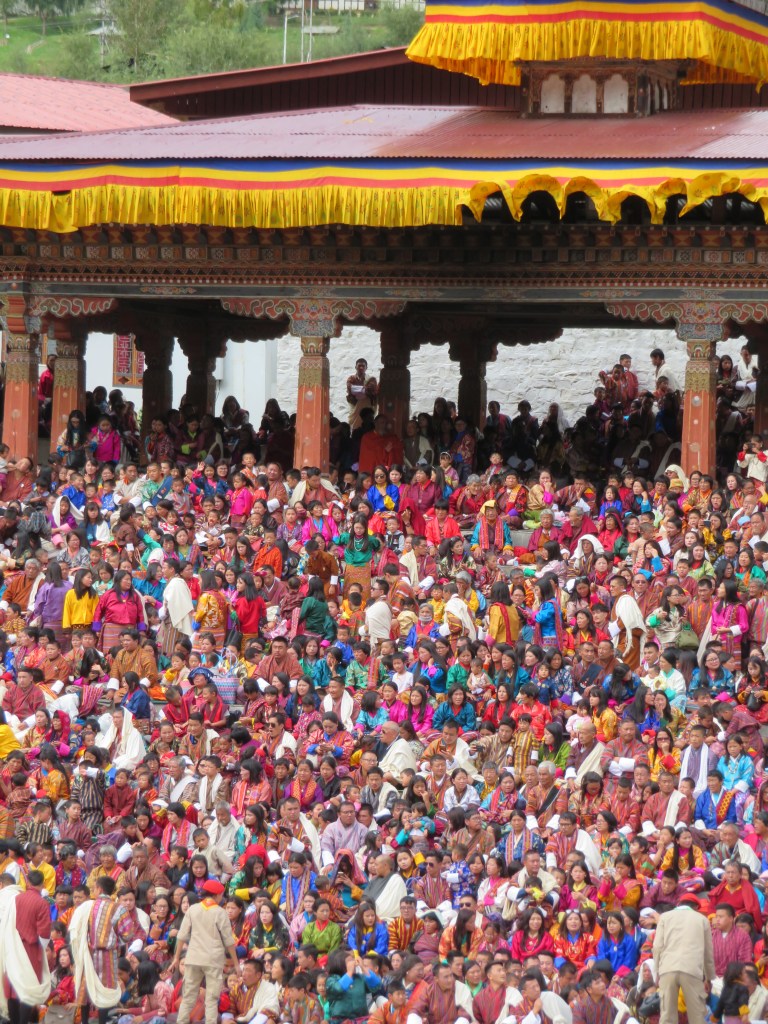
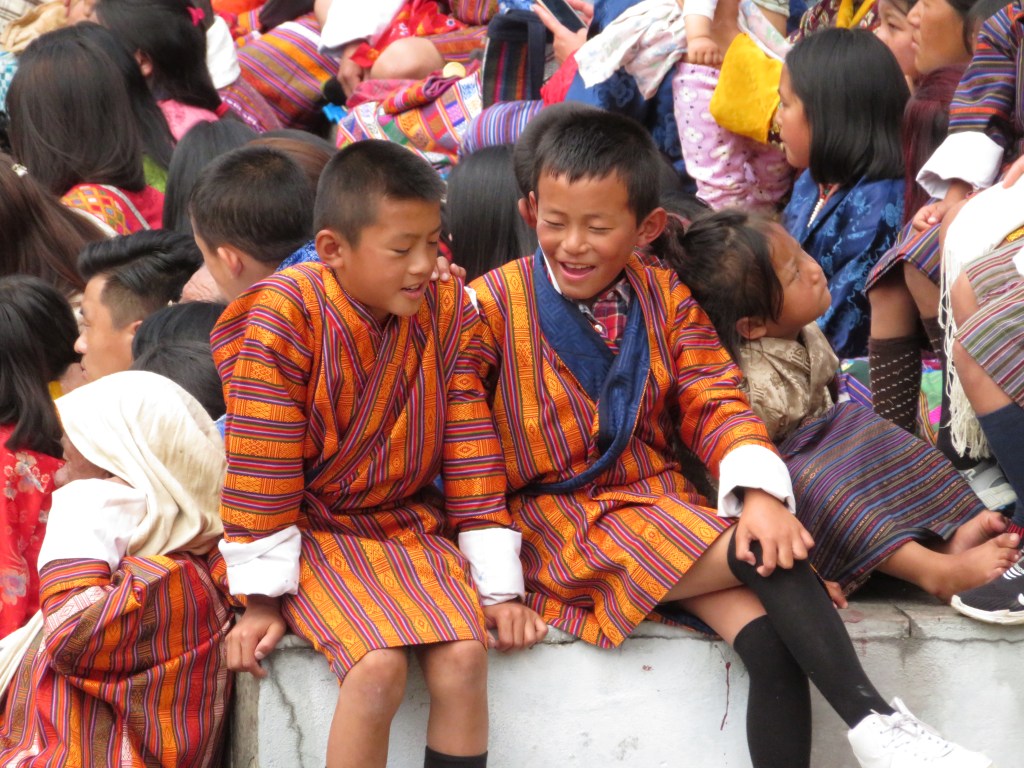
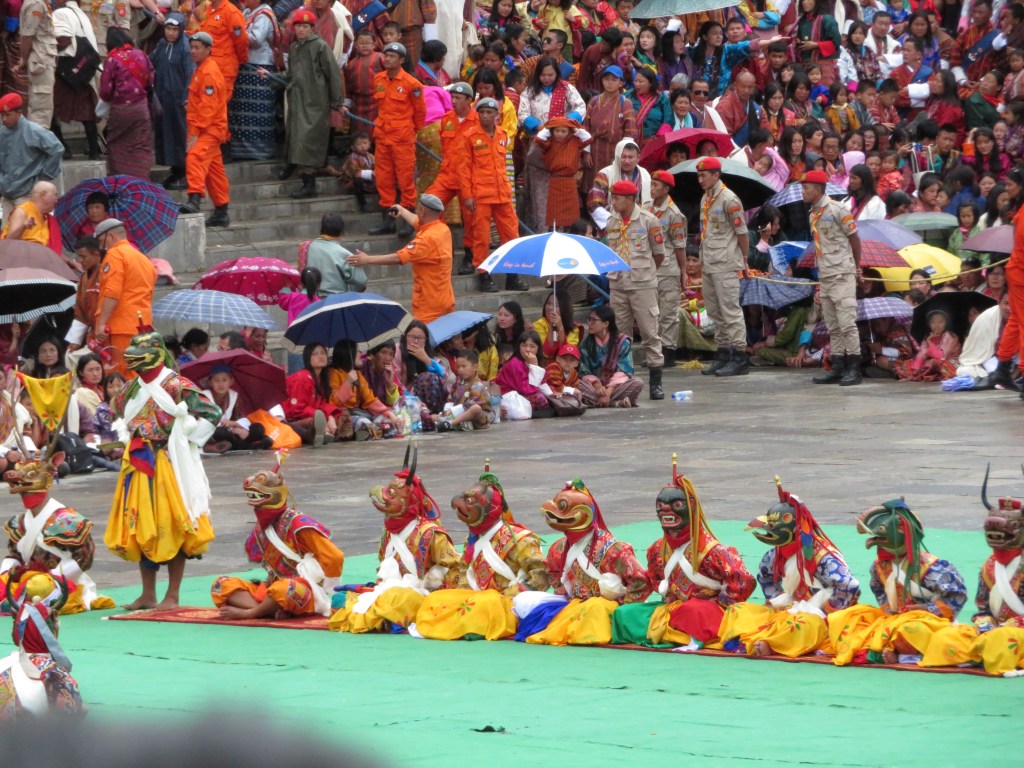
There are 20 Dzongs in Bhutan. Each Dzong celebrates its own three day Tshechu. The largest are in Paro and Thimphu. With rural to urban migration and increasing tourism, Thimphu Tshechu grew to the point that it could no longer accommodate the crowds. A new stadium, designed to accommodate several thousand guests was built in 2017 and the first Tshechu in the new facility was in 2018. Already, the stadium overflows, attendees sitting on the floor of the stage and on the surrounding hillsides. Organization is maintained by the King’s Guard (in the orange jumpsuits), a volunteer service organization, but order is maintained by the attendees. Thousands of people, all peaceful, congenial, patient and accommodating, share food, stories and laughter all around us.
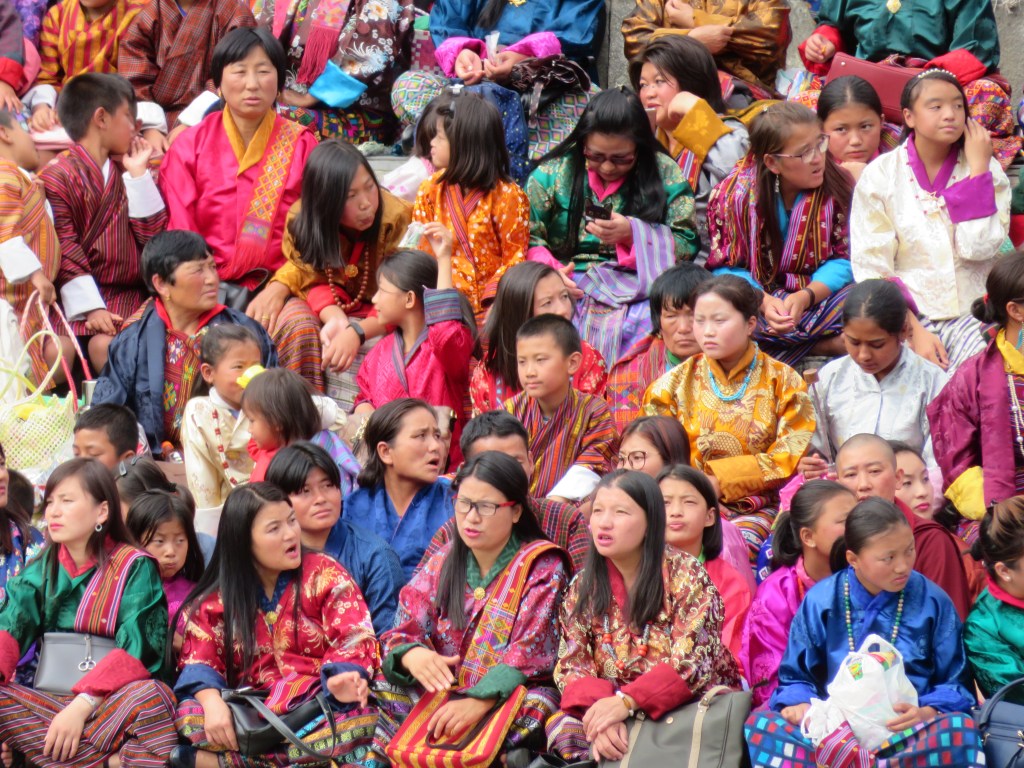
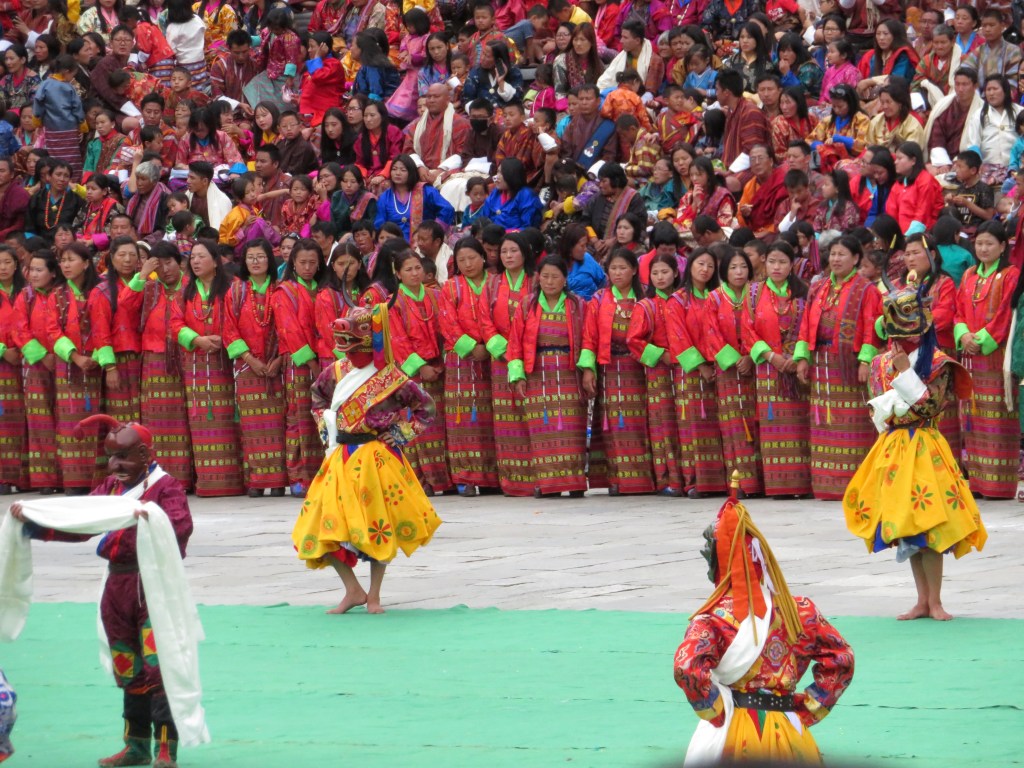
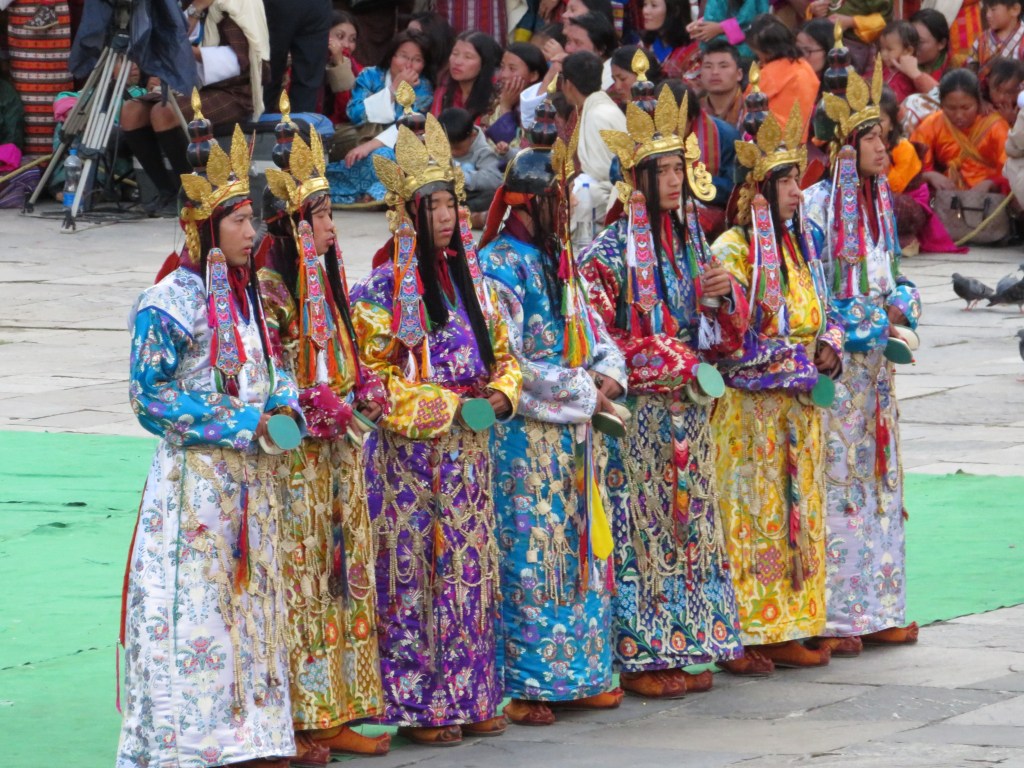
Tshechu around the country is an opportunity for families, friends and communities to come together, sometimes the only opportunity for those who live remotely. A time of celebration, it is customary to wear only your finest clothing and jewelry. Kiras may take over a year to weave or cost a year’s salary. The riot of colors and pattern is astonishing.
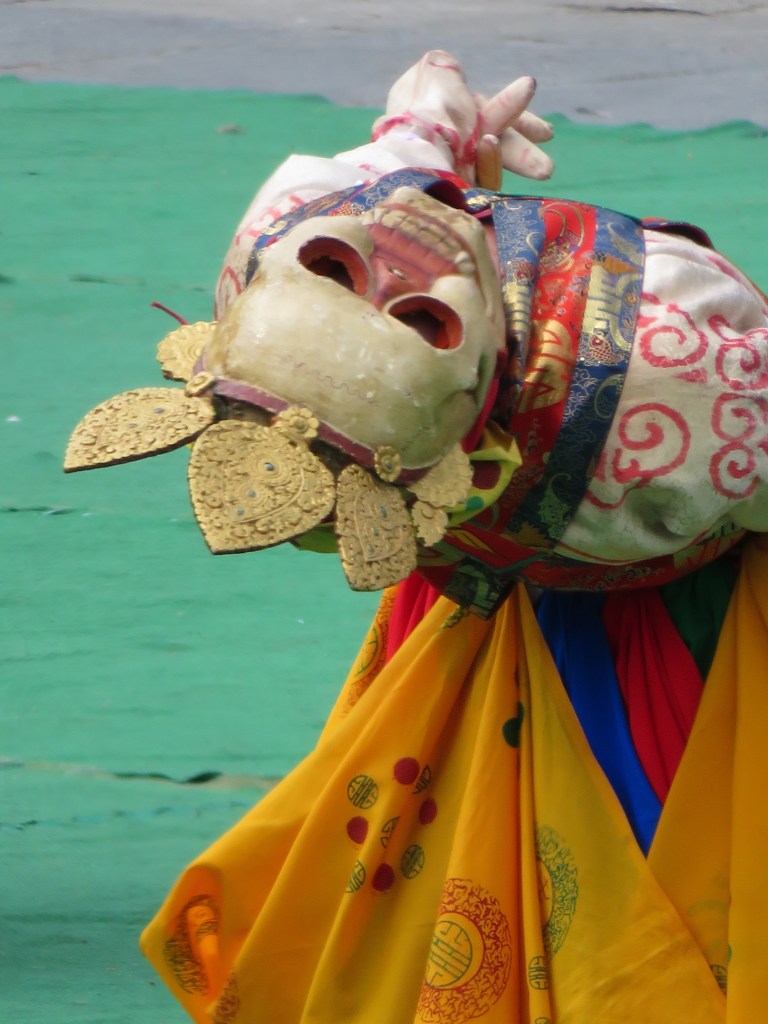
First up: Lord of Cremation Dance

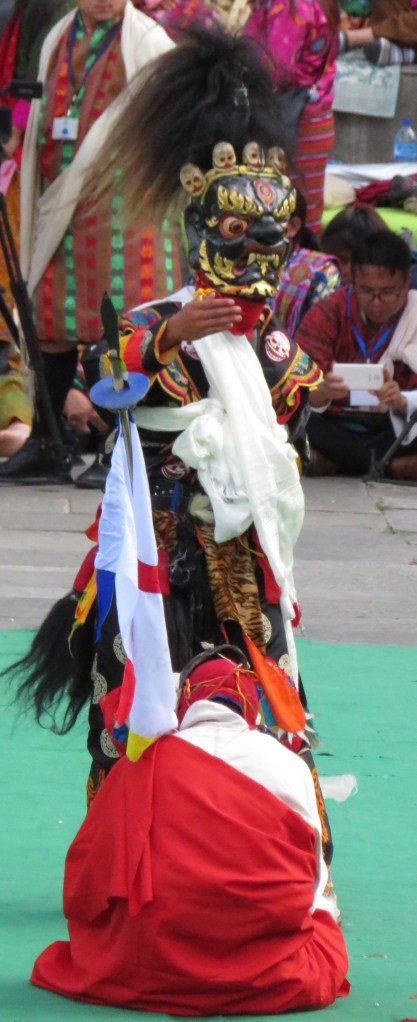
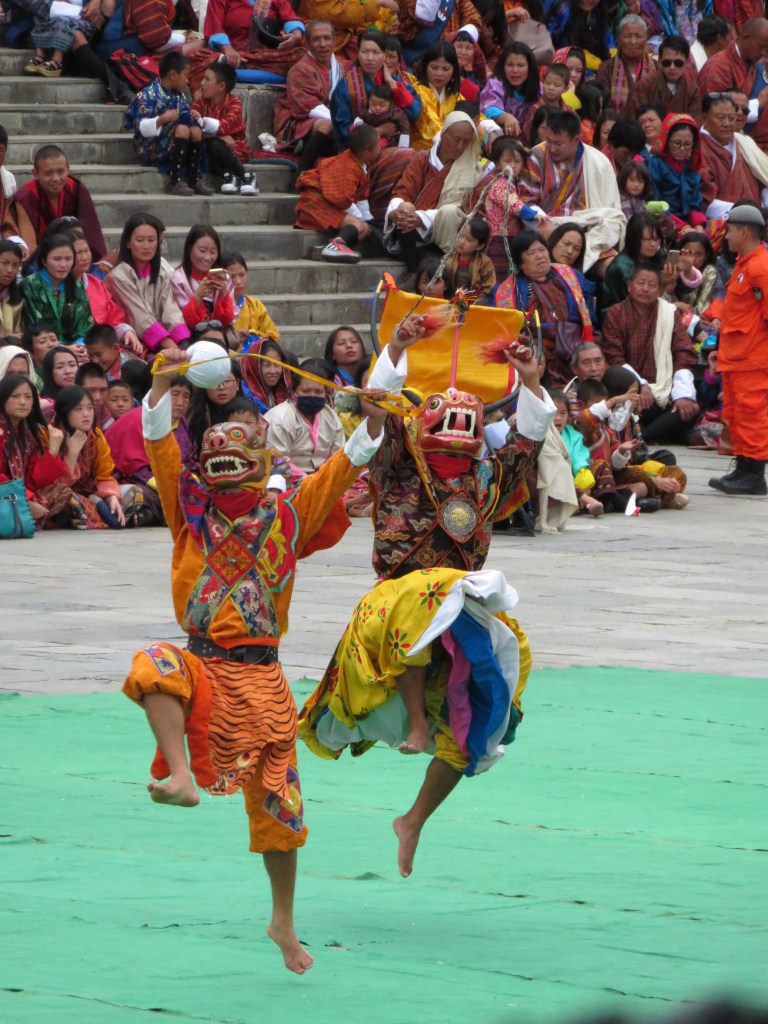
Four masked dancers remind the viewers of death, engendering thoughts of the inevitable truth of impermanence. They bend deeply backward, touching the ground behind and beneath them with the tip of their masks, calling on the earth deity to liberate the spirits of the deceased.
Wrathful Dance (Tum Ngam Cham)
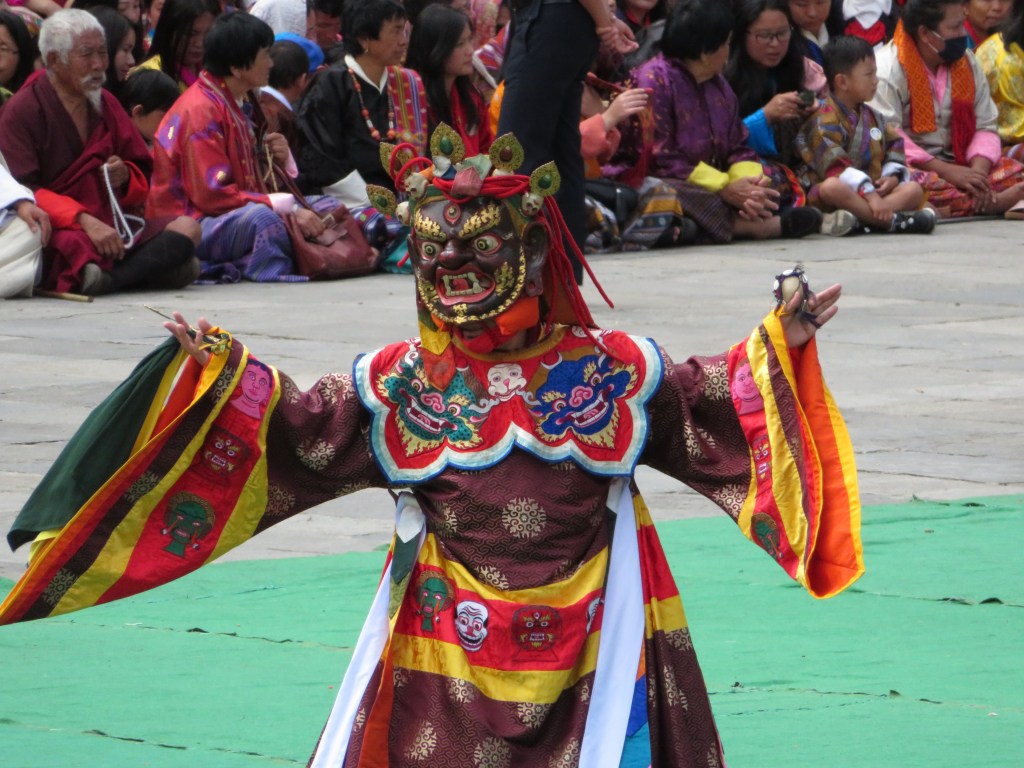
The intention of this dance is to destroy the notion of dual appearance for both the viewers and the dance performers. Crimson masks symbolize the wisdom of discrimination. A black scorpion in the right hand represents the destruction of anger. The head dancer carries a thunderbolt in his right hand while the other twelve monastic dancers clasp scarves of five colors, representing the five wisdoms of the Buddha.
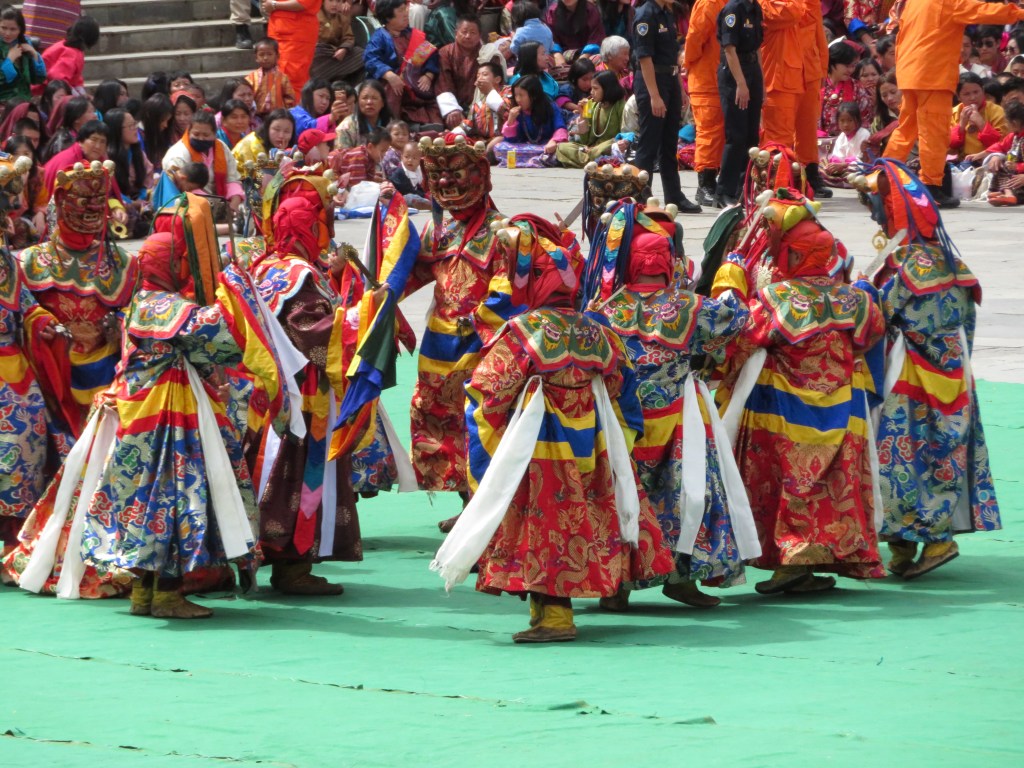
The Intermediate State Dance (Bardo Cham)

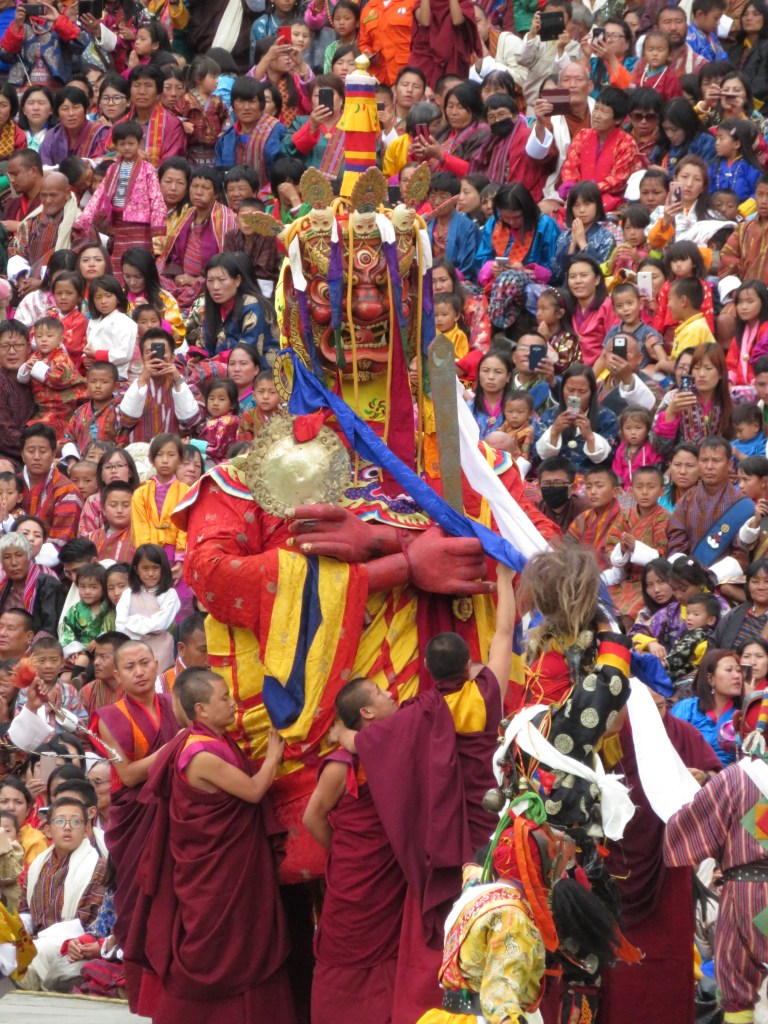
The Lord of Death, an emanation of Avalokiteshvara, carrying a karmic mirror in his hand
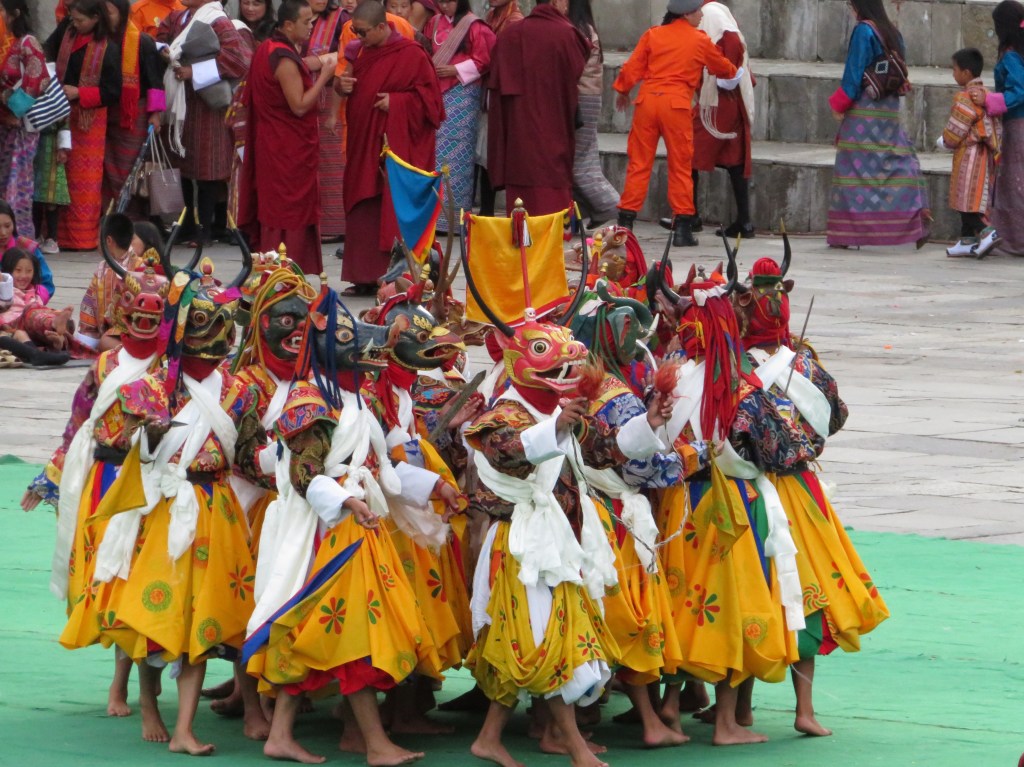
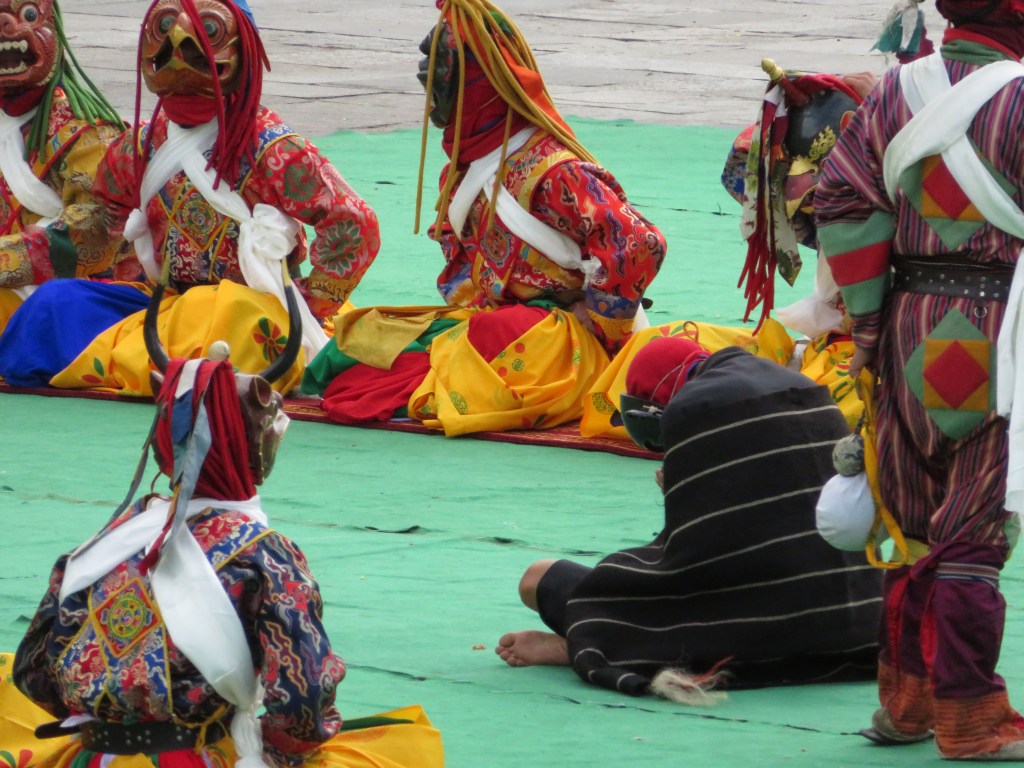
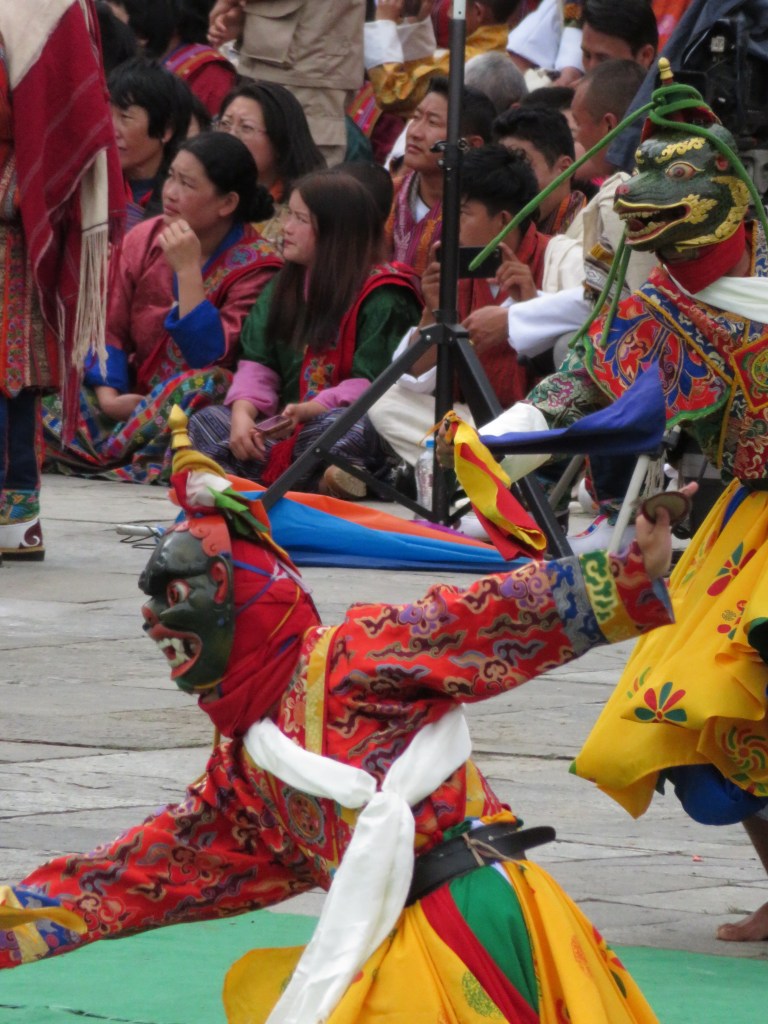
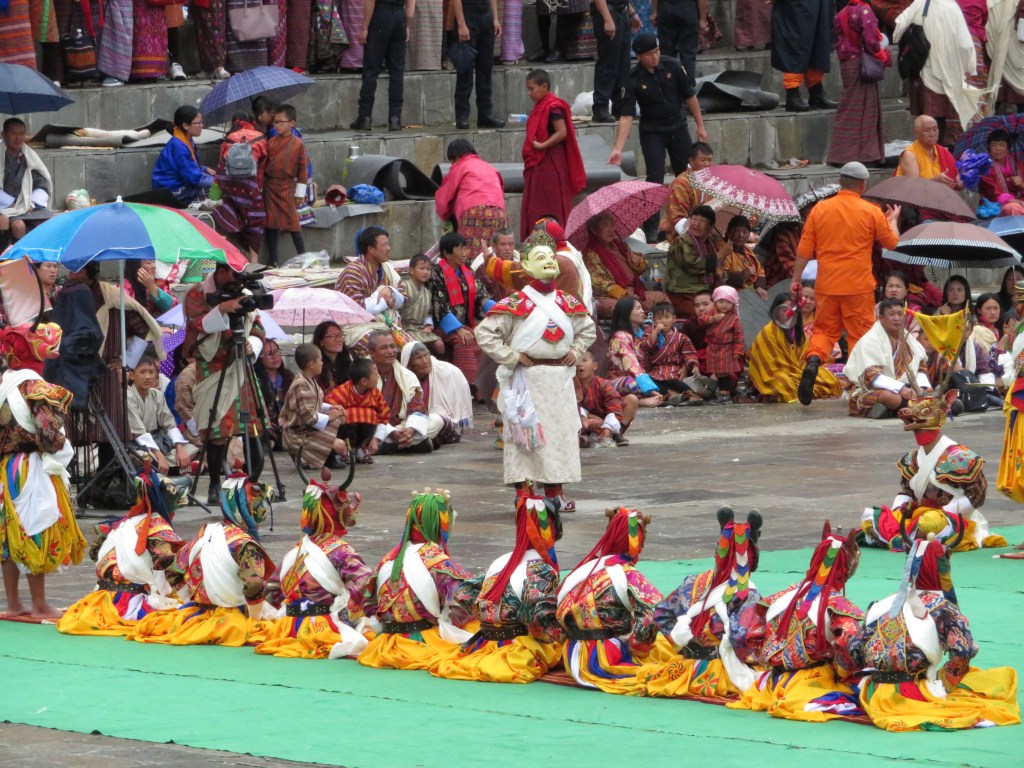
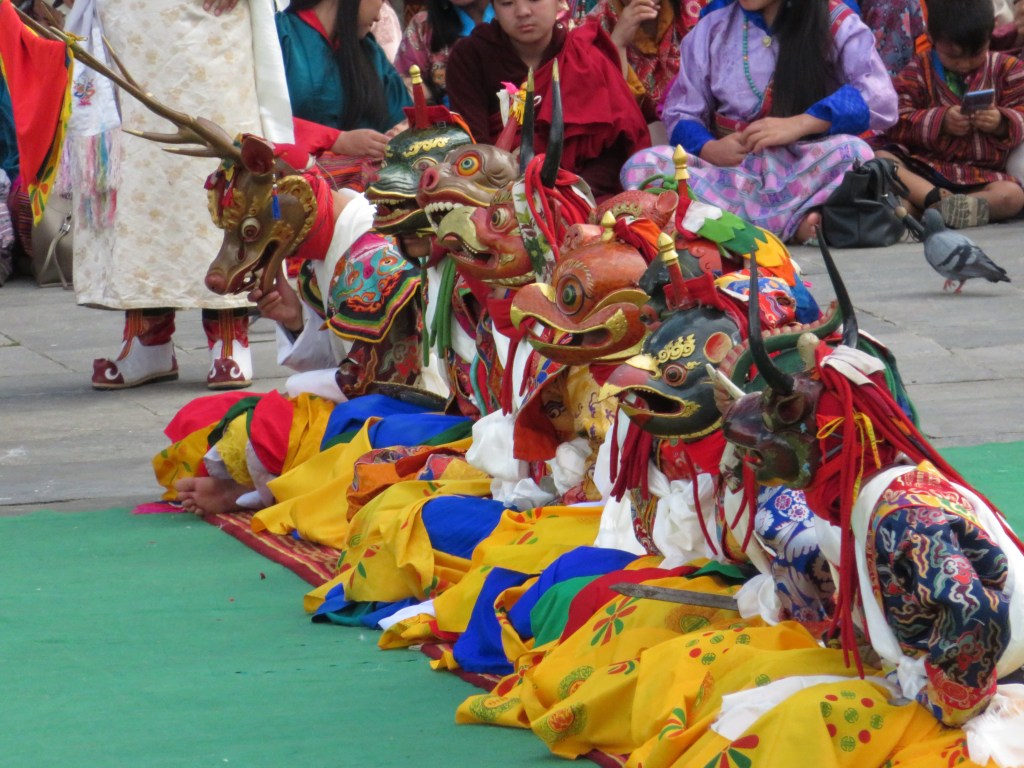
The Bardo Cham is a very complex and intricate dance, revealed in the 14th century. It takes over two hours to perform. The Lord of Death is led by a Black Demon, holding the blue scarf, and a White God, holding the white. As the dance progresses, the performers sit in two rows, dancing one at a time, allowing them much needed rest. An Ox-headed dancer leads the right hand row while the Stag-headed dancer leads the right.
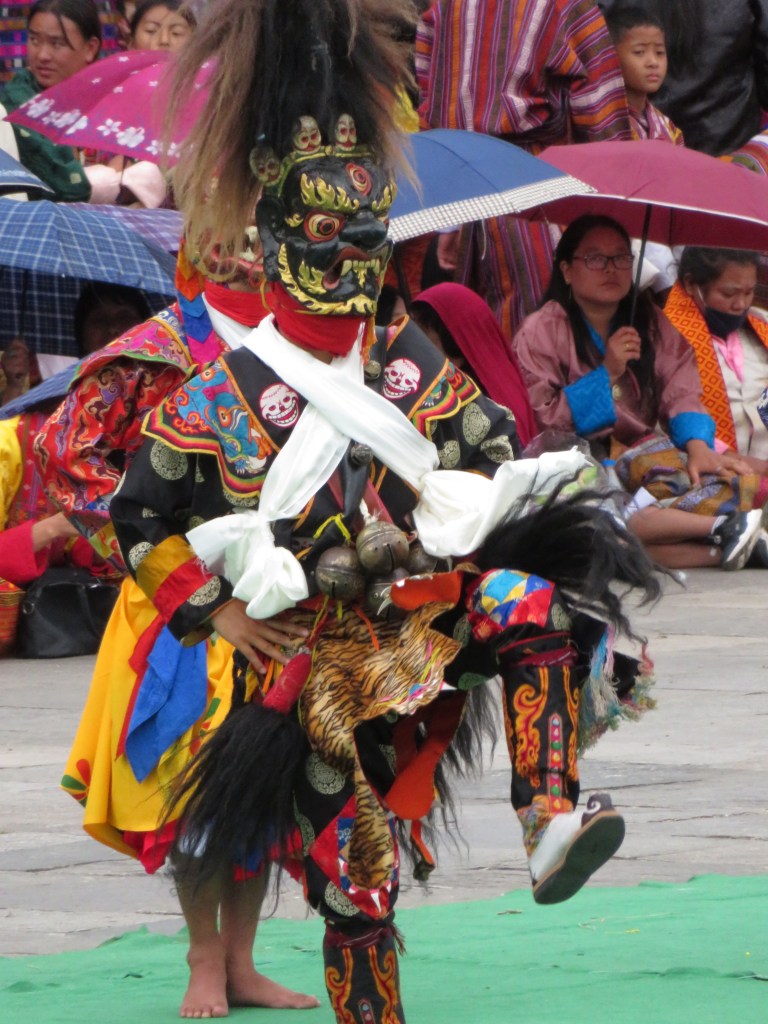
The Bardo is the state where the departed spirit exists with the mental body (yid-lue) for a period of forty-nine days following death and before the next rebirth. The significance of this dance is to remind people to be mindful during day-to-day life, as each choice has karmic effects. These effects will accumulate throughout life and then determine the nature of the next rebirth. The Bardo Cham illustrates the impermanence that surrounds all beings, and the ever-present reality of death. Specifically, it illustrates what happens during the Intermediate State, and how the spirit undergoes judgment as the result of actions during life.
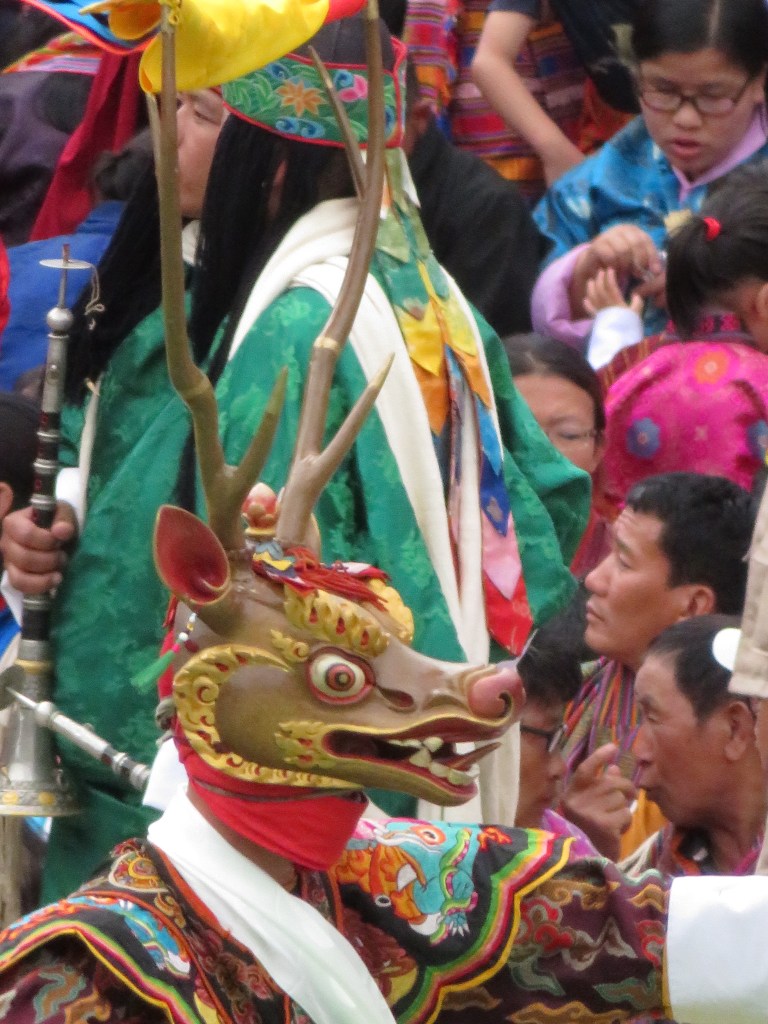
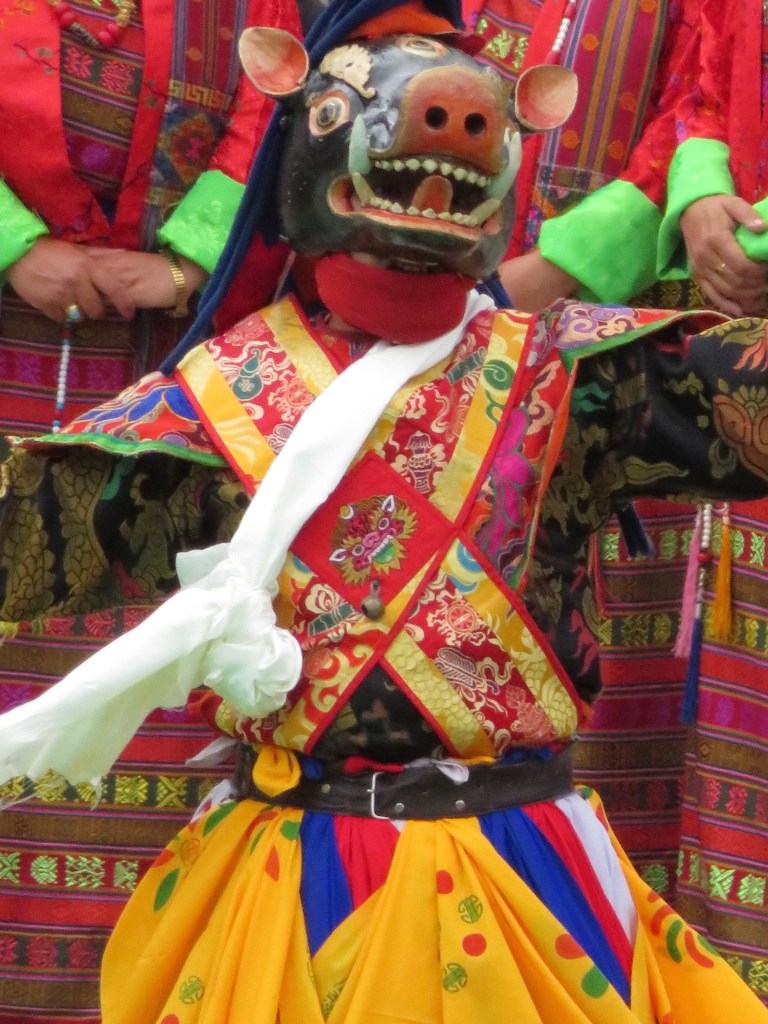
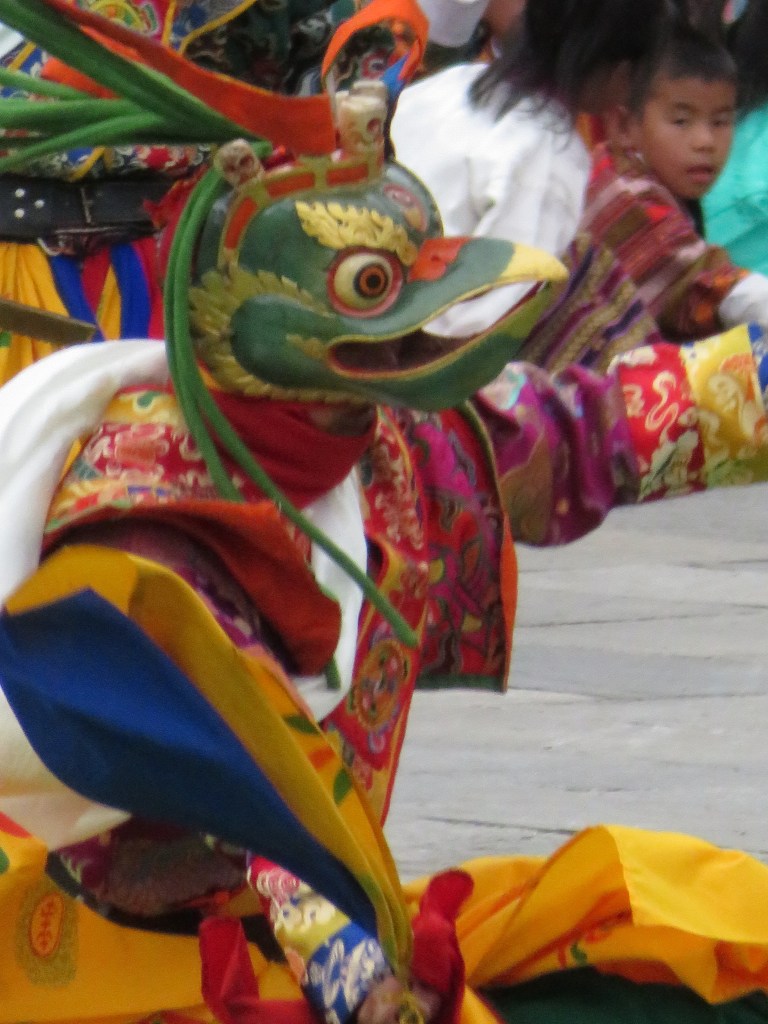
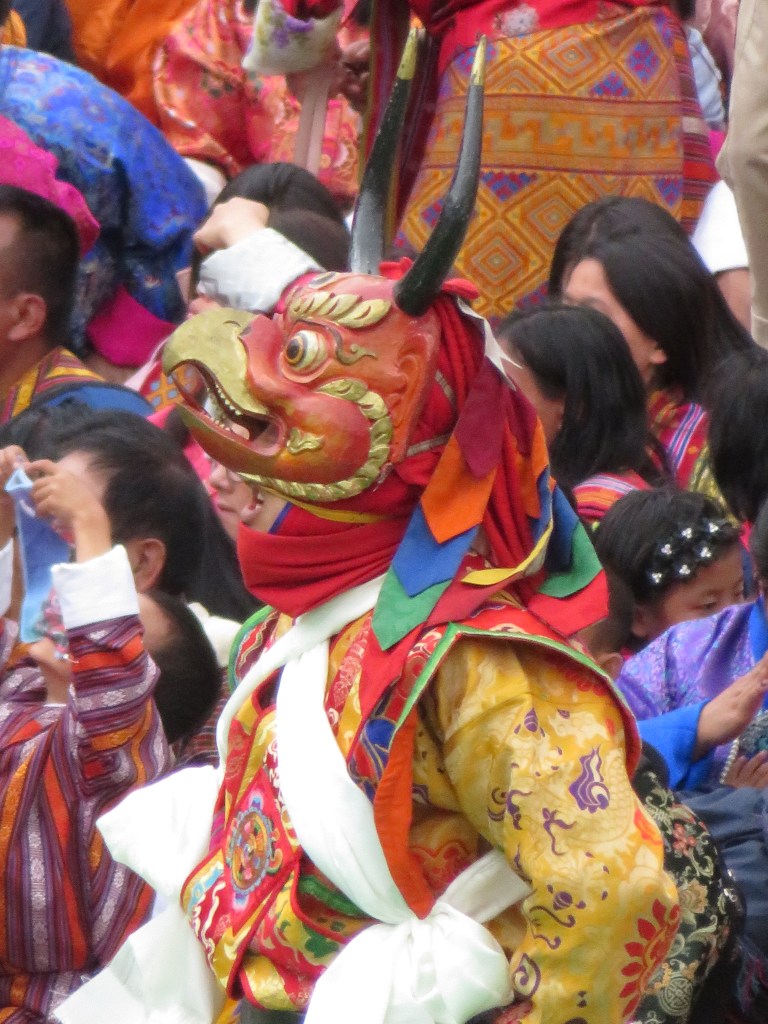
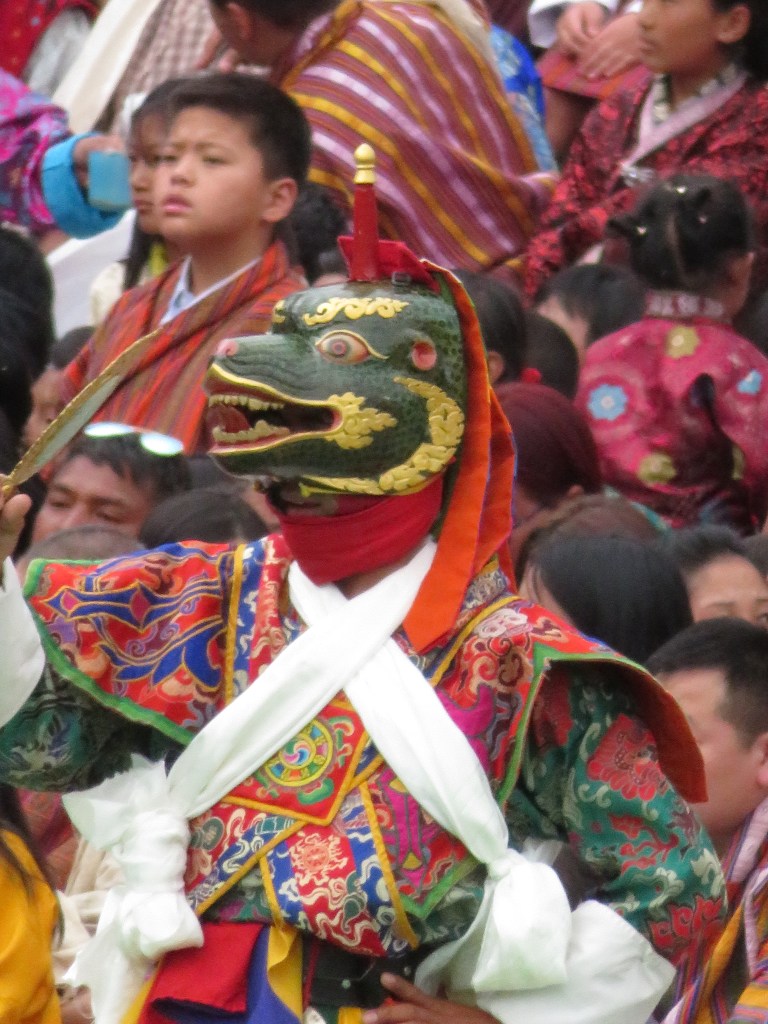
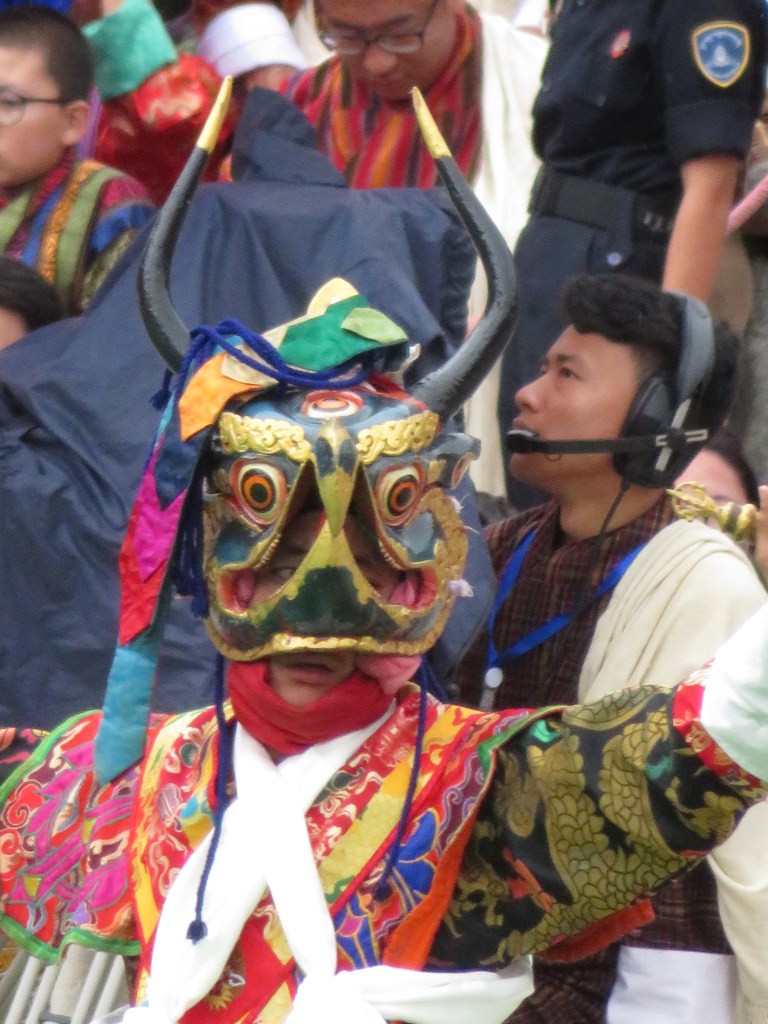
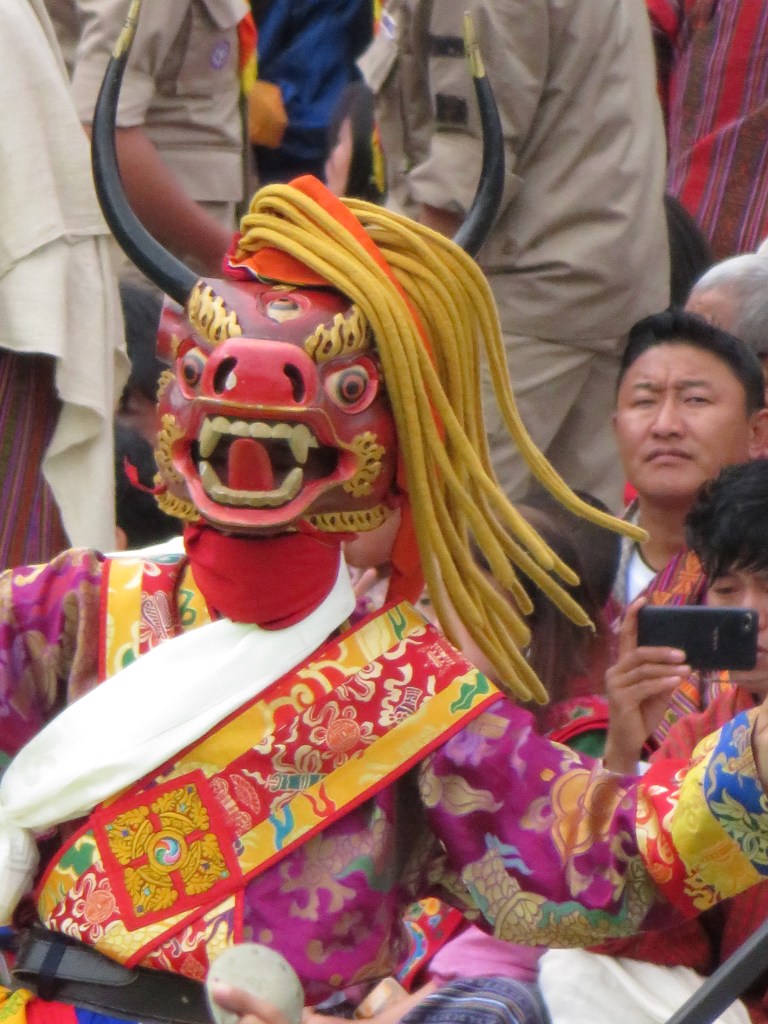
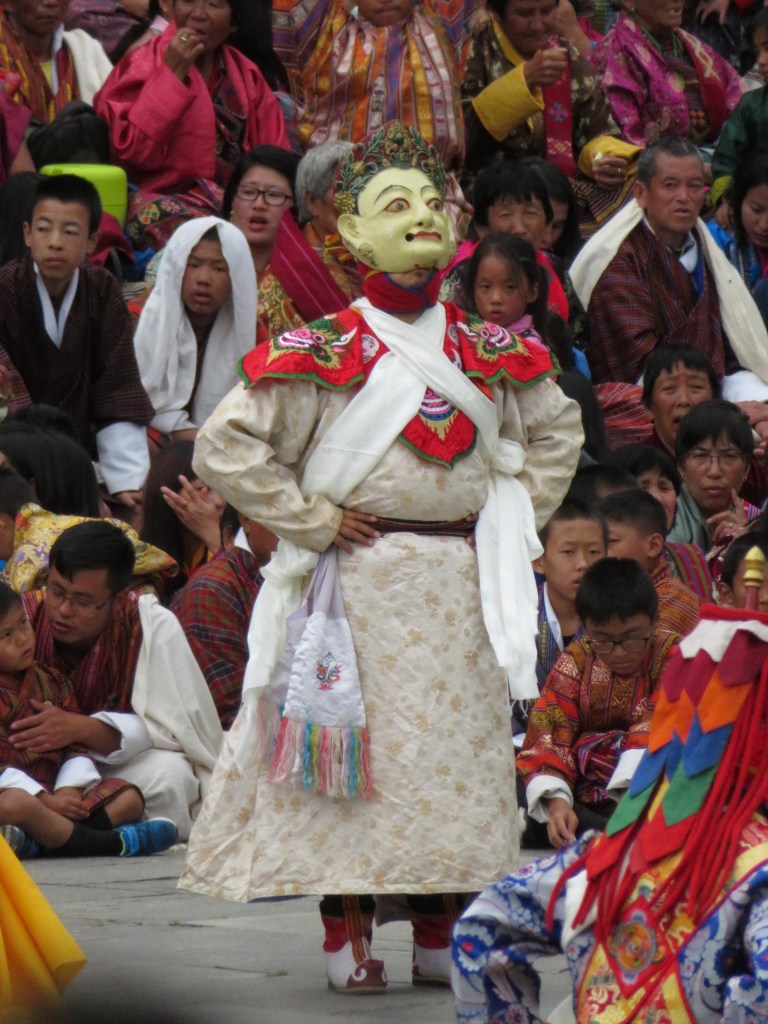

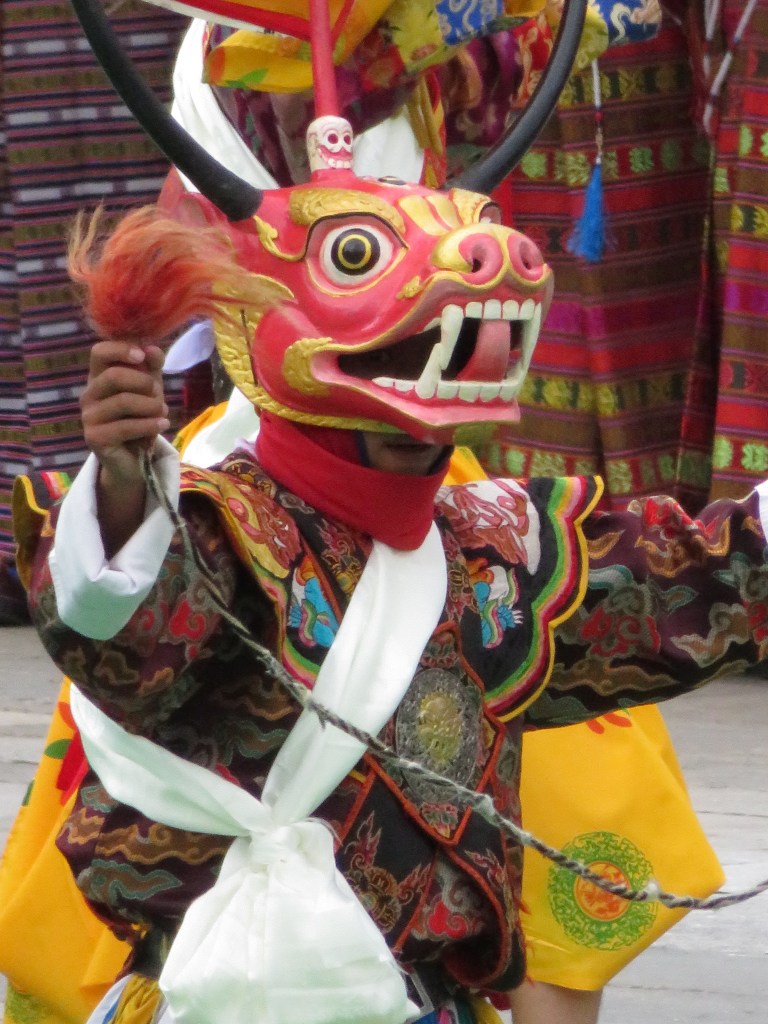
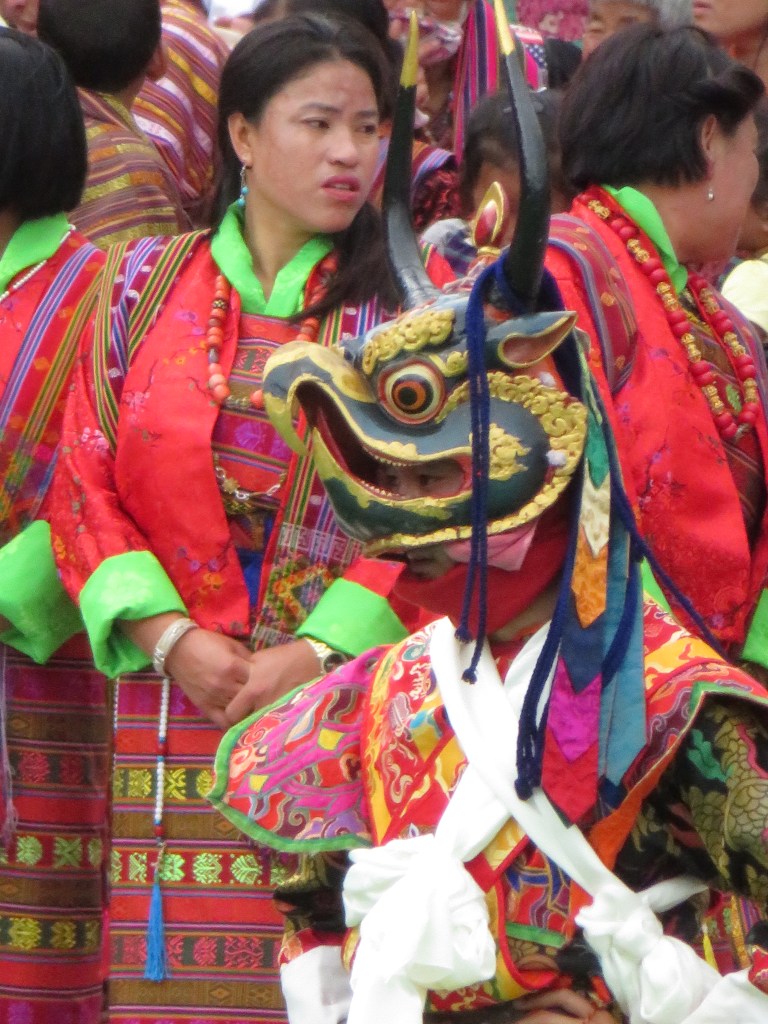
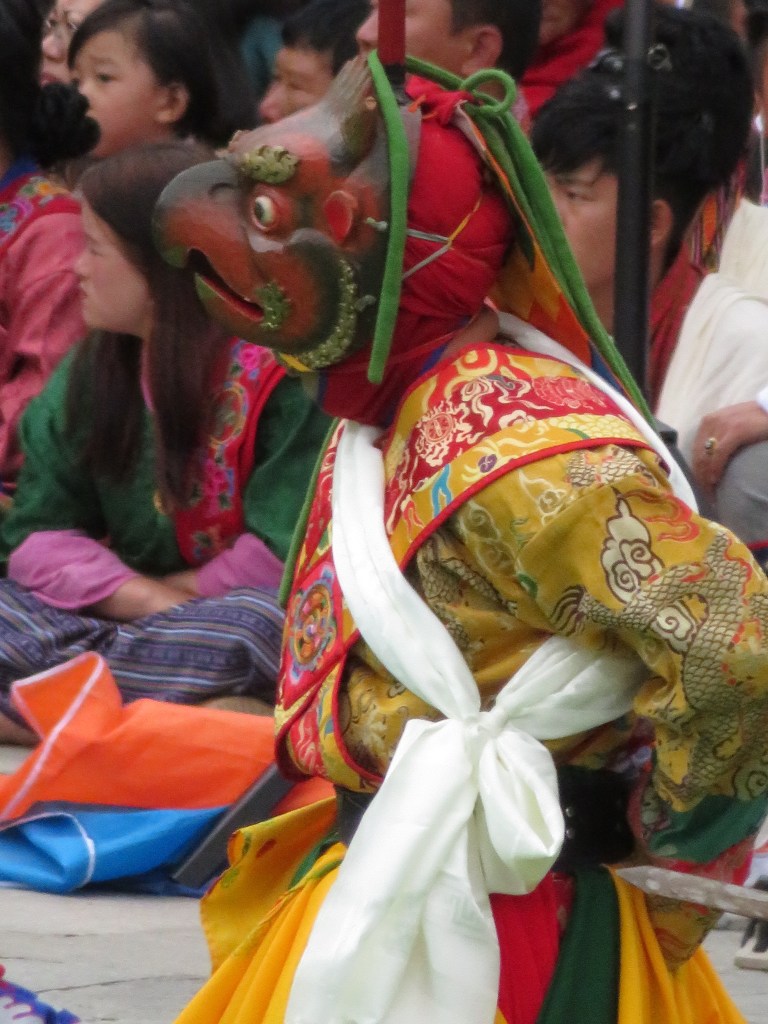

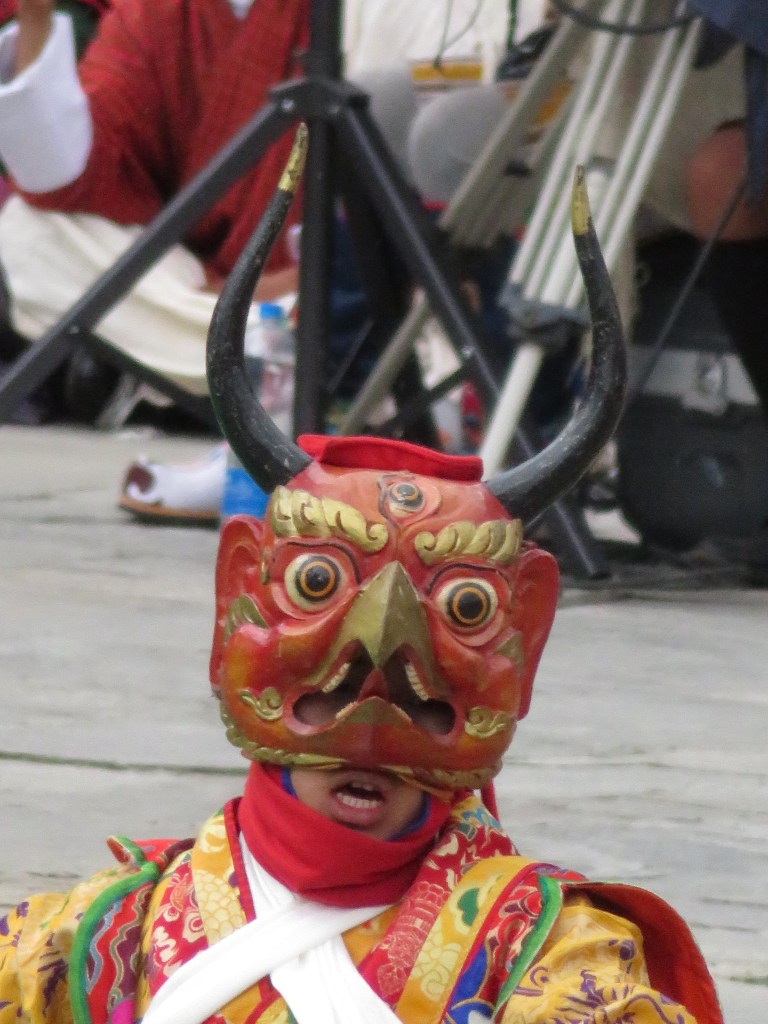
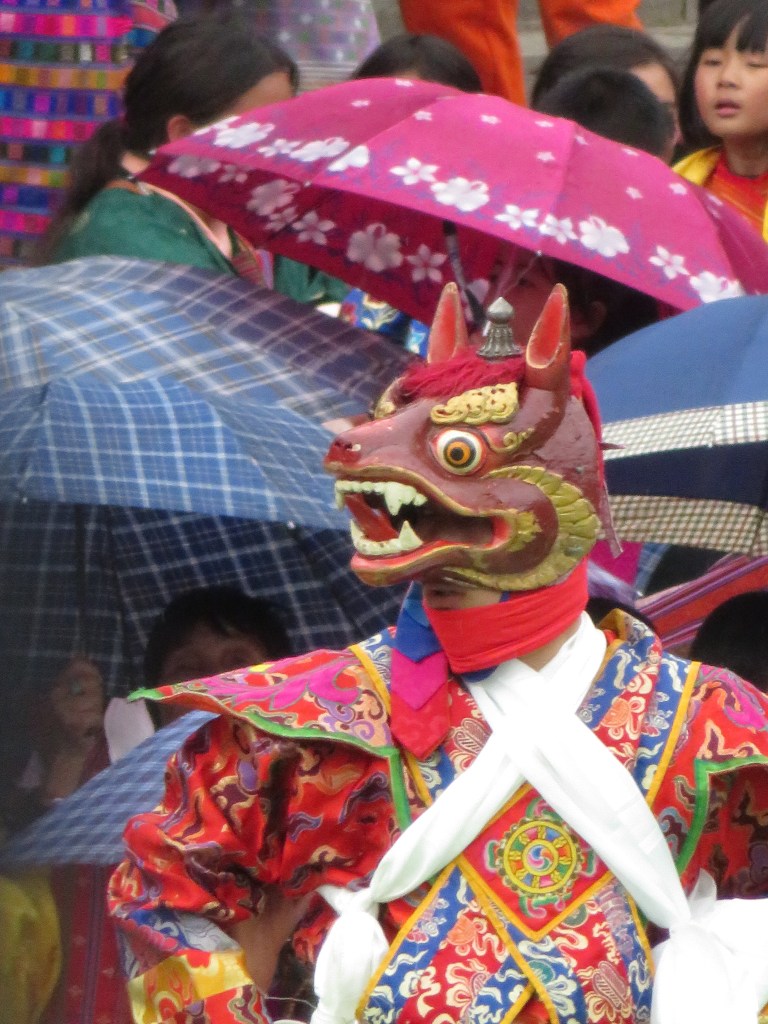
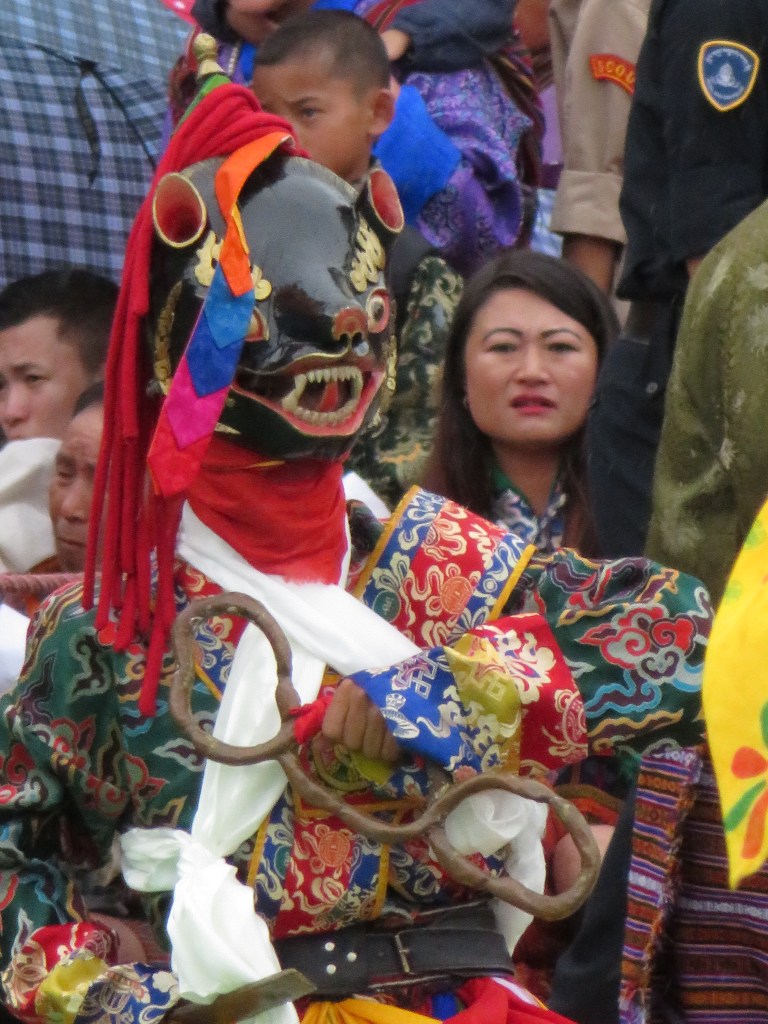
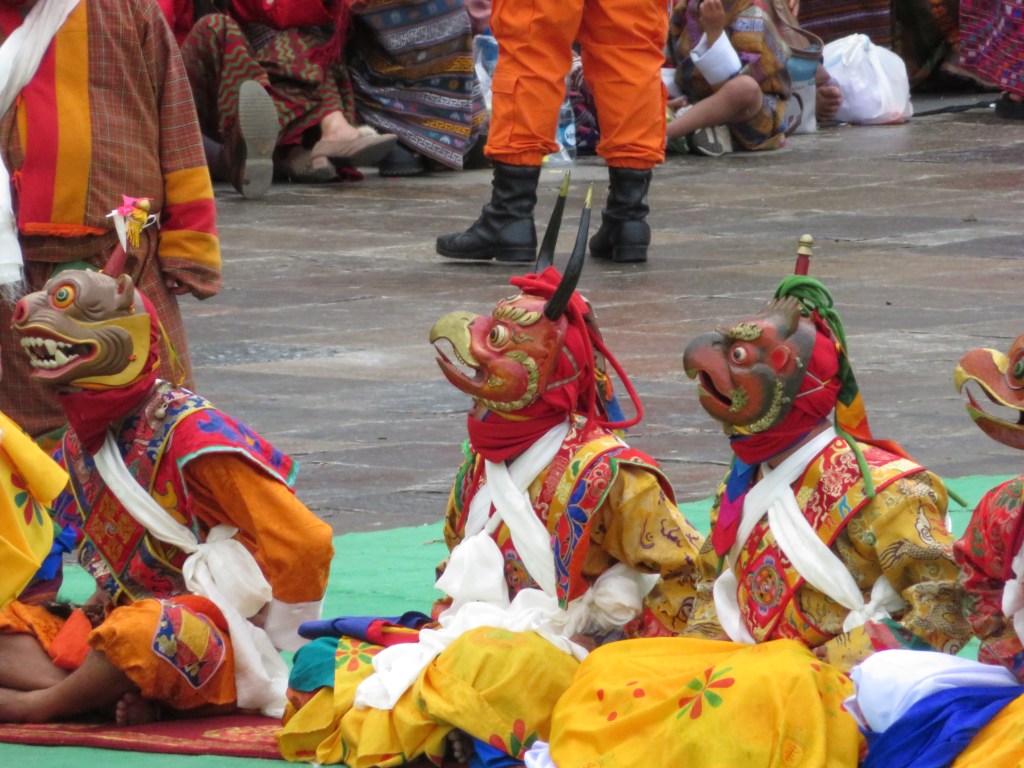
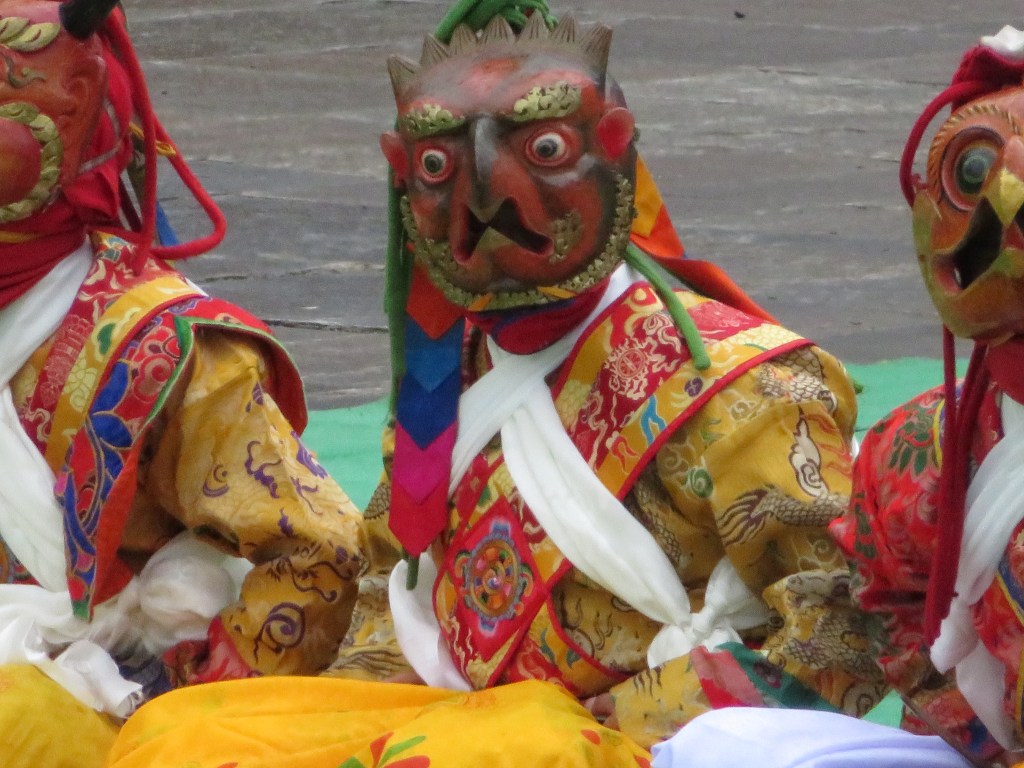
Photos of a few of the twenty-eight dancers who each wear a different animal mask, and the White God. As the deceased encounter these animal-faced beings in the Bardo, the beasts attempt to disrupt their journey on to the next rebirth. This dance explains how the animal faced guardian deities in the Bardo State judge the deceased’s evil and virtuous deeds.

The 70th and Present Je Khenpo, His Holiness Tulka Jigme Choedra, presiding over the Tshechu. The senior religious hierarch of Bhutan, he leads the Commission for Monastic Affairs overseeing the Central Monastic Body. Aside from the King, only the Je Khenpo can don the saffron Kabney.

Wow! That’s a lot to digest. It was an incredible day of pageant and an amazing day for photos. Feel free to quit here and come back later. I have so many wonderful photos, I’m posting some randomly below.
Descriptions have been freely quoted or paraphrased from “Invoking Happiness: Guide to the Sacred Festivals of Bhutan & Gross National Happiness” by Khenpo Phuntshok Tashi.
 Our Seasons in Shangri la
I feel so grateful that you are sharing all of this with us.
LikeLike
Wow. Just wow. You look great in your Bhutanese dress! Steve, did you learn the complicated procedure for putting it on? Also, I was thinking that learning all this deep Buddhist knowledge can’t but help with adapting modern psychology to people in Bhutan.
LikeLike