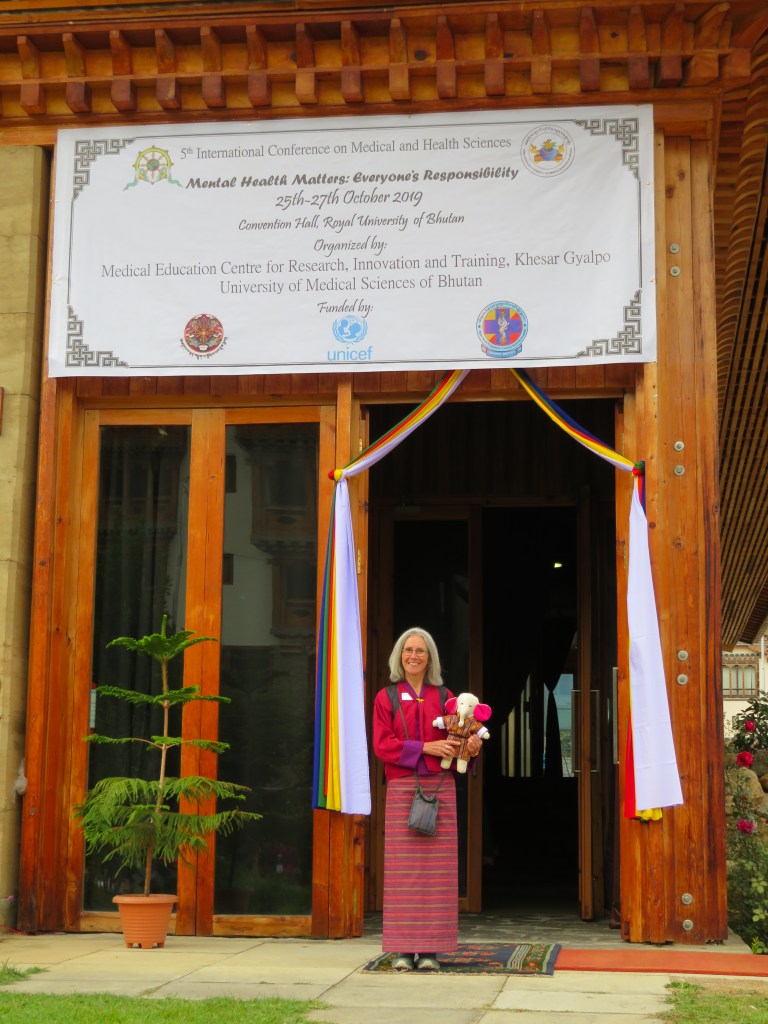
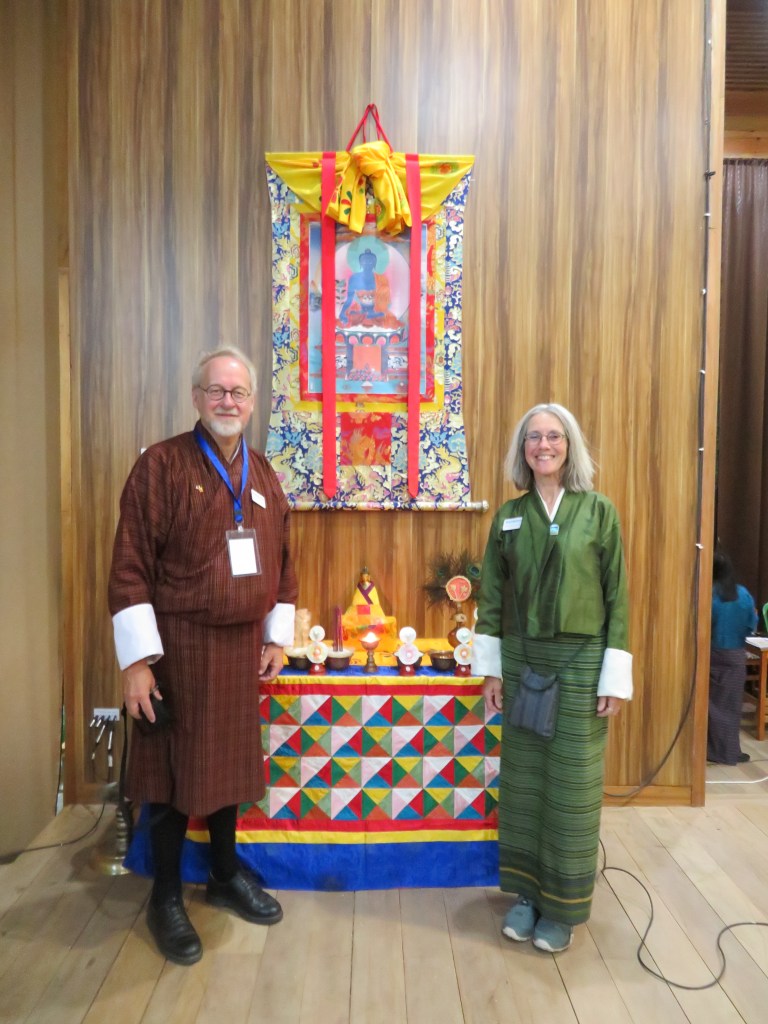
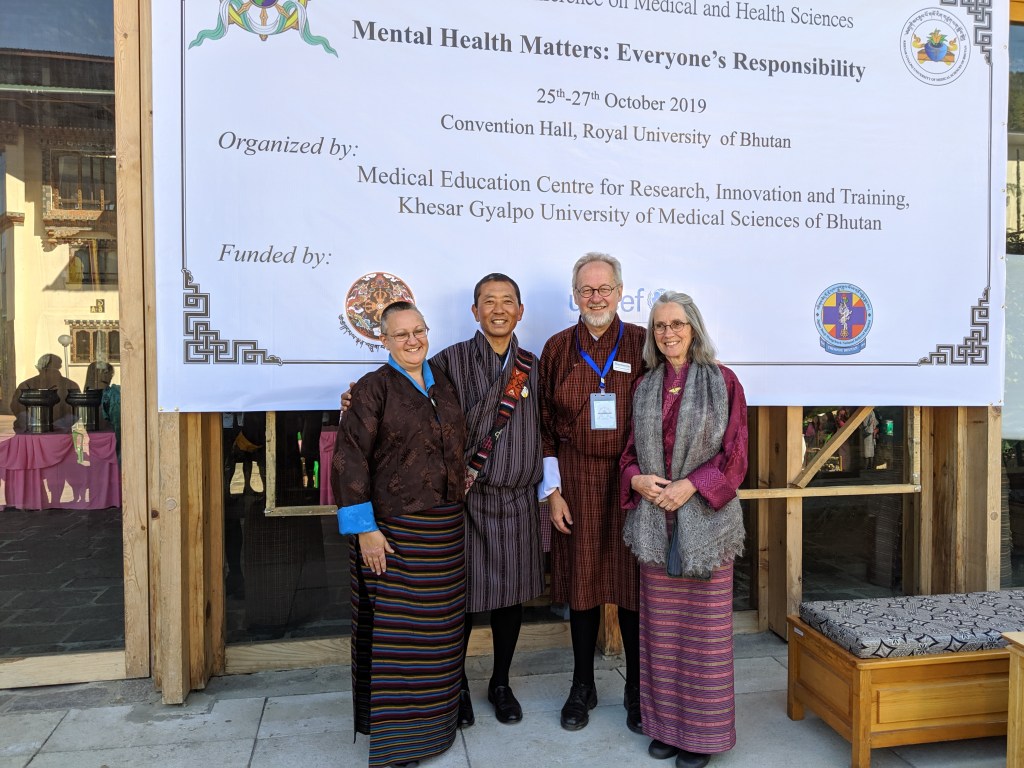
Margaret and I had the pleasure this past weekend of attending the 5th International Conference on Medical and Health Sciences with the theme of Mental Illness Matters: Everyone’s Responsibility. The conference took place at the Royal University of Bhutan in Thimphu. There were attendees and presenters from Bhutan, Australia, Japan, Norway, the Netherlands, the UK, the US, India and Thailand. The theme being Mental Health was a welcome coincidence with our stay and I had the honor to participate as an HVO panelist in the pre-conference workshop as well as enjoy the presentations of my new colleagues here. The conference was sponsored by Khesar Gyalpo University of Medical Sciences, Jigme Dorji Wanchuck National Referral Hospital and UNICEF.

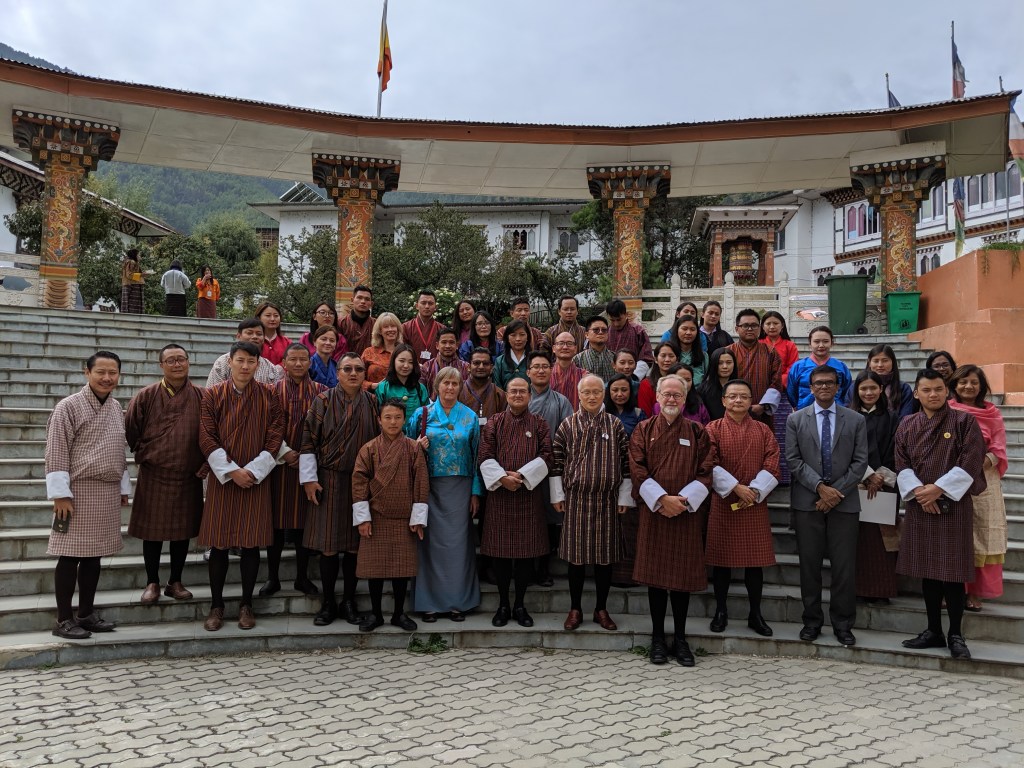
Left to Right: Dr. Steve. Dr. Chencho Dorji, Bhutan’s first psychiatrist. Dr. Damber Nirola, Chair of the Psychiatry Department at JDWNRH, clinical nurses Pema Wangchuk from the Eastern Regional Hospital in Mongar and Zimba Lethro from JDWNRH. My role was to discuss contrasts between Bhutanese and American psychiatry and the potential for a uniquely Bhutanese psychiatry grounded in Buddhist philosophy of mind, the latter a theme that came up throughout the conference.
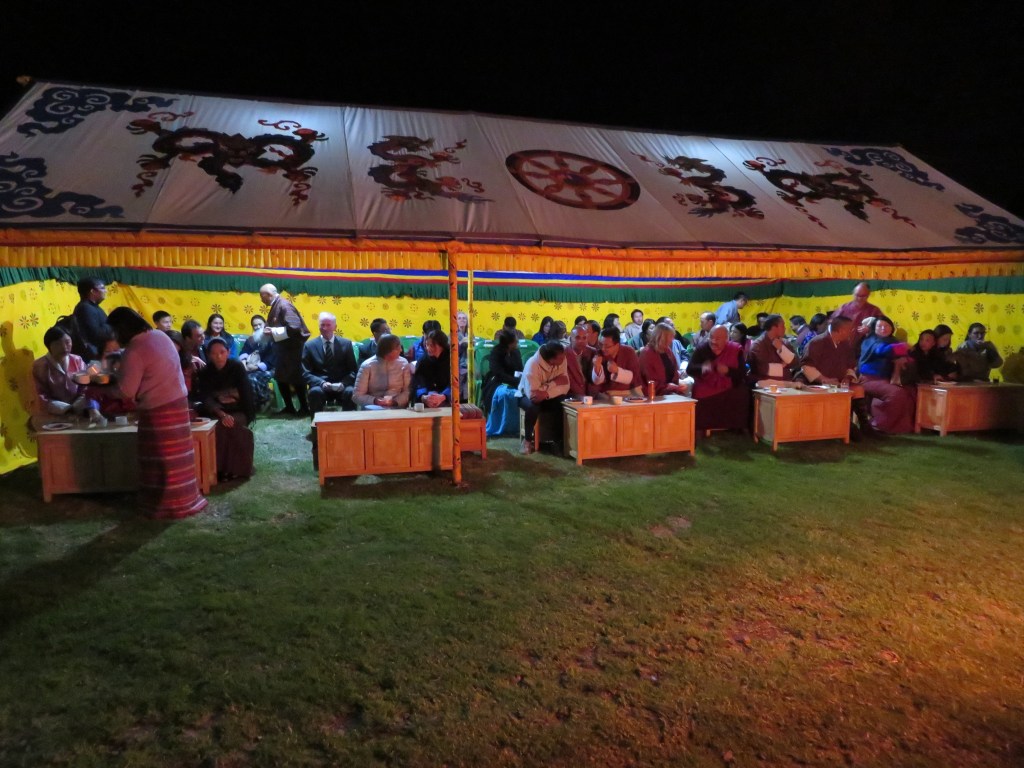

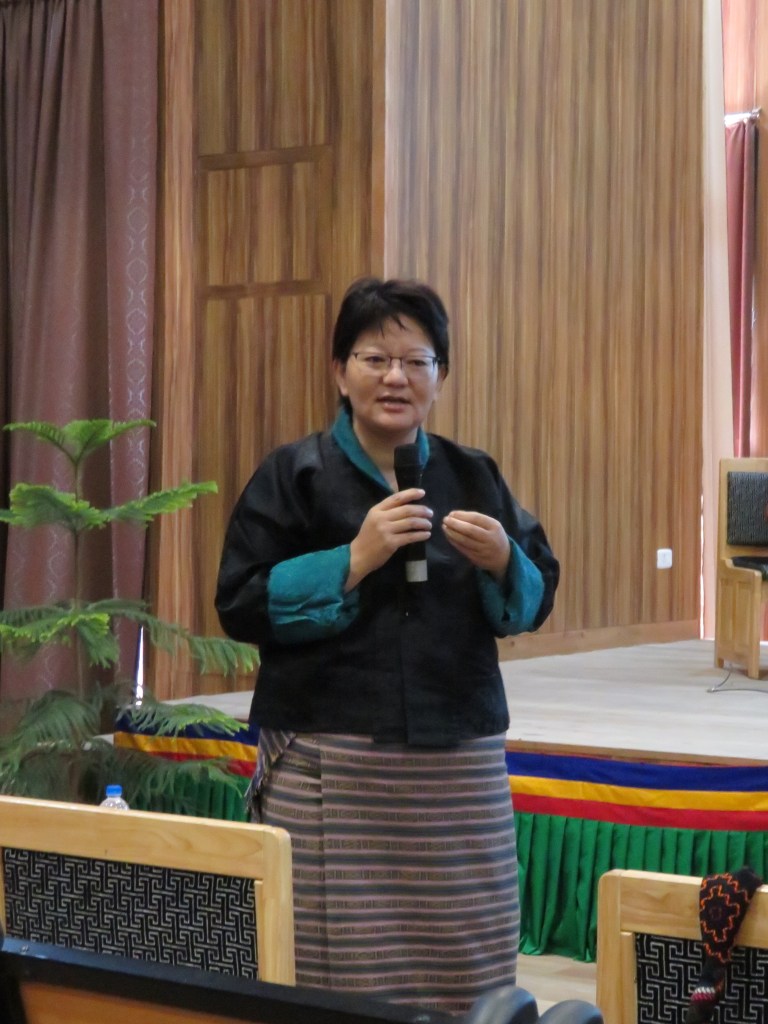
Her Excellency was the Guest of Honor for the opening ceremonies. She discussed the Thousand Golden Days program, the thousand days being those from conception through a child’s 2nd birthday, a national initiative to ensure quality universal prenatal and postnatal care, well-child care, vaccinations and developmental screening. Bhutan has recently introduced six months of paid maternity leave. If a mother is not employed, she will receive a six month stipend while staying at home to care for her child!

In Bhutan, the only opiate available for abuse is Tramadol, known as ‘SPs’ or Spasmos. Interestingly, if you are caught with 21 or more capsules and have a positive urine tox screen, you are referred a government sponsored forensic drug rehabilitation program. However, the same quantity with a negative tox screen will lead to a five year prison sentence. Mr. Dorji reviewed a study of those offenders currently incarcerated and presented the results as supporting decriminalization.

Ms Pem presented study findings that document an alarmingly high rate of elevated blood levels in children from Phuentsholing and Thimphu. Origin of the lead has yet to be established but lead paint from India and lead contamination of imported food are suspects.

Mr. Wangchuk presented research on resiliency factors and mental health in 300 high school students from Eastern Bhutan. Interestingly, religiosity in his study did not contribute to adolescent mental health resiliency.
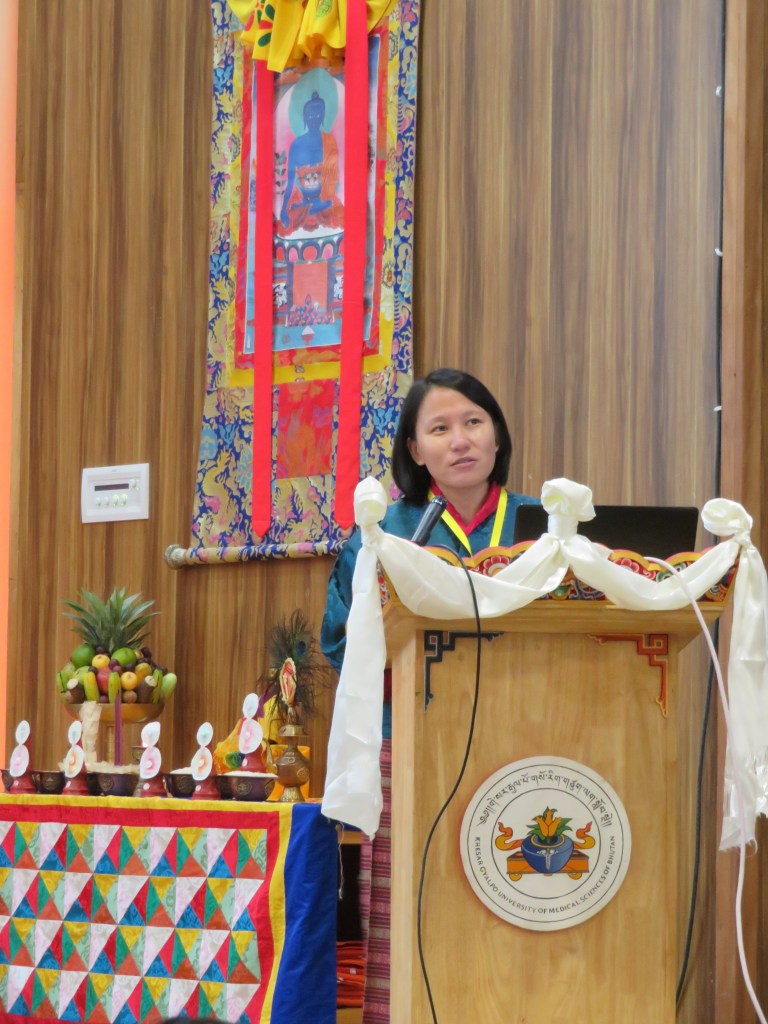
Development of Bhutan Child Development Screening tool
Prevalence of any disability among Bhutanese children age 2 to 9 is 21.3%. Working with the Ministry of Health and UNICEF, a brief, easily administered developmental screening tool was developed to enable early identification and intervention. Intervention services remain difficult to access but identification and quantification of the problems may facilitate allocation of greater resources.
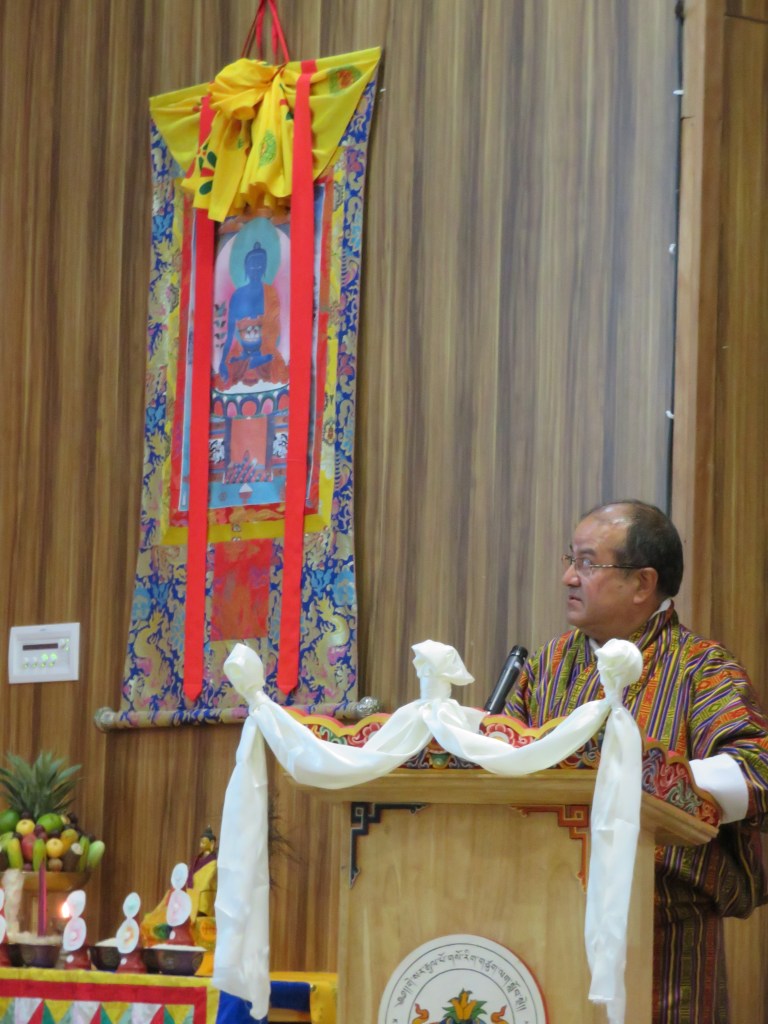
Alcohol and Substance Use Disorders in Bhutan.
Alcoholic Liver Disease is the largest cause of death in Bhutan
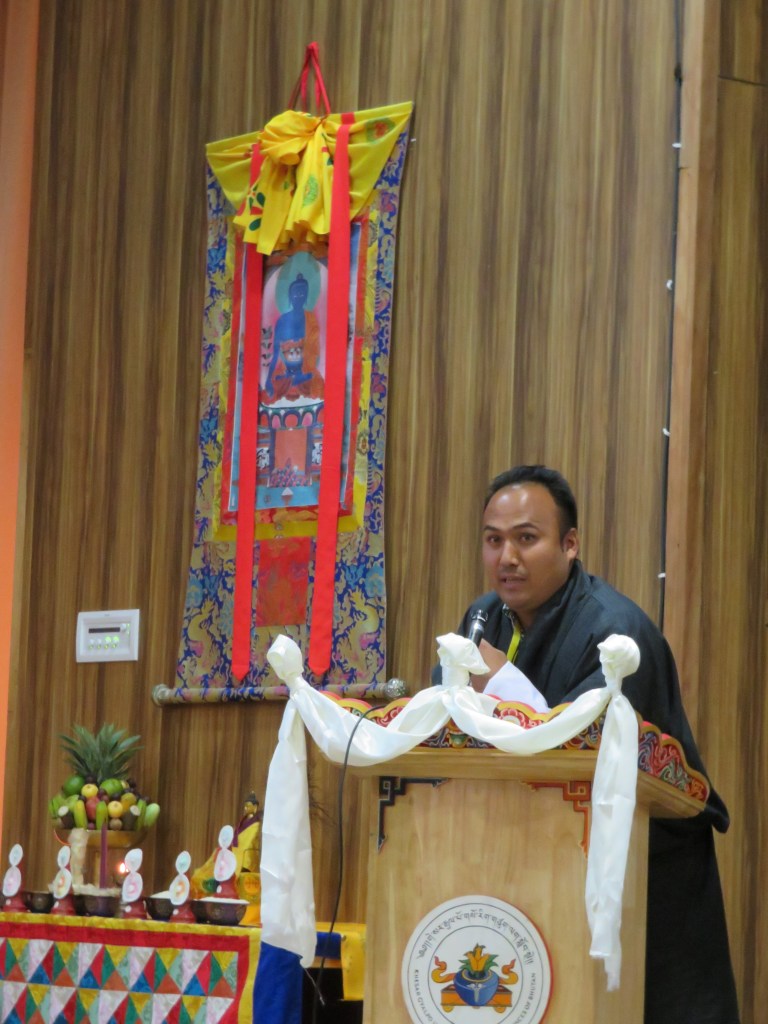
Epidemiologic Characteristics of Attempted Suicide Patients at JDWNRH
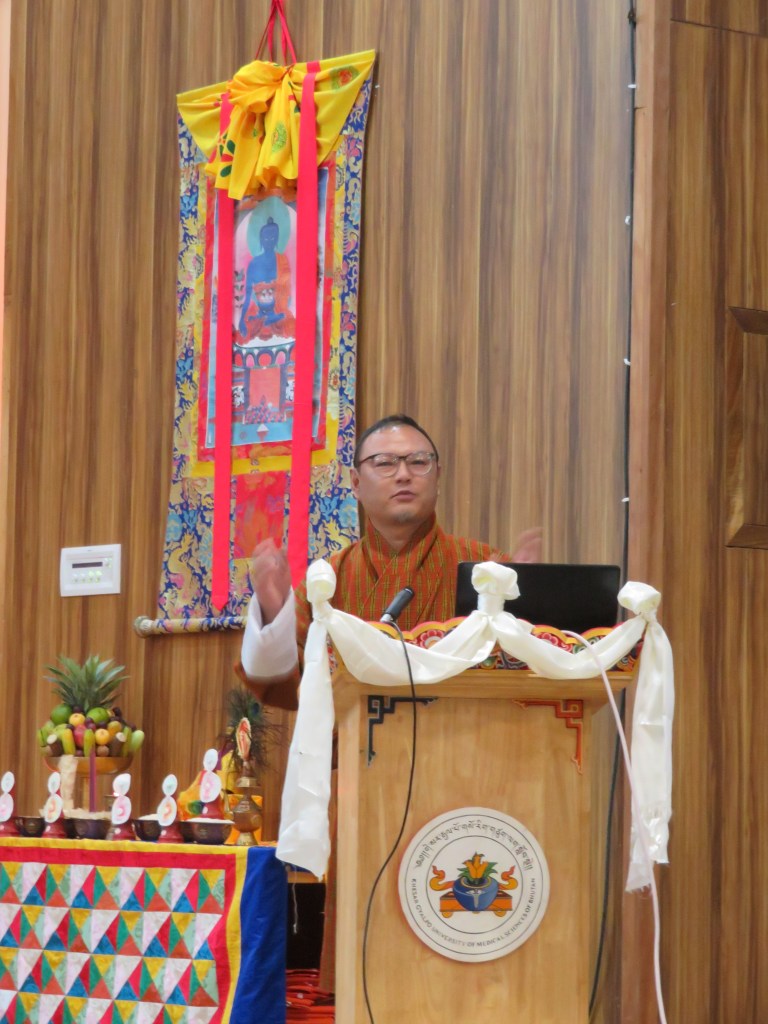
Interaction between Disulfiram and Betel Quid among patients admitted for alcohol detoxification.
Betel quid consists of a leaf from the betel plant, slaked lime (calcium hydroxide) and areca nut, sometimes with tobacco or spices. It is called doma in Bhutan, available in shops and from street vendors, and widely used. The psychiatrists I work with even chew or keep it tucked in their cheeks during rounds. It is a mild intoxicant and I am told it is addicting. Disulfiram is a medication prescribed to alcohol dependent individuals as a deterrent to drinking. Combined with alcohol, it makes the user very ill. This study showed a negative interaction between disulfiram and doma leading to two cases of shock requiring resuscitation and an intensive care stay.
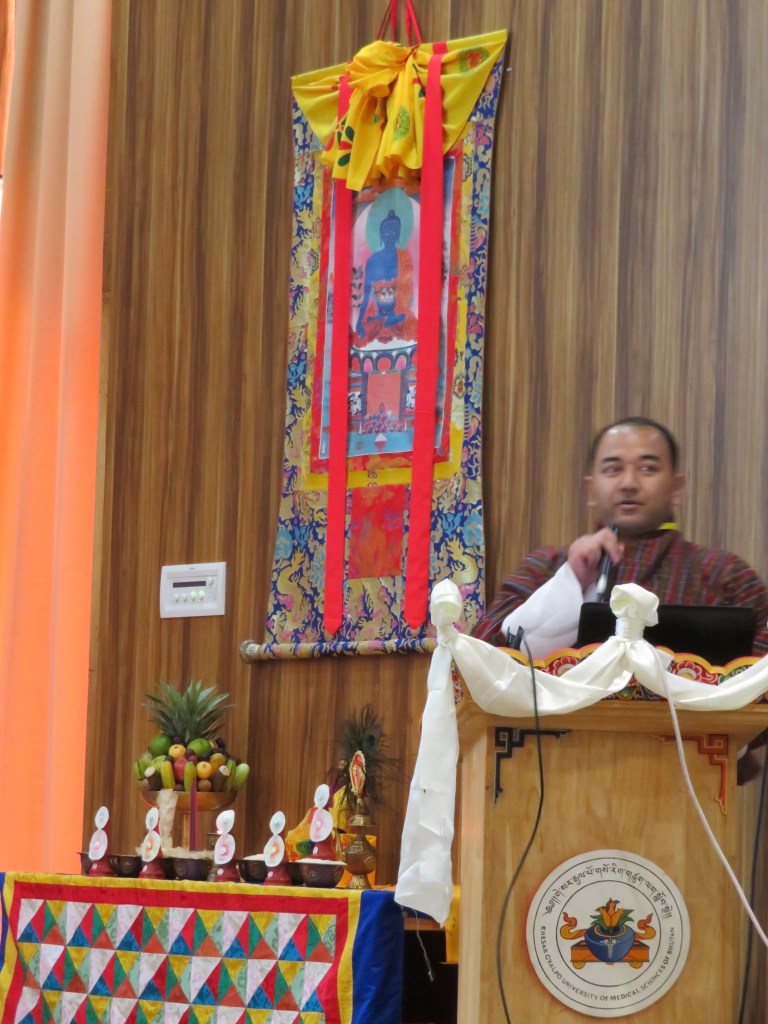
Infantile Beriberi presenting as Acute Infantile Encephalopathy
In collaboration with the Health Volunteers International pediatrician, Dr. Pradhan determined that a series of in hospital deaths in otherwise healthy infants under six months was related to a Vitamin B1/Thiamine deficiency, presumably related to breastfeeding from Thiamine deficient mothers. Empirically directed treatment has been highly successful in treating infants with this presentation. The results are being used to advocate for vitamin supplementation. The primary caloric source for most people in Bhutan is imported, washed and polished rice, low in Thiamine.
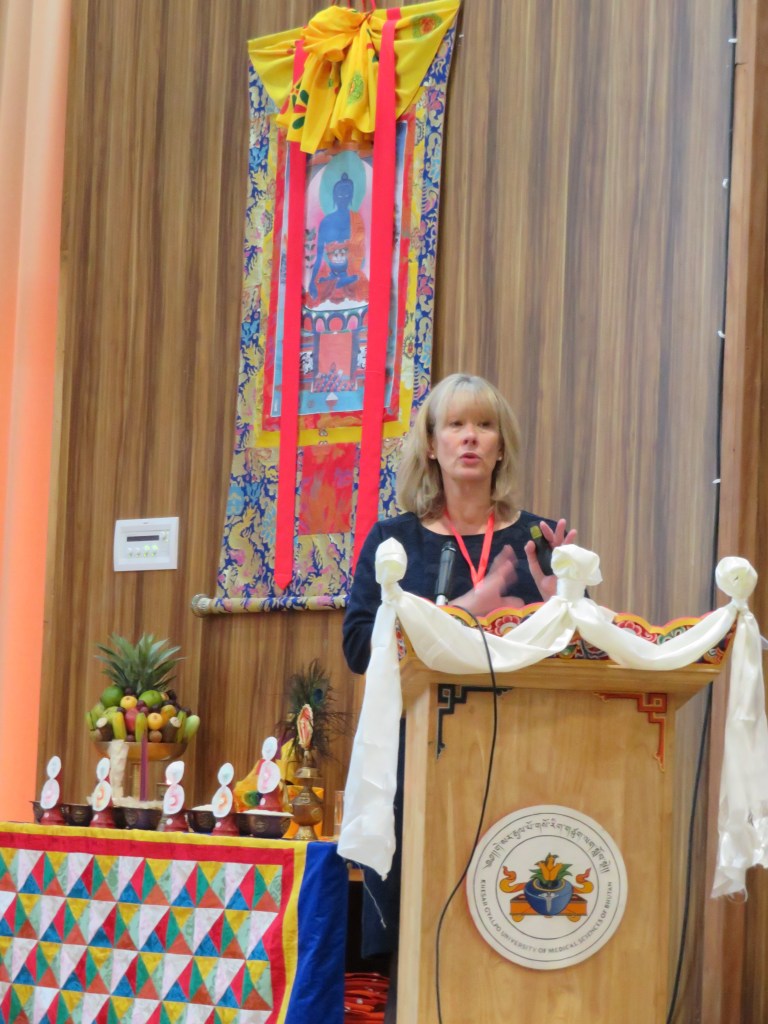
Founder, The Foundation for Mother and Child Health, UK
Perinatal Positivity
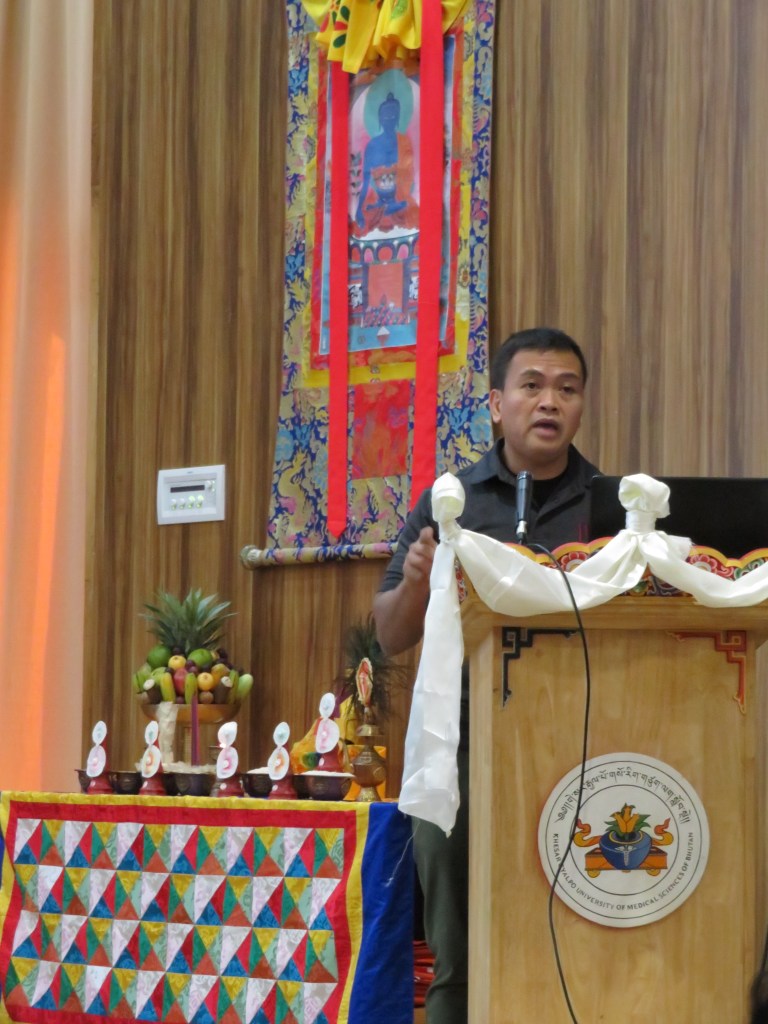
Big Data Meets Mental Health
Dr. Celi is in Bhutan for a three day conference, “Big Data for Health.” He had a very positive view on how algorithms can enhance physician performance and discounted concerns re: confidentiality. Google is one of his funders. He feels resistance to collection of personal data to build useful algorithms is a generational issue, young people having no qualms.
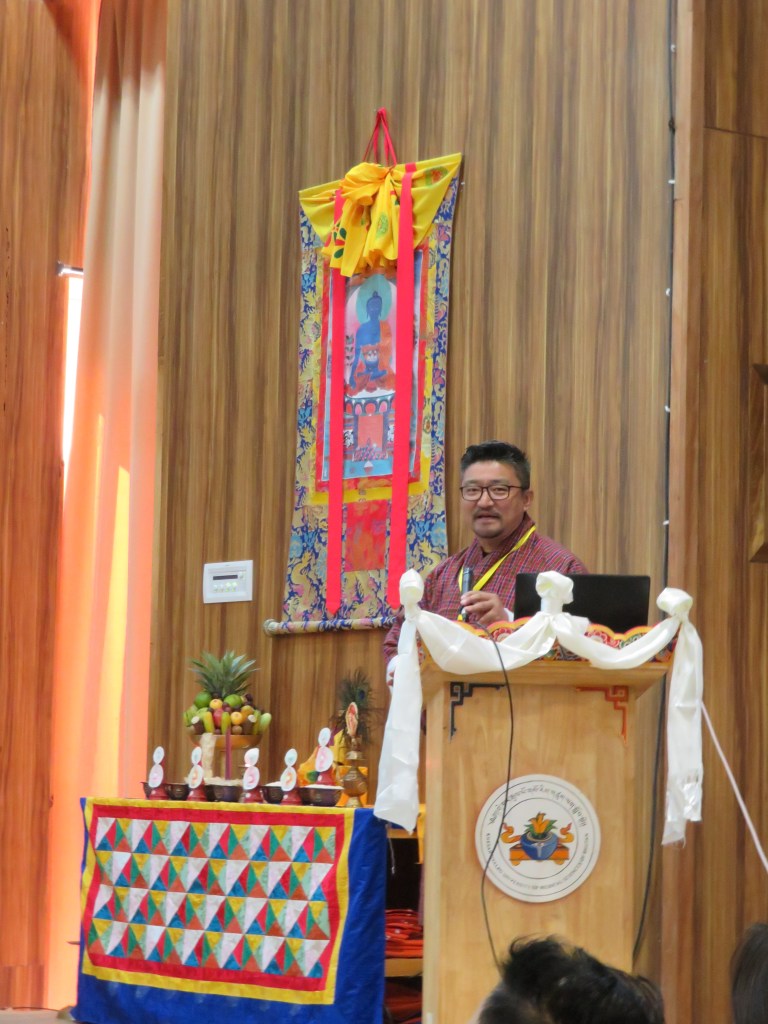
Contemplative Education
One of the high points of the conference for me, Mr. Jamtsho discussed the application of Mindfulness therapies to substance abuse treatment eloquently and effectively. Of note, Bhutan has two masters level university programs in Contemplative Psychology, their graduates primarily working in the schools.

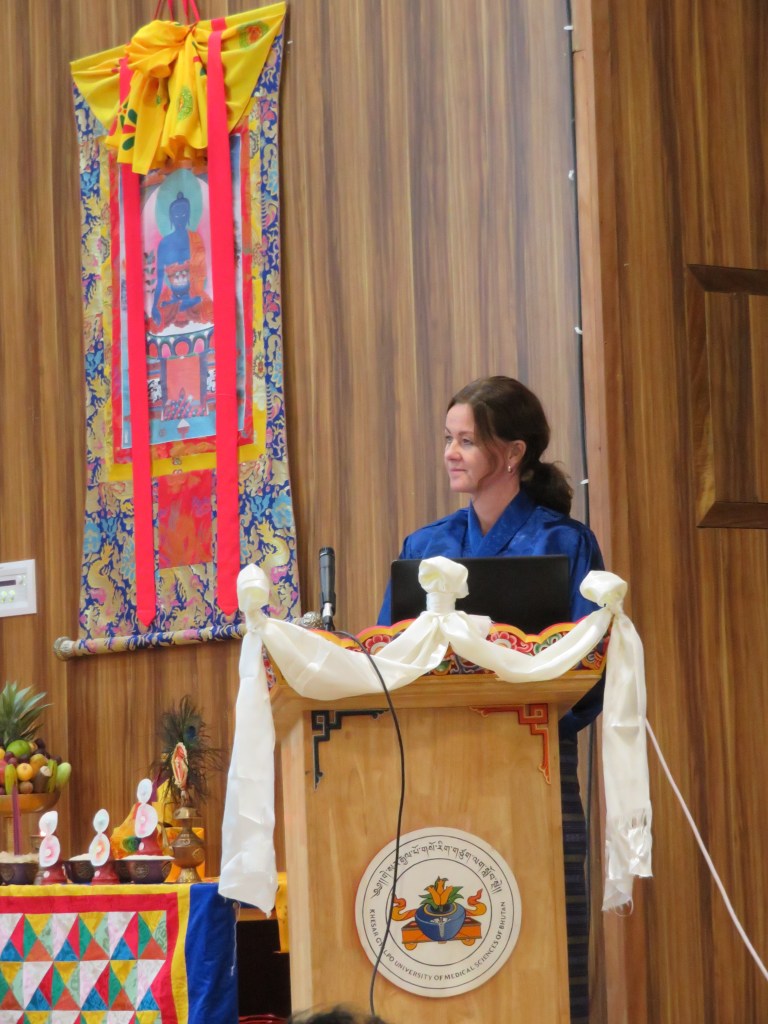
International Child Development Program
Ms Kippenes discussed the ICDP program, used internationally to provide parental guidance and support to caregivers of special needs children (age 0-5) and how it could be adapted to Bhutan.
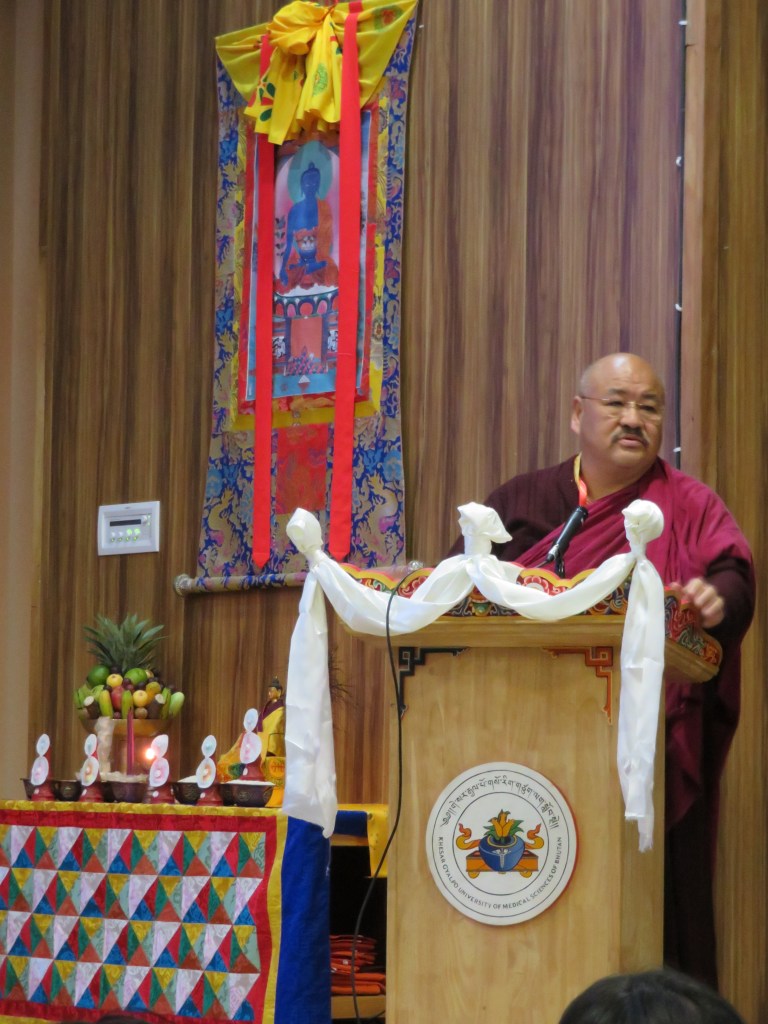
Mental Health: A Culture of Optimal Health and Wellbeing
Go the the blog website to hear his talk
The Lopen’s talk was the high point of the conference for me and many others, the lecture I’ve been waiting for since coming to Bhutan.
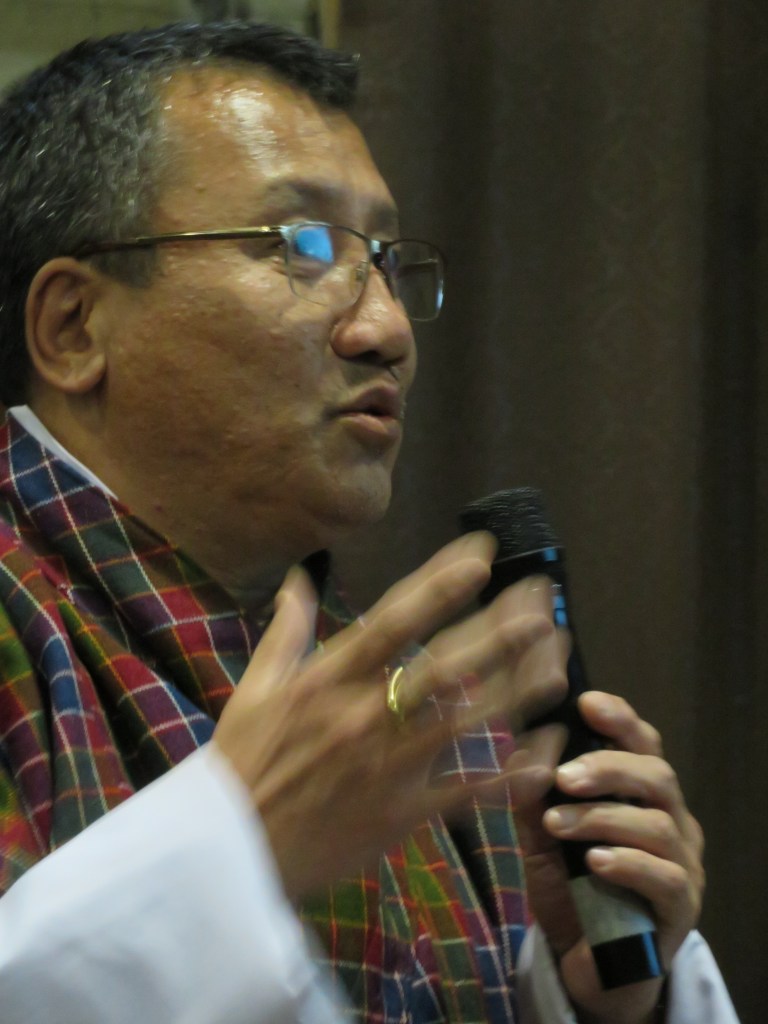
Bhutan’s first psychiatrist, Dr. Chencho led off the experience sharing segment of the conference, sharing the stage with three recovering patients and the mother of a child with disabilities. Dr. Chencho described poignantly the psychotic illness of his brother that prompted his interest in psychiatry and the struggles to introduce it to Bhutan. His brother was a brilliant and promising young monk who became so ill with schizophrenia that he had to be locked in a room for twelve years, often handcuffed, before treatment was finally available.
Go to the blog website to hear Dr. Chencho’s talk
There were, of course, many other lecturers. I won’t cover them all. The conference concluded with a talk by His Excellency Dr. Lotay Tshering, Prime Minister of Bhutan.

His Excellency is a well loved and highly respected surgeon who still performs surgery on the weekends. He spoke of his career in medicine, the nobility of the profession, the role of compassion and the future of medicine in Bhutan. Eloquent and articulate, thoughtful and compassionate, all that you would hope for in a leader.
 Our Seasons in Shangri la
Thanks so much for posting this. I can’t wait to hear your stories about this adventure face to face.
LikeLike
All you have been able to do and see is incredible! What a happy coincidence the conference focused on mental health!
LikeLike