Phobjikha Valley

We’re back from seven wonderful days on the road, with lots to share. We started out from Thimphu with our guide, Dorji, and driver, Sangay, both great travel companions. Dorji has his own guiding business, starting after a two year tourism course, a six month internship and a few years in a larger guide business. Sangay is an IT person in the Ministry of Health, but, as many Bhutanese do, he has a side job to help support his wife and three children. Sangay is a serious practitioner of Vajrayana Buddhism, both a wealth of information and a great fellow to talk philosophy with. Our friend, Sally, from the UK accompanied us the first few days, adding to the enjoyment.

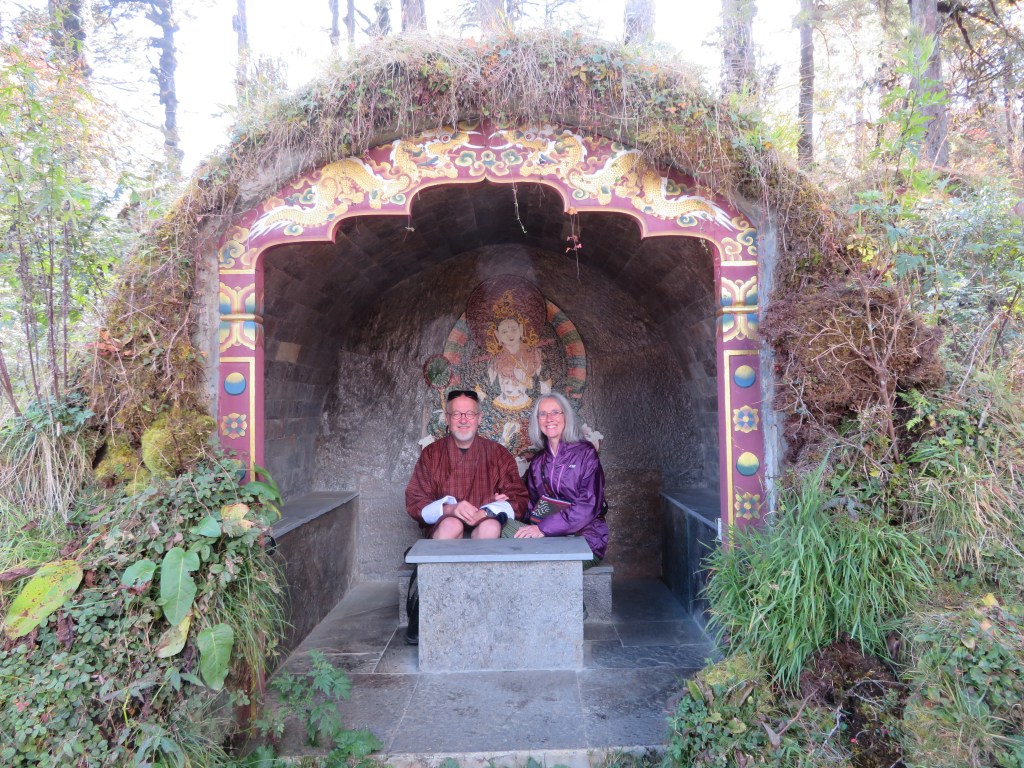
Our third time over Dochu La pass with the 108 Chortens, we were hoping for clear skies to see the Himalayas, but had to settle for the beauty in the foreground.
This time we discovered the many contemporary meditation caves, free for anyone to use, any time of day or night.
Entering Phobjikha Valley with fields of buckwheat, potatoes, turnips and greens. A very different feel than that of Thimphu.
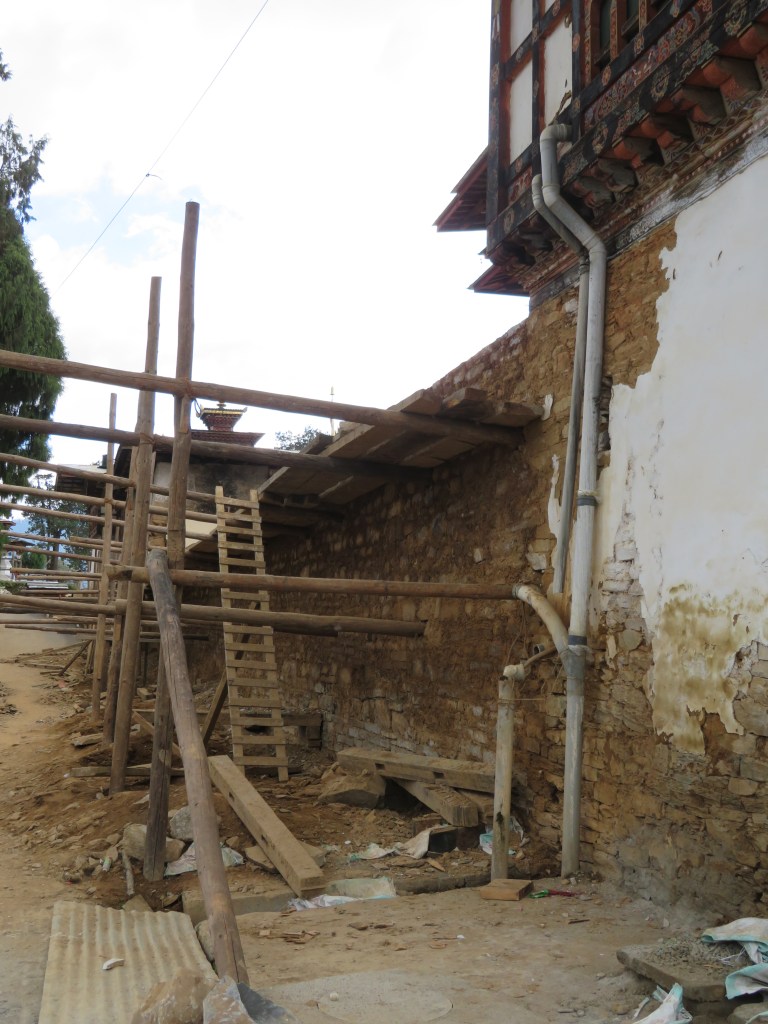
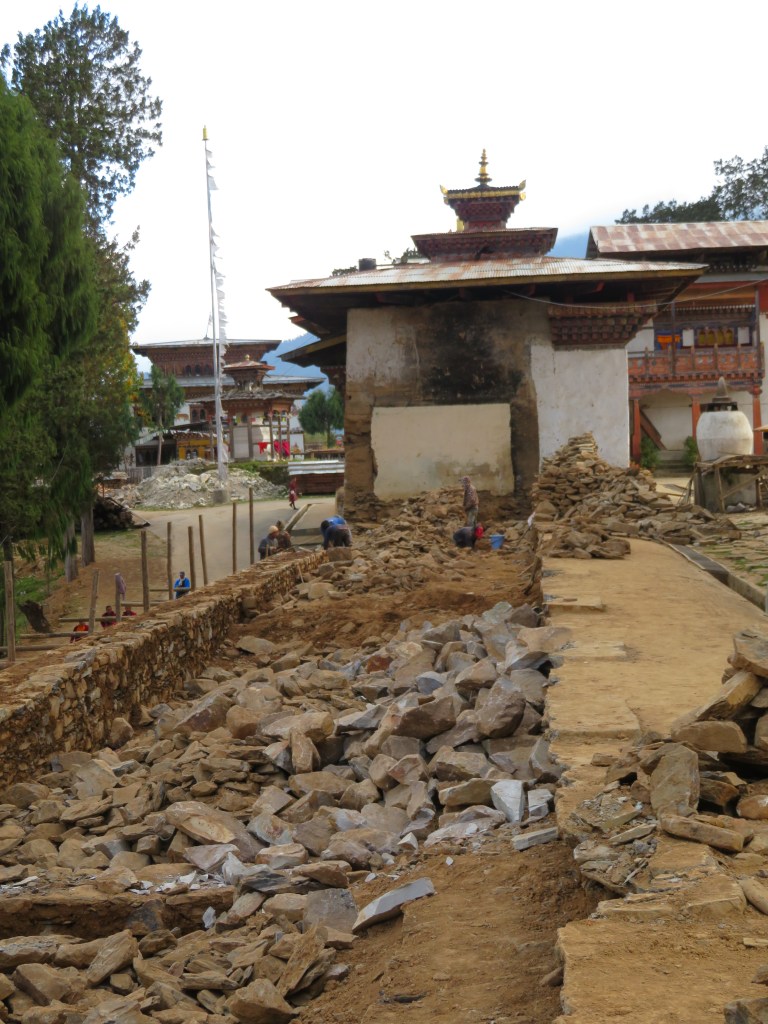
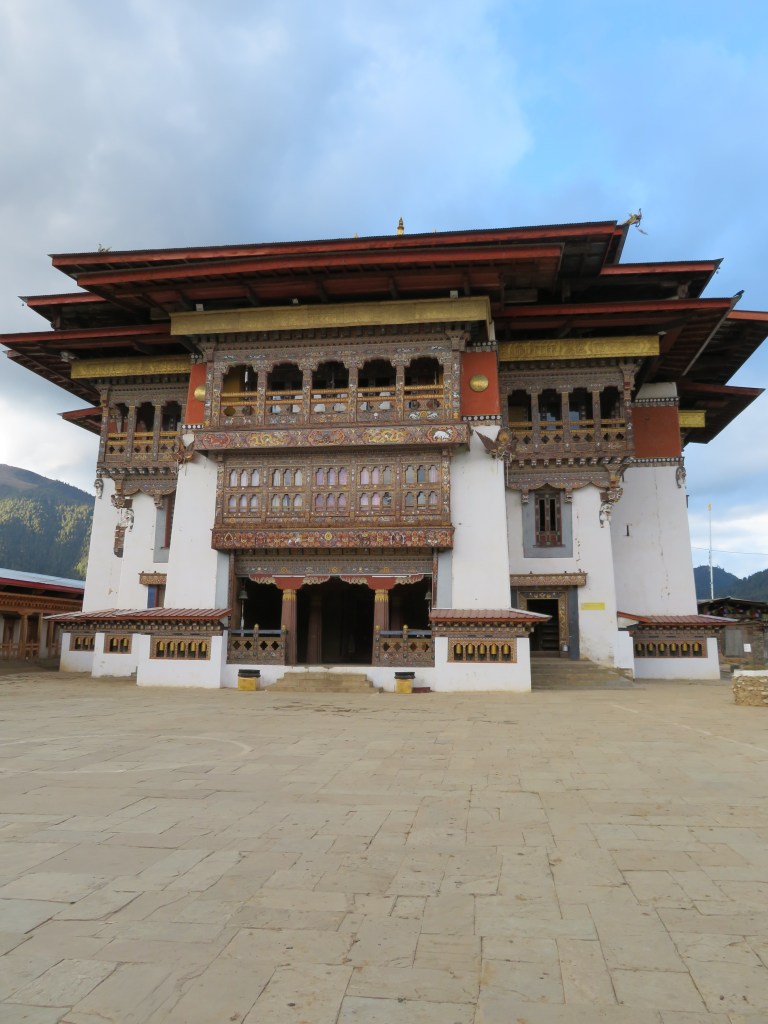
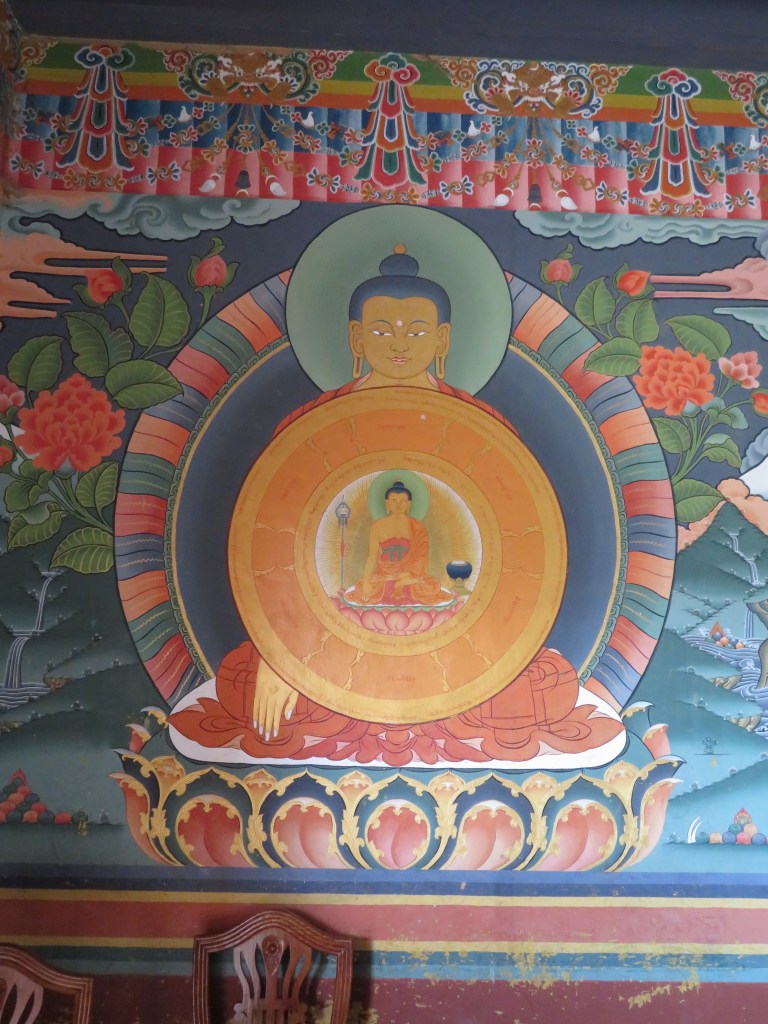
Gangtey Monastery, overlooking Phobjikha Valley, was built in 1613. Damaged by an earthquake, it is under reconstruction, though monks continue to reside there.
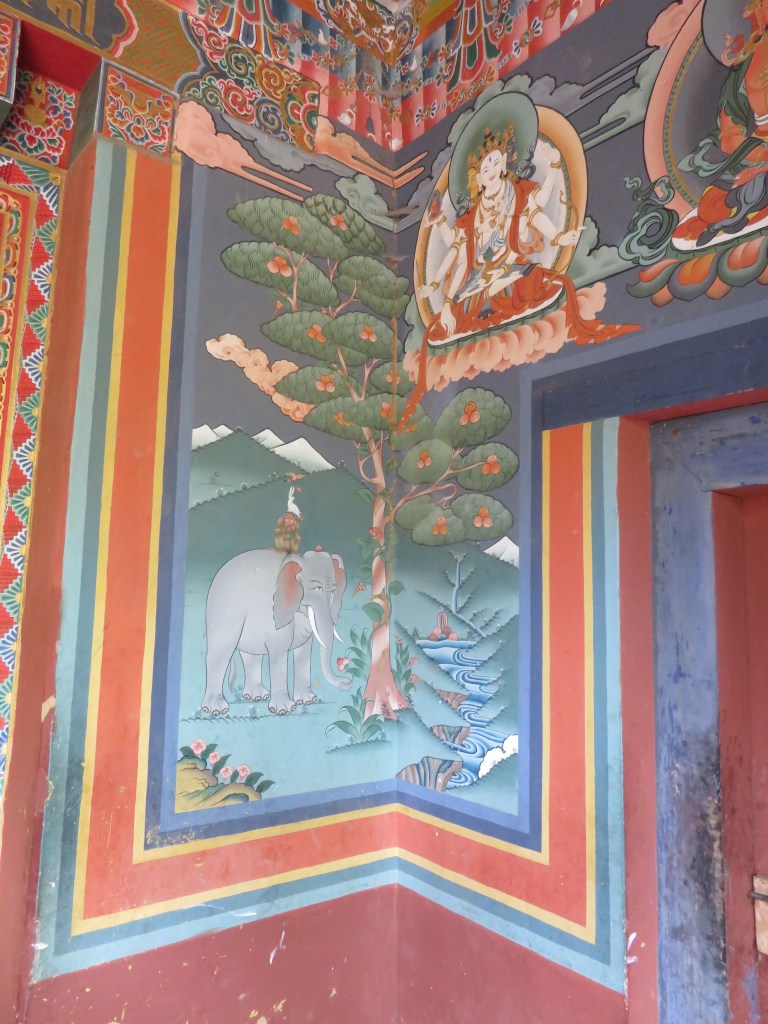
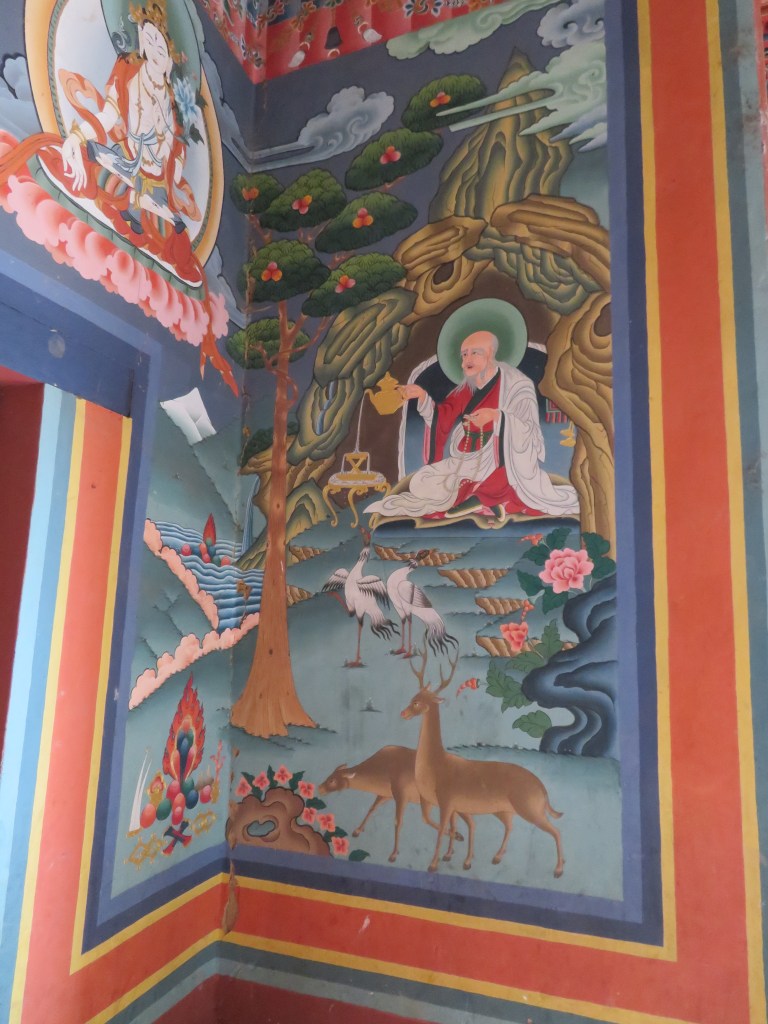
The Four Harmonious Friends
Longevity
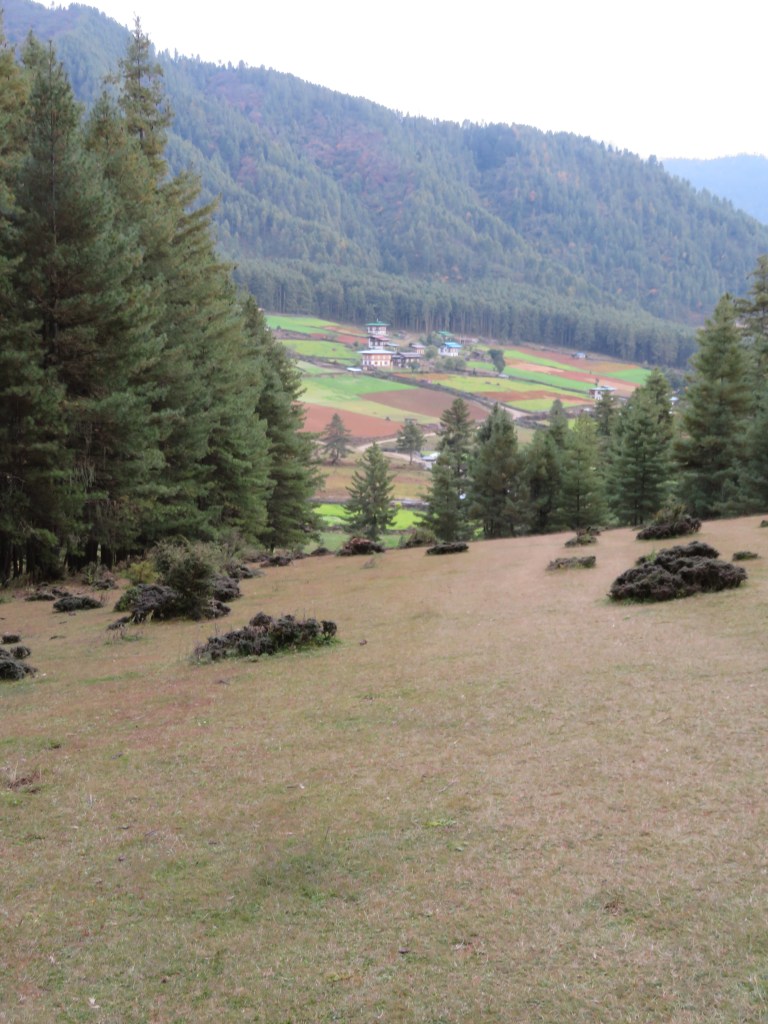
A pleasant hike down from Gangtey
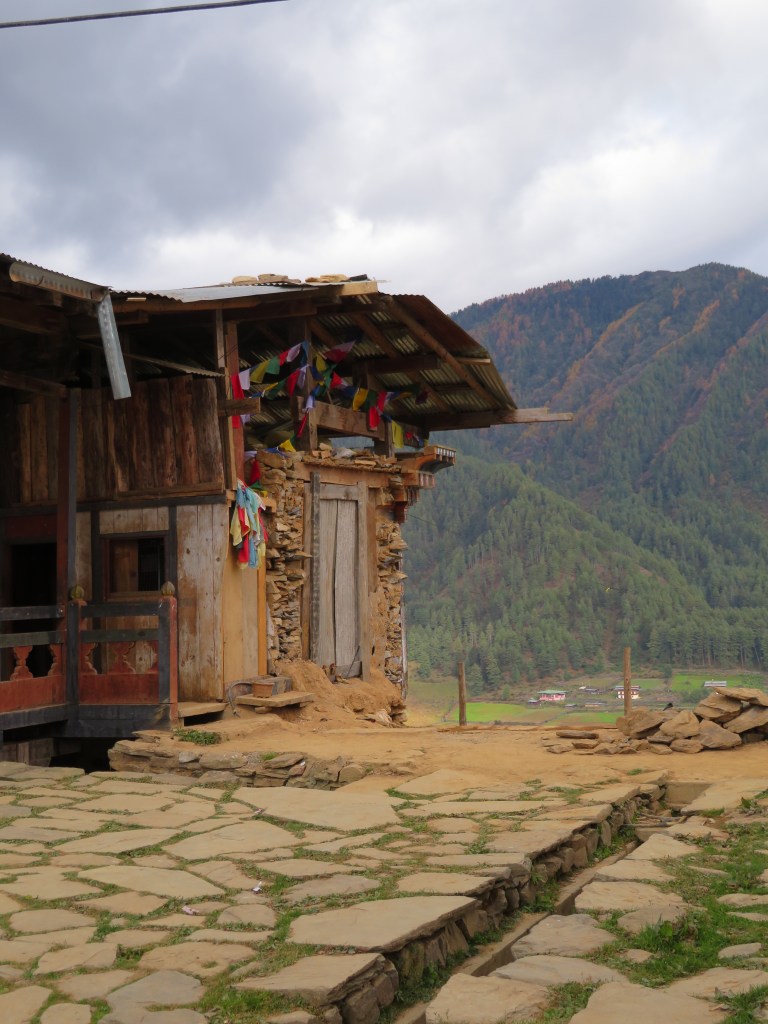
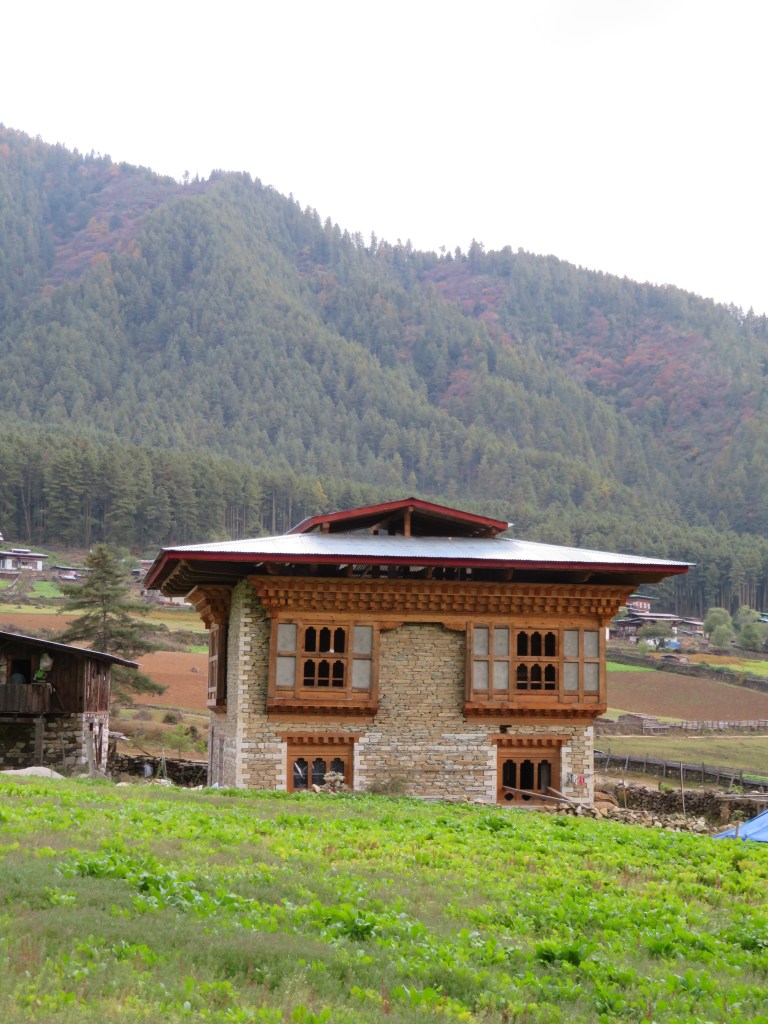
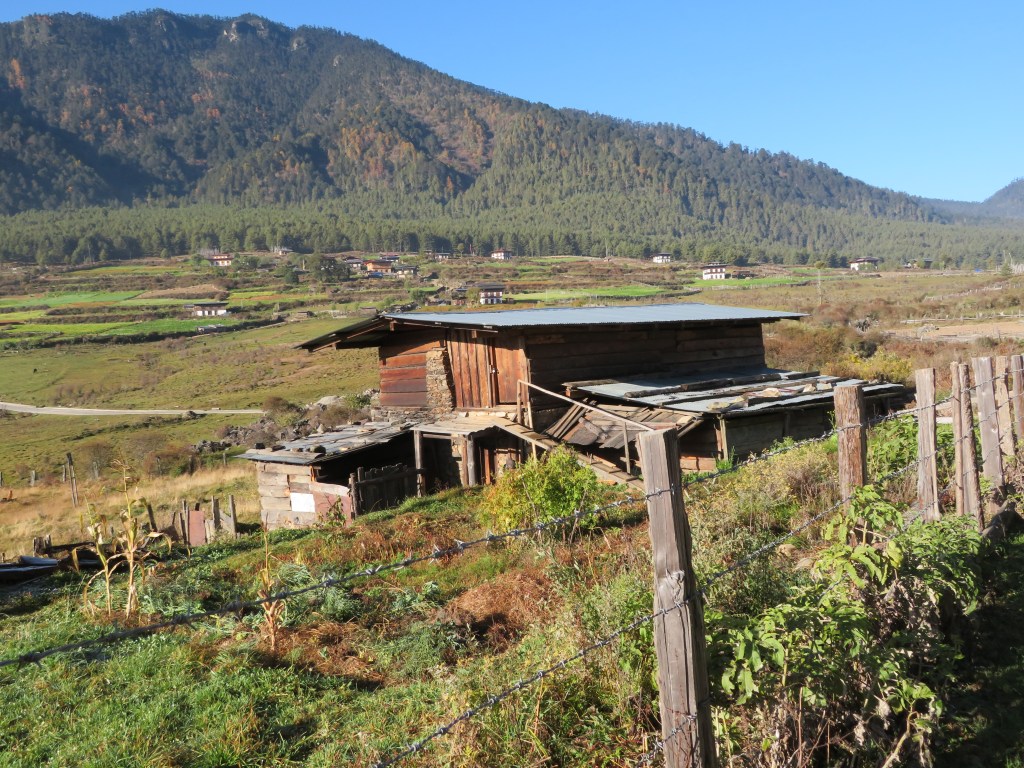
Traditional farmhouse
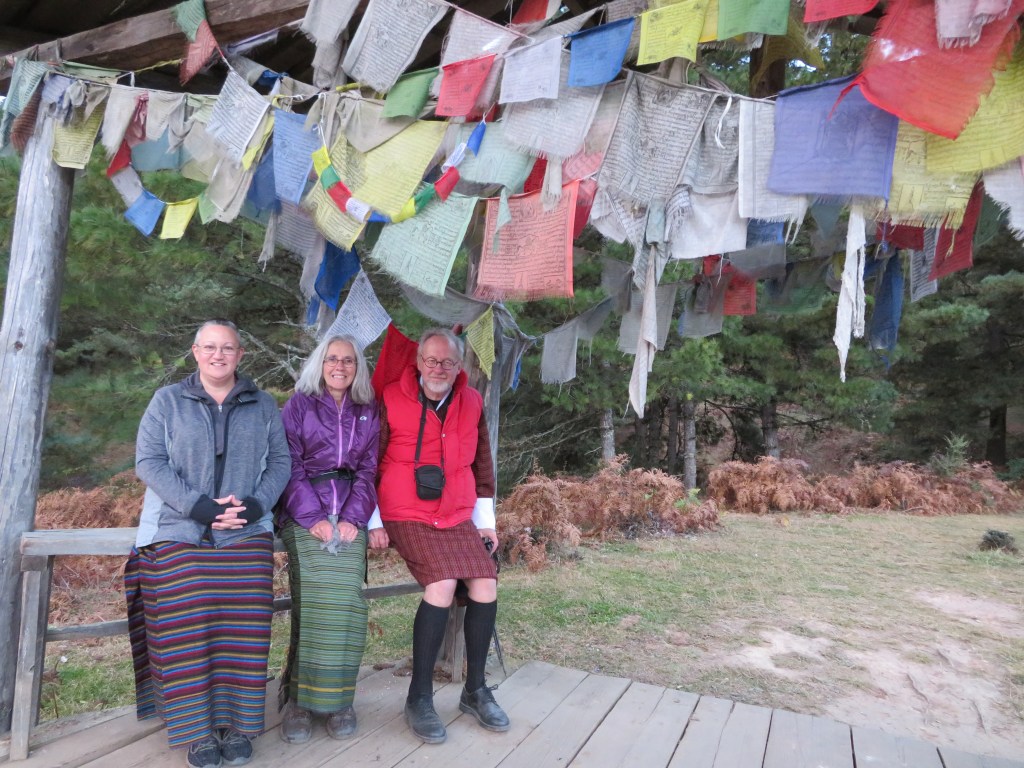
We hung new prayer flags before Sally departed for Nepal.
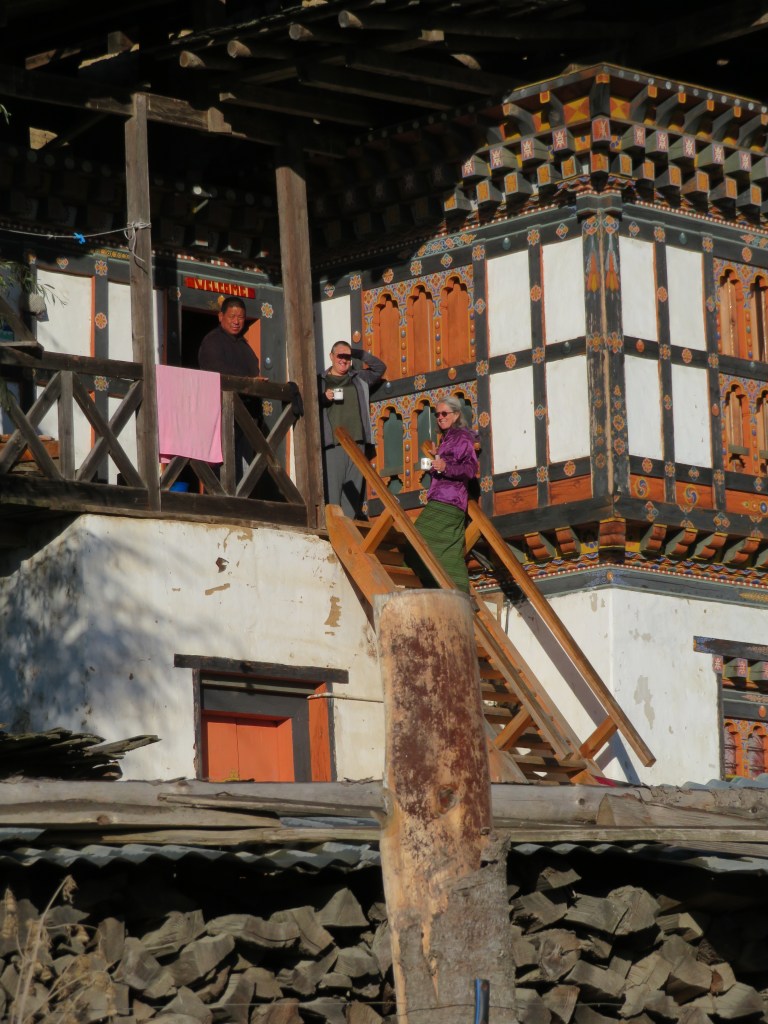
Our Phobjikha Valley digs
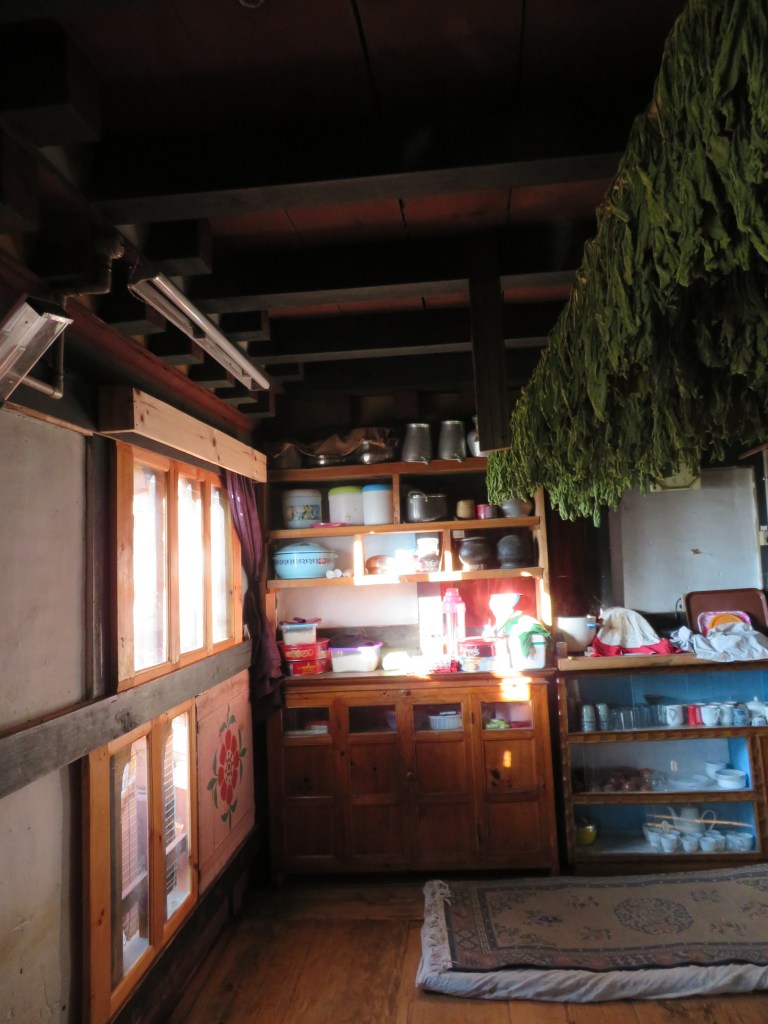
Homestay kitchen
The high stone walls are necessary, sometimes with electrification, to keep out the wild boars. Legend has it that the boar and the snake had a contest. It was agreed that if the snake won, rice would grow in the valley. If the boar won, it would be barley. The boar won and barley it is. There are two rivers in the valley, the Boar Chu the stronger, the Snake Chu meandering slowly along before they join.
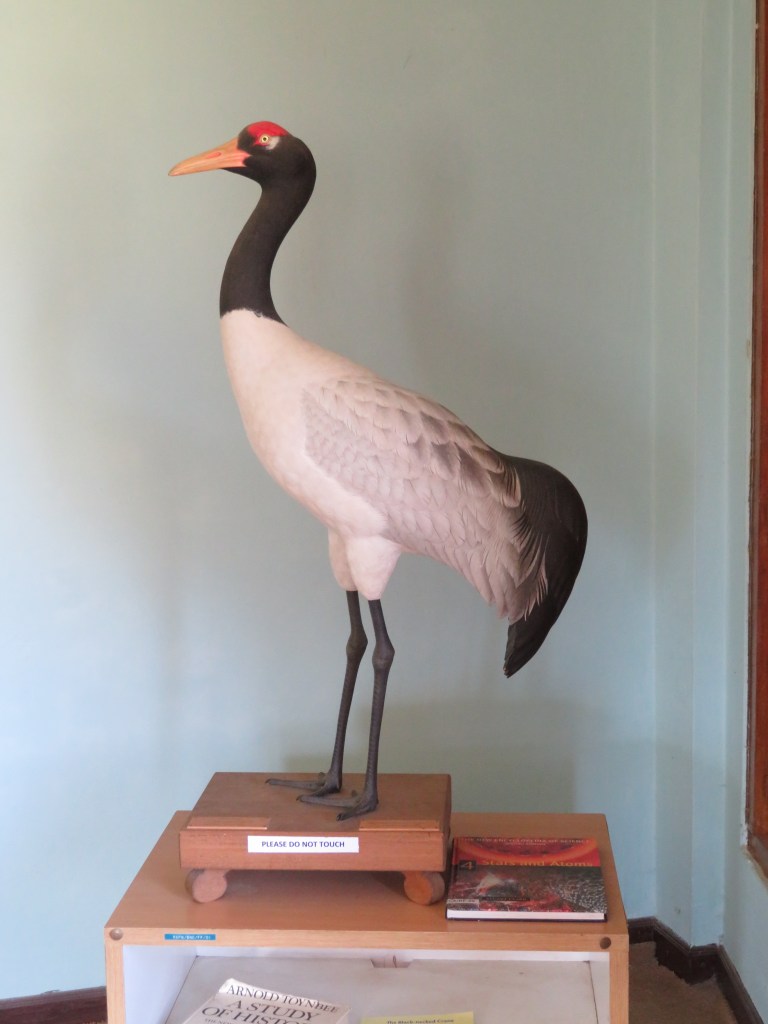
Herder’s residence in the valley. Cows roam freely but conservation rules do not permit planting in most of the wetland valley as it is winter habitat for the endangered black neck crane. After a night at a very rustic homestay, we started our second day on the road by visiting the crane center before heading east to Trongsa.
Phobjikha Valley is the summer home of the black neck crane. Normally arriving in mid to late October from Tibet, the arriving cranes circle Gangtrey Monastery three times for blessing then descend to the wetland valley floor. Our guide informed us that they are arriving later each year, attributing this to global warming. We sadly missed the first arrivals by two days.
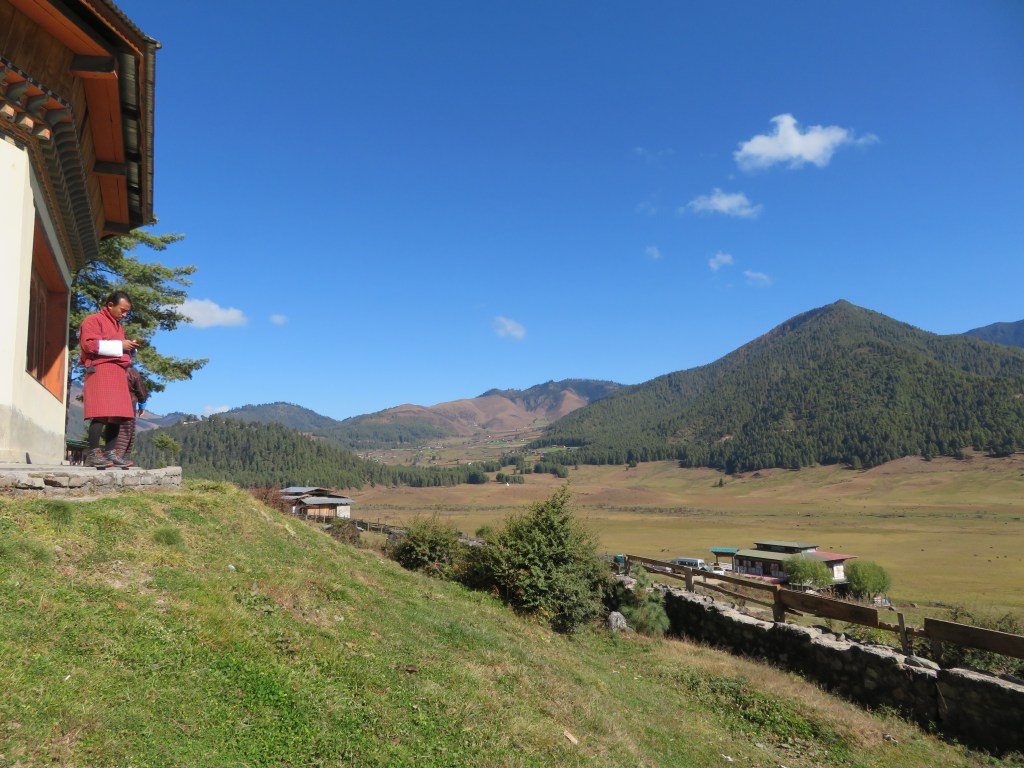
View of wetland habitat from the Black Neck Crane Conservation Center. The conservation effort is extensive. We watched recorded nighttime infrared video of leopards stalking the cranes. The live video is monitored and workers are sent out as necessary to chase away predators. Usually the cranes move to wetter ground at night so they can hear the predators’ footfalls in the water. Habitat loss however is the chief threat to their survival as a species.
On the road again. In the distance are the high Himalayas.

3 Comments

Leave a comment