Off to Trongsa

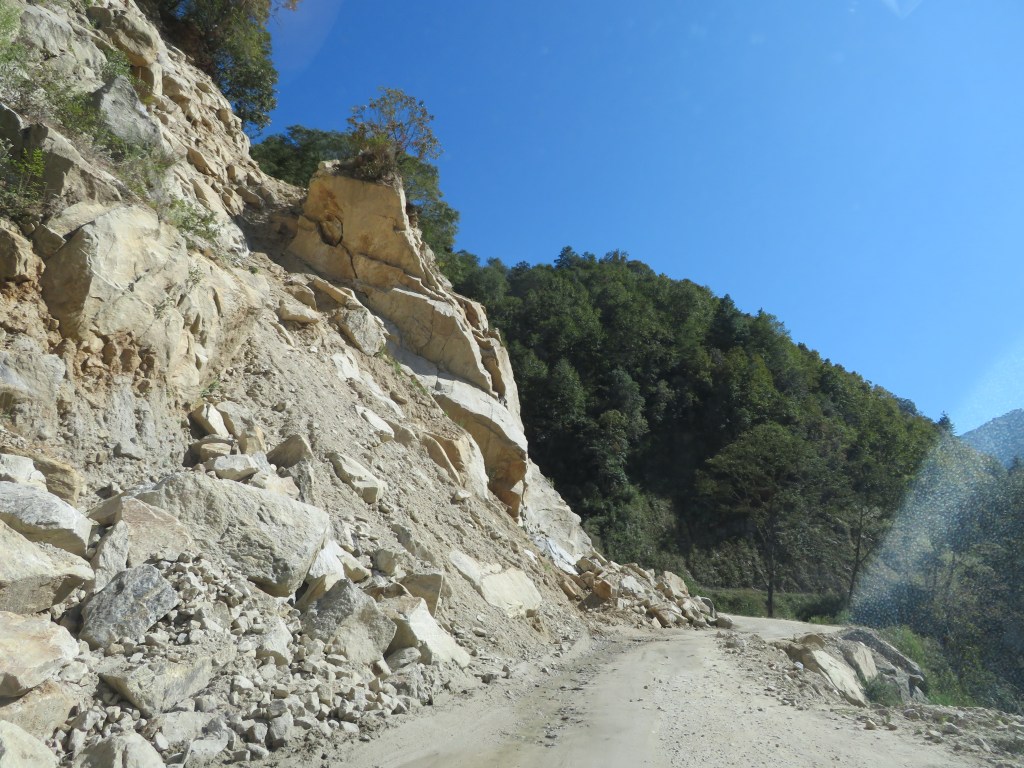
The East-West highway, known locally as the Lateral Road, was started in 1962 and constructed primarily with manual labor. Initially only 8.2 feet wide, some of it was expanded to two lanes by 2014. The geology is unstable. Landslides are frequent, especially during summer monsoons, but they can occur any time. In this photo, you see on a landslide on the left and a collapse of the road on the right. Our driver would warn us when a “free massage” was approaching. In addition to four wheel drive passenger cars, the road is shared by overloaded 8-ton Tata trucks with their trademark wisdom eyes, along with public buses and the ubiquitous Toyota Coaster buses full of tourists. It’s a bit narrow here and they appear to have given up on paving this section. We are told that the further east you travel, the worse the road.
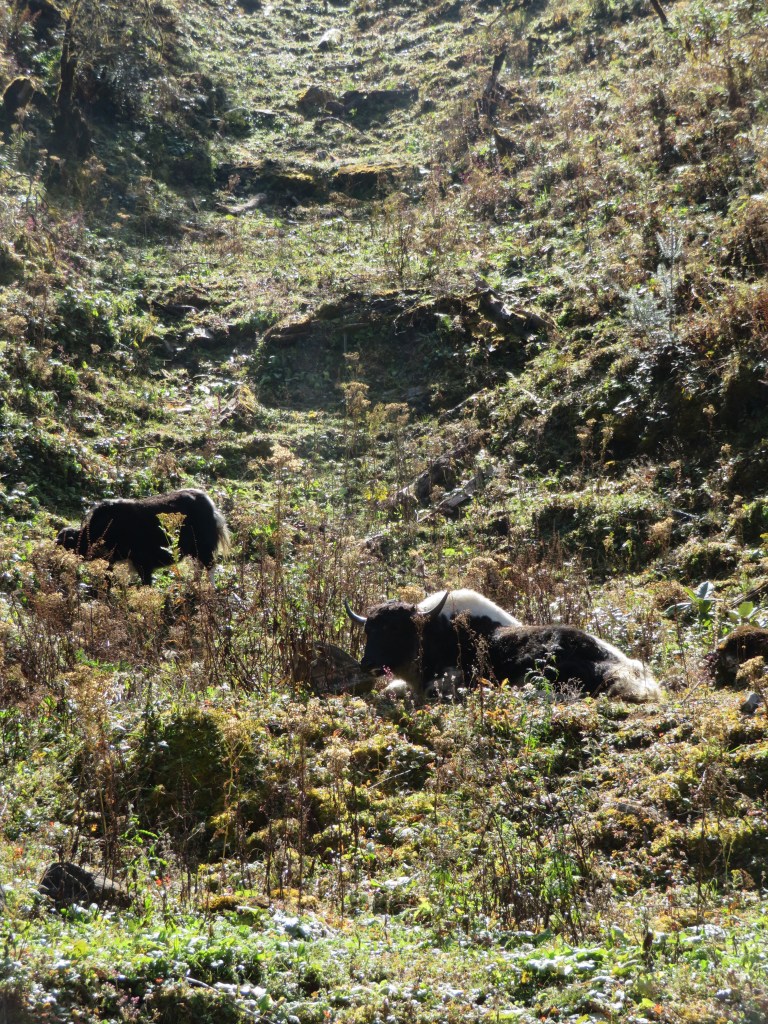
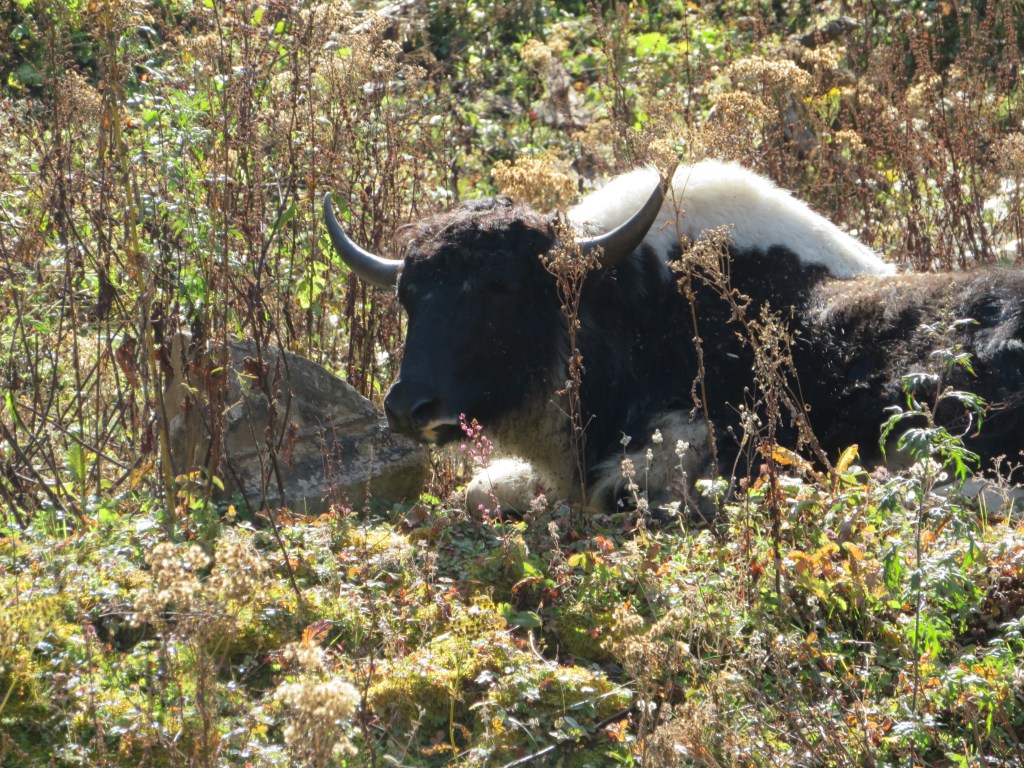
Yaks (pronounced yucks) on the hillside
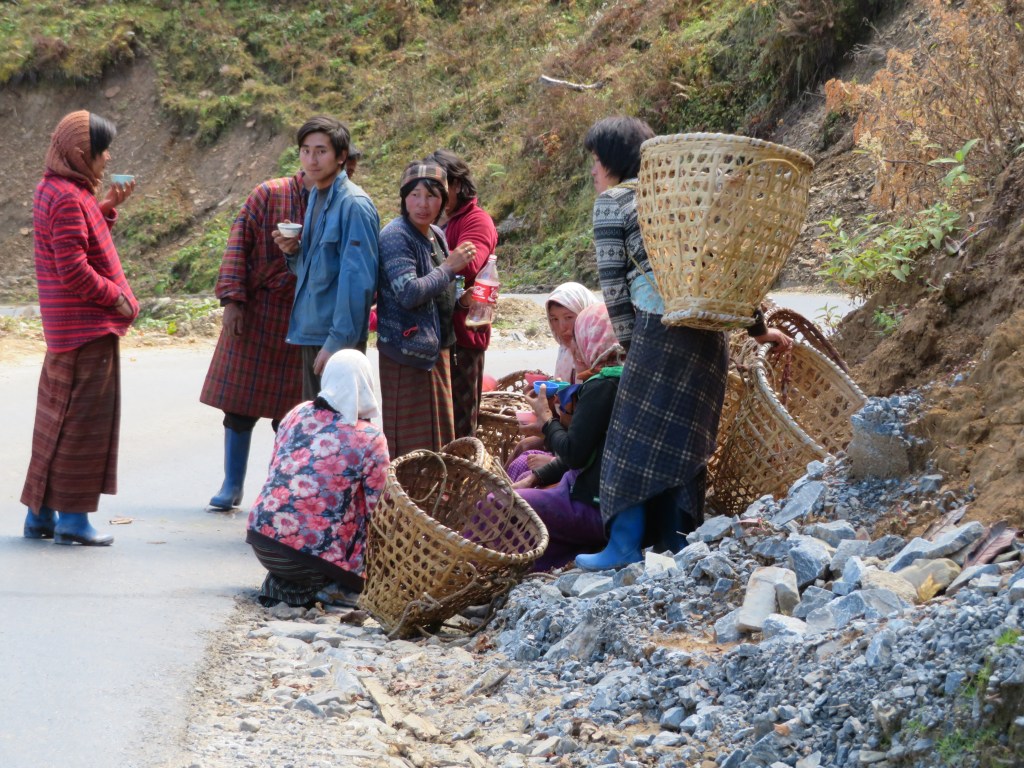
Tea break. Locals collecting leaves for compost.
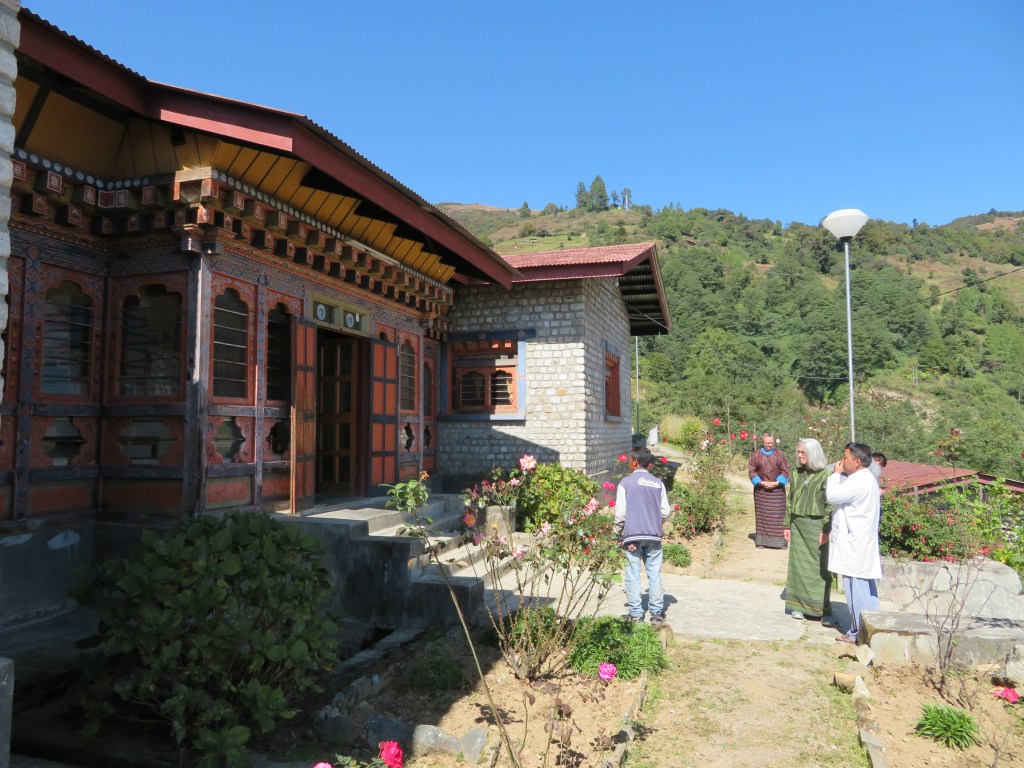
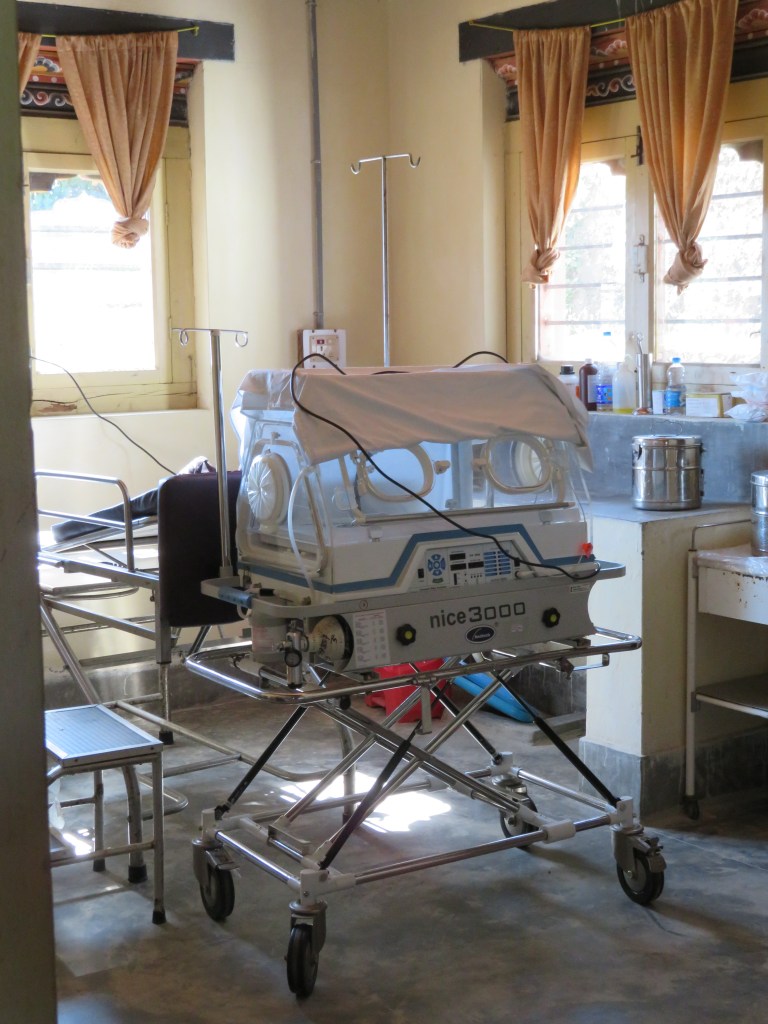
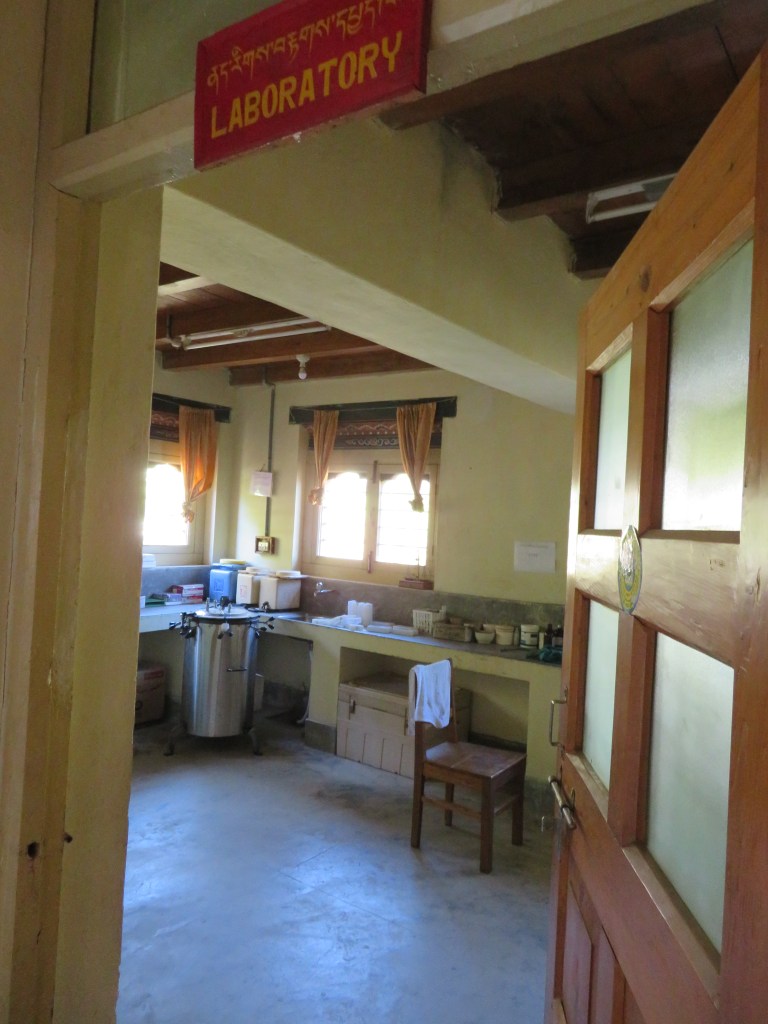
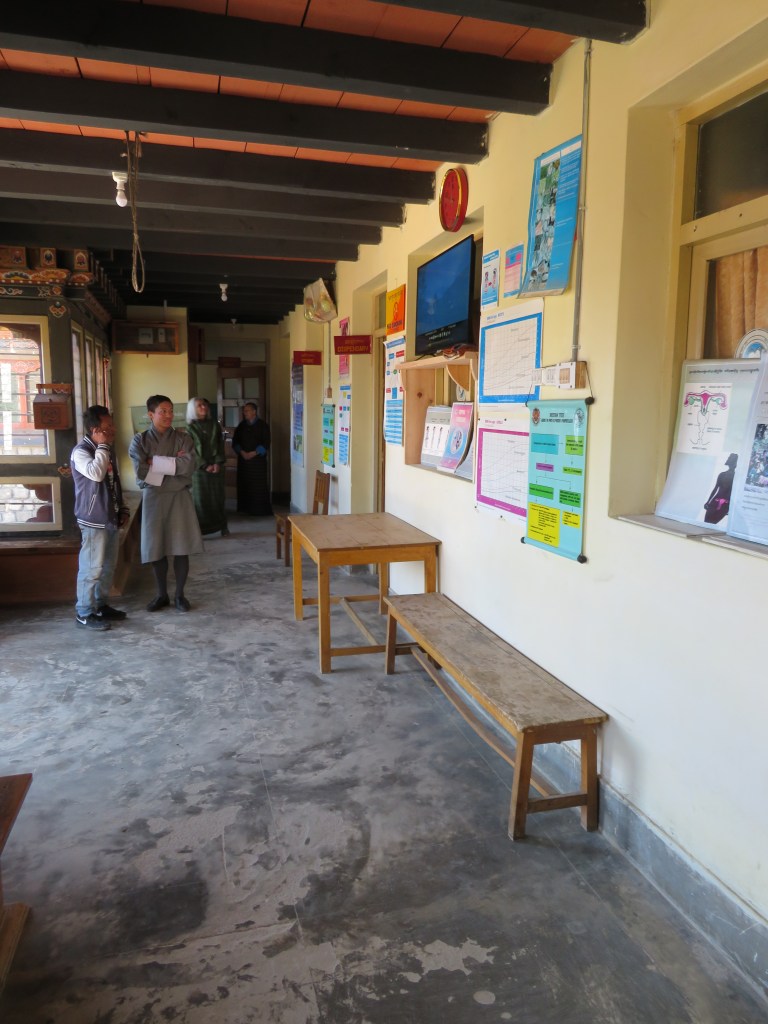
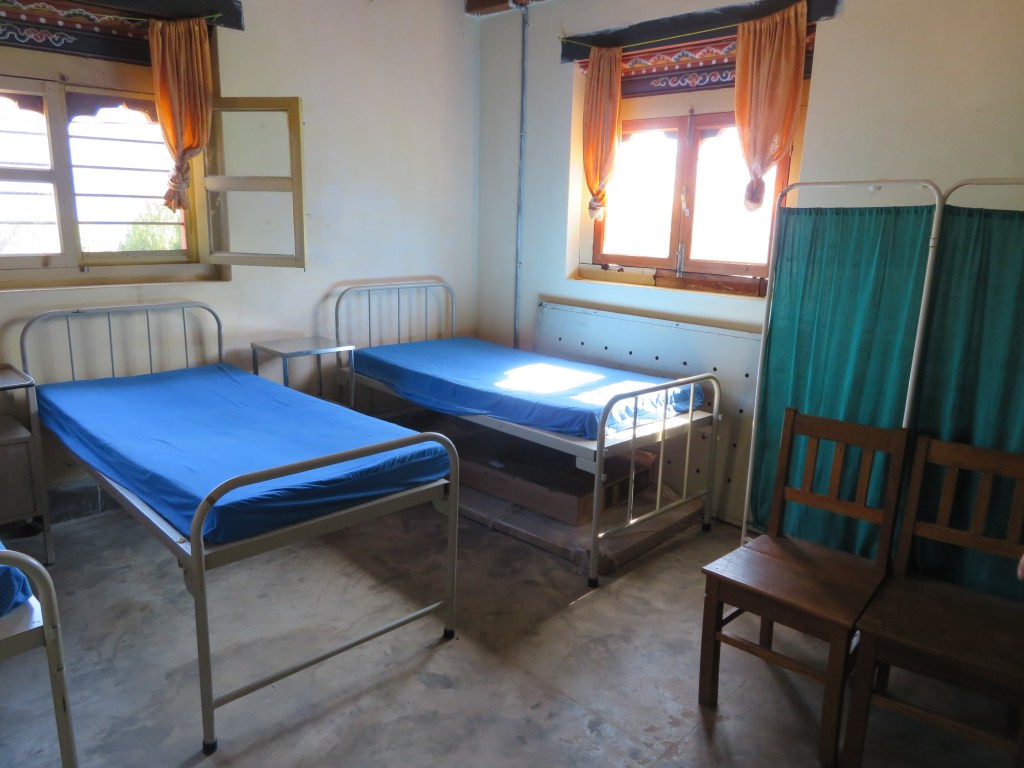
Trangsa Basic Health Unit. The 205 BHU’s across Bhutan provide free health care at the community level. Doctors are placed at the BHU’s after one year of internship to handle every aspect of primary care with very few resources, referring to district hospitals as needed. The doctor in the photo has staffed this BHU for nine years. I believe the funds for this BHU came from Denmark.
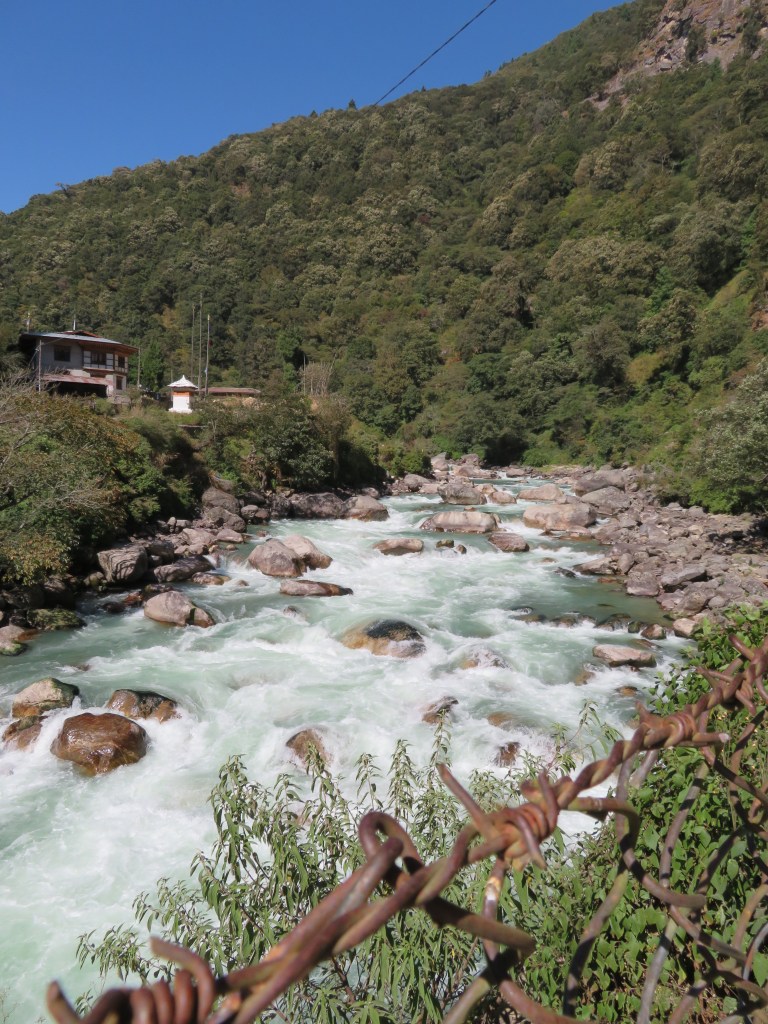
The Mangde Chu. Glacier runoff from the Himalayas turns Bhutanese rivers a beautiful blue-green.
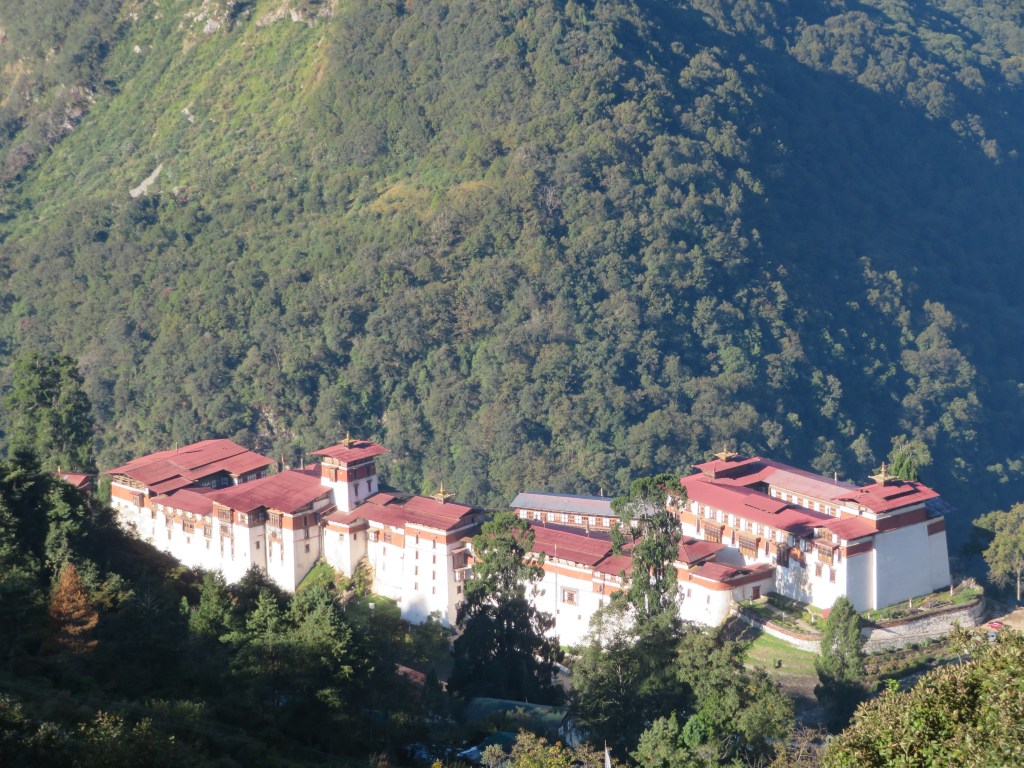
Overlooking the gorge of the Mangde River, Trongsa Dzong is the largest in Bhutan
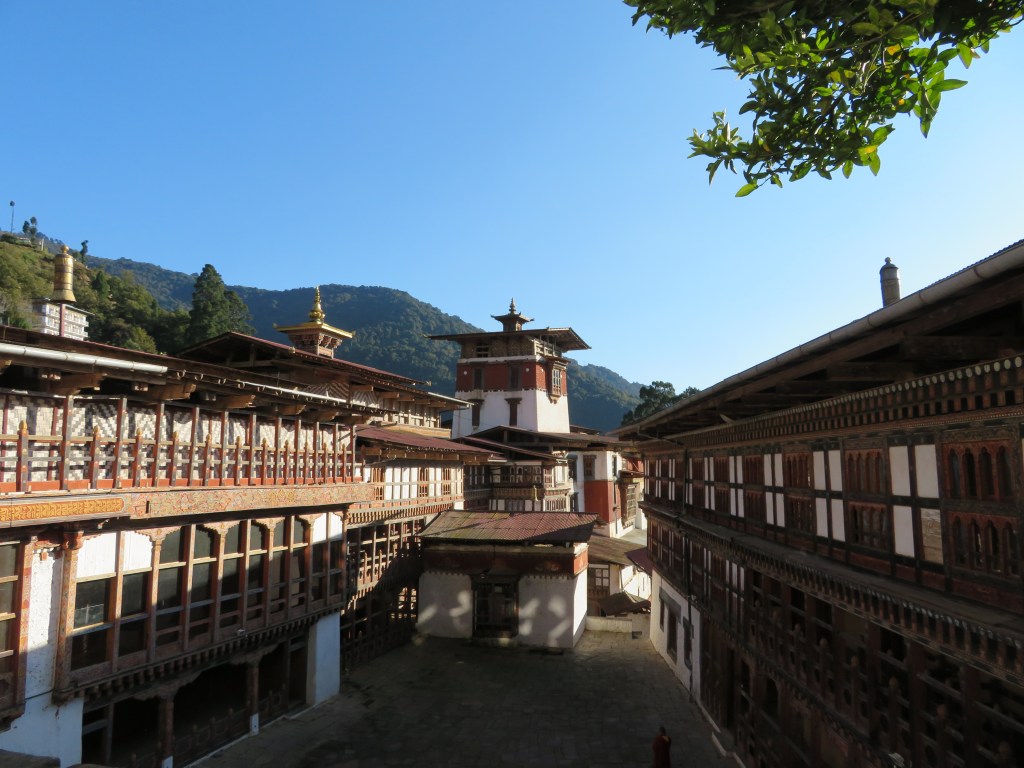
Trongsa Dzong is a major monastic complex, the winter home to about 200 monks and a major publishing center for Buddhist texts. In the summer, most of the monks move to Kurje Monastery in Bumthang.
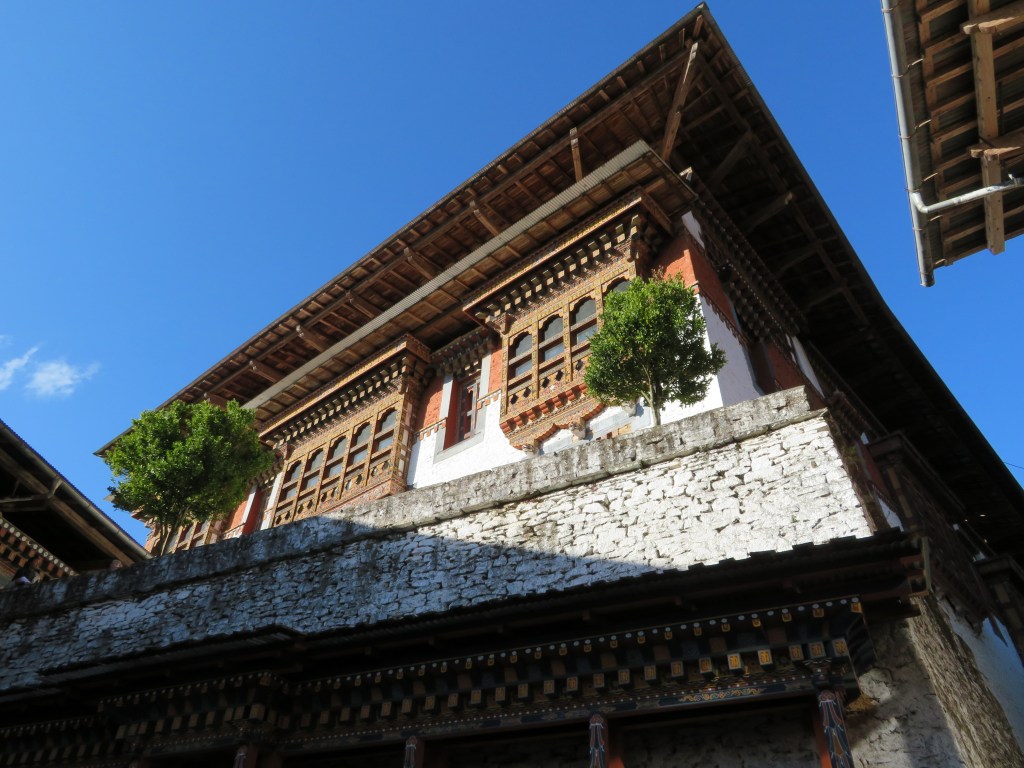
Constructed on multiple levels on the mountainside, the Dzong was preceded by a temple built in 1543. In 1647, Shabdrung Ngawany Namgyal, the great unifier of Bhutan, built the original Dzong. It was expanded extensively in the 18th century. Damaged in the 1897 Assam earthquake, it underwent extensive renovation in 1927 and again in 1999.
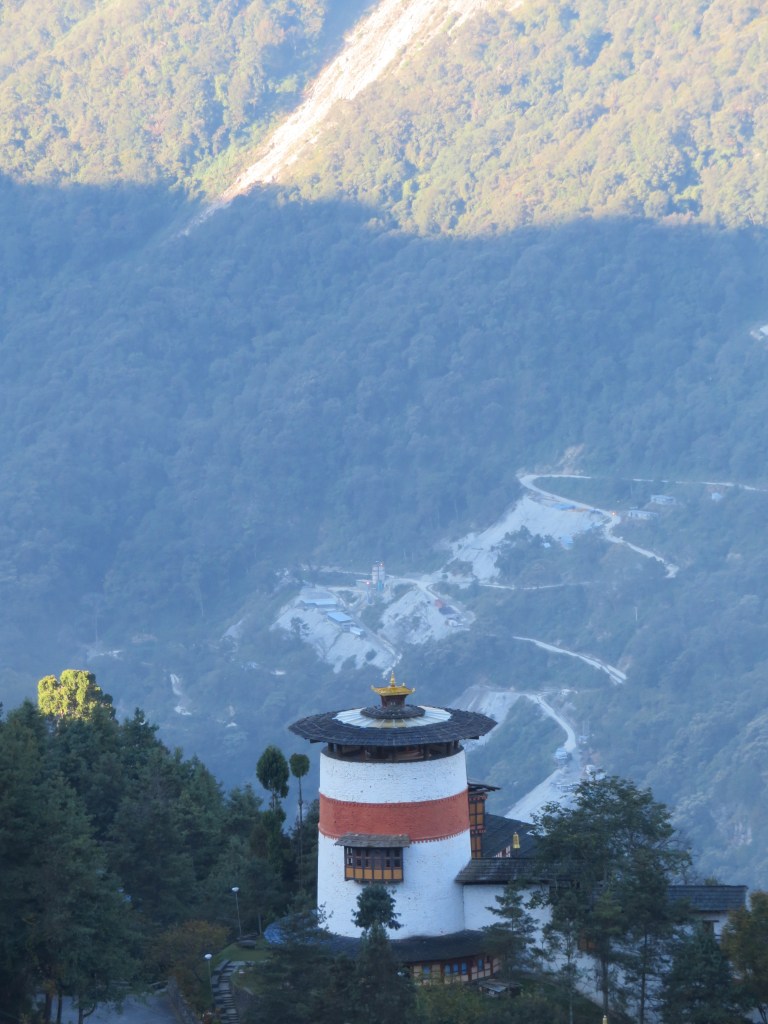
The Ta Dzong watchtower is now home to a beautiful museum. Bhutan was subject to many invasions from Tibet and the Dzongs were critical for Bhutanese defense. The winding road beyond goes to a new hydroelectric plant.
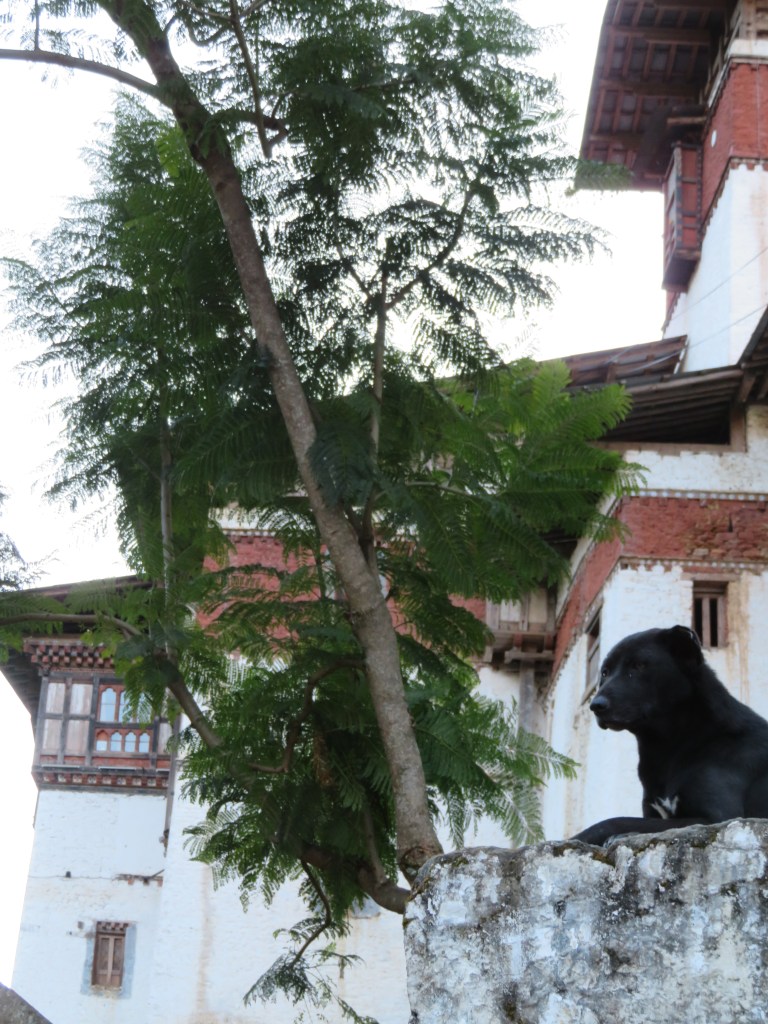
The Dzong is home to about 25 temples and at least as many well cared for dogs.
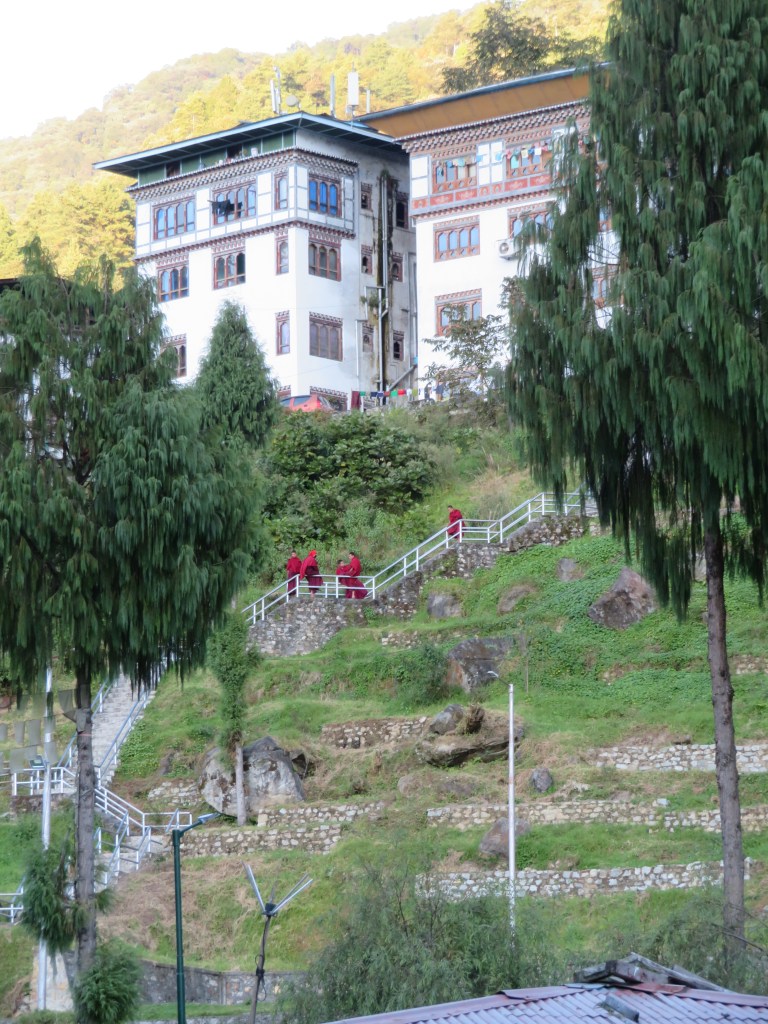
Monks returning from the new village of Trongsa, under construction since 1982. The old village is in the valley below.
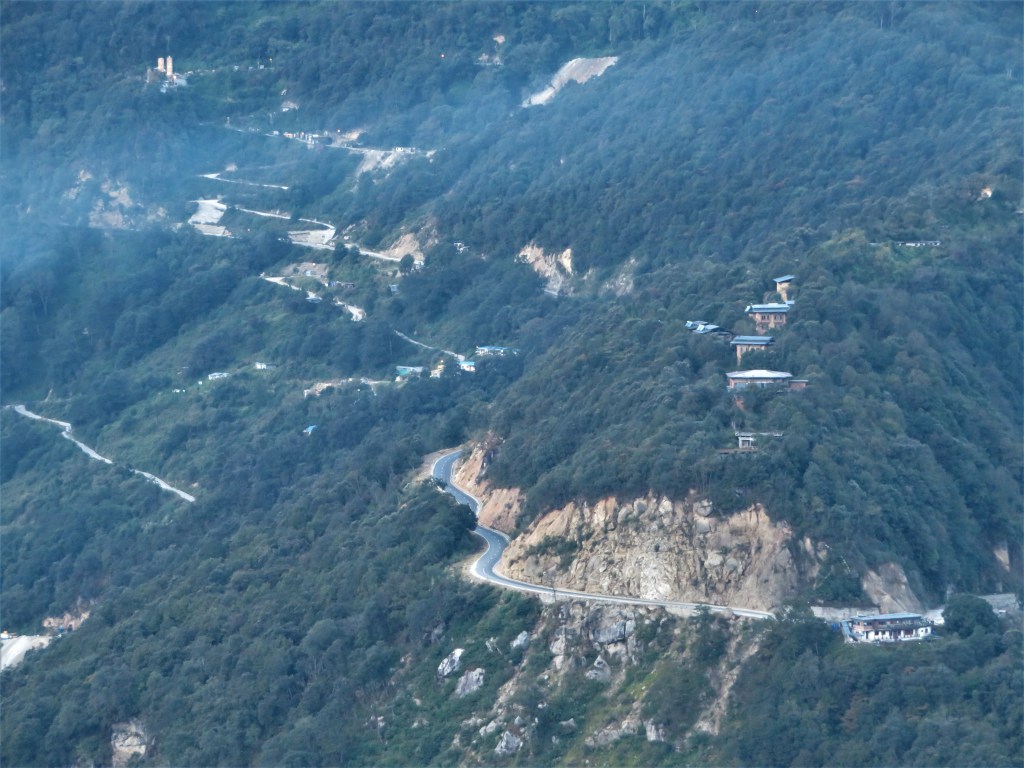
Tomorrow’s long and winding road as viewed from our hotel room balcony at dusk.

2 Comments

  1. Fascinating travels. Thanks for sharing though we don’t envy you traveling on those roads. I remember our family telling us the roads were collapsing under their wheels as the bus drove by. Good Luck.

    Like

Leave a comment