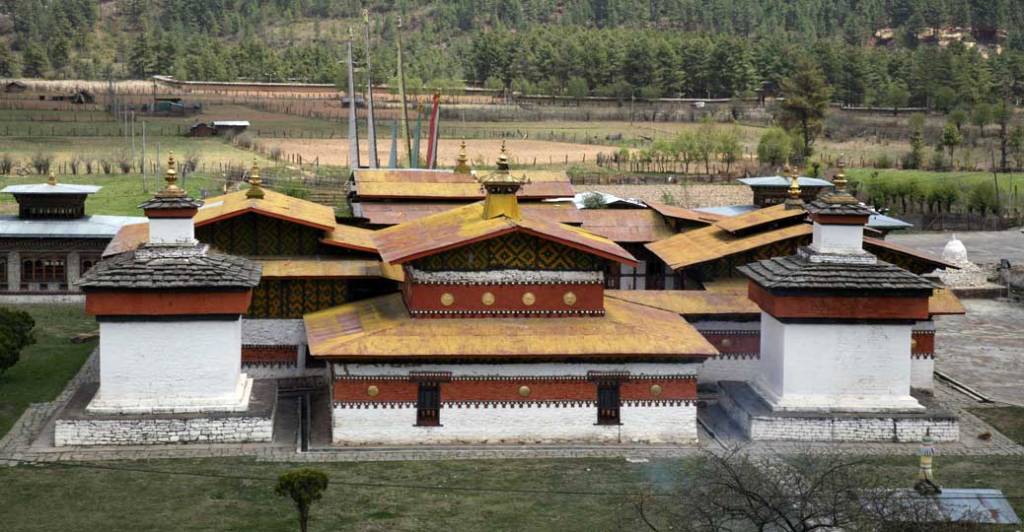
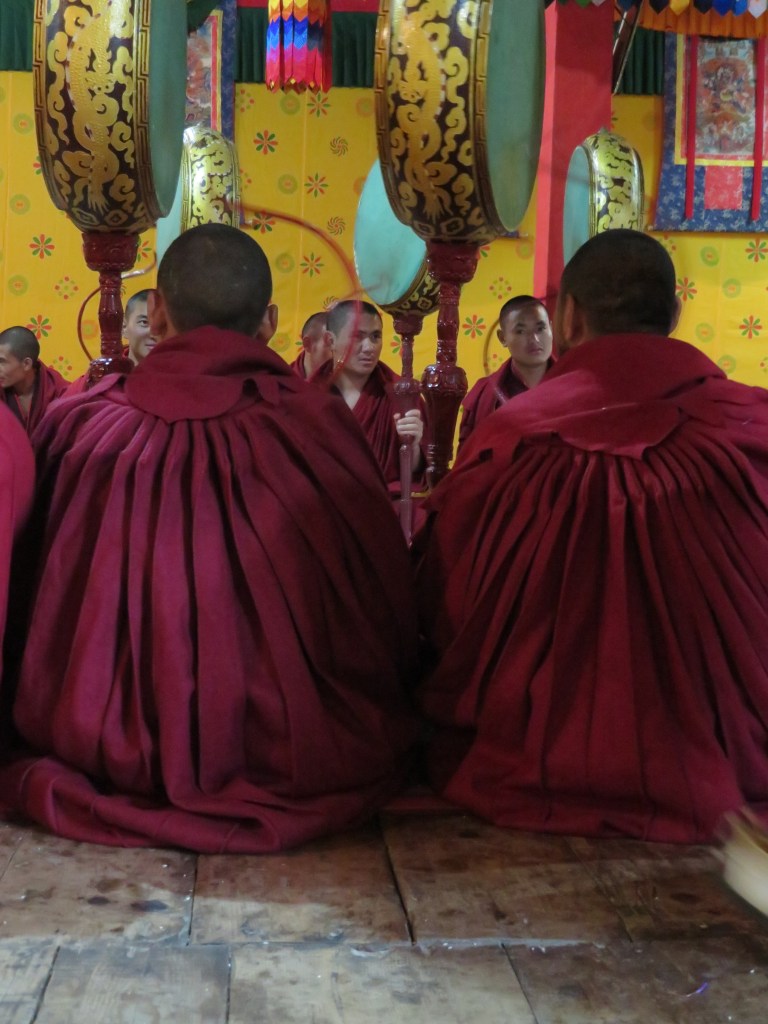
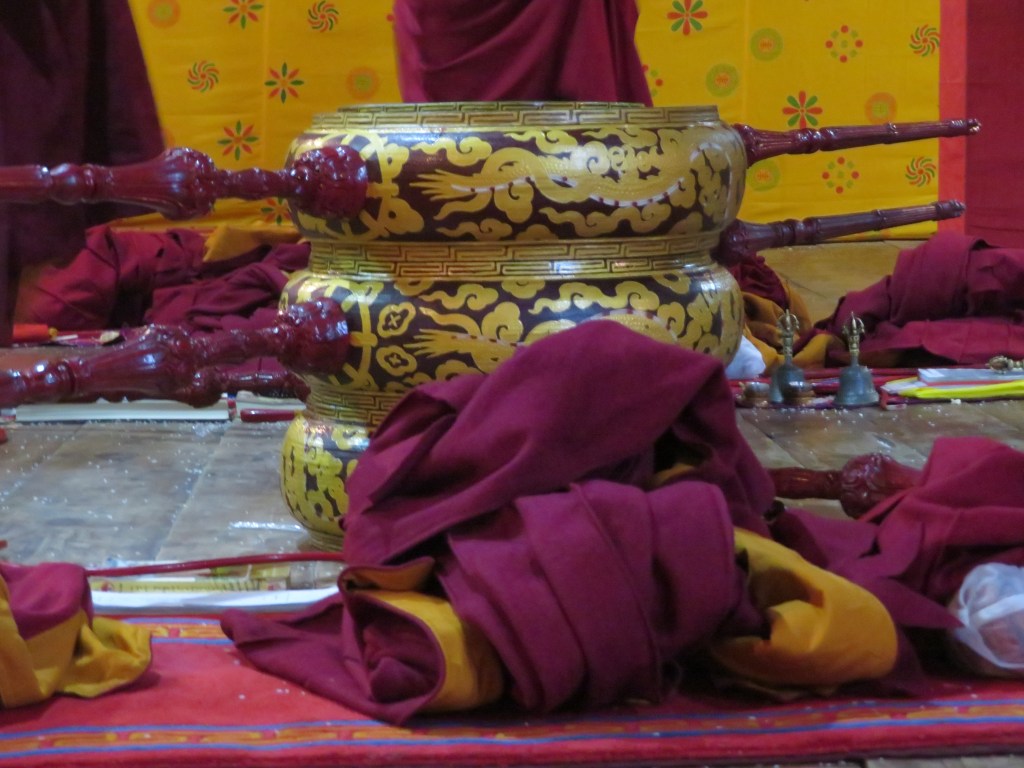
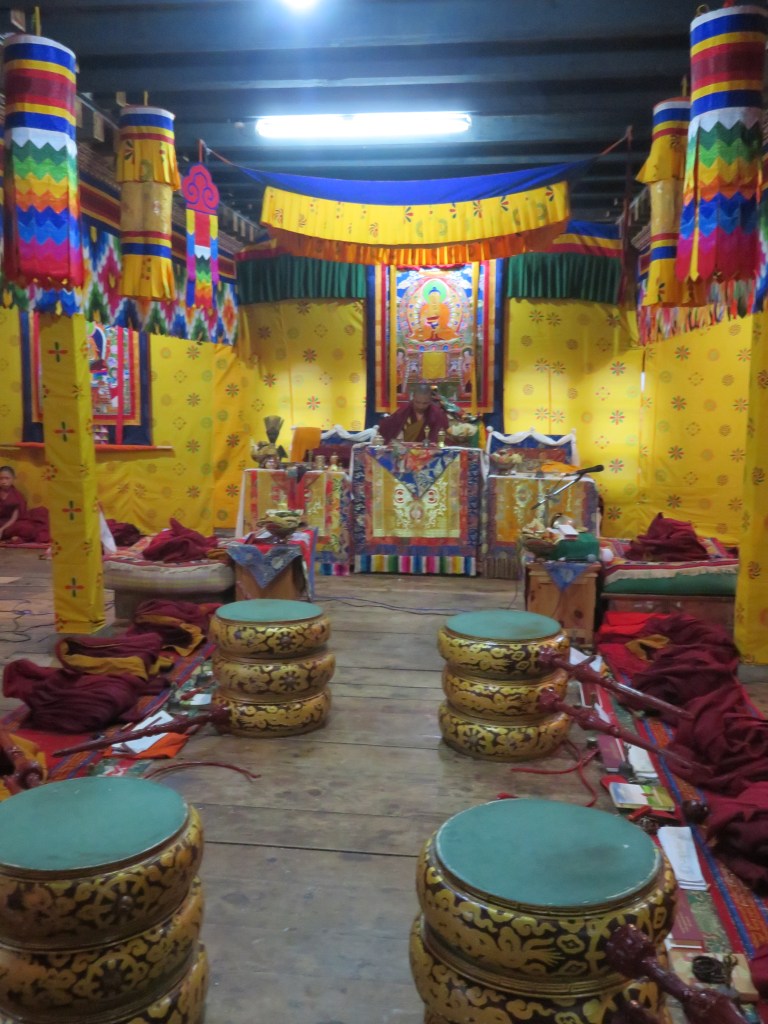
We were fortunate enough to arrive at the start of the annual Dorling Drupchen, “in a service to the teachings of Shakyamuni Buddha in general and for the well-being, peace, happiness and prosperity of His Majesty the King, Royal Family, officials and the people of Bhutan in particular.” We were even more fortunate that the rituals were being performed outside the temple, in a tent where we were permitted to take photos.
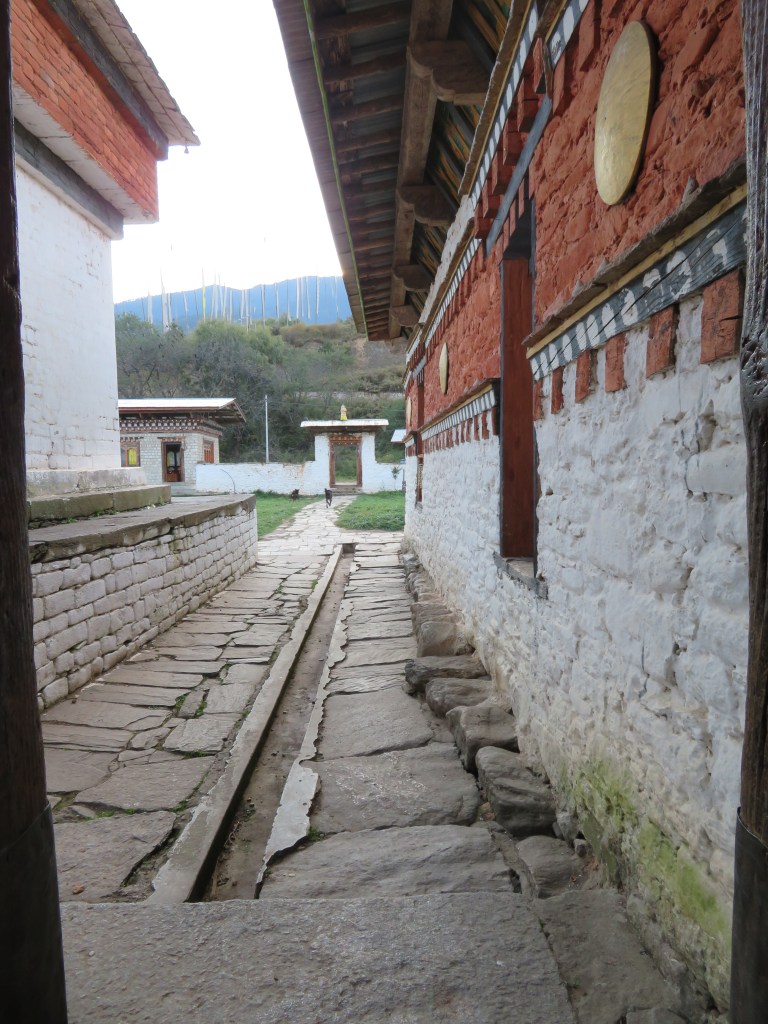
The temple of Jambay Lhakhang was later visited by Guru Rinpoche and later restored by Sendhu Raja after Guru restored his life force. Jambay Lhakhang has been repaired and rebuilt several times over time. During the 8th century, Sendhu Raja who was the king of Bumthang fell ill, and he invited Guru Rinpoche who brought Buddhism to Bhutan to cure him. Guru Rinpoche found out that the King’s illness was caused by the local deities including the powerful Shelging Karpo.
Finding the cause of the illness, Guru chased the deities into a cave, and Guru meditated inside the cave for three months. Guru then subdued the deities including the powerful Shelging Karpo and left his body imprint inside the cave, thus giving the name Kurjey (Body Imprint). Beside the Monastery is a tall cypress tree that is believed to have sprouted from the walking stick of Guru Rinpoche.

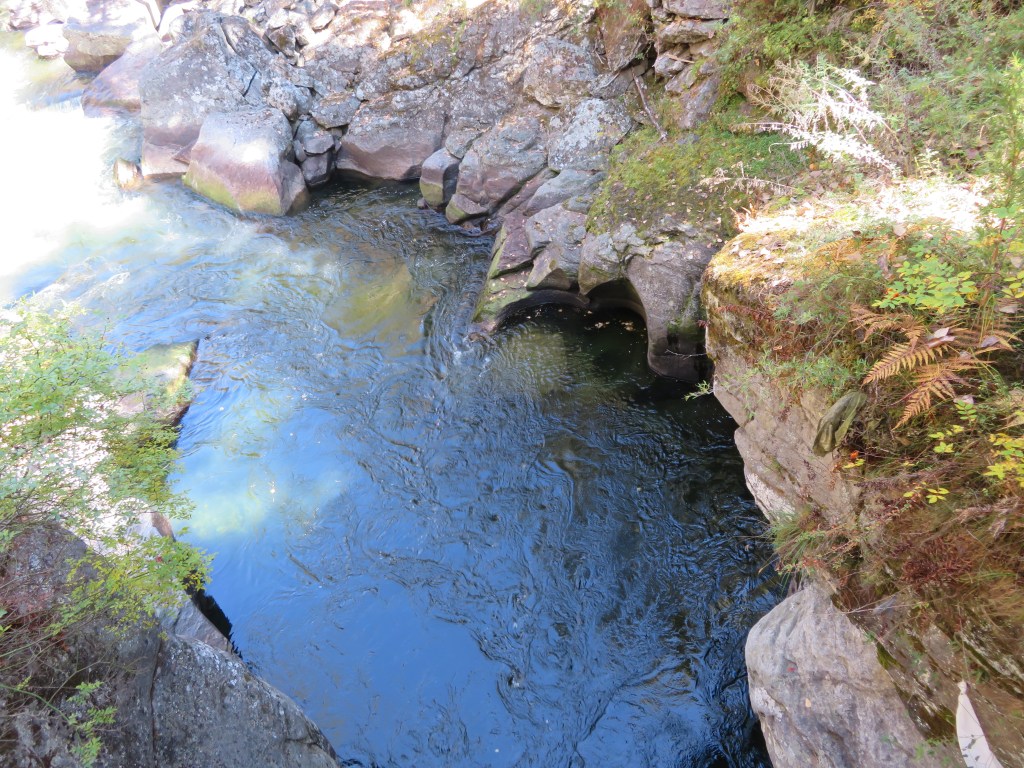
It is believed that in 1495 a Buddhist Saint named Terlon Pema Lingpa jumped into this lake with a burning butter lamp. However, before he jumped he declared to the crowd “If I am a demon I shall die and if I am a true emanation of Guru Padmasambhava, let me come out with the treasures and the lamp still burning.” Accordingly, after a few minutes he came out of the lake holding a statue, a script and ritual skull, with the butter lamp still burning. Thereafter, this lake was known as Mebar Tsho. Text from interpretive sign at site.
 Our Seasons in Shangri la
It must have been so interesting watching the ceremony and wonderful to have received blessings.
LikeLike
Very impressive ceremony.Prayers
LikeLiked by 1 person