The Bhutan Broadcasting System Tower, atop a ridge just outside the city, is the starting point of hikes to Wanditse Lhakhang (monastery) and the Chhokhortse Goembe (temple). Fall has come to Bhutan. It hasn’t rained in weeks and the hillsides are turning brown. It was a beautiful, clear windy Sunday when we started, the hot sun at altitude balanced by the pleasant breeze.
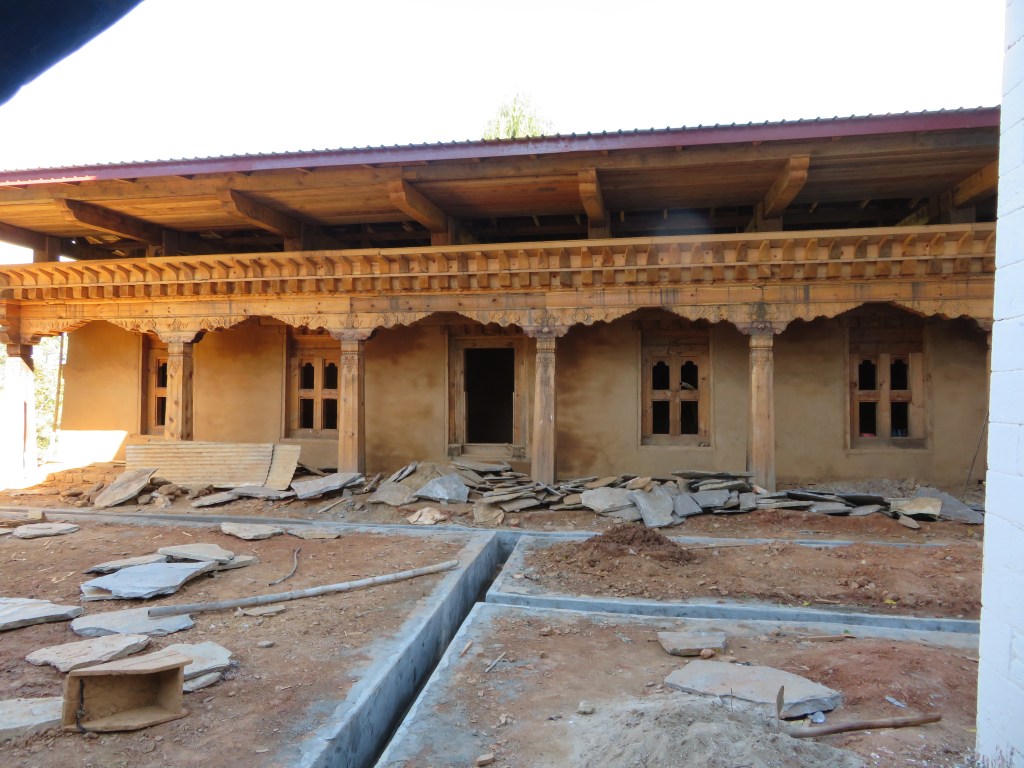
Wangditse Lhakhang was built in the early 18th Century. Now unoccupied, restoration, funded by the Royal Government of Bhutan, was started in 2013 and continues.
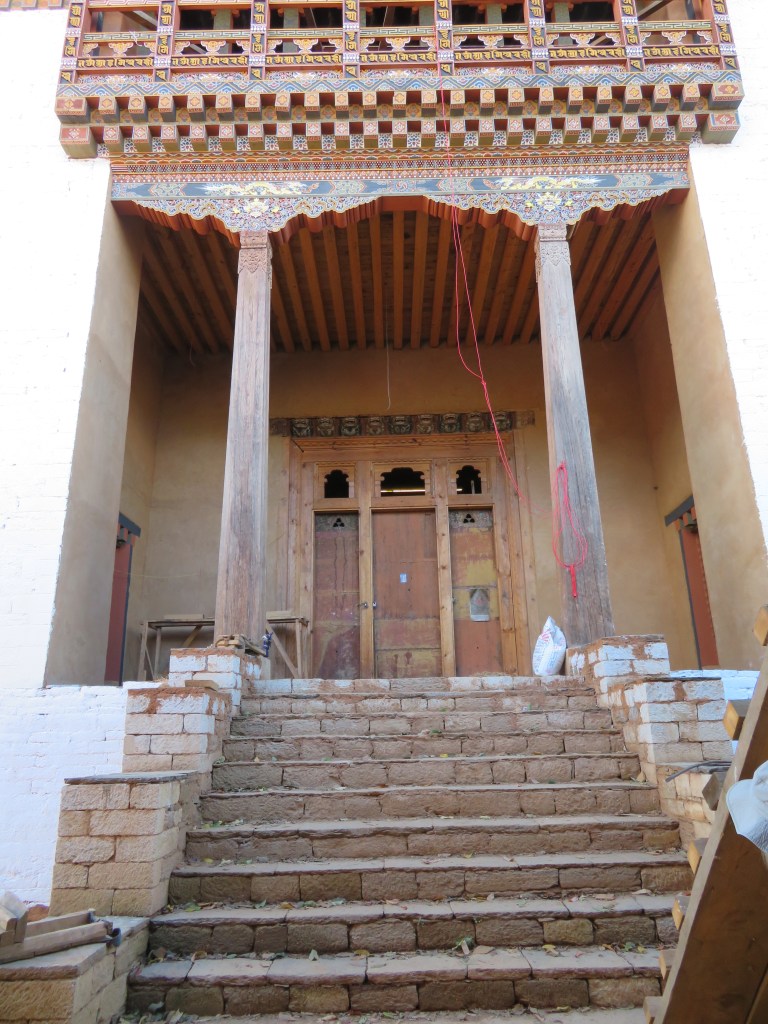

Though newly constructed, the unfinished monk’s quarters felt more like ancient ruins.
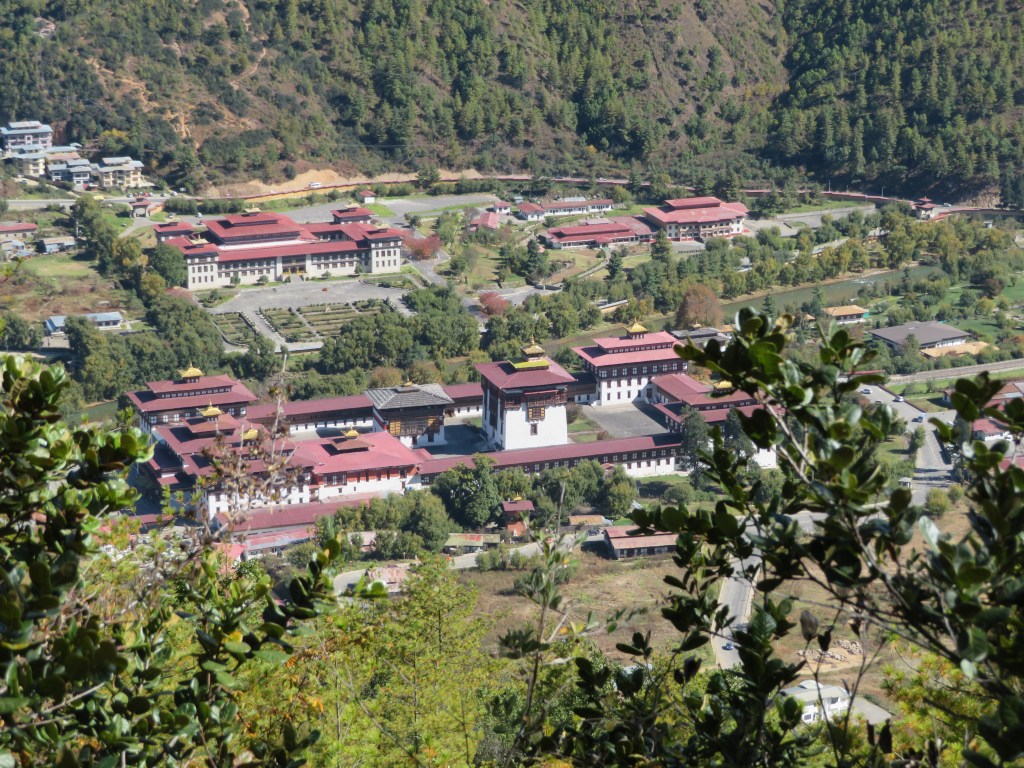
The Lhakhang had a fabulous view of the Tashichodzong in the valley below. The Dzong houses the main offices of the administrative and monk bodies for Thimphu and is the site of the annual Tshechu. While relaxing and enjoying the view, we met the President of the Royal College of Bhutan, out his first hike to Wangditse. We chatted about his involvement in an international effort to introduce the Gross Happiness Index to other countries.
After returning to the BBS Tower, we started the longer hike to Chhokhortse. We passed many groups of picnickers along the way as well as four students from the College of Traditional Medicine taking advantage of the quiet to memorize copies of an ancient text for an upcoming exam.

Of the two temples at Chhokhortse, one was newly renovated but closed to visitors.

Walking just a bit further along, we came to the older temple. Constructed in the year 1345, it appeared to have changed little. The inner temple was much simpler than any we’ve seen, the altar having only one large statue of Sakyamuni Buddha, flanked by smaller statues of the past and future Buddhas. The tapestries and victory banner appeared quite ancient.
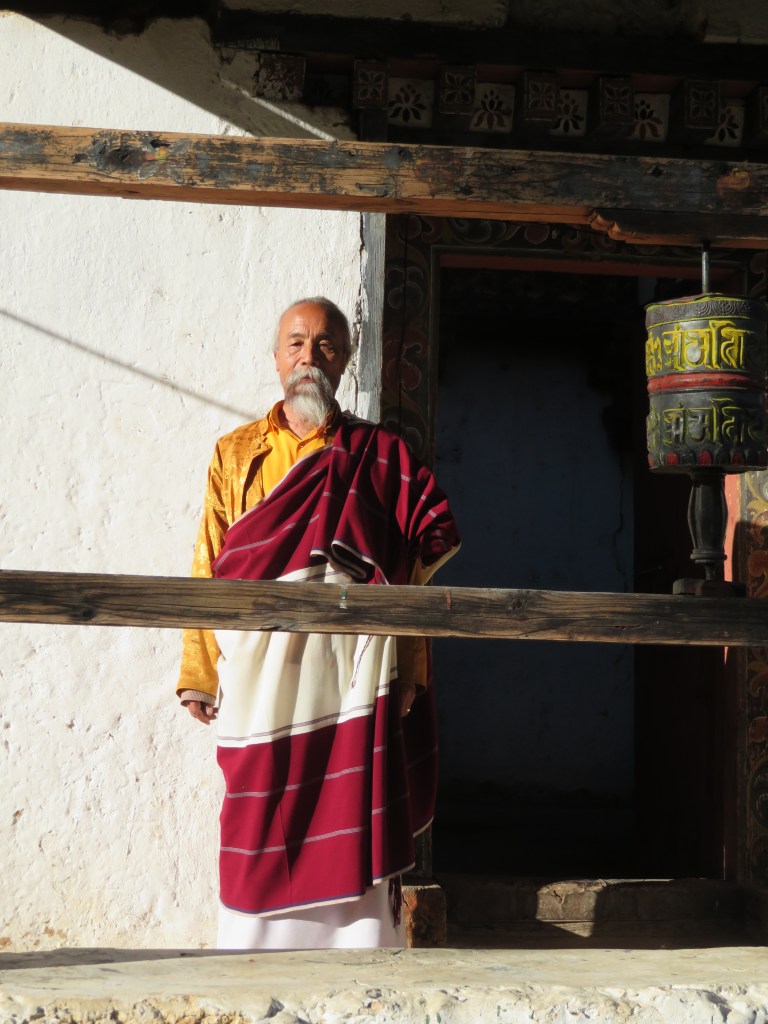
The temple caretaker has resided at Chhokhortse for fifteen years as its sole occupant. He is a member of the Nyingma school of Tibetan Buddhism, the oldest. His monk’s robes are much different than those of the dominant Drugpa school in Bhutan.
Good fortune and auspicious signs greet us wherever we go in Bhutan. As we approached the old temple, sitting at a picnic table was a Parliamentarian from the National Council of Bhutan, having hiked to the temple to avoid his “domestic problems.” He and a friend served as translators while the caretaker entertained us with milk tea and cookies before showing us the temple. Offering them some of the maple sugar candies we had brought to Bhutan, we discussed the potential for maple syrup production in Bhutan before we started back down the mountain.
 Our Seasons in Shangri la
Wonderful experiences. You are getting in a lot of hiking at altitude! Miss you here.
LikeLike