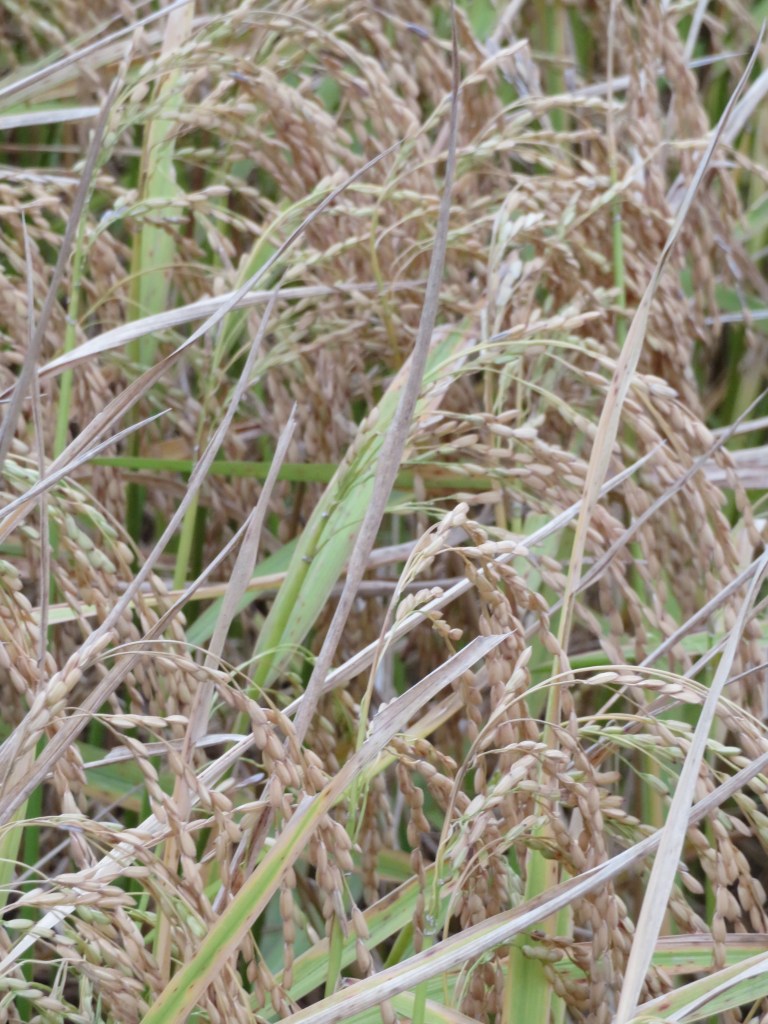
Rice is the foundation of the Bhutanese diet. Red rice is uniquely Bhutanese; nutty and sweet, whole or refined. Meals with colleagues were generally communal, most units at the hospital having an electric rice cooker located somewhere out of the way. We often woke at home to the chop, chop, chop of our apartment building neighbors as they prepared the meals for the day, the sharp raps transmitted through the contiguous concrete walls, marble countertops and water pipes. As everyone left for work or school, neatly sewn bags carrying stacked round containers and thermoses swung by their sides. Dr Bikram, the second year Psychiatry resident, had a wonderful mother-in-law who sent a freshly prepared bounty each day to work, enough for us all to share. I dared to bring potato datshi to share one day, spicy enough and salty enough I thought, only to have the interns ask why I left the salt out.

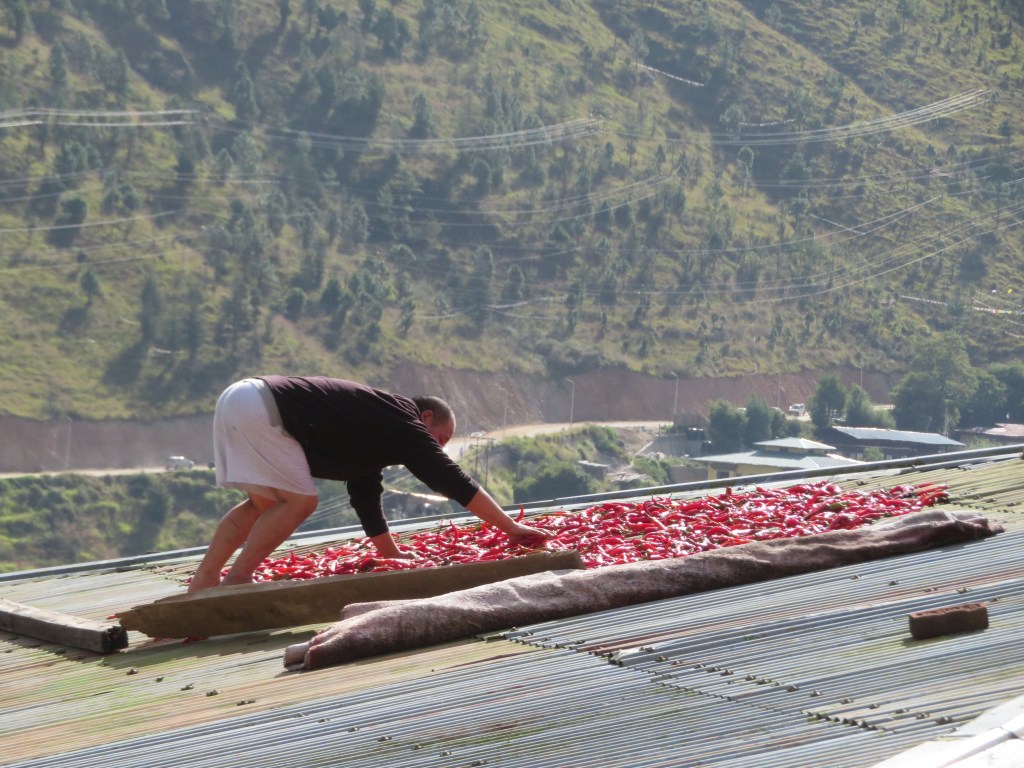
These are drying on the roof across from our apartment. It seemed like every above ground horizontal surface exposed to the sun was covered with chilies.
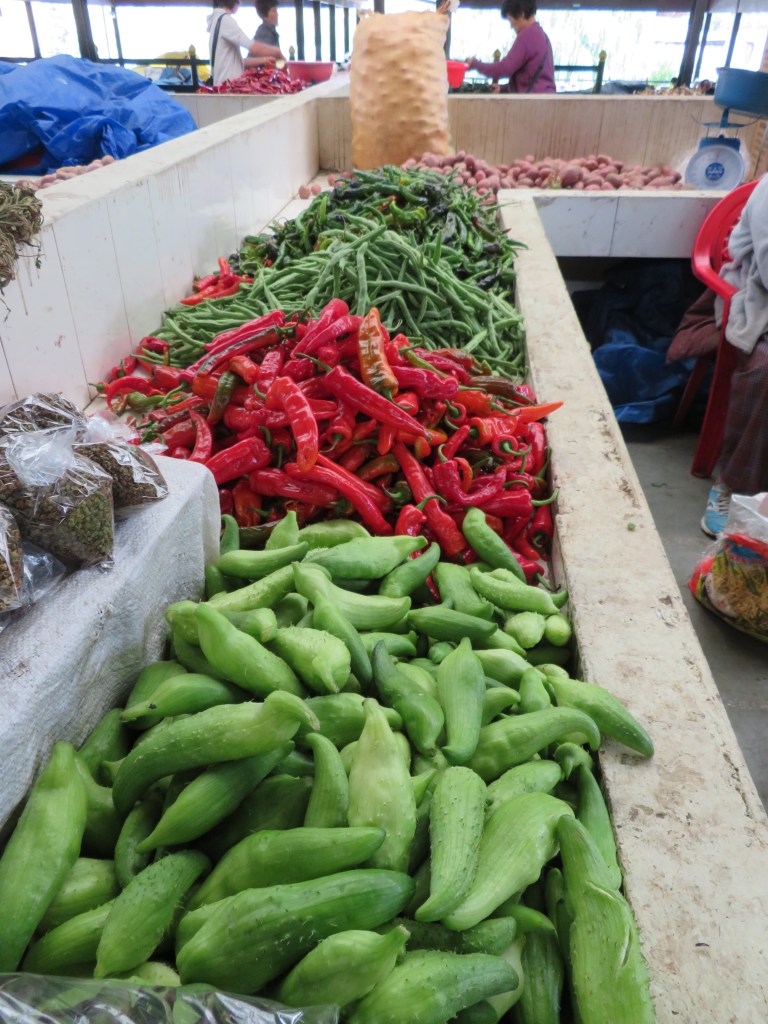
In Bhutan, chili are not considered spices. Chilli are the primary vegetable. Combined with a fresh, crumbly, easily blended cow’s milk cheese called datshi, customary dishes include kewa datshi (potatoes, chillis and cheese,) shama datshi (mushrooms, chilli and cheese,) sag datshi (spinach, chilli and cheese, ema datshi (chilli and cheese), laphu marp datshi (carrots, chilli and cheese,) and combinations with just about any vegetable or meat available.
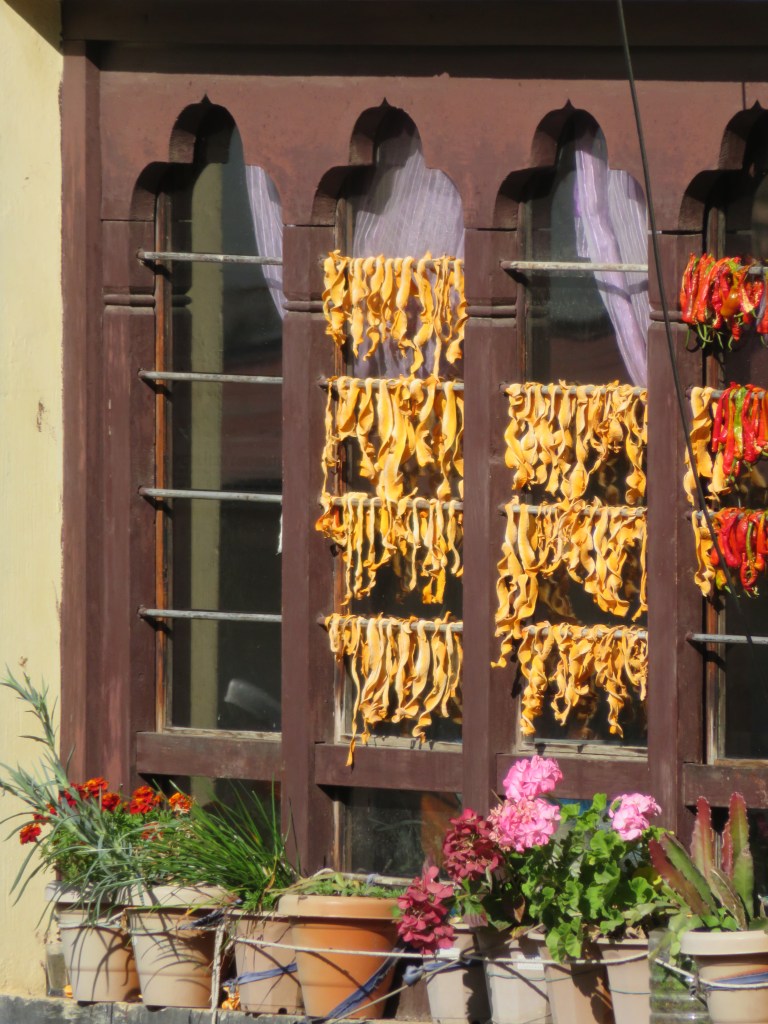
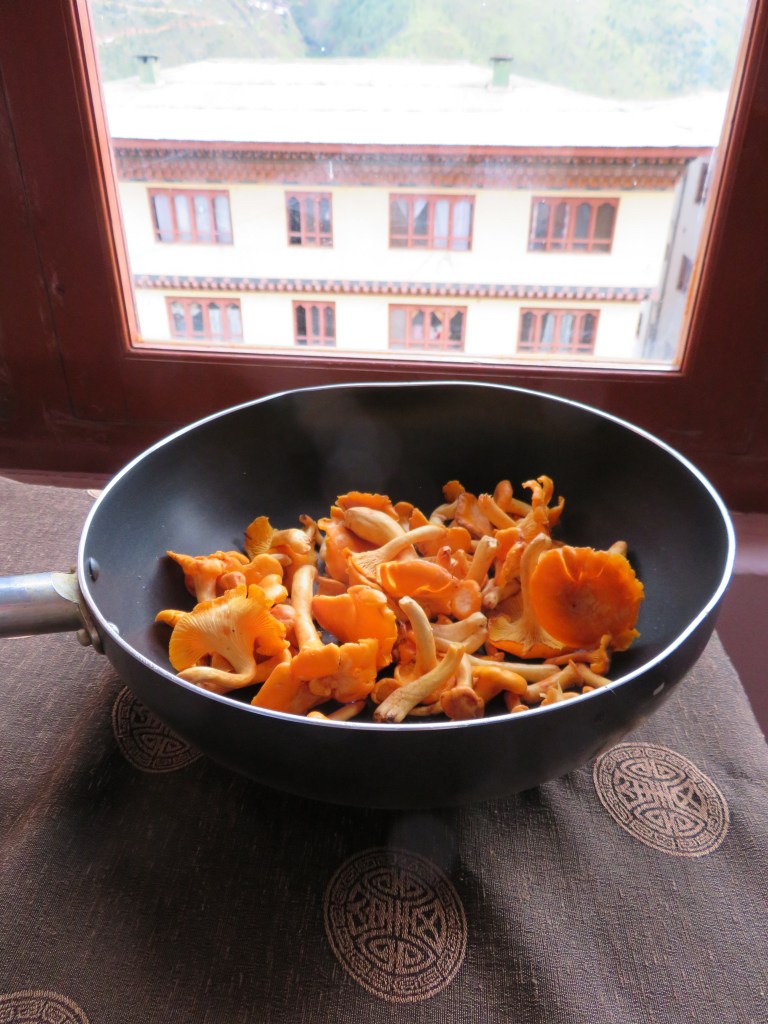
Preserved foods, dried or pickled are an important element of Bhutanese cuisine. Refrigeration is a new, urban phenomenon. Hanging in a neighbors window are strips of squash and the ubiquitous chilli. Dried foods include chilli, turnips, apples, pears, peaches and spinach. Wild, fresh mushrooms were abundant and fabulous early in our stay, dried mushrooms just as amazing as our time to leave approached.
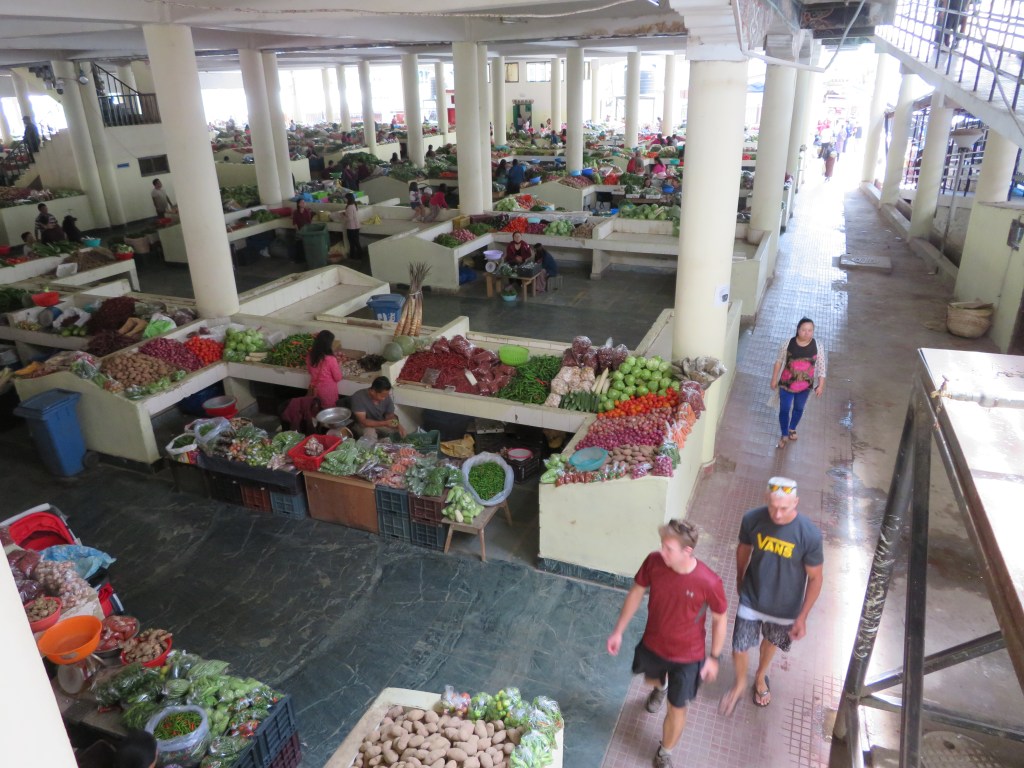
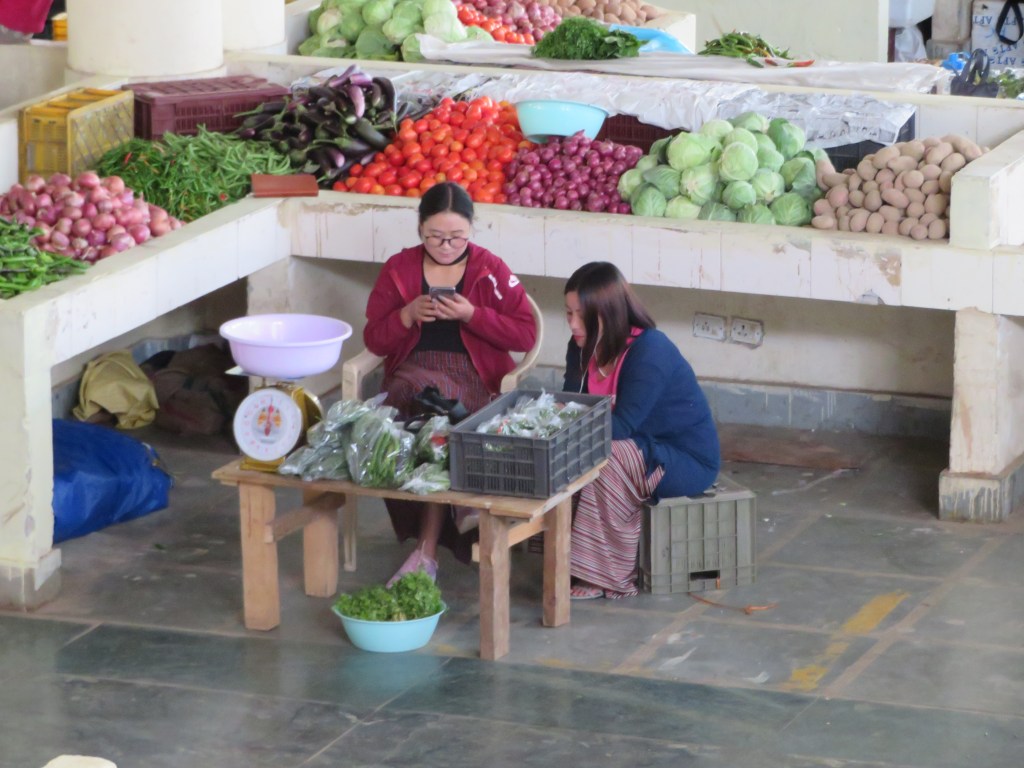
This photo covers perhaps one sixth of the splendid riverside market in the capital of Thimphu. It has one floor for imported fruit and vegetables, one floor for Bhutanese, and separate areas for grains, incense and dried fish. Bhutan is rapidly moving to an all-organic agriculture. With the south sub-tropical, the middle temperate and the north boreal, the selection was amazing, the harvest windows for seasonal vegetables extended as they moved northward. With 70% of the country forested, the wild harvested mushrooms were especially impressive.
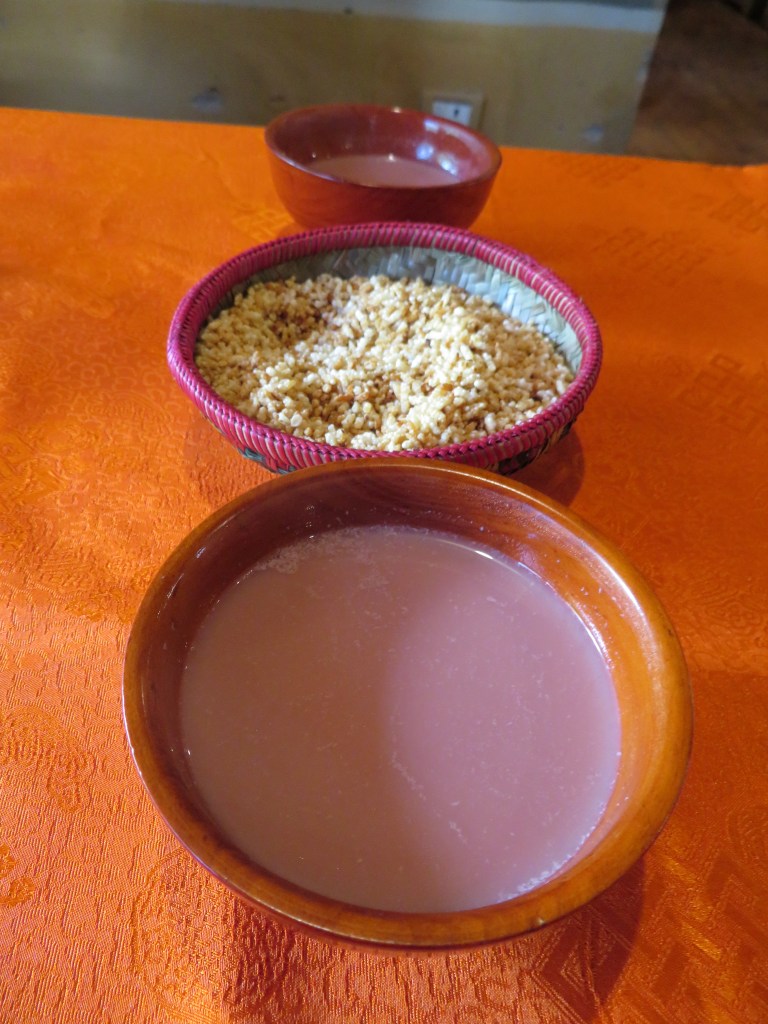
Nearly every sit-down encounter in Bhutan, professional or personal, starts with a snack, usually tea and momos. More often than not, the lightly spiced black tea is served with milk and sugar, milk tea. A special treat is butter tea, black tea with salty butter. Before trying it, our friend, Sally, suggested we think of it as a broth, rather than a tea. A good idea. It was delicious. Both teas are customarily served with toasted rice to float or eat separately, as it is here, or raw rice crushed into flakes.
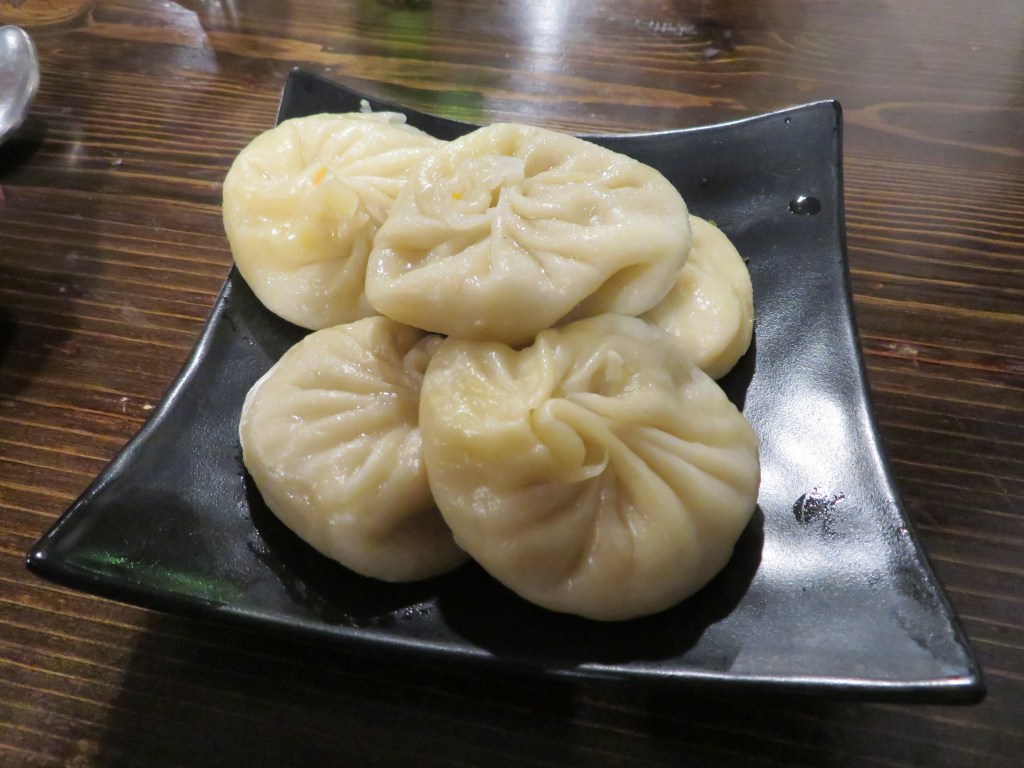
These stuffed dumplings, five to an order, were, without question, our favorite Bhutanese food. Served with ezay (chilli relish), they could be ordered steamed, sauteed or deep fried (OMG). Like tea, they were everywhere. You couldn’t even go to a lecture without a thermos cask of momos being passed around with ezay. Our favorites were, of course, veggie, stuffed with cabbage, cheese, potatoes or a combination of the three. Definitely not to be missed and on my list for learning how to make them at home.
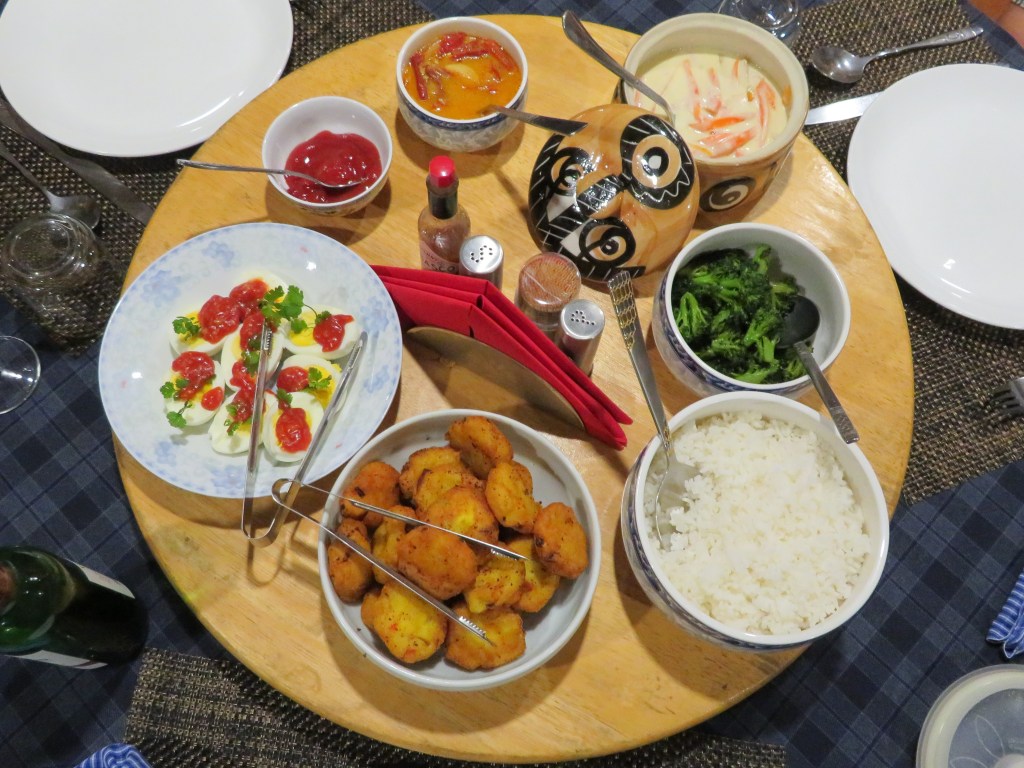
Clockwise from 12 o’clock: Chilli and cheese, carrots and chilli and cheese, broccoli, rice, potato croquette, eggs with chilli sauce and extra chilli sauce

The National Heritage Museum is a must visit with it’s preserved 17th century farm home. Don’t leave without eating at the internationally known traditional restaurant. Notice the little rice ball at the bottom right. Traditionally, Bhutanese wash their hands by rolling a ball of rice between them. It works incredibly well. Next to the discarded hand cleaner are two new foods, fried chilli cheese and buckwheat pancakes. Buckwheat pancakes are a traditional food from central Bhutan. Making them at home, we enjoyed them on picnics with buckwheat honey, but they were also good with curries and datshi.
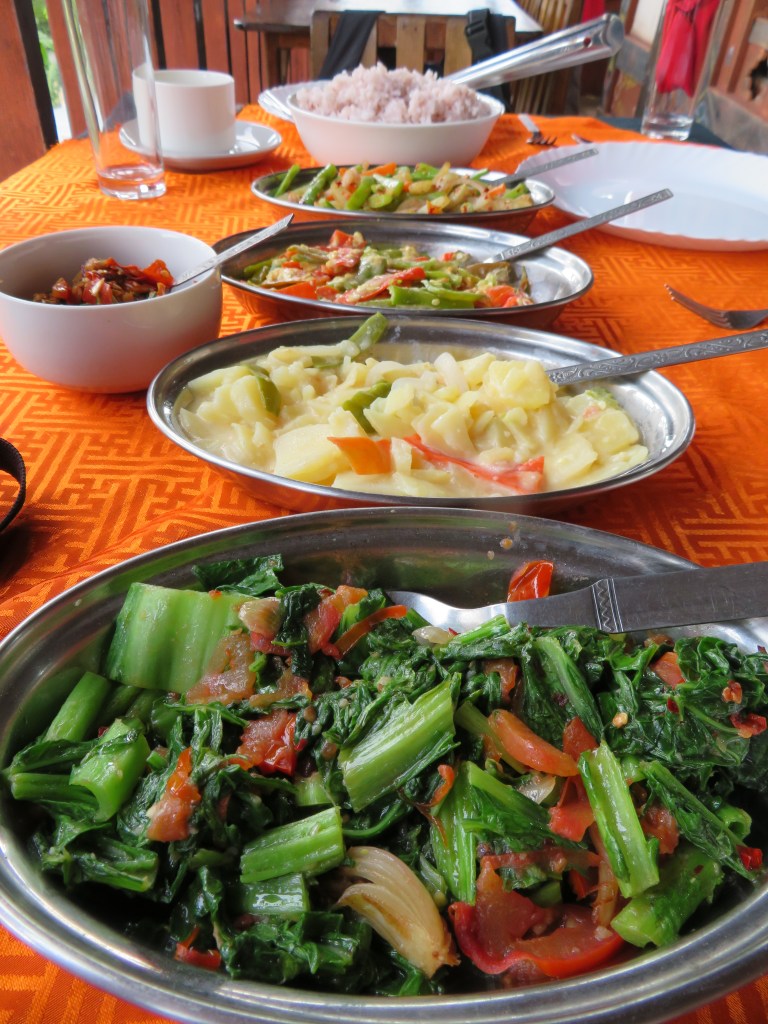
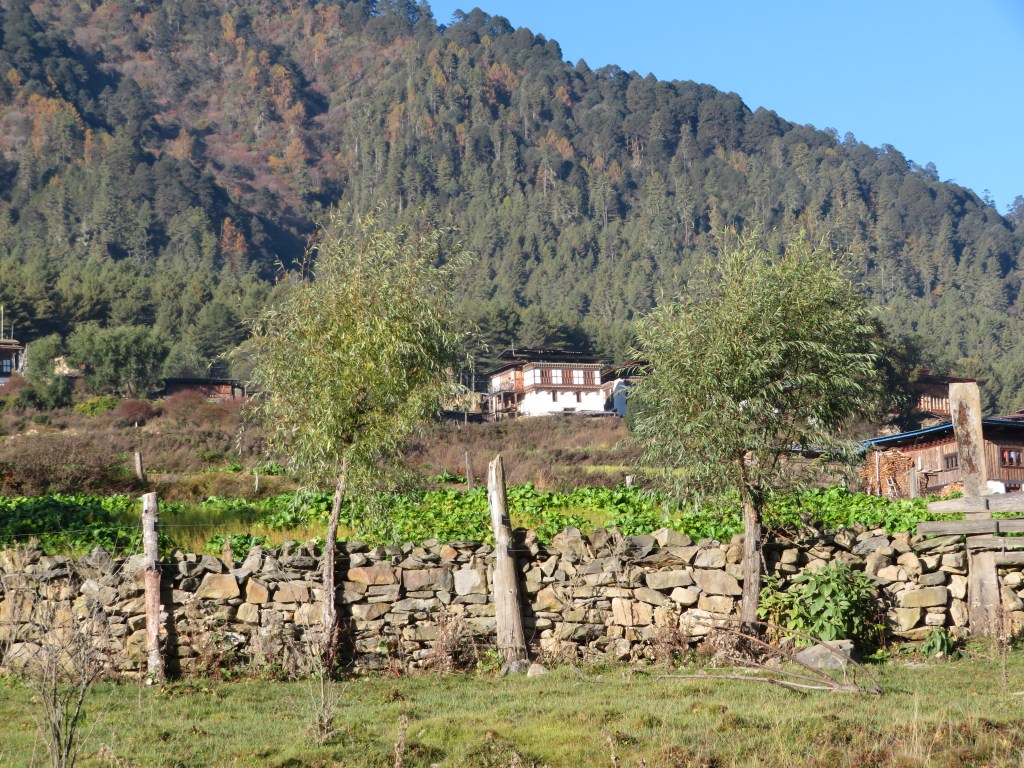
The human-wildlife interface poses problems in Bhutan, more for farmers than for wildlife. Being a Buddhist kingdom, the killing of wildlife is prohibited. In the South, elephants have chased many a farmer off their land, destroying crops and even homes. In central Bhutan, native boars are endemic, necessitating five to six foot high stone fences around gardens to prevent the crops from being rooted up by their tusks.
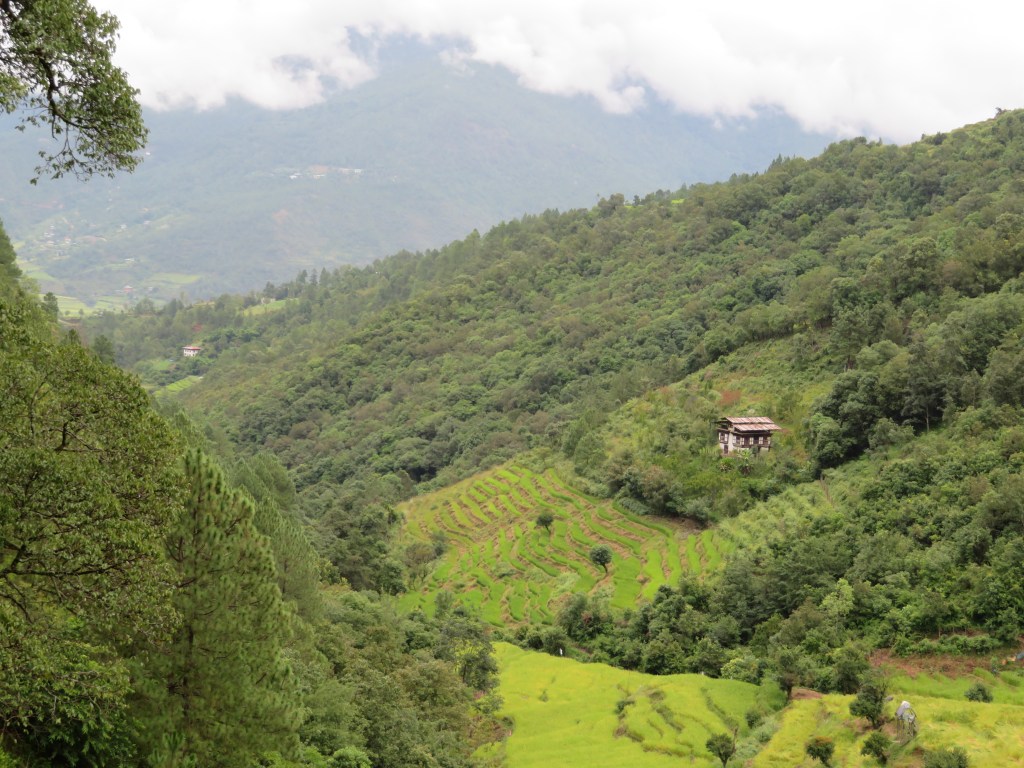
Most agricultural land in Bhutan is terraced and irrigated. Only three decades ago, most of what is now the city of Thimphu was paddy. Inefficiencies in irrigation and inconsistent distribution of water, especially in the face of climate change, are major areas of concern being addressed by the government. Bhutan aspires to become food self-sufficient but has a long way to go in this regard.

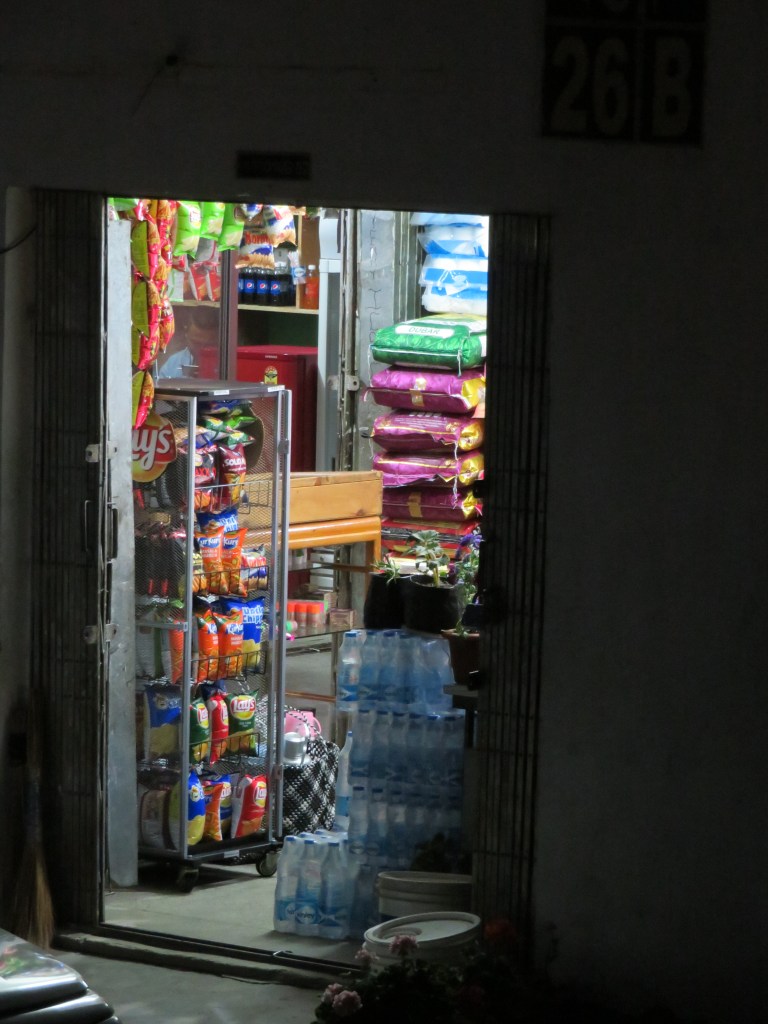
Fifty pound bags of rice, stacked in contrast to chips and bottled water. There were four similar shops on our block, carrying the basics of boxed milk, eggs, juice drinks, soda, cereals, candy, chips, biscuits and bread (not Bhutan’s culinary strong point). Three blocks down the street was a dairy store carrying fresh milk, kefir, Emmental cheese and an amazing semi-soft cheese. One block behind our apartment, another small shop carried a selection of produce changing daily. It seemed like every other alleyway downtown was a produce market. There was certainly no need to go without.
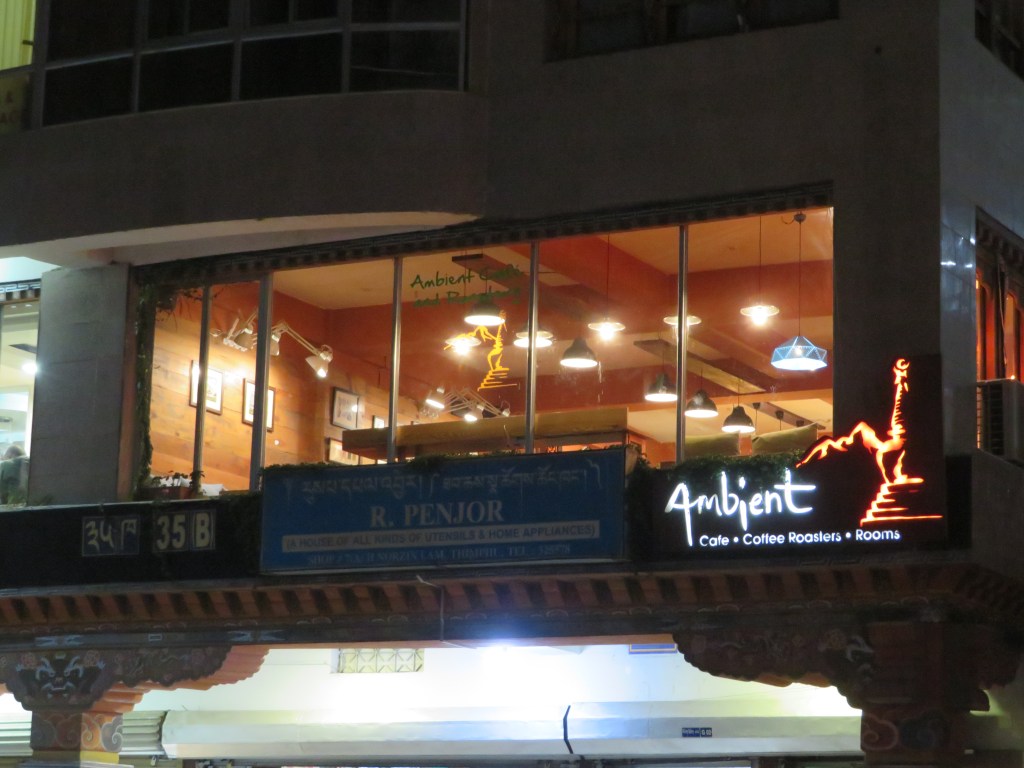
Our favorite Western style restaurant
The Ambient Cafe, second floor on Norzin Lam not far from the traffic circle, was operated by a very warm and welcoming young Bhutanese couple and known as ‘the cafe’ for the expats. The menu was 100% vegetarian and as varied as you could imagine, with particularly awesome veggie burgers, waffles, smoothies and baked goods. The vegan banana bread was the best and the proprietress was kind enough to give us the recipe. If you’re lucky enough to live in Saranac Lake, I may make you some.
So, those are the basics of our food experiences in Bhutan. Much more went unphotographed. Once hungry and presented with a plate of food, I would soon forget about my camera.
 Our Seasons in Shangri la
Thanks for this. I hsve been drinking butter coffee for months anxious to try buttered tea. A bullet blender takes the place of churning the butter into the coffee/tea.
LikeLike
Very interesting and inspiring food. Thanks for sharing.
LikeLike