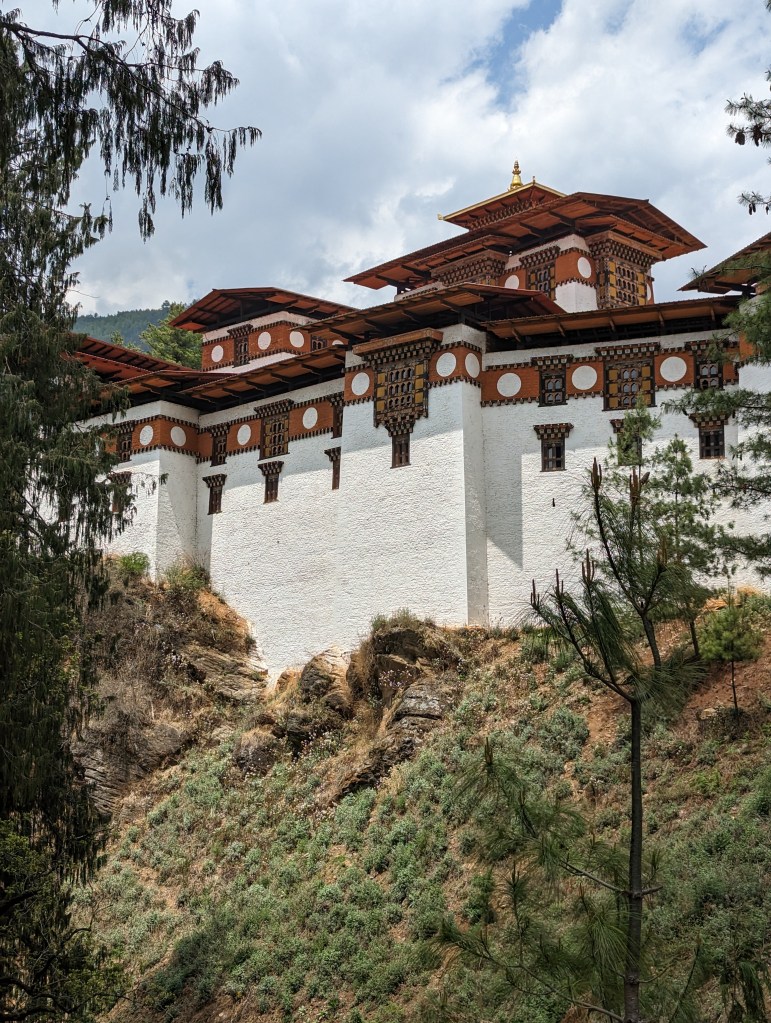
Drukgyel Dzong, perched on a ridge to the north of Paro Valley, was built in 1649 under the direction of Zhabdrung Ngawang Namgyal, the unifier of Bhutan, to commemorate multiple victories over the invading Tibetans and Mongols. Drukgyel was unique among the many dzongs Zhabdrung built. Other dzongs were designed to accommodate religious and secular administrative functions. Drukgyel’s sole function was defensive and it maintained the largest arsenal in the fledgling nation.
Drukgyel Dzong continued to serve as a defensive fortress until 1951 when it was destroyed by fire and left to ruins. In 2012 an application was made for designation as a World Heritage Site, but it was decided instead to restore the structures instead. Restoration continues a work in progress.
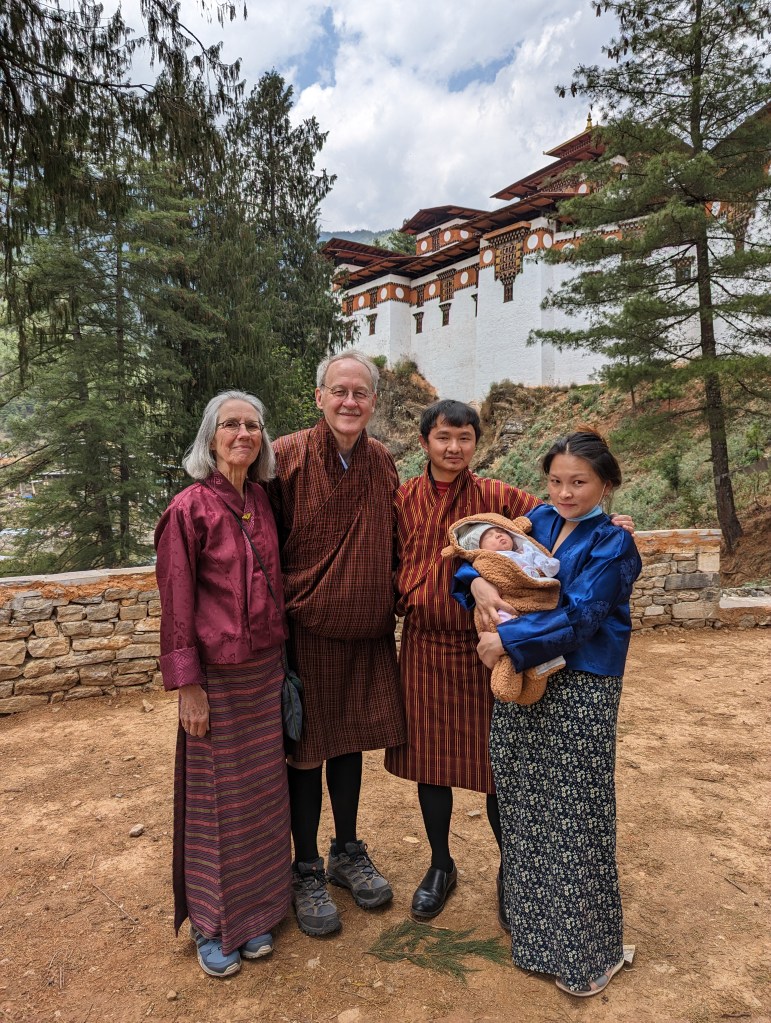
Margaret met our good friend, Kinley Tshering, in 2019 when she was working with the oncology department at the Jigme Dorji Wanchuck National Referral Hospital. In 2019, our first outing was with Kinley and Pabi, another oncology nurse. Together we climbed to Taktsang, the iconic Tiger’s Nest.
Three years later, Kinley is now married to Tshering Llamo and they have a beautiful daughter, Ugyen Yangden. Kinley, Tshering and Ugyen were our hosts and guides at Drukgyel Dzong. It was a beautiful, sunny day, perfect for exploring.
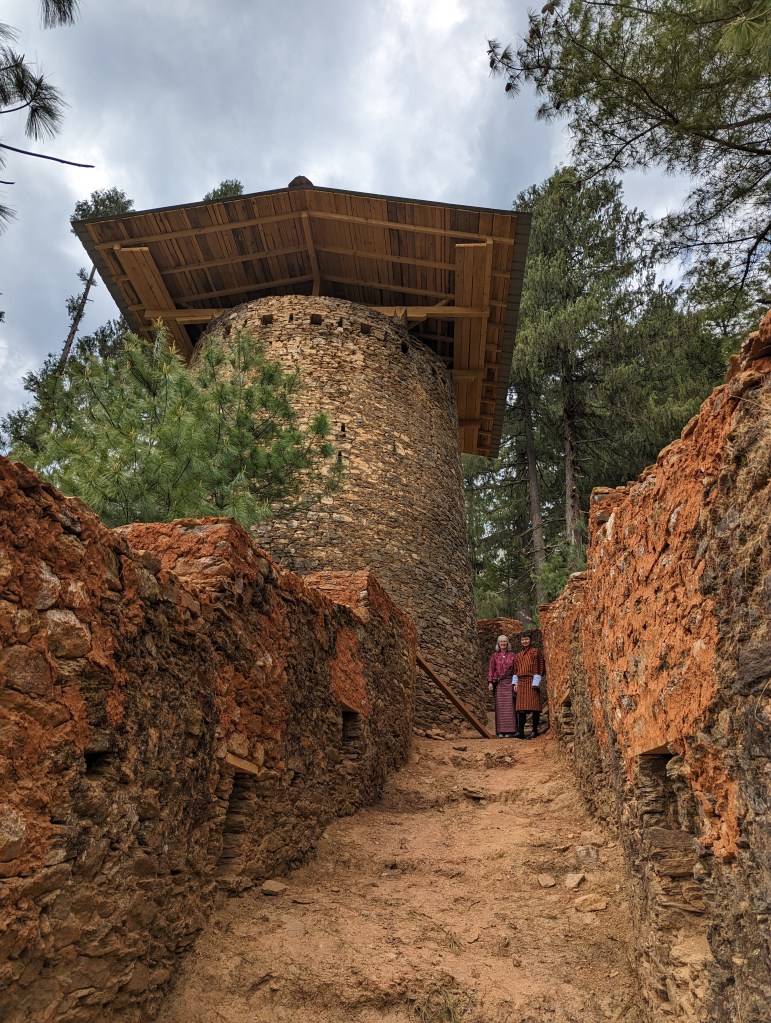
The dzong, with only a single entrance, was surrounded by ta-dzongs, round, fortified watchtowers, all connected by fortified walls and secret passages to ensure access to water during a seige. This ta-dzong has a new roof and the passageway walls are being repaired.
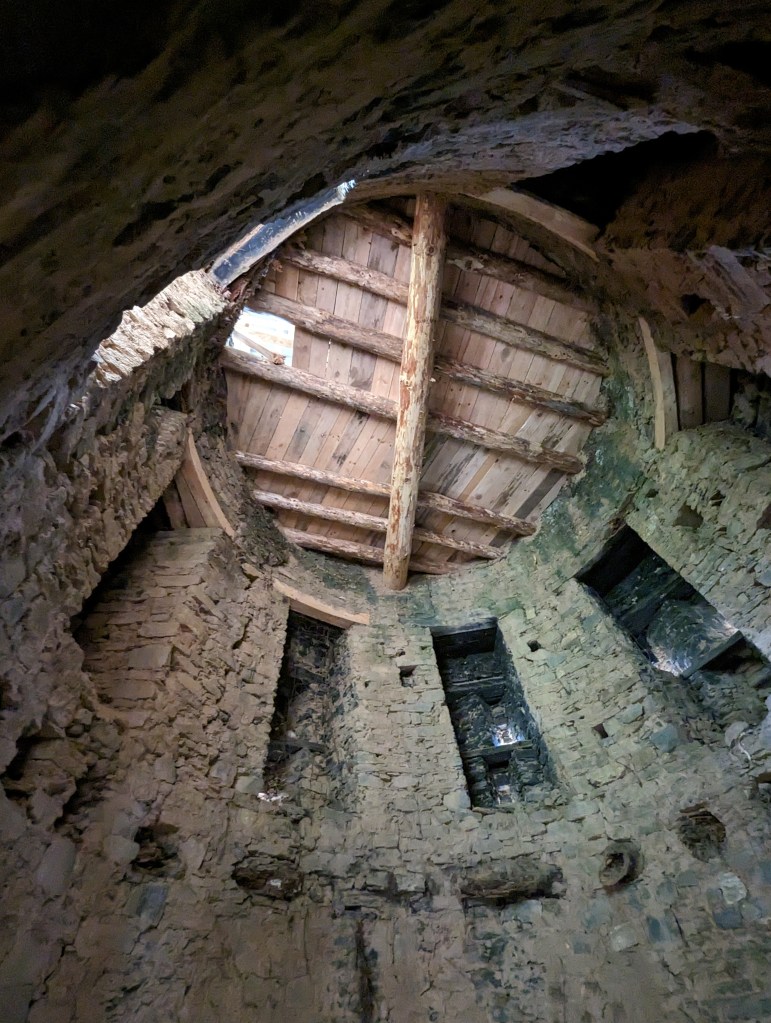
Inside a ta-dzong. Visible are the remnants of the cross beams for the second floor and the restored third floor with an opening beneath the roof..
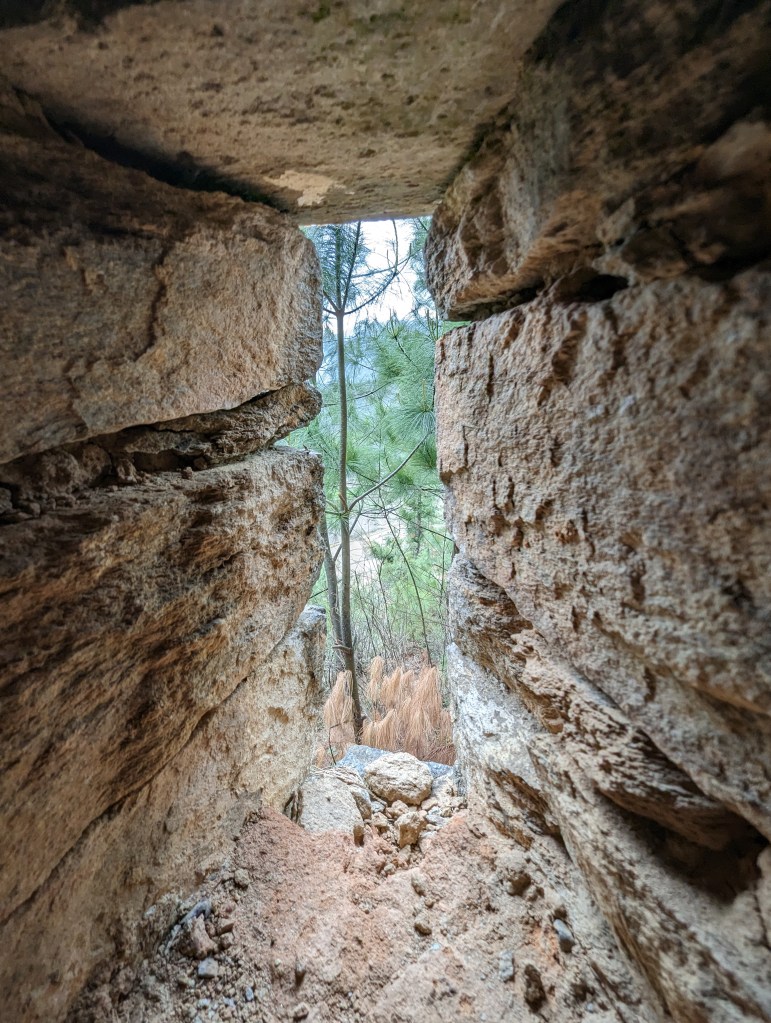
An arrow slit in a passageway wall, narrowing from two feet wide to a palm’s width, overlooking the Paro Valley. Historically, the Bhutanese were renown archers. Archery is still officially the national sport.
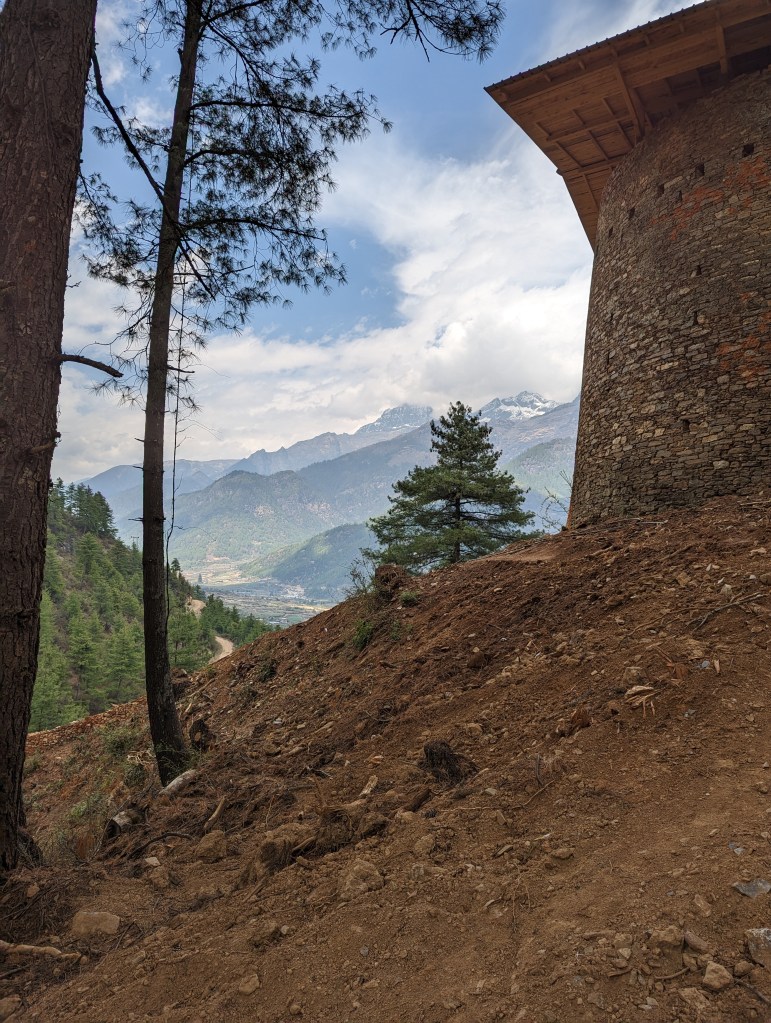
Looking North to Tibet. Zhabdrung Ngawang Namgyel fled Tibet in 1616 when his recognition as the Drukpa Ralung lineage holder was challenged by a rival family and he faced arrest. In a vision, the chief guardian deities of Bhutan assured him of a welcome and he established a new base in western Bhutan. Zhabdrung is venerated as the unifier of Bhutan, his likeness a feature in most temples, sharing a position of prominence with Shakyamuni Buddha and Padmasambhava, the bringer of Buddhism to Bhutan. Zhabdrung died in 1651, two years after completion of the Drukgyel Dzong, but his death was kept a secret out of concern for the stability of the young nation and the fear the news would embolden Tibetan leaders and risk re-invasion.
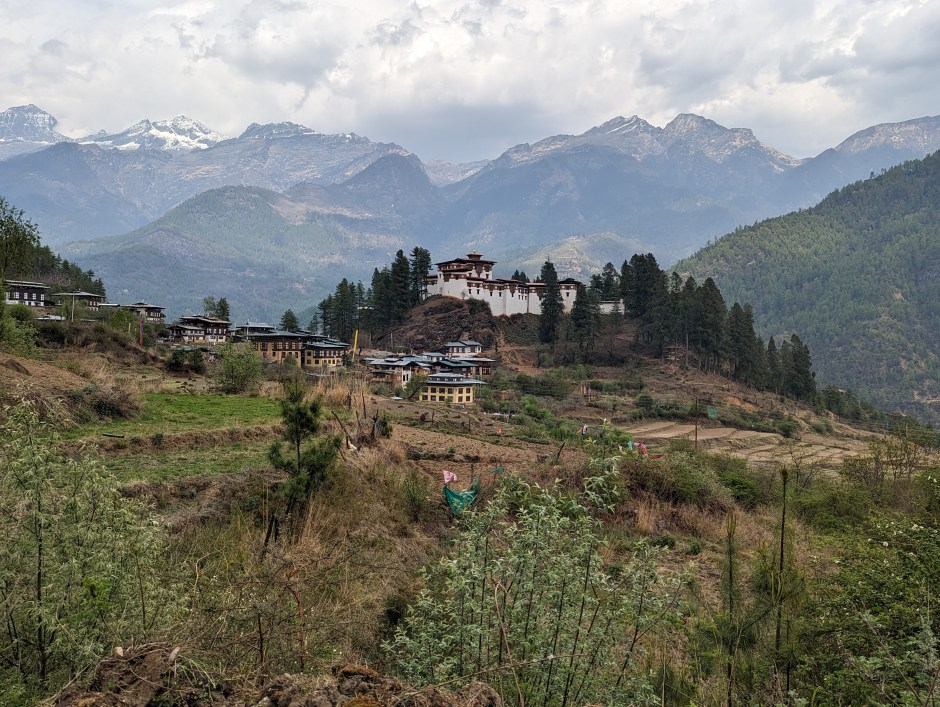
Drukgyel Dzong
 Our Seasons in Shangri la
Nic to read the history and to follow you on this journey. I hope that you are feeling well and having a productive time.
LikeLike
Gorgeous photos! Thanks for sharing.
LikeLike