Merak: Part One, the Journey

Merak is a village and a region in the far east of Bhutan, isolated for centuries by its geography. Approximately 350 families of people known as the Brokpas live in Merak and neighboring Sakteng. The Brokpas have a unique culture, language, and dress, with a life style centered on yak herding and breeding. Margaret and I had the unique opportunity to visit and meet with them in a variety of settings. It is not easy to get to Merak but it is far easier than it was only seven years ago. Our first post on Merak is the journey itself.
Mindu La

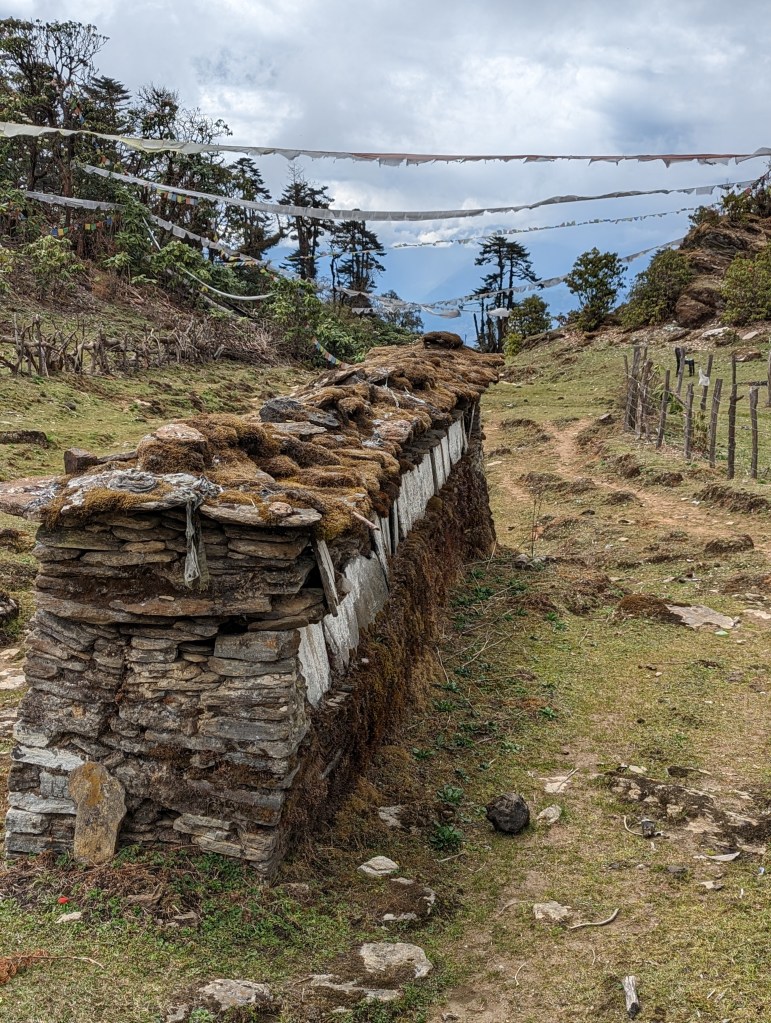
Mindu La is a waypoint on the two day journey by foot from Merak to Chaling, one of many paths traveled for centuries for trade with the world outside Merak. Our driver chose it as our picnic spot en route. Shown is a mani wall. The six syllable Tibetan mantra of Avalokiteshvara, the boddhisattva of compassion, is inscribed on each of the flat stones along the side to bless the herders and pilgrims as they pass.

Our intrepid guide for the week, Pema Wangchuk, preparing a lunch of rice, potato, fern datshi, and local mushrooms. Pema is from Trashiyangtse and his native language is Scarchop. The Brokpas speak Brokpa Kha, one of twenty unique languages in Bhutan, but fortunately have traded for centuries with Trashigang and Trashiyangste, so many of them speak Scarchop as well.
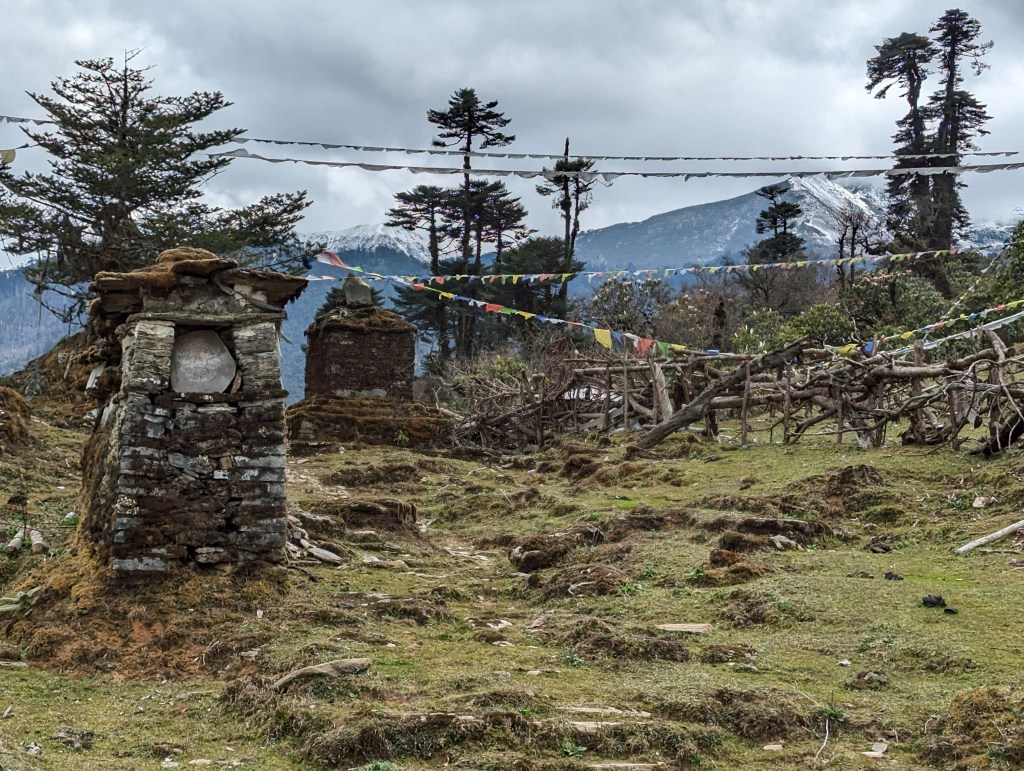
Our chilly, haunted picnic spot among rhododendron forests.
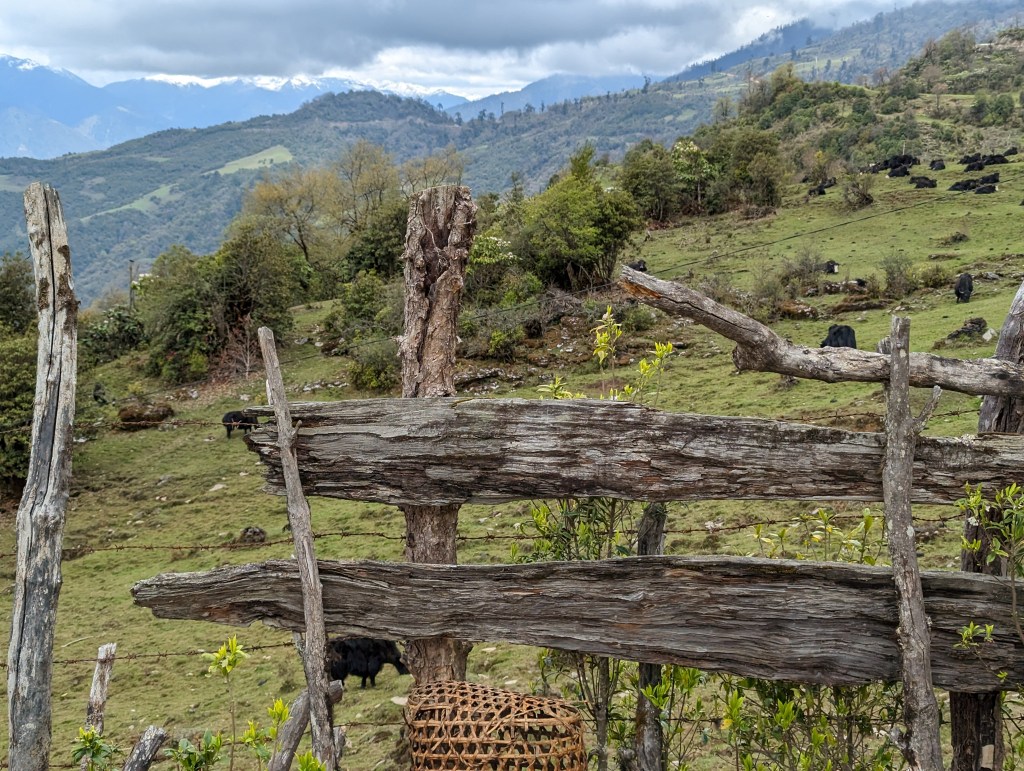
A roadside stop in yak pastureland. In 2015, the first motorable road reached Merak. Even with the road, it was a bone-rattling four and one half hour journey in one of the ubiquitous Bolero all-wheel drive pick-ups, the “Hilux” of the east. All along the way, concrete rain gutters were being installed in preparation of blacktopping the dirt road all the way to Merak and on to Sakteng. Remarkably, electricity preceded the road by five years and cellular service by two. Internet was crucial during the pandemic as school went entirely online.

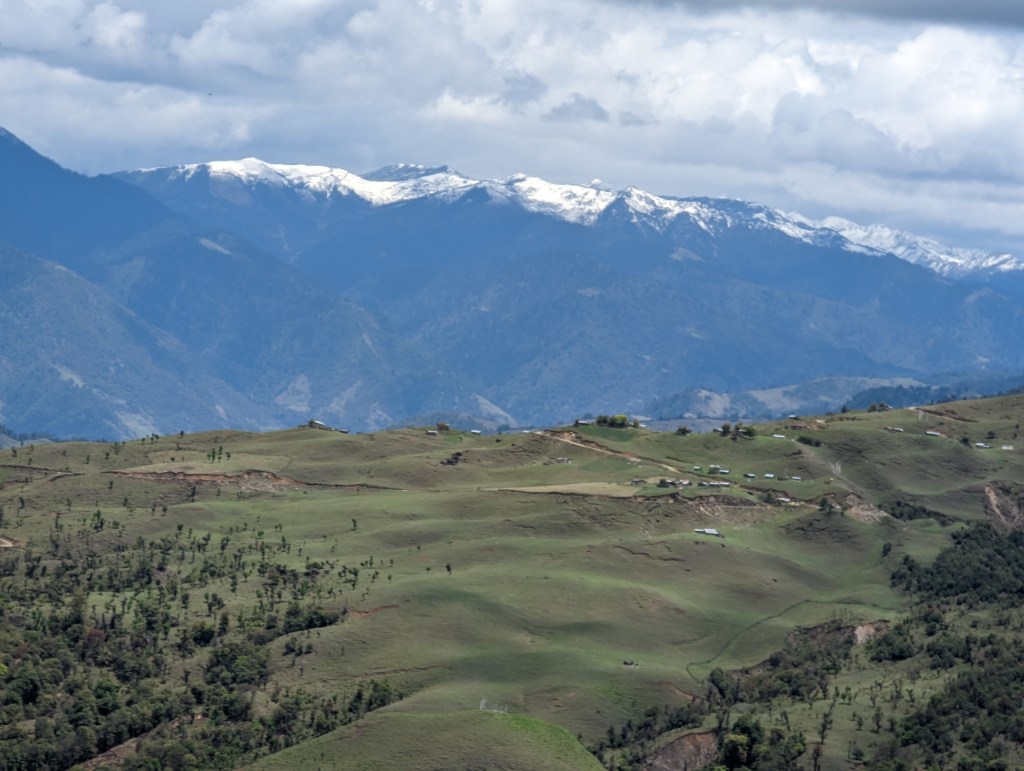
The Brokpa are semi-nomadic yak and sheep herders. In the summer they tend the herds in the wide-ranging pastures. In the winter, they return to there houses, usually single story, made of stone and with small windows. Often referred to as highlanders, the area they occupy sits at about 3500 meters altitude.
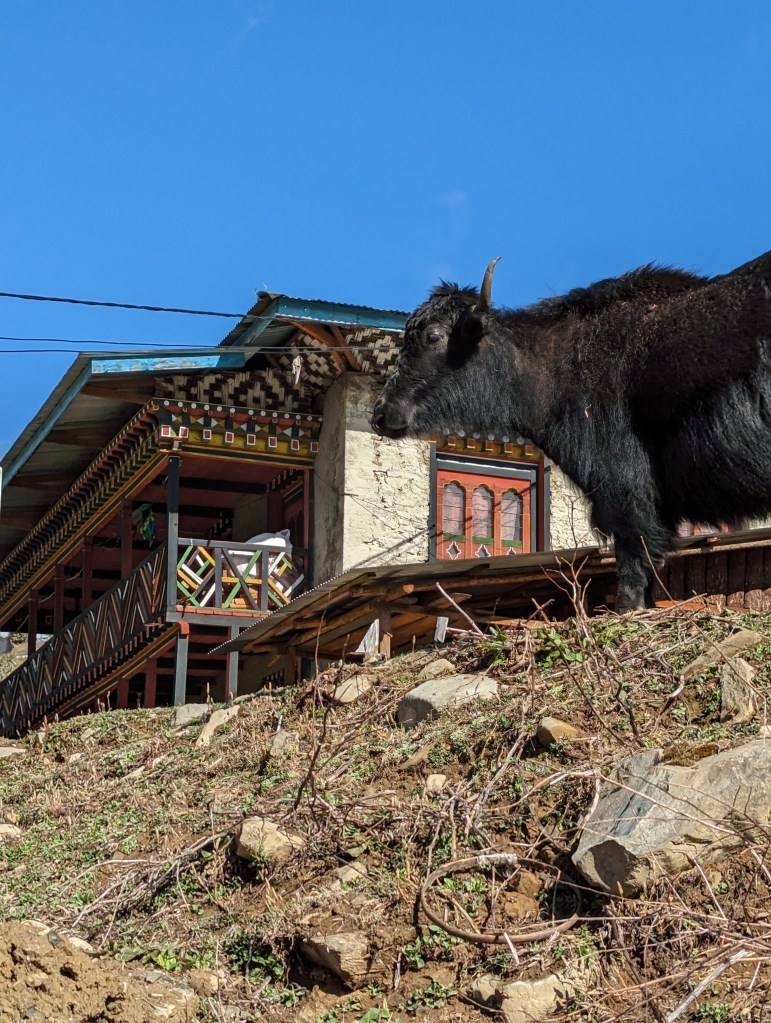
We’ve arrived at our homestay for the night. A traditional house, our accommodations were challenging for soft westerners. The walls allowed light and cold in through cracks, the plumbing was largely non-functional and the only heat was a smoky woodstove that required keeping the house doors open and was not kept going through the night. Warm hospitality only goes so far. Margaret and I layered on the clothes and hats, snuggled up on the hard mattress of a single bed, and piled on the blankets as it snowed outside. Our hosts were going about barefooted.
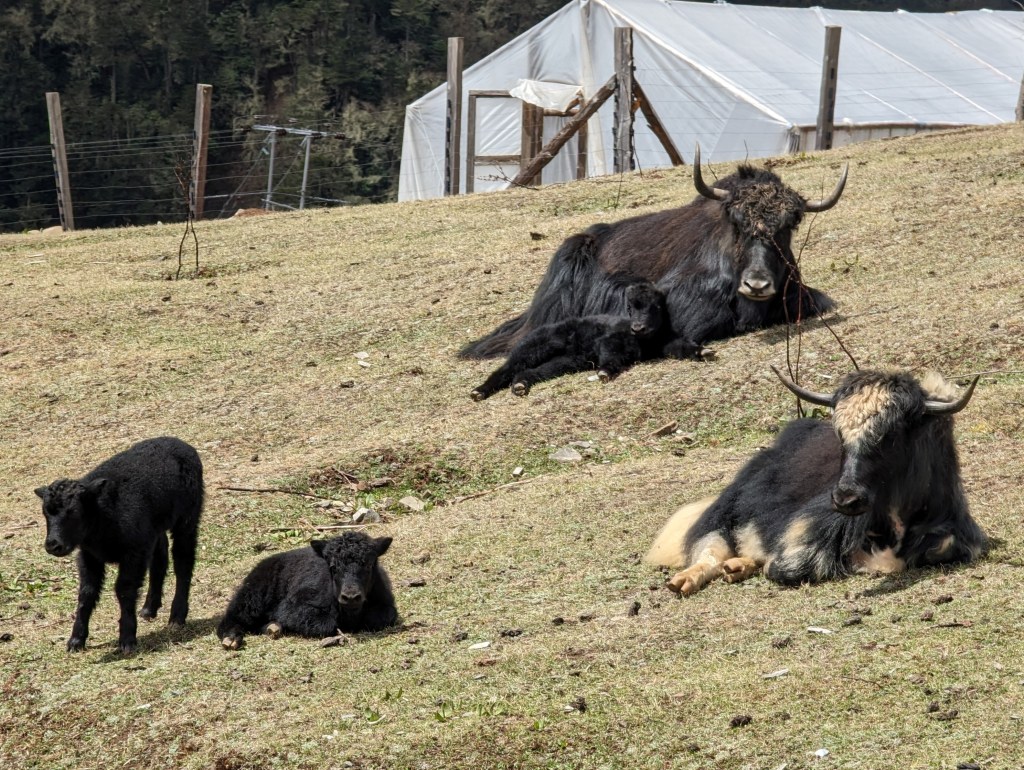
Our new neighbors. It’s calving season. Every family keeps yaks for the milk, butter and cheese that anchor their subsistence economy and permit trade for other essentials. Polyurethane greenhouses have made their way to Merak to extend the growing season and foraging is an important source of vegetable nutrition. We ate local ferns, local mushrooms, local spinach and a foraged bitter herb with reputed medicinal value (well, we could have caught pneumonia and we didn’t.) Local honey was especially good.
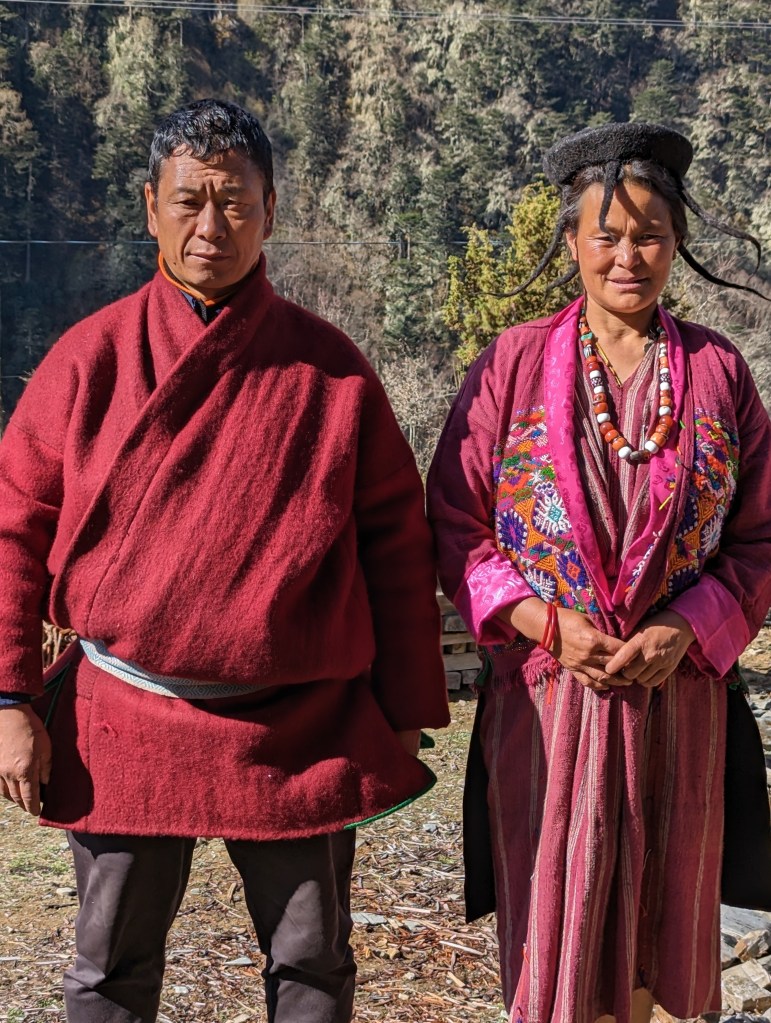
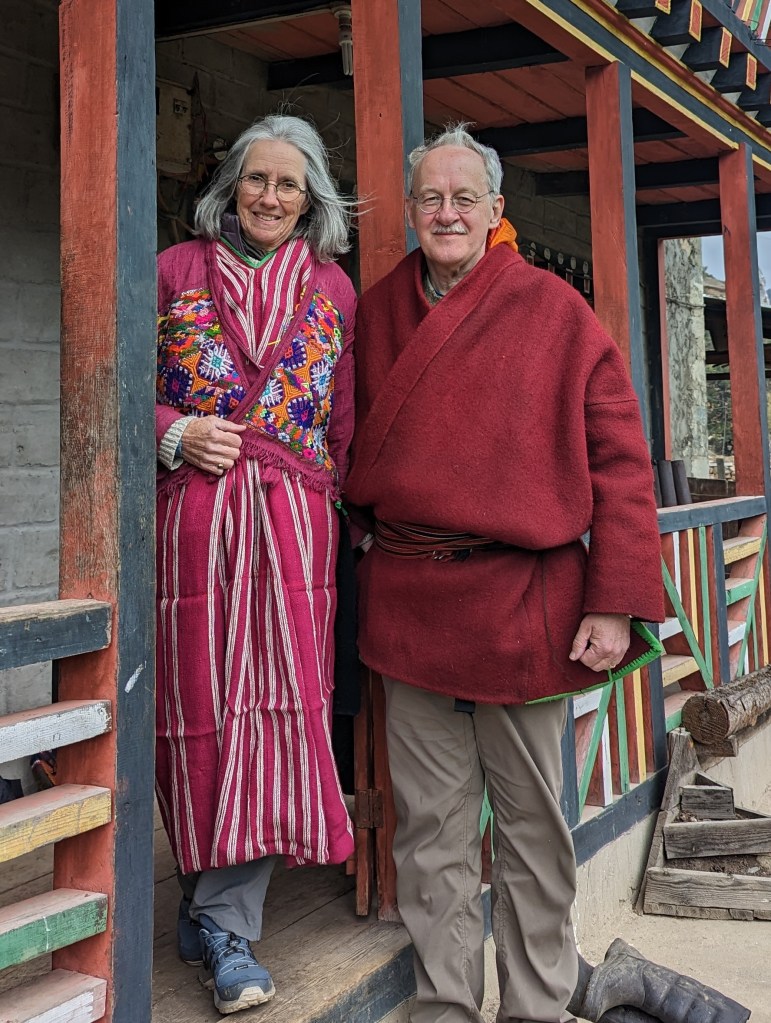
Our hosts, Lobzang (Luri) Tashi and Sangay Dema. Lobzang is wearing the traditional thick red wool tshokan chuba, Sangay a shingkha.
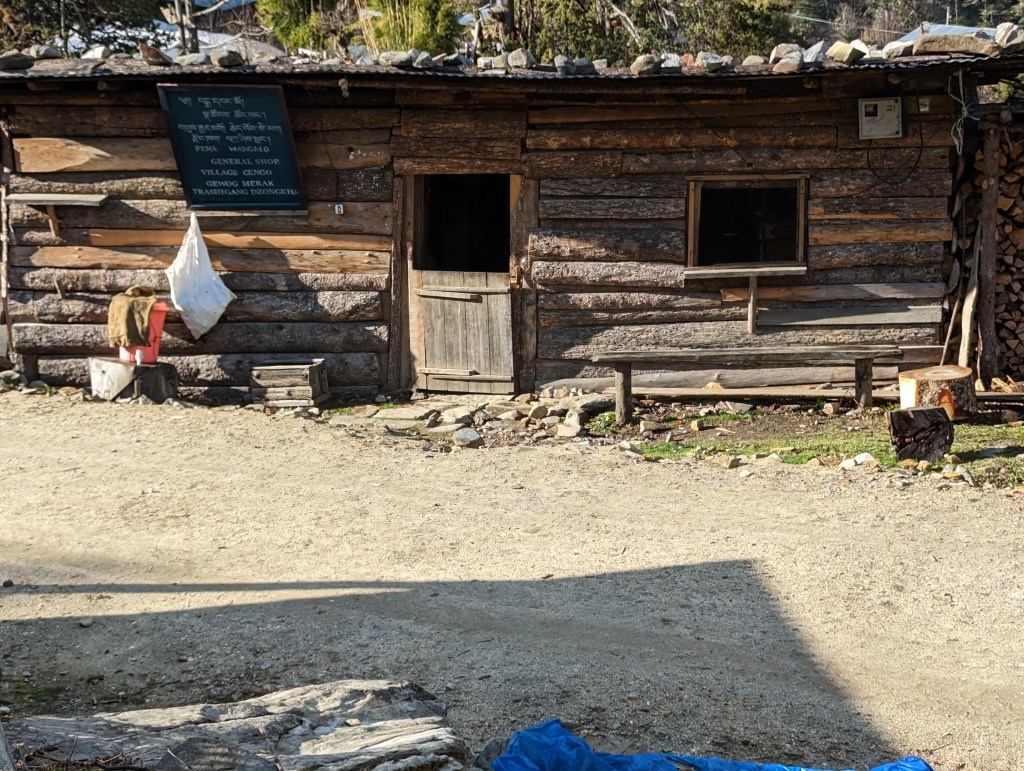
The General Shop. Supplies are now available for much of the year, as long as the roads remain passable. Merak proper is just down the road a bit.
It was cold up there! Late afternoon rain soon turned to snow.

More on Merak to come.

1 Comment

Leave a comment