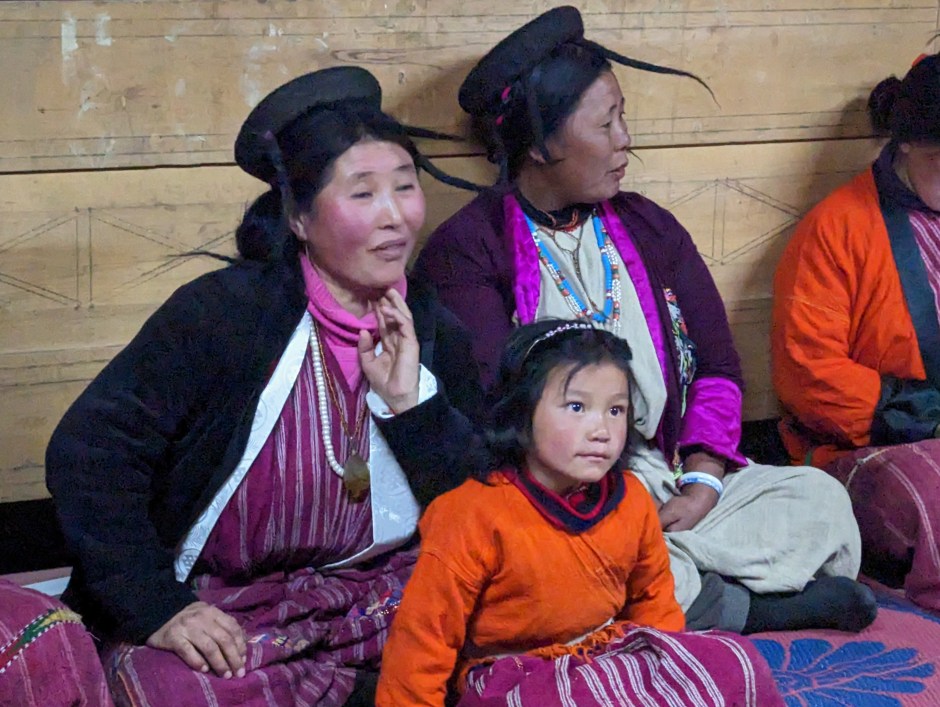
The people of Merak are known as Brokpas. They are semi-nomadic yak-herders, tending to the herds in the pasture lands during the summer and returning to their homes in the winter. Although they are Bhutanese, they have a distinct culture and language, preserved by centuries of geographical isolation. The evening of our stay, several villagers came to visit.
Men and women share equal status among the Brokpa, but with men often away tending yak or trading, women tend to assume the head of household role, represent their family at social or religious functions and make important decisions regarding the community’s welfare . Polygamy and polyandry are accepted and marriages are mostly arranged, generally by the mother upon consultation with an astrologer.
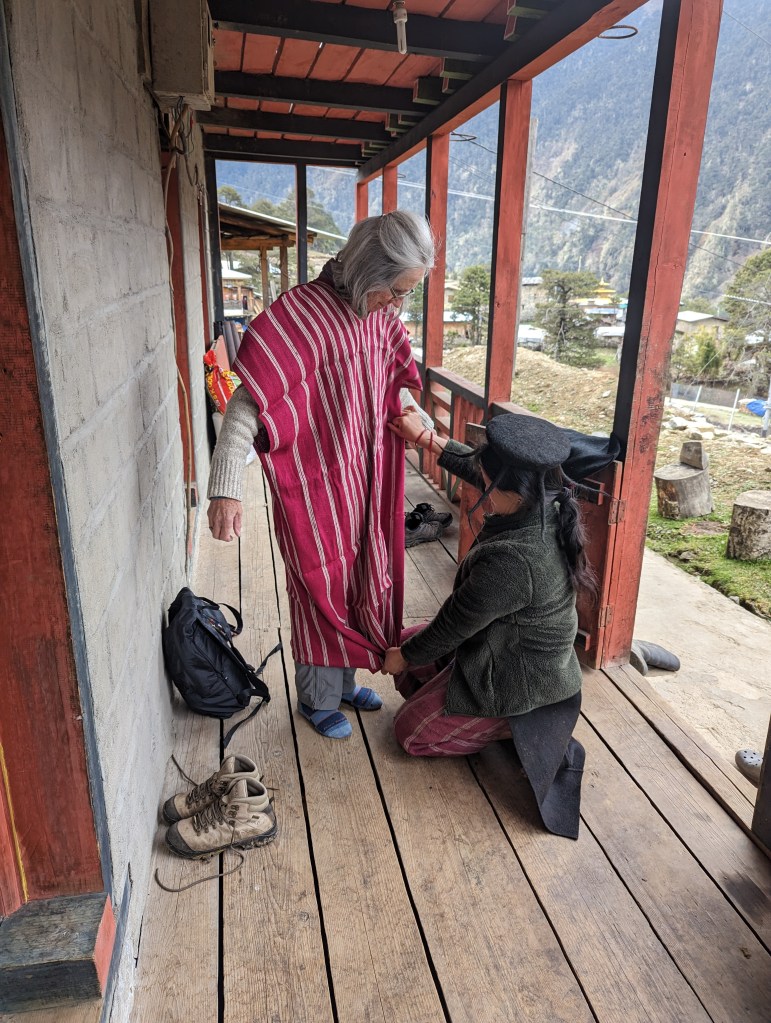

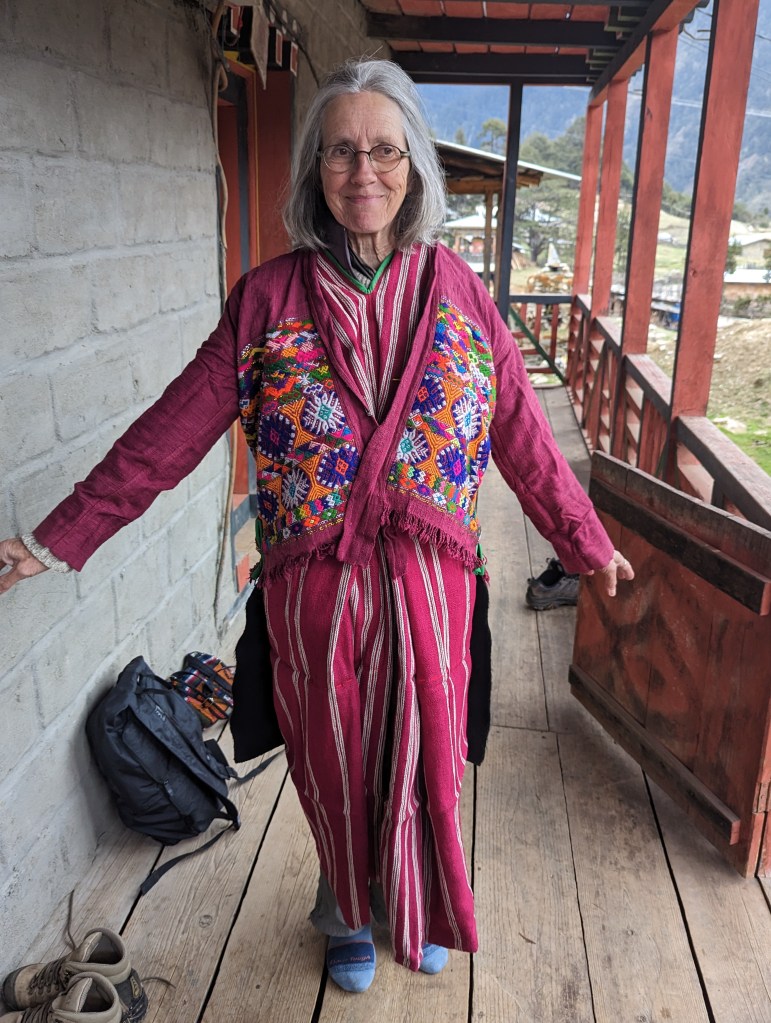
Brokpa women do not wear the traditional kira and tego of Bhutan. The red and white dress is known as a shinkha. Ribbons sewn as a border on the lower skirt reflect the quality of the dress and the wealth of the owner. Put on over the head, it is pleated by hand in front, the pleats held together between the knees as the belt is applied. The mackem is a felted wool pad on the back that functions as insulation and mattress. The top coat is an elaborately embroidered zug theng. The brokpa hat is made of yak wool. Called a shamu, the function of the five spider-like dreadlocks is to divert rainwater away from the face.
Our visitors were shy at first. In the foreground are two thermoses among about a dozen containers filled with ara, the homebrew of Bhutan, at least one brought by each visitor. In Merak, ara is brewed from fermented maize mash. As special guests, ours was served heated with egg mixed in. Our little wooden bowl would be filled and refilled after each sip. When the women would sing, the men would drink with each chorus, the reverse when the men sang. Even the little girl had her cup of ara. The shyness dissipated as the evening progressed, to the point we were all dancing and I even agreed to sing a western song at their insistence . God only knows why I chose Somewhere Over the Rainbow. It may be the only ukulele tune I know the words to, though the uke was left behind. To top it off, Margaret and I demonstrated east coast swing to a Cab Calloway tune (sorry, no video of either). Quite an evening.
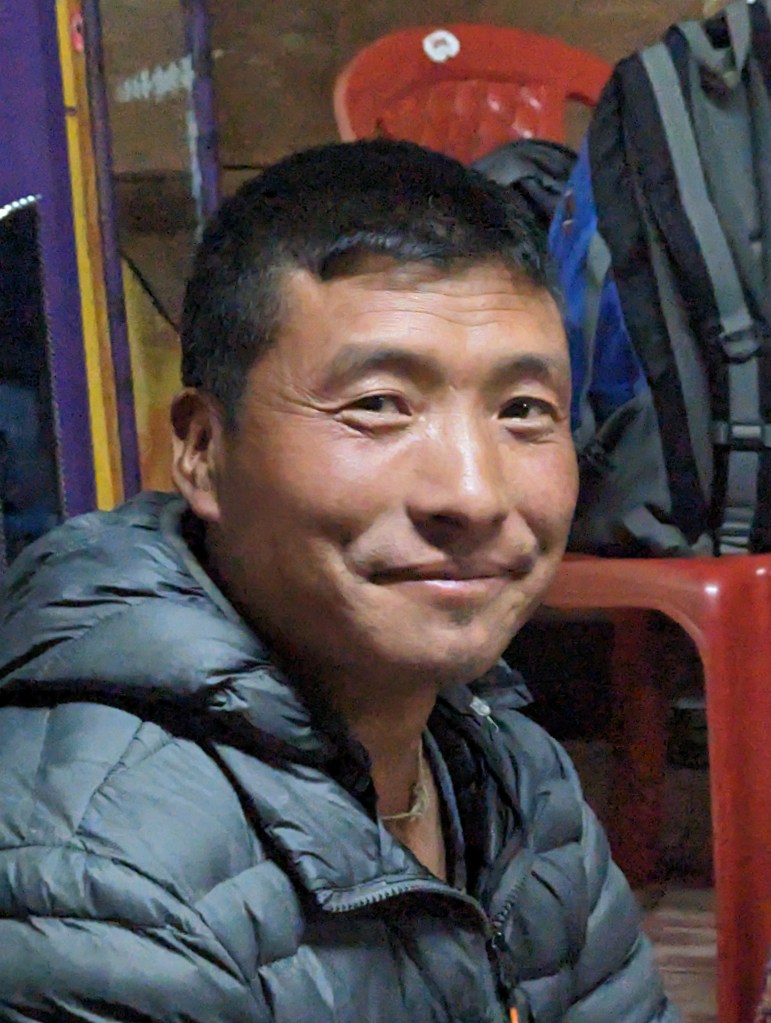
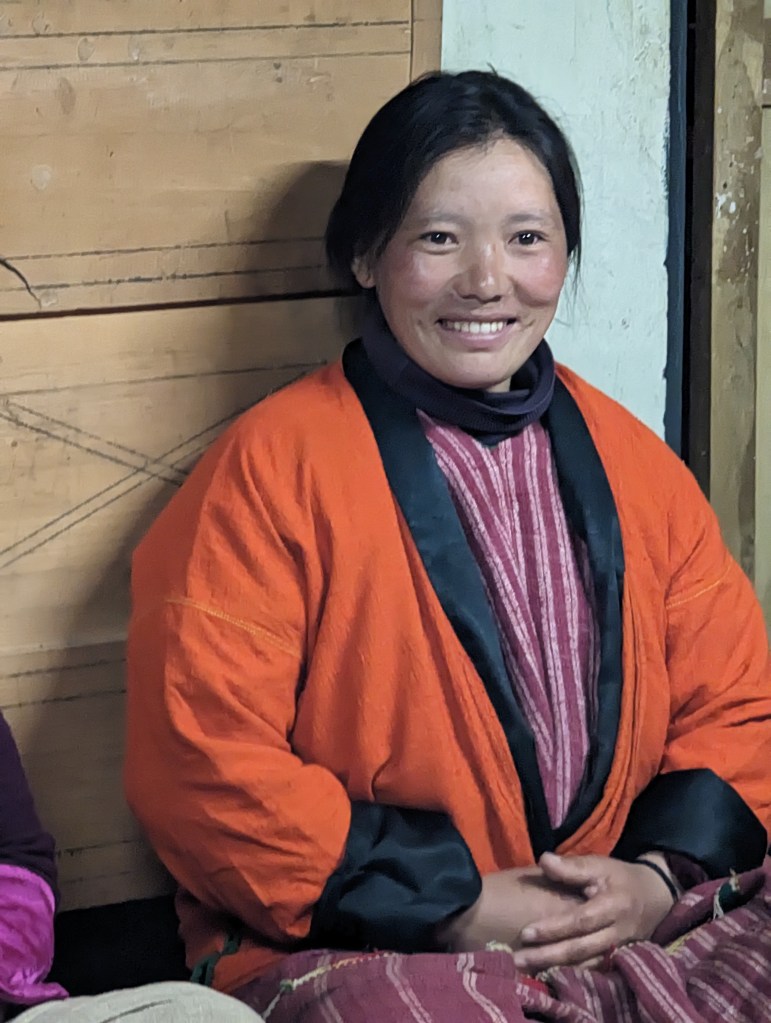
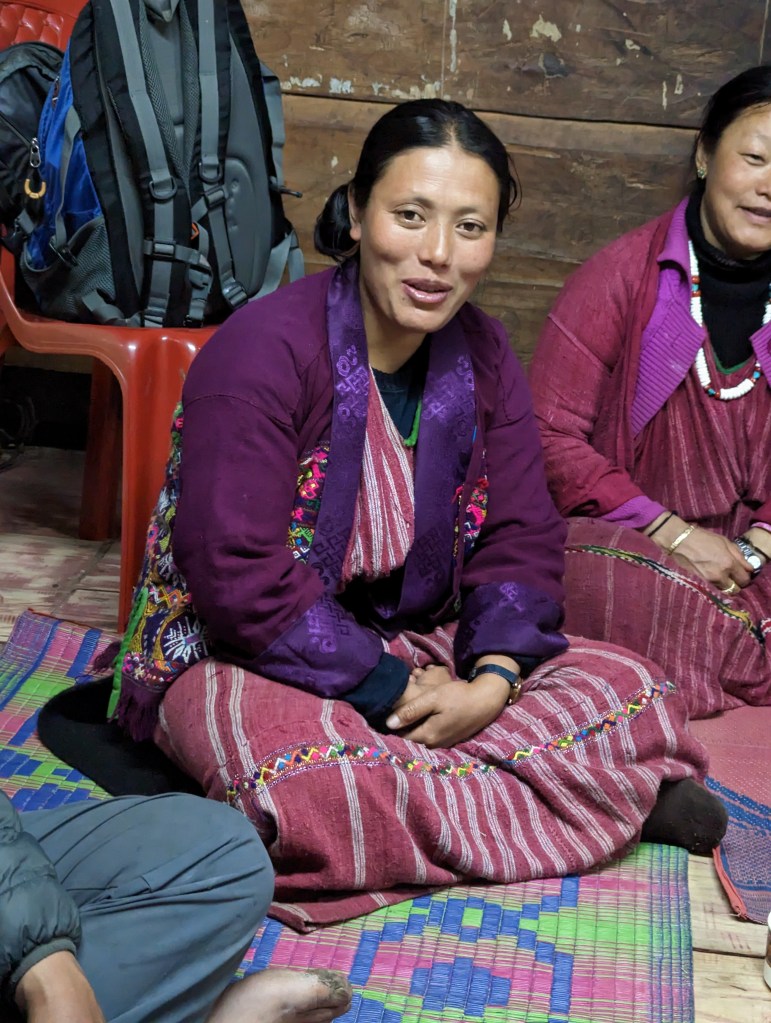
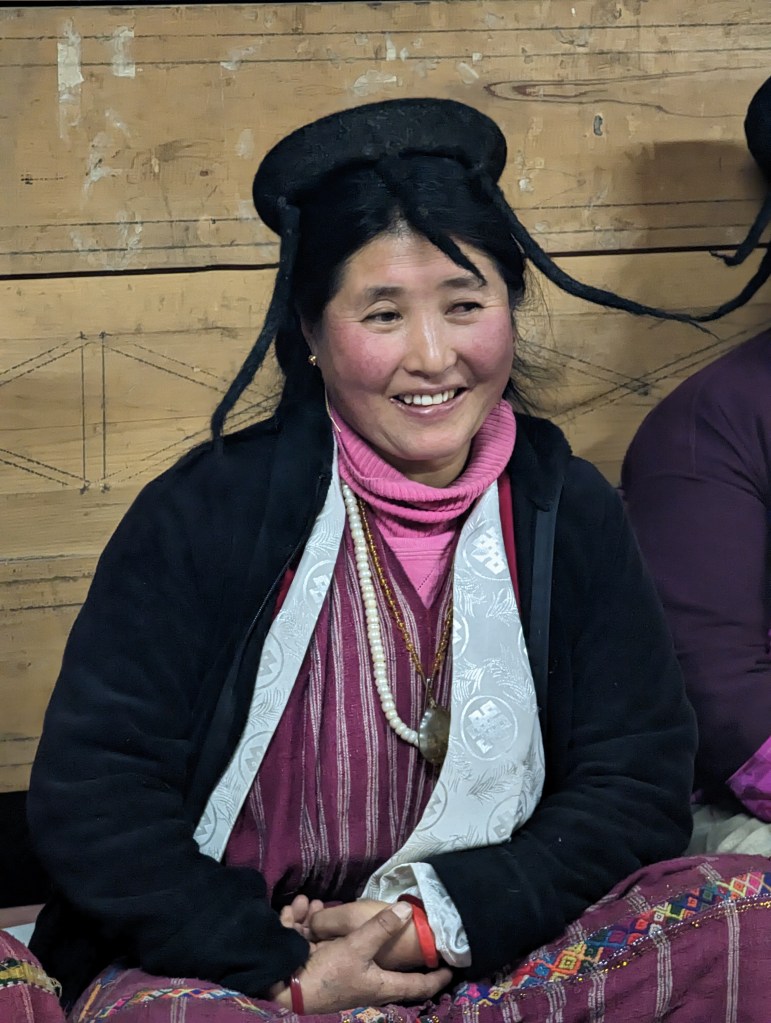
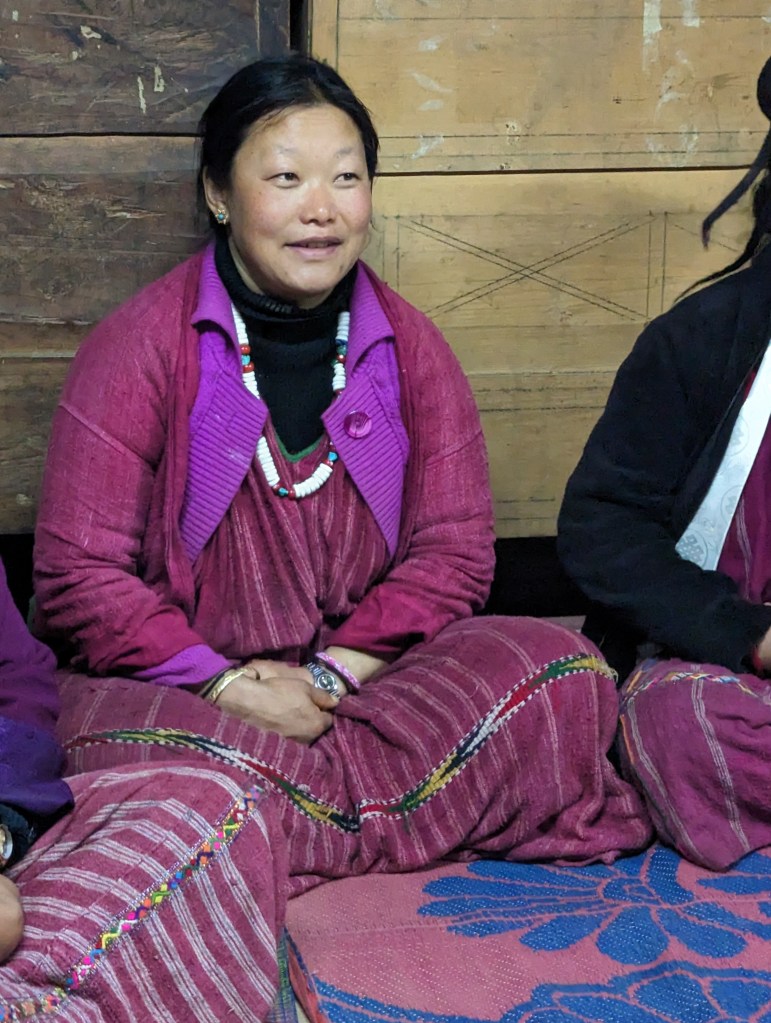
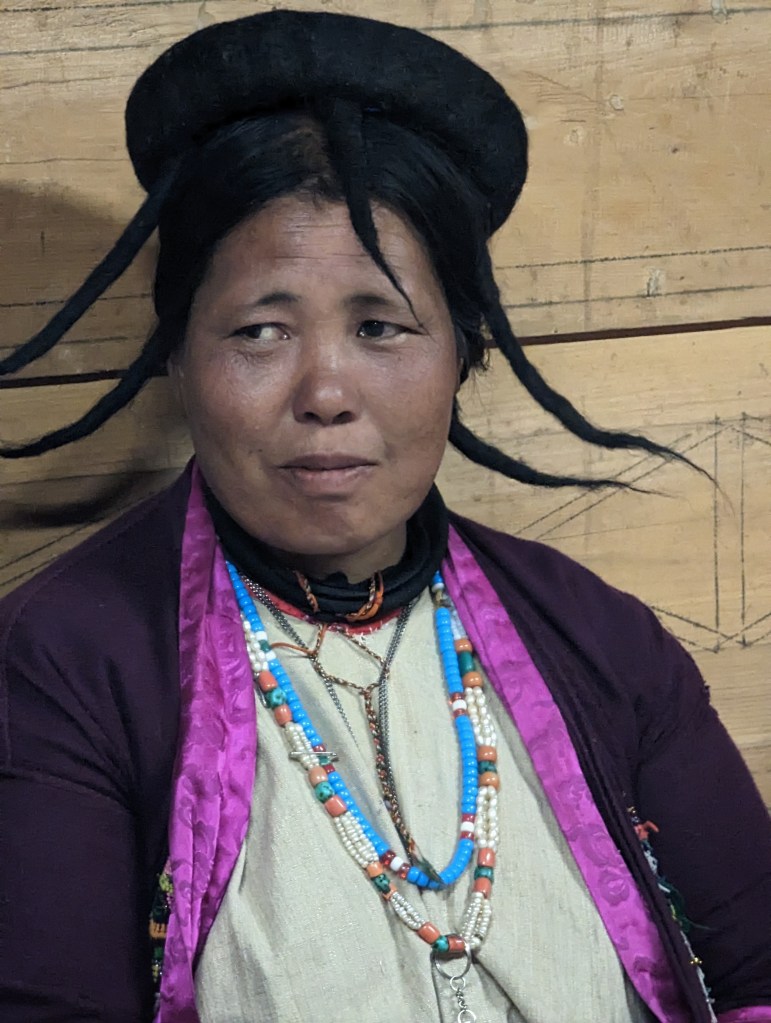
Up until 2010, outsiders were not permitted to visit Merak and Sakteng, the government of Bhutan wishing to protect the area from outside influence. Now efforts are being made to promote tourism to supplement the income of the Brokpas. Visitors remain infrequent however. Eastern Bhutan in general struggles to attract tourists, most of the iconic, must see sites in the west, and access by road difficult.
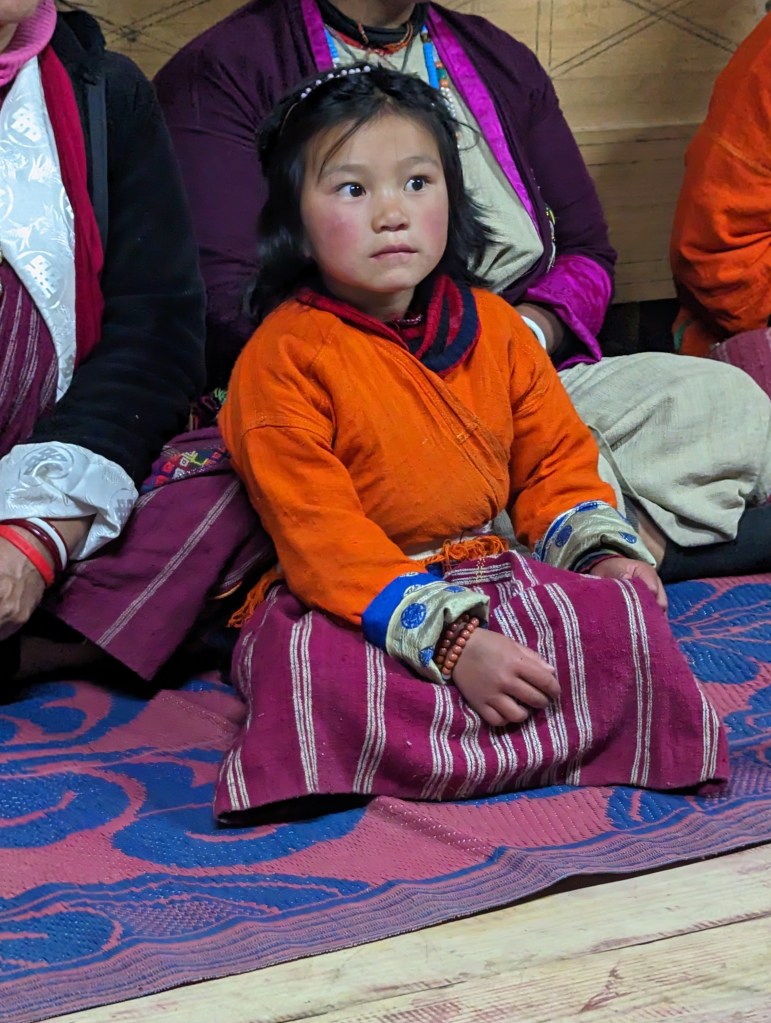
Like much of rural Bhutan, Merak is experiencing an exodus of young people, moving to Thimphu as the country urbanizes. This charming but wary girl was sent by a grandmother to the gathering, bringing ara in anticipation of a tip from the tourists. As you’ll learn in Merak, Part Three, many, if not most, Brokpa children reside as borders for their schooling given the distances between settlements and the semi-nomadic lifestyle.
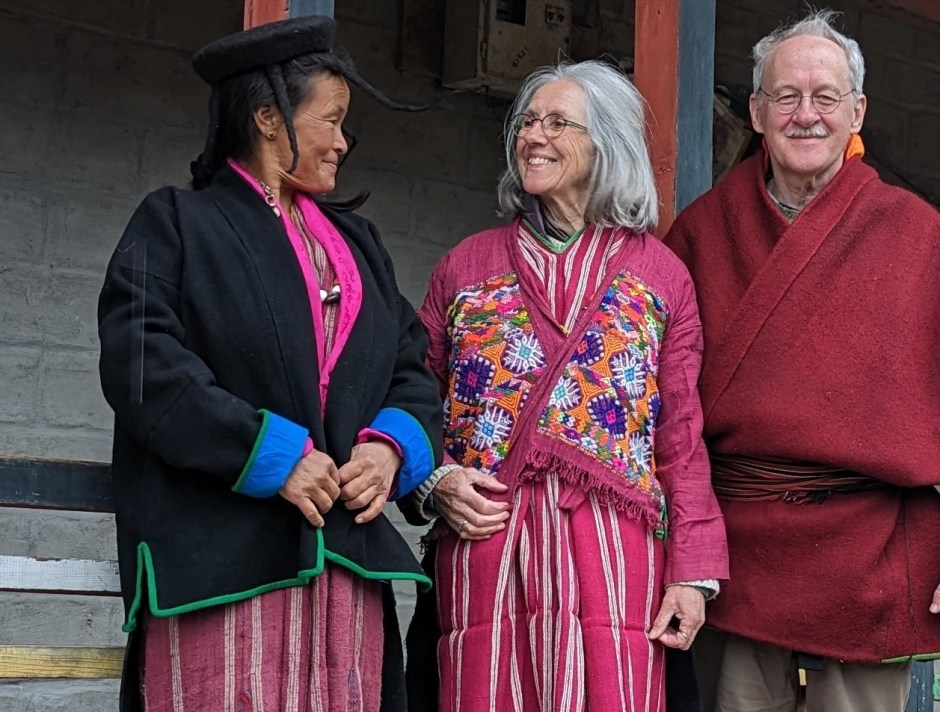
Margaret can make friends with anyone, though Sangay, the hostess, remained reserved during our visit. No doubt the language barrier plays a role. One of the difficult things to adapt to here in Bhutan is how deferential the Bhutanese are to us as western guests.
 Our Seasons in Shangri la
Thanks for this Quite an evening.
LikeLike