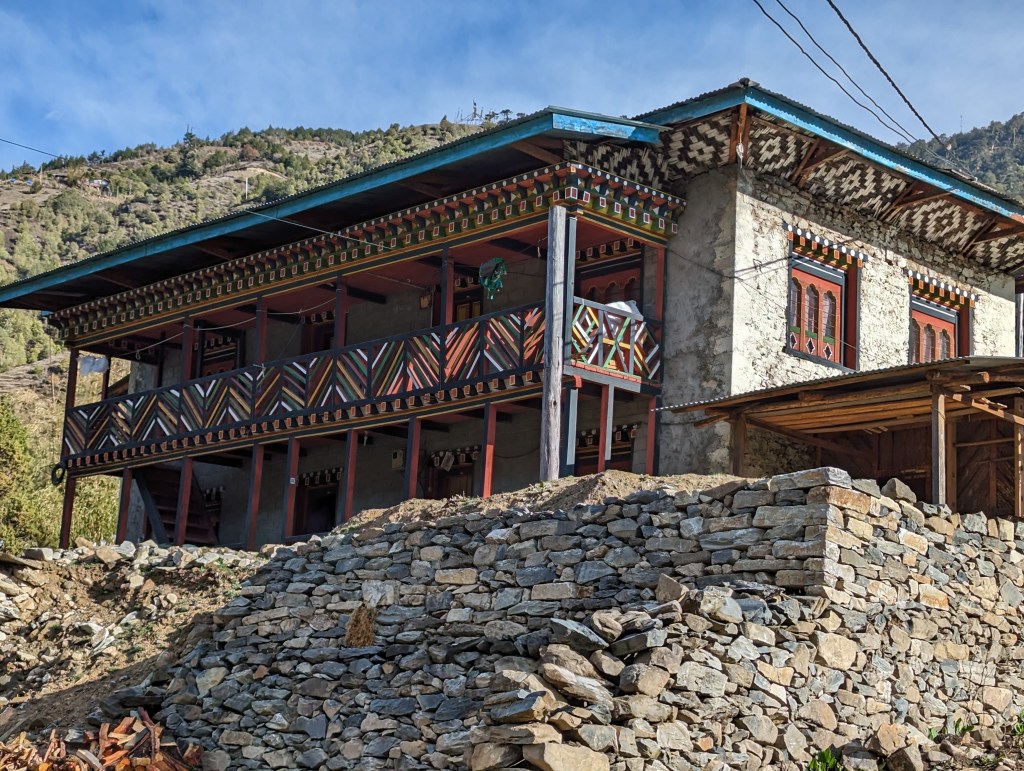
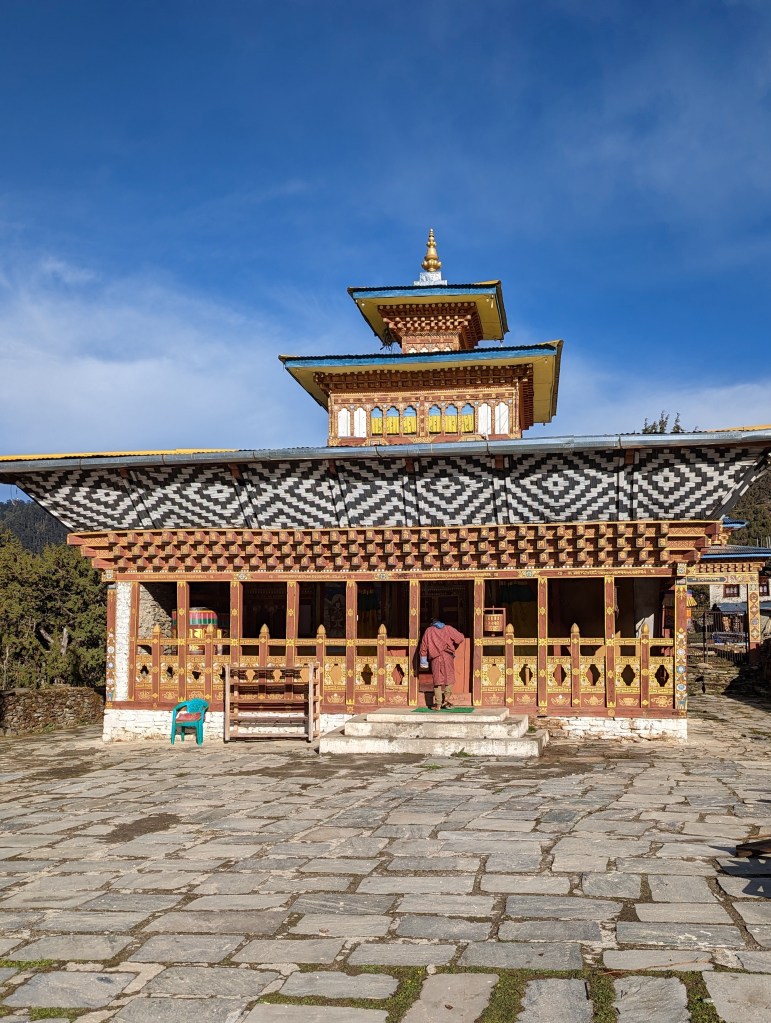
Religion is an important part of Brokpa life. They are believed to have migrated from Tibet in the 7th century. Folklor has it that they were forced to flee after murdering an oppressive king. They practice the Gelugpa school of Buddhism, unusual in Bhutan, and worship additional deities, including Ama Jhomo and Sherphu. The fourteenth century temple in Merak is one of the oldest in eastern Bhutan and these deities are represented in addition to Buddha, Padmasambhava and Zhabdrung.
Births are highly celebrated by the community as they bring new hands to the labor. Death rituals are quite bizarre from an outsider’s perspective and vary according to the status of the deceased. According to an article in the national newspaper, Keunsel: “The dead body of an ordinary brokpa is kept in the water for 3-6 days depending on the advice of the astrologer. Once it is removed from the water it is chopped into 108 pieces and thrown into the river. However, the body of a revered priest is often left in a far off open space to be eaten by vultures while the lower class people such as blacksmiths have their dead bodies buried.” This is in marked contrast to cremation, the prevalent means of disposing of the corporeal body in the remainder of Bhutan.
As frustrating as it is, as everywhere in Bhutan, photographs inside temples are considered to violate the sanctity of the space and are absolutely forbidden. You have to see it to believe it, but after a week of visiting temples in the east, with the intensity of the paintings and sculptures, the deities with their terrifying manifestations and consorts in yab-yum (look it up) I was actually becoming a little dissociative in their presence. The one exception was a beautiful temple built exclusively by nuns. More on that in a subsequent post.
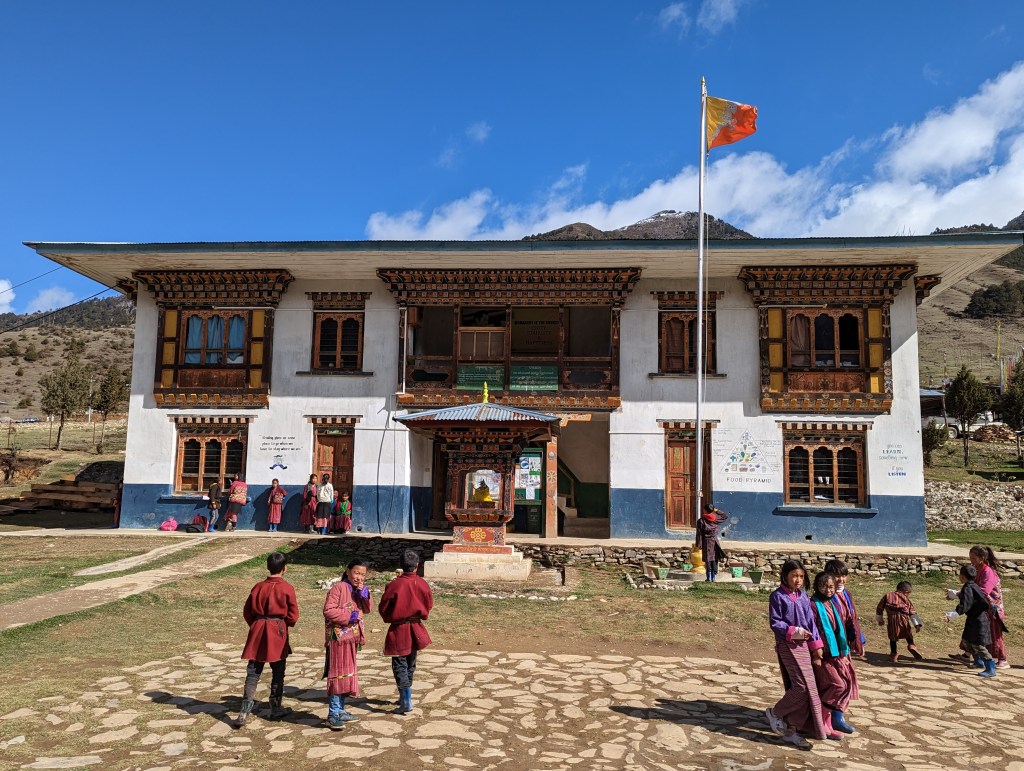
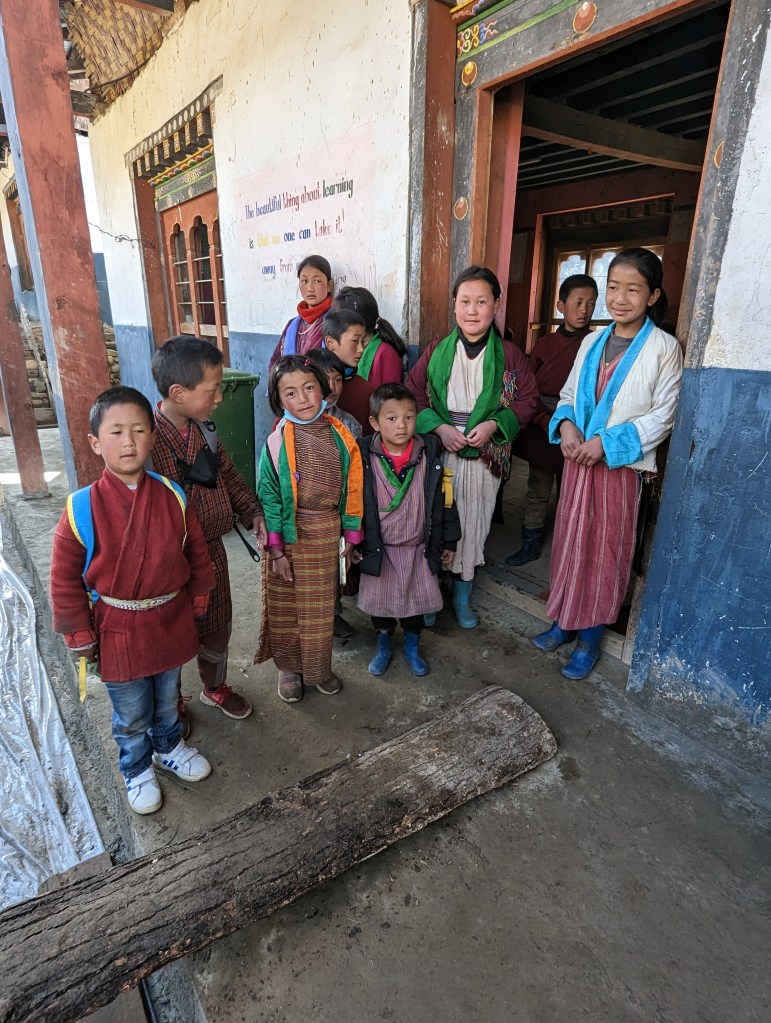
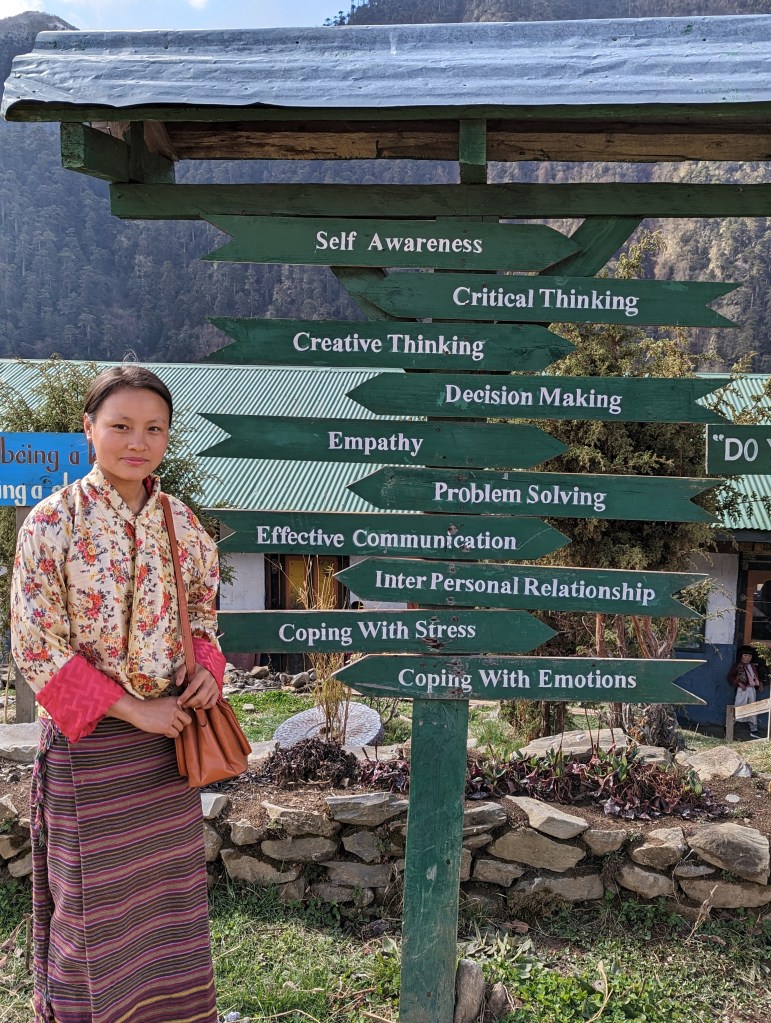
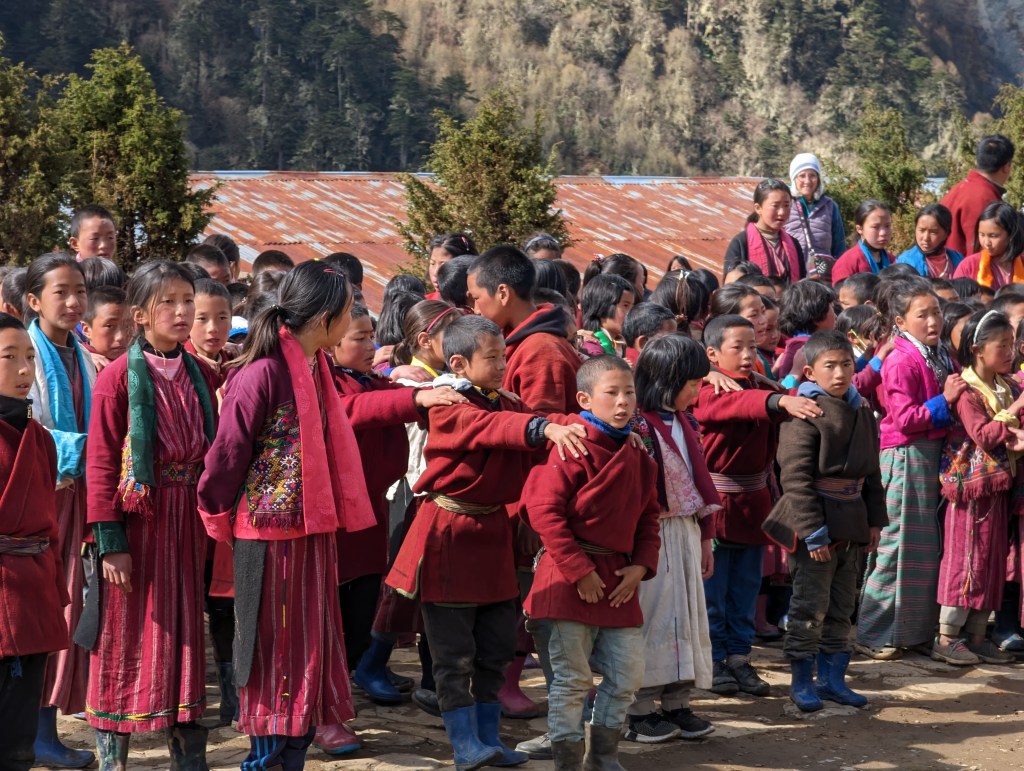
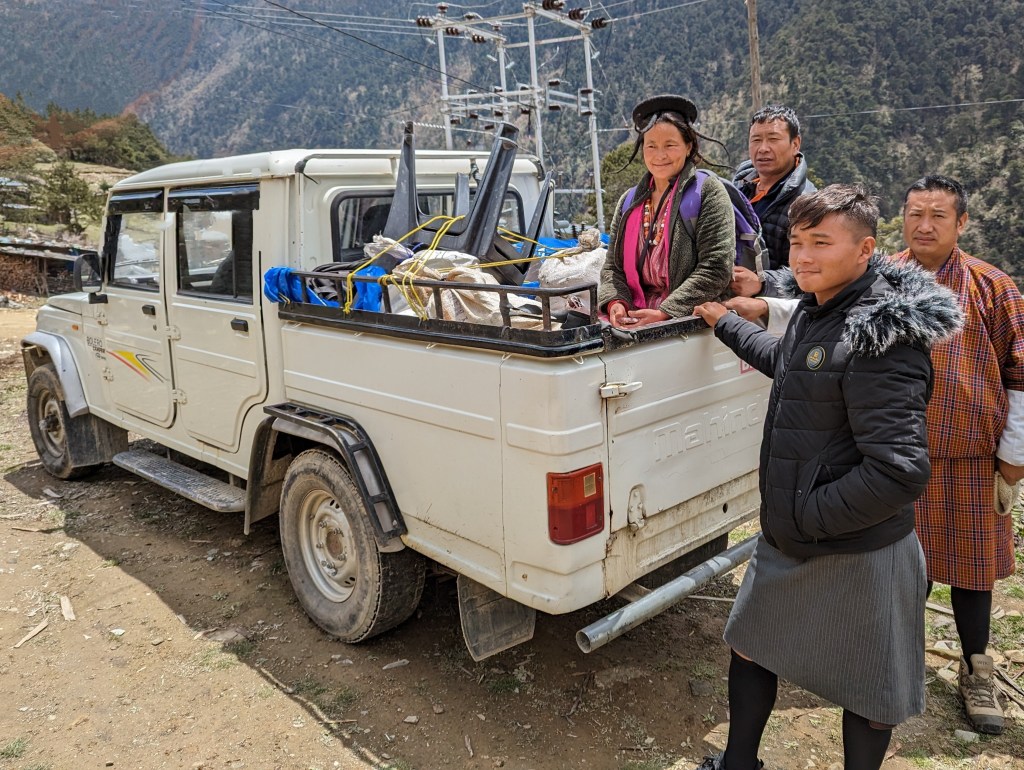
Into the Bolero and our first stop was the school. Approximately 175 students, kindergarten to Class 6 attend. Ninety-five of them are boarders, living at the school all but one month in the winter and one in the summer. This is quite common in Bhutan and I imagine this is a significant contributing factor to the communal spirit we witness everywhere we go. Classes are taught in English and Dzongkha, the two national languages of Bhutan.


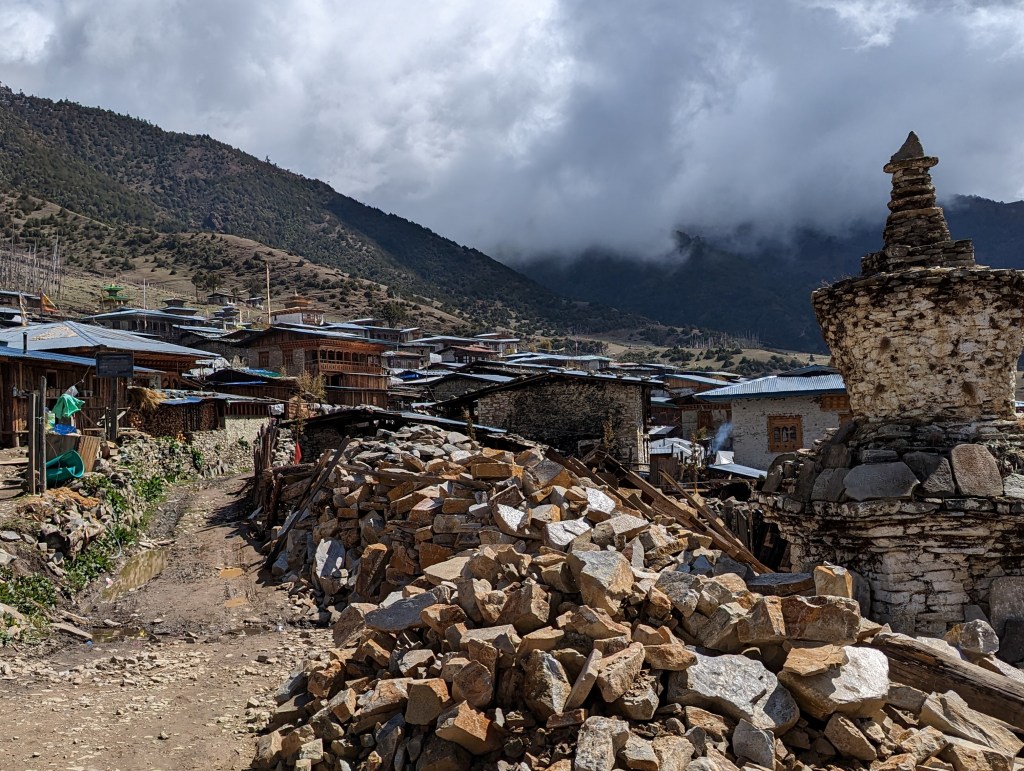
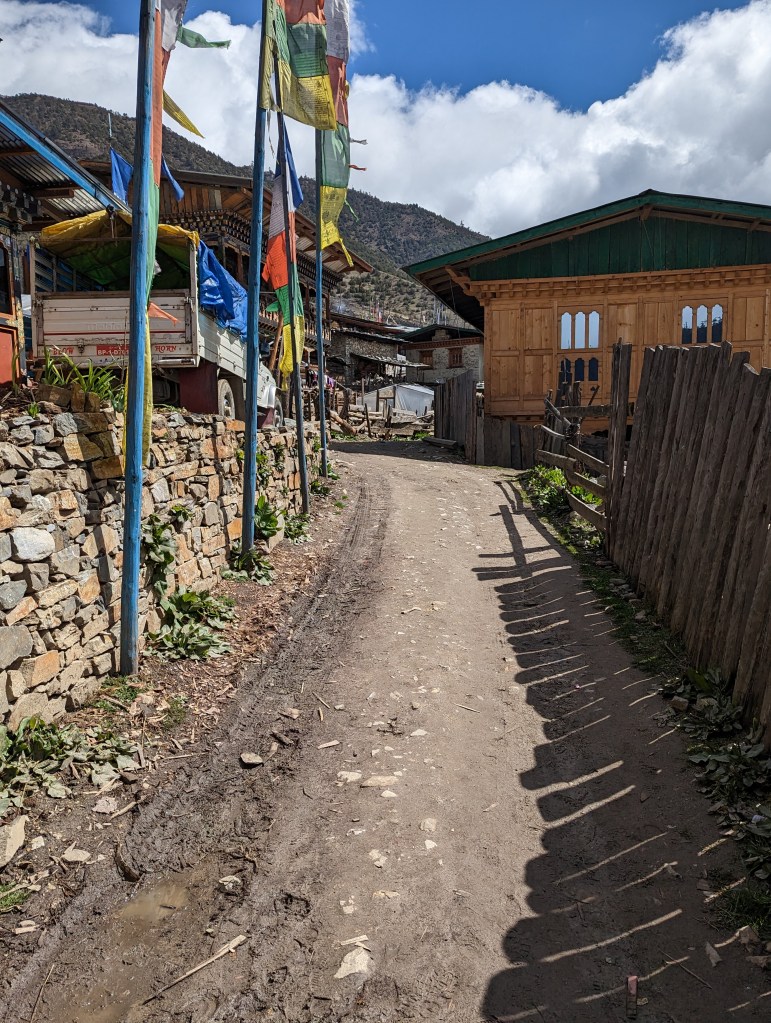
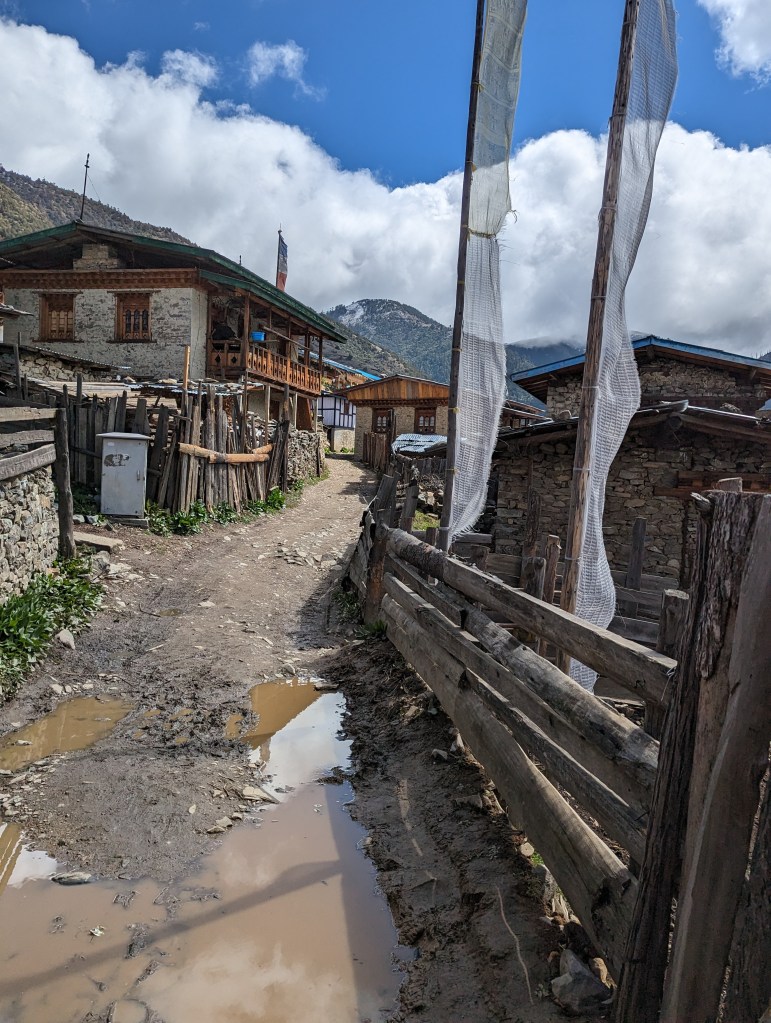
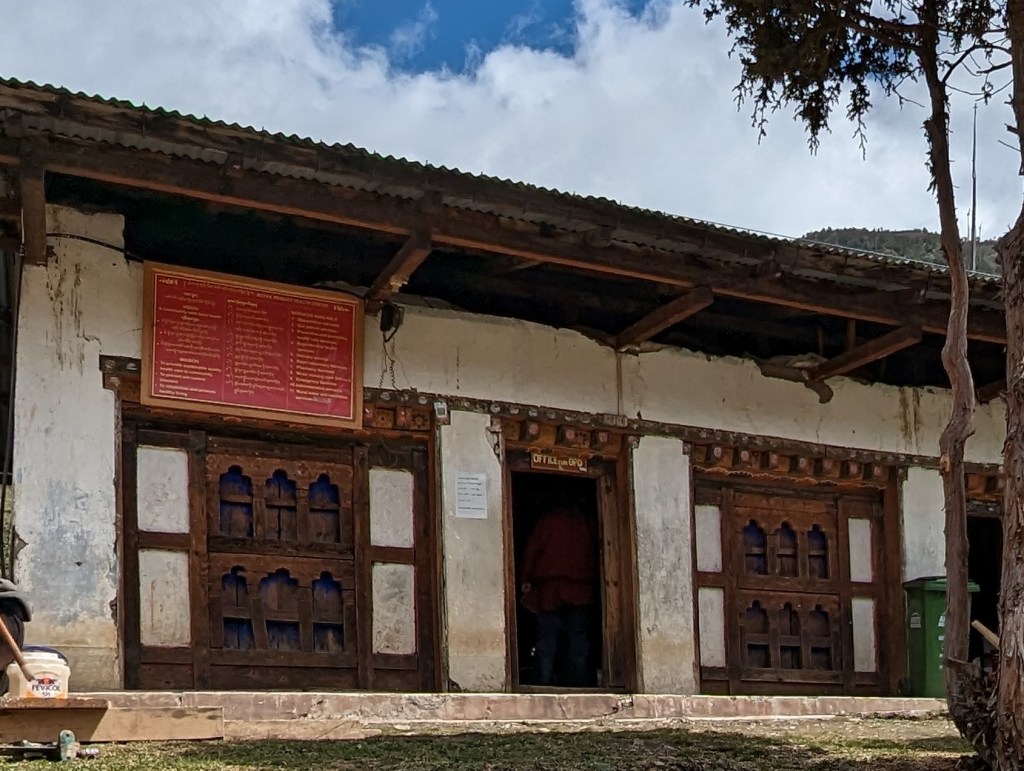
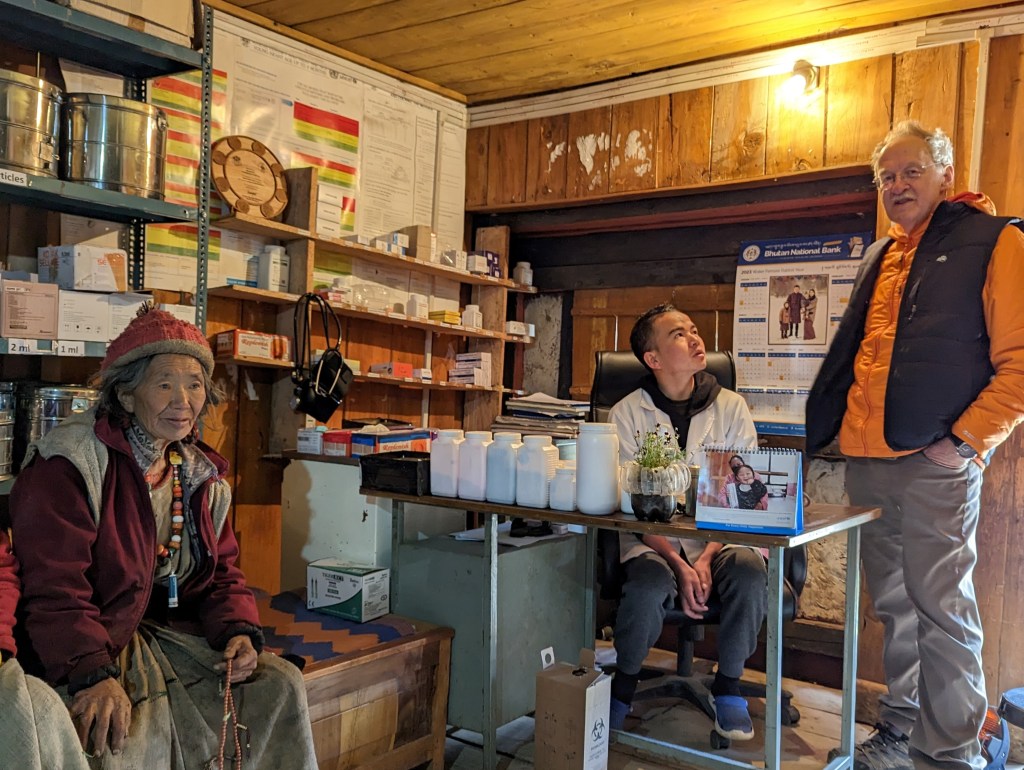
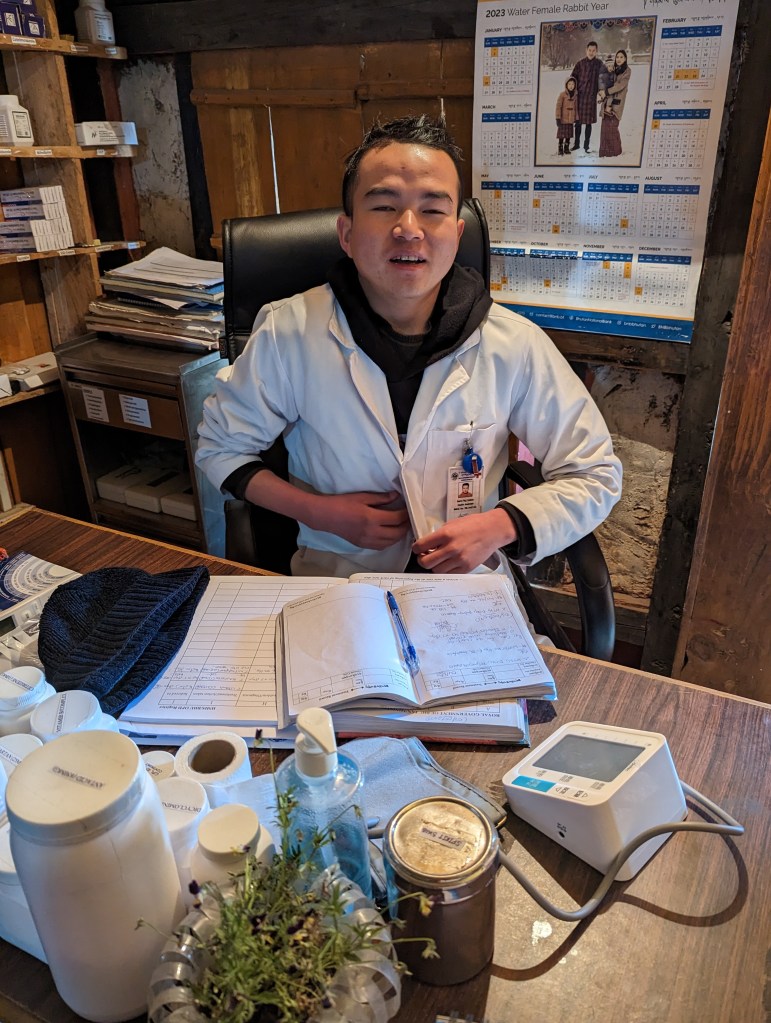
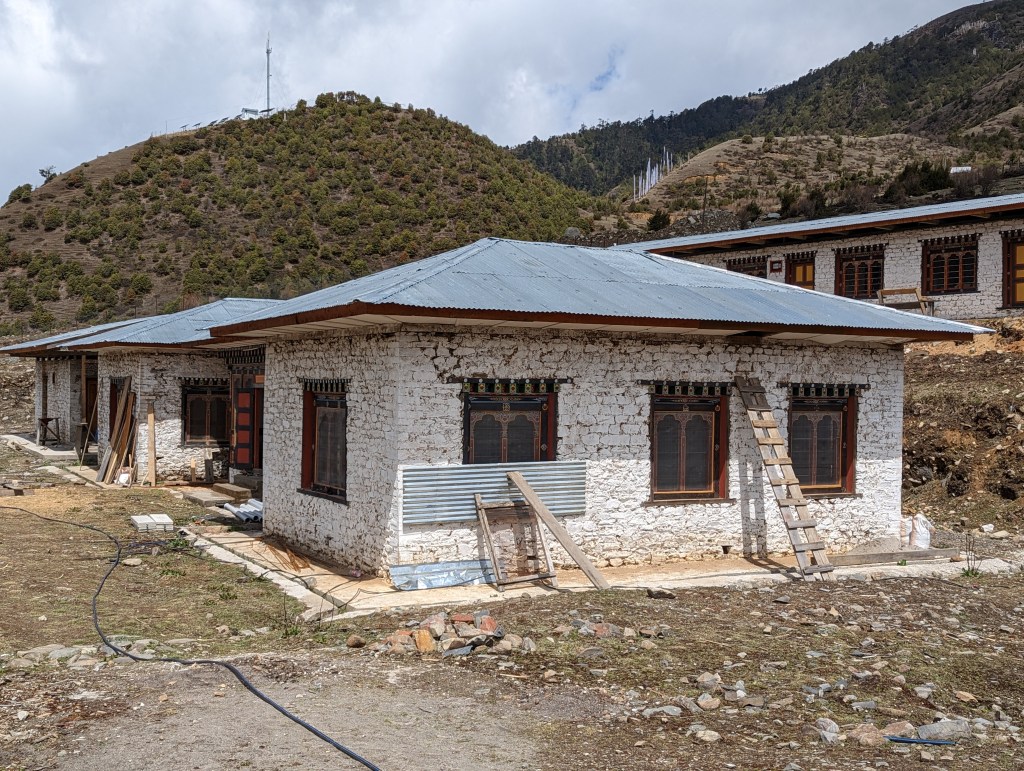
There are 156 BHUs in Bhutan, usually staffed by two credentialed health assistants, one male and one female, each with three years of medical training, qualified to provide basic primary care services, wound care and intravenous hydration. The health assistants can dispense a limited formulary of medicines, including only two psychiatric medications, diazepam and amitriptyline. The Merak BHU consisted of three cramped rooms, one for examination, one with two hospital beds and another largely filled with randomly stacked supplies. A new unit is being constructed just outside of the village, larger but still quite basic and inclusive of apartments for the health assistants who are on call 24/7.
 Our Seasons in Shangri la
What an amazing opportunity to visit this place and these people. Thank you for describing it so beautifully through your word and photos.
LikeLike
I am so proud of you. I always have been. Margaret looks younger than when I last saw her.
LikeLike