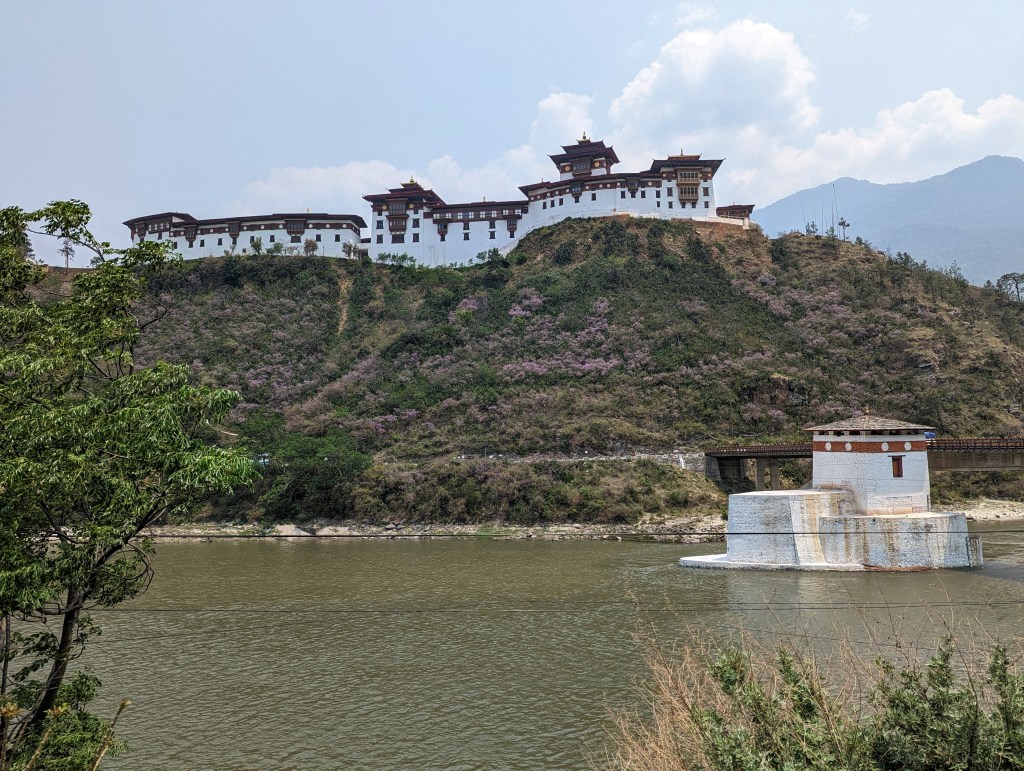
Wangdue Phodrang Dzong overlooks the convergence of the Dangchhu and Punatsangchhu in central Bhutan. Built in 1638 to resist incursions from the south, it was destroyed by fire in June of 2012, a fire started by a faulty electrical water cooker. Fortunately, it was in the early stages of renovation and most of the valuable relics and statuary had been moved elsewhere. Reconstruction of the dzong, using traditional methods but with updated utility infrastructure, began in 2014, initial financing raised by donations from the Japanese, and was completed in 2022. It had been destroyed by fire once before, in 1837, and the bridge washed away by floods.
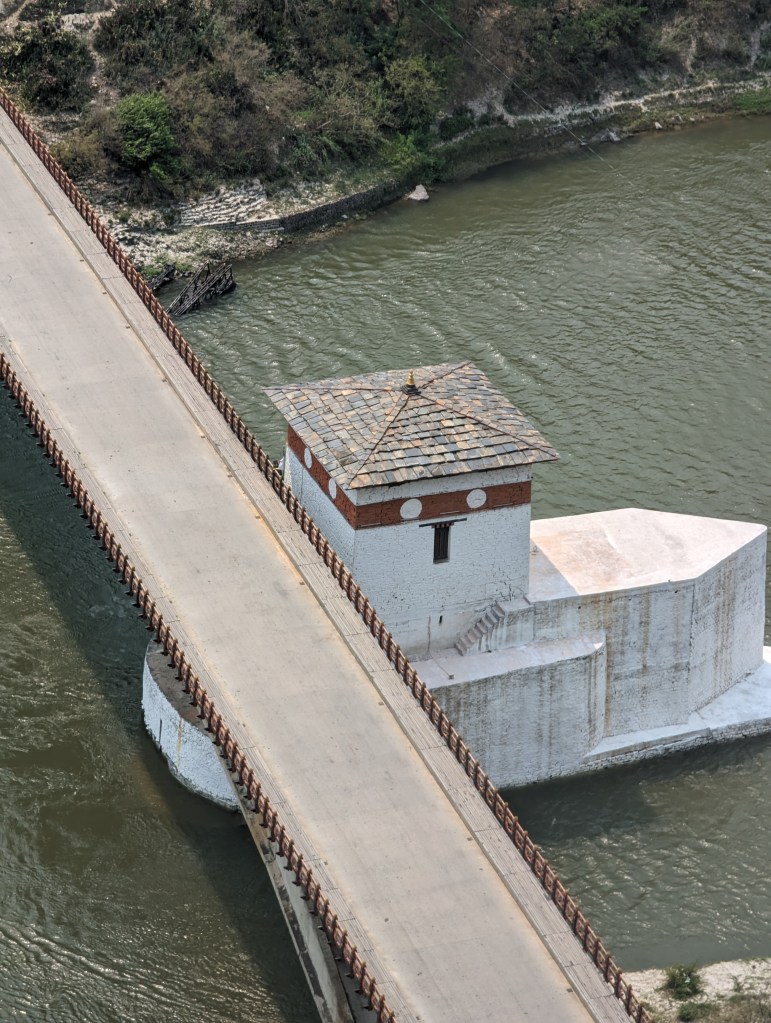
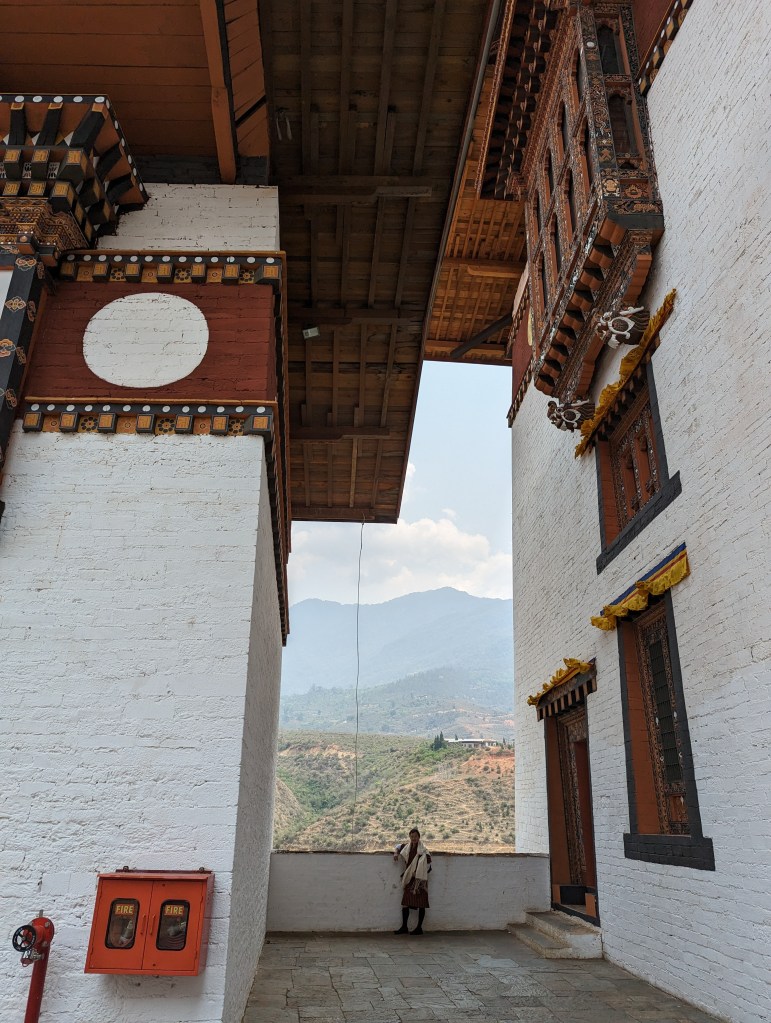
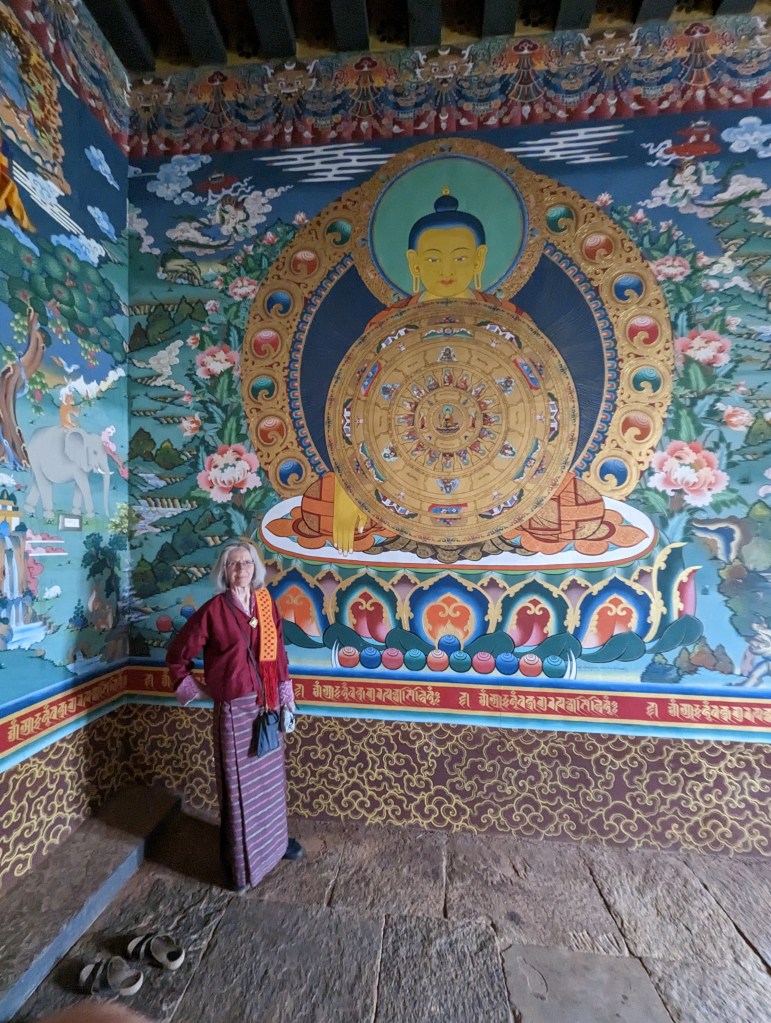
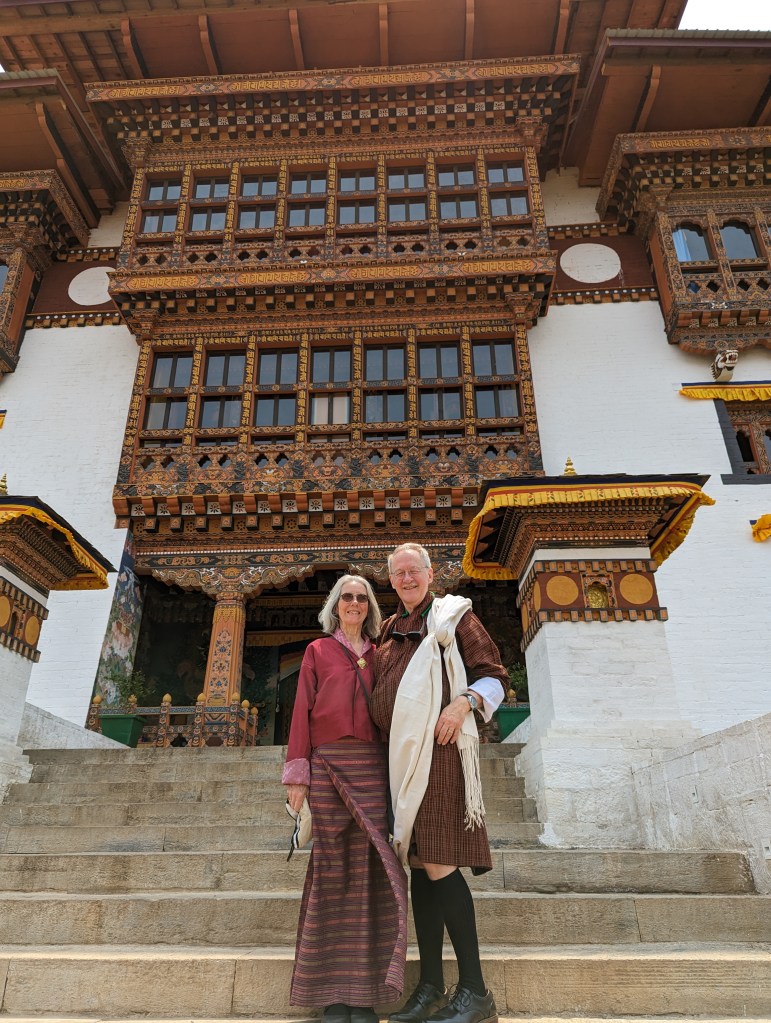
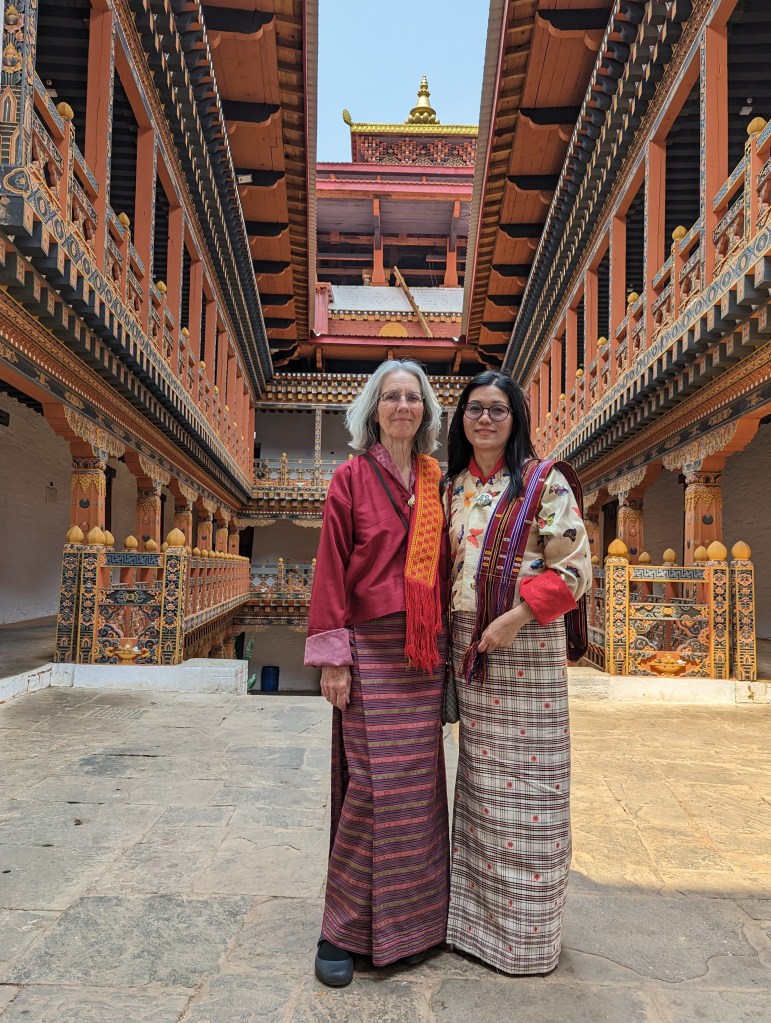
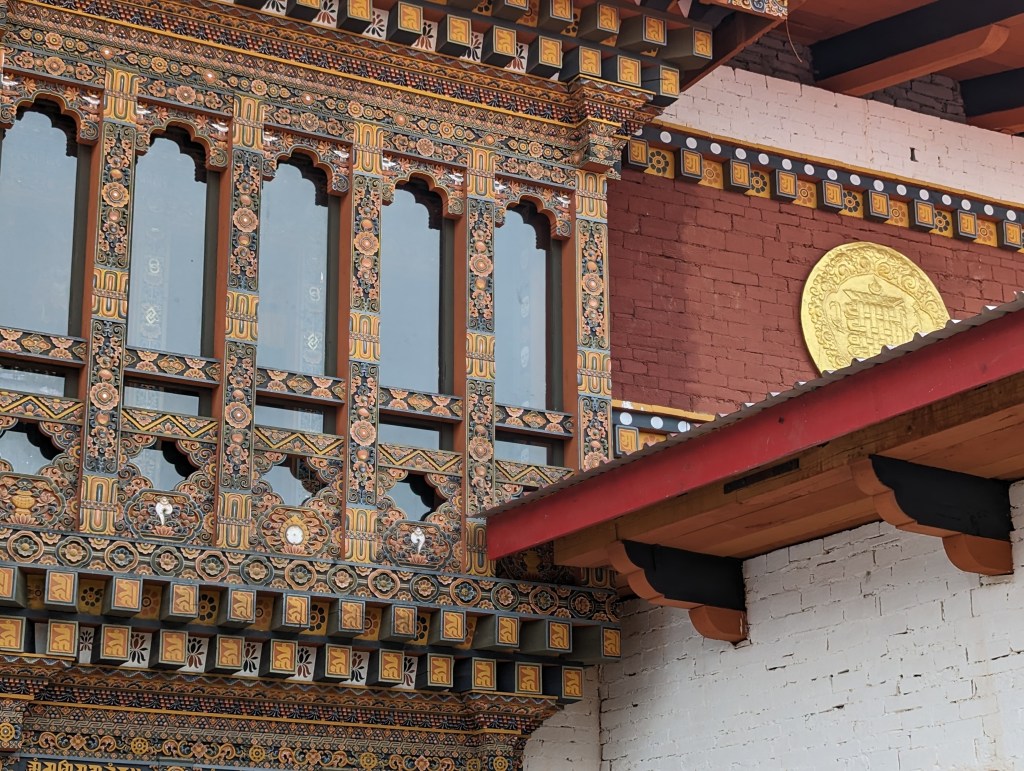
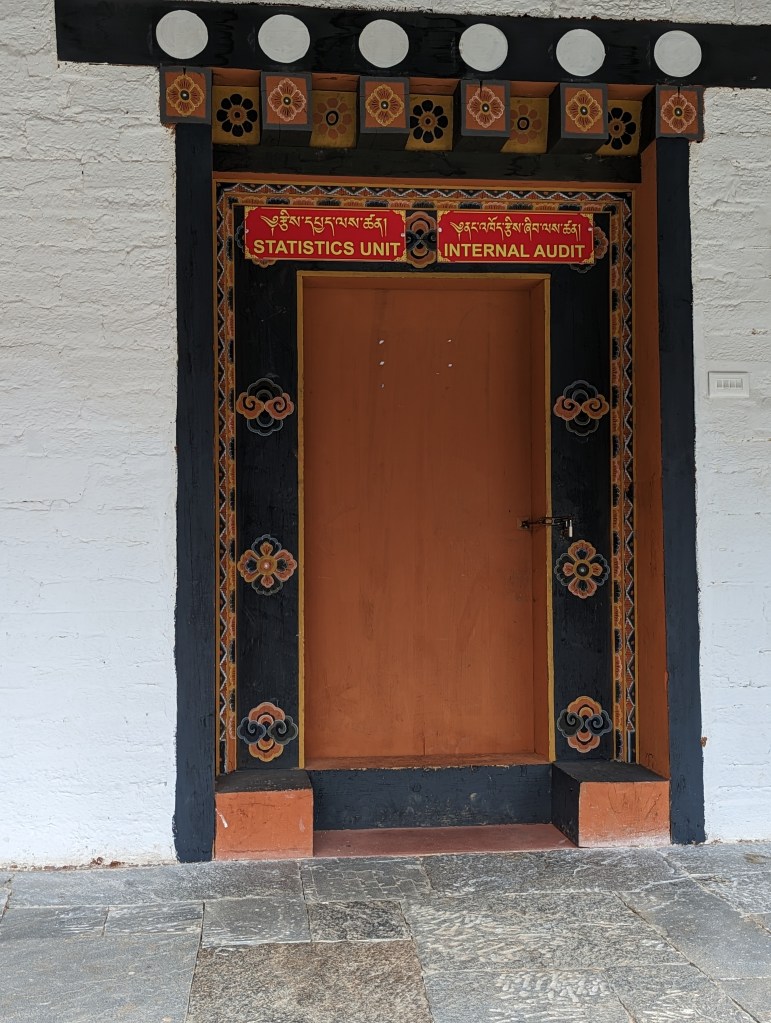
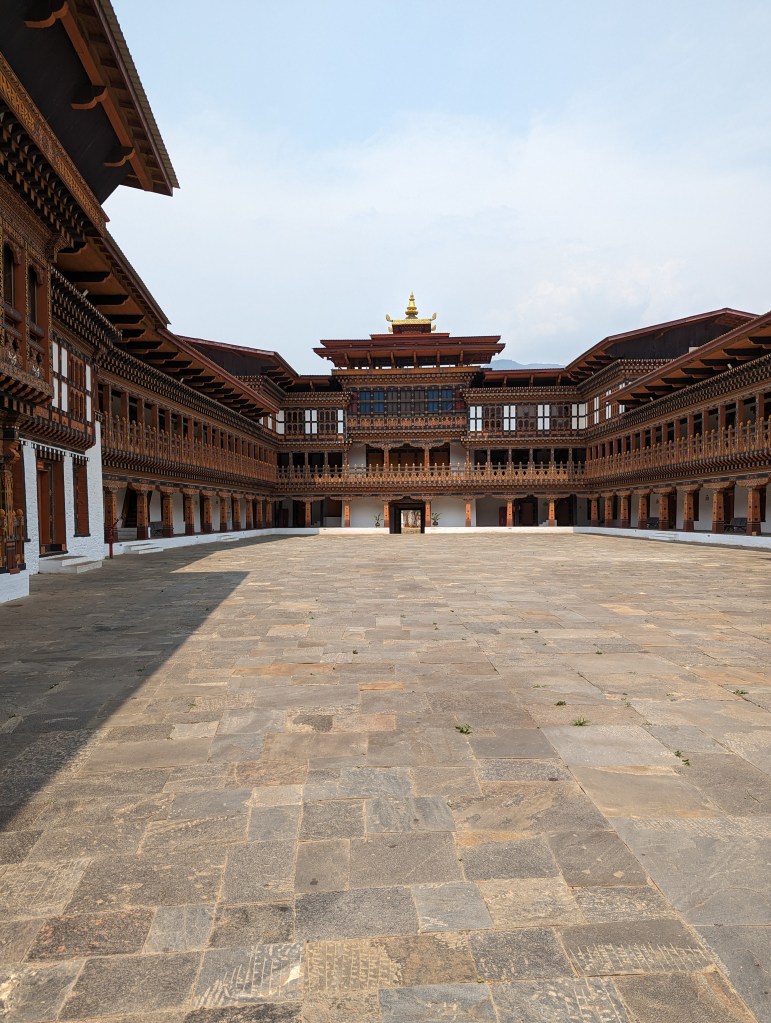
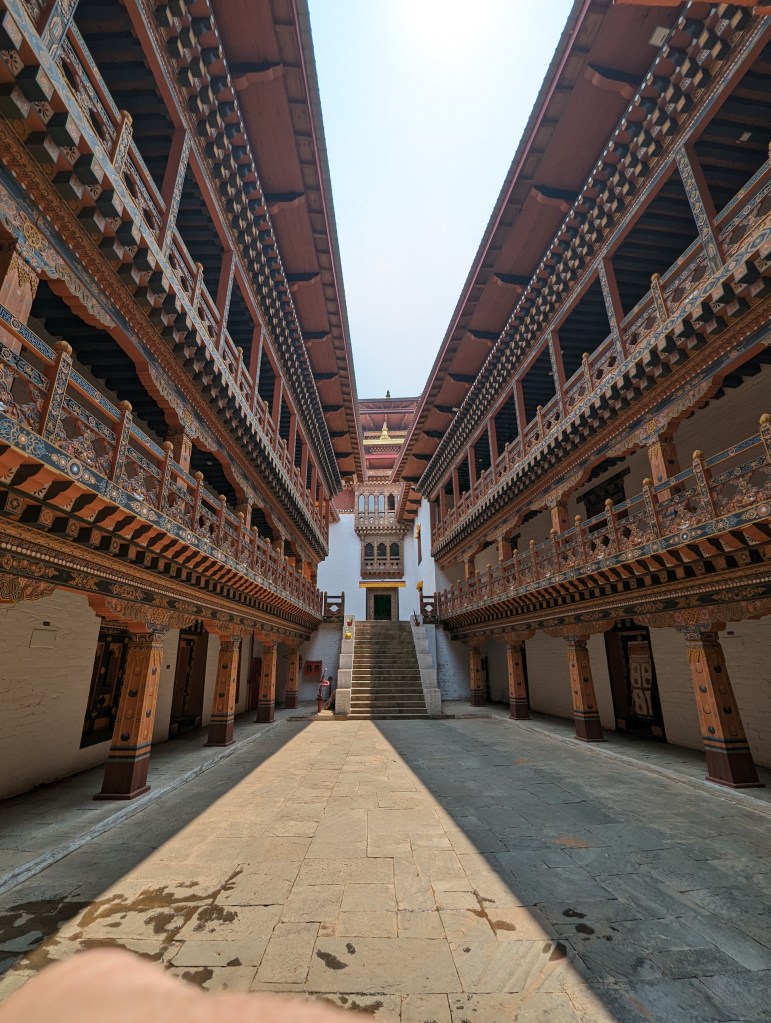
We visited the dzong on April 2oth and had it all to ourselves with the exception of monks who greeted us in each of the many temples, explaining the wall paintings and statues, pouring the purifying truchu, or holy water, into our hands to drink and touch to our heads. The dzong was largely empty because it was April 2oth, a national election day with all businesses and non-essential government offices closed for the day to enable voters to travel to their own dzongkhag or district to vote.
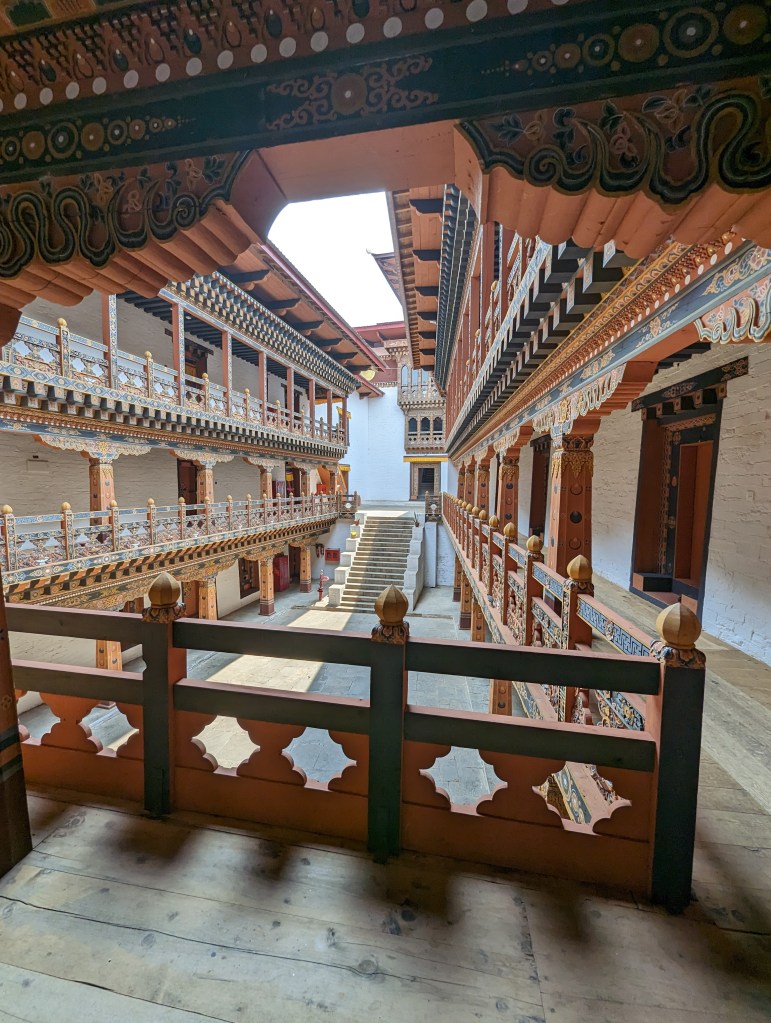
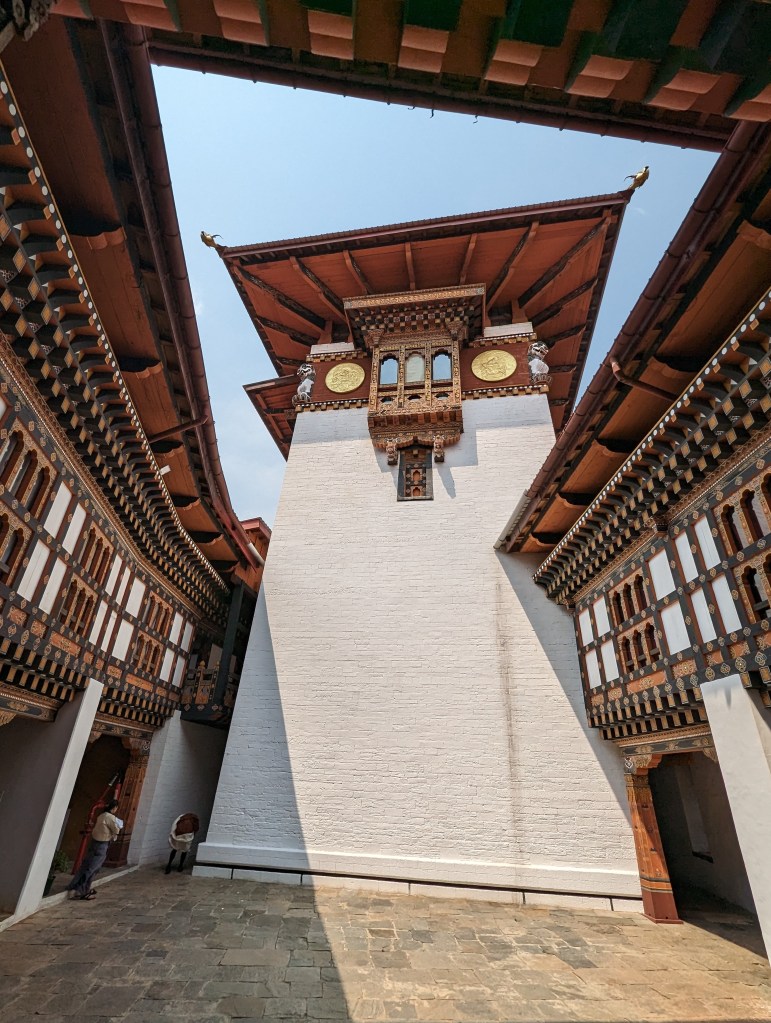
The utse or central tower that holds the holiest of the temples. We were able to visit three levels of temple, the third excluding women and the fourth level off limits to foreigners as it held the temple to the local deities. The base of the tower is specially designed to withstand earthquakes. I believe there are ball bearings of some sort inside the divider at the base.
For more info on the Wangdue Phodrang Dzong: https://www.drukasia.com/bhutan/wangdue-phodrang/wangdue-dzong/
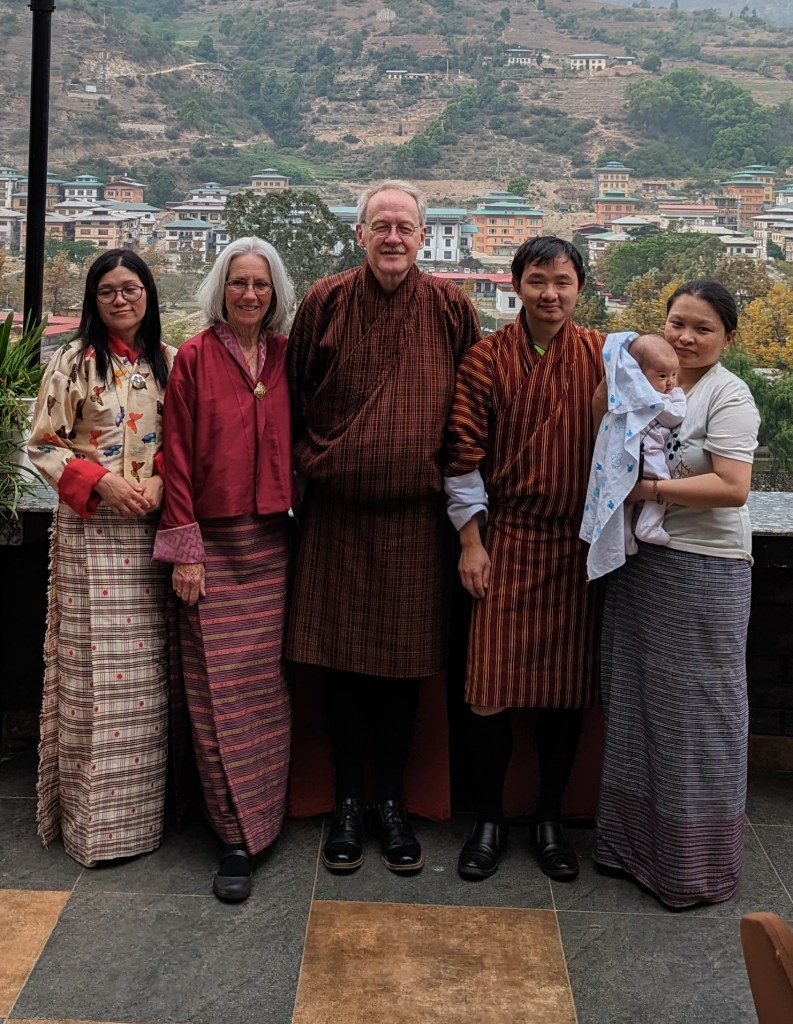

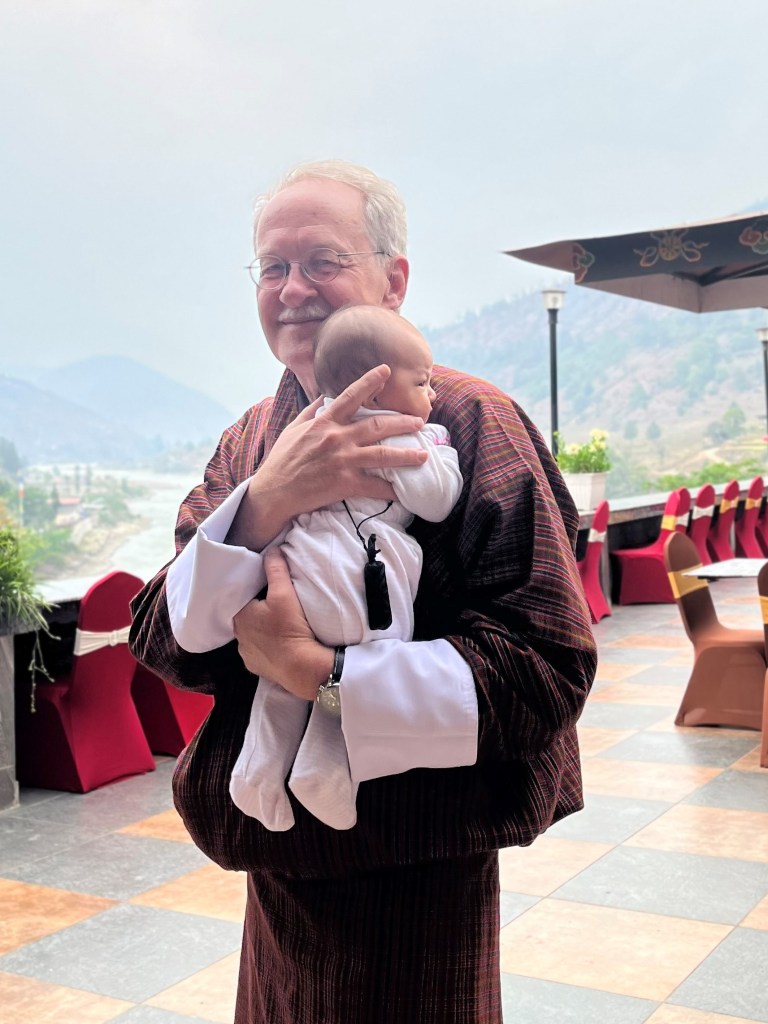
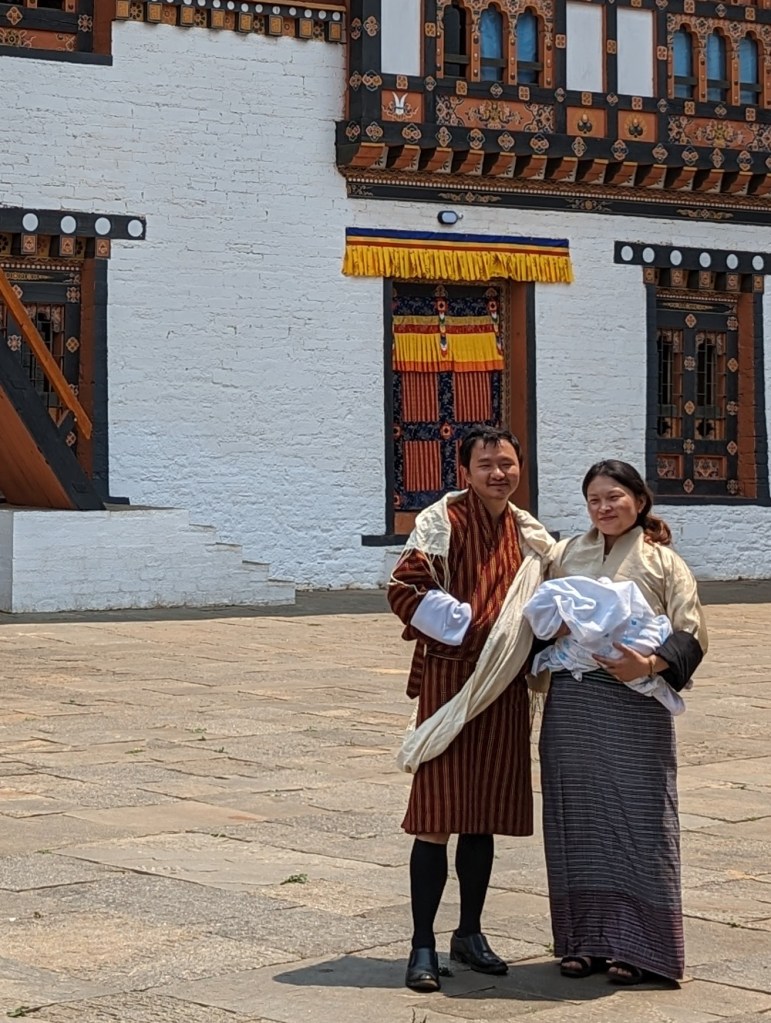
Everybody loves a baby
 Our Seasons in Shangri la
Incredible site! Beautiful pictures and narrative Steve, thanks for posting. See you and Margaret at the reunion.
LikeLike
💚
LikeLike
The landscape and architecture is so beautiful! I am also in love with the fabrics I see in the ceremonial and every day clothing. Such beautiful colors, patterns and textures. I love the way the different patterns are worn together.
LikeLike
Beautiful! So nice to be introduced to your friends there.
LikeLike
Beautiful. Thanks for doing this.
LikeLike
Wow Steve, looks fantastic and so good to see Kinley and Pabi again 🙂
Please remember me to them when you next see them and thank them again for our fab day trip to Taktsang in 2019 which I still remember vividly and with gratitude!
LikeLike
Hi Steve and Margaret! I can hardly imagine what you both must be feeling when you visit such holy grounds. The beauty is astonishing! When I think of you 2 and all that you have experienced I am reminded of explorers from the earlier part of the 1900s. You just seem to be in a place so out of our ordinary world here. A world in itself. I hope we have time to spend with you so you both can share more.
LikeLike