
In September of 2019, Margaret and I visited Tandin Nye on her birthday and posted about our visit on this blog. We posted again in late November as we took leave of Bhutan, hanging prayer flags as we did. So, it was a must see on our return. Many improvements to access, stone paths with railings replacing precarious dirt paths in particular, have been made. We visited on the eighth day of the fourth month in the Bhutanese calendar, Tara’s day, and it was a popular spot that day, as a cave in the upper Lhakhang houses a statue of Tara, known to have spoken on one occasion, and a rock containing 21 manifestations of Tara yet to fully manifest.
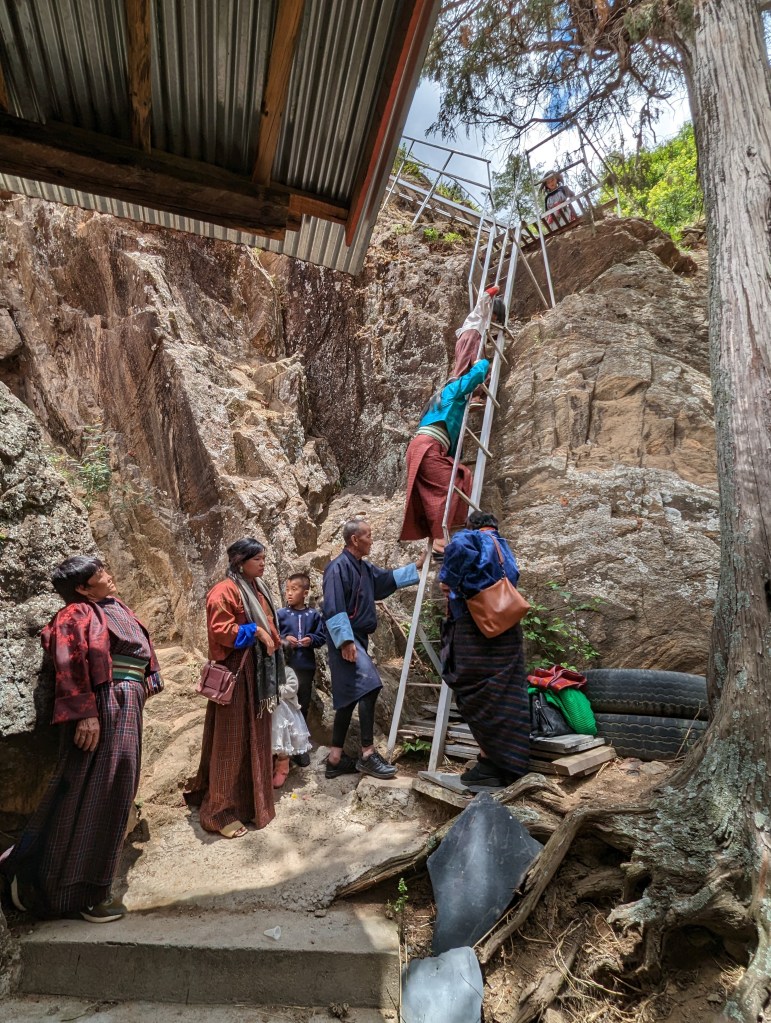
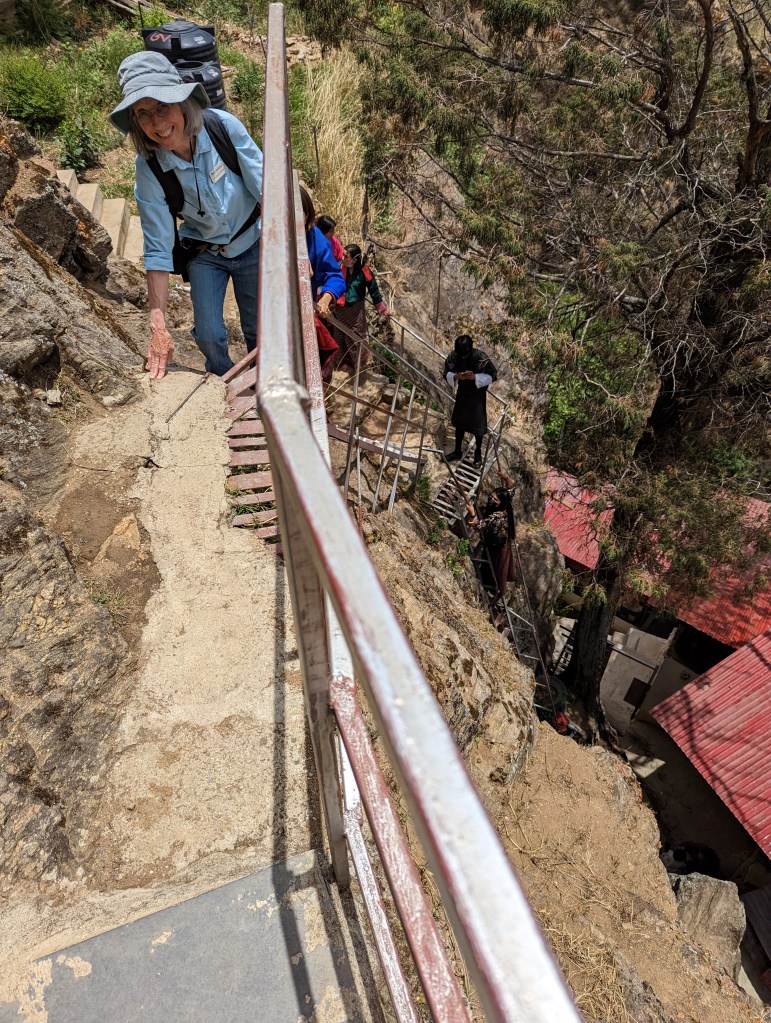
During our previous visit, the access to the meditation caves from the lower complex was blocked. We were fortunate this visit that it was open, though reaching the caves was a challenge.

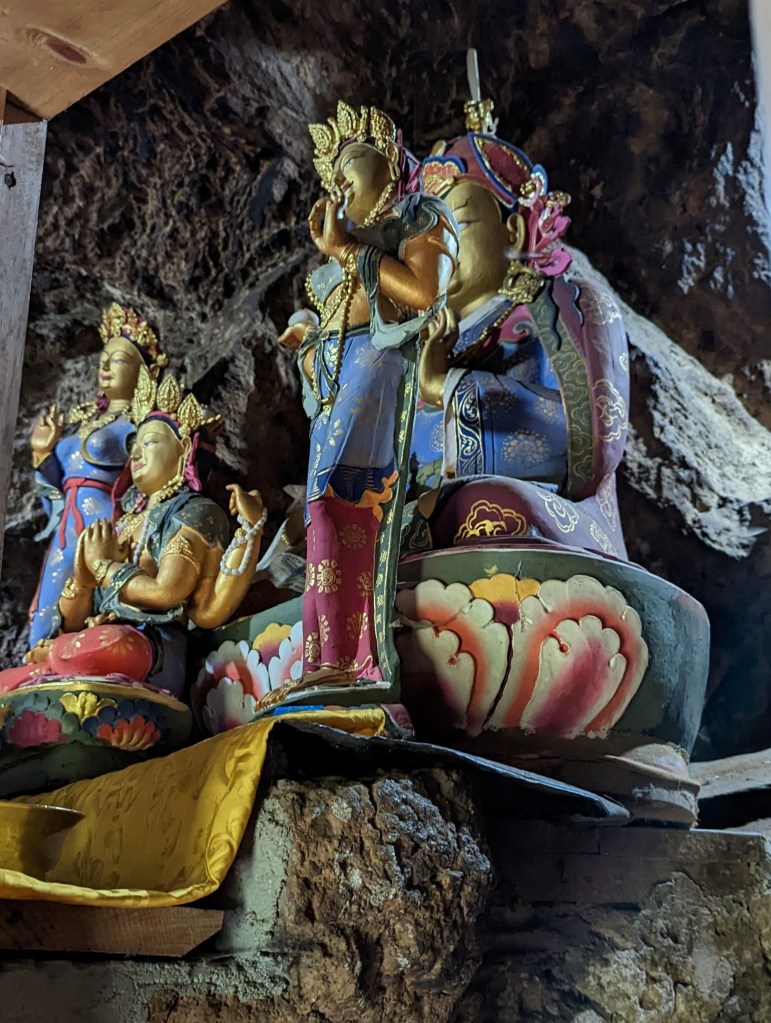
Anyone who even casually reads about Buddhism, learns that retreats in caves are an integral part of the history. Guru Rinpoche, also known as Padmasambhava, brought Buddhism to Bhutan in the eighth century and is believed to have meditated in the caves at Tandin Nye. Here is a statue of Guru Rinpoche in one of the several caves we climbed too.
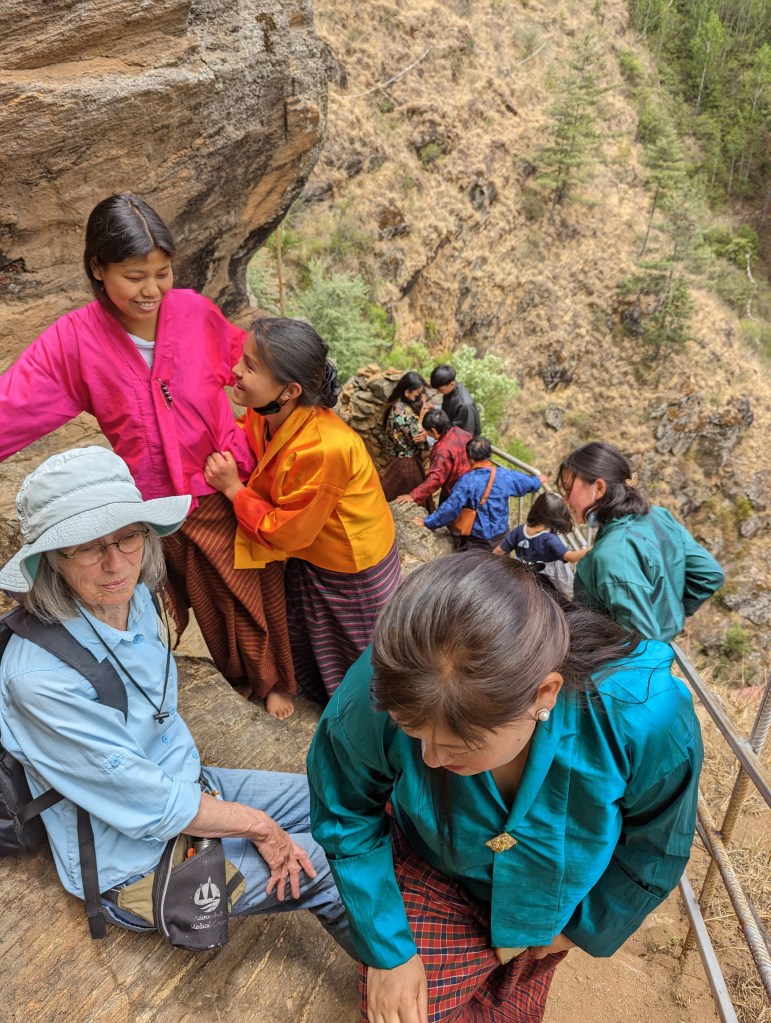
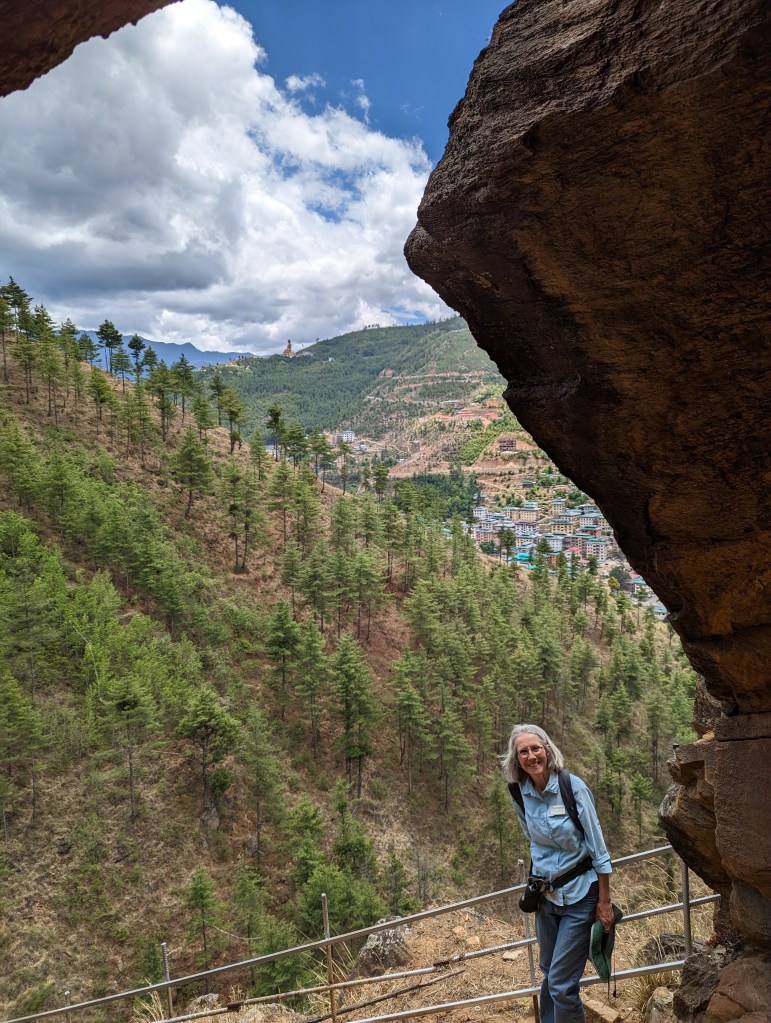
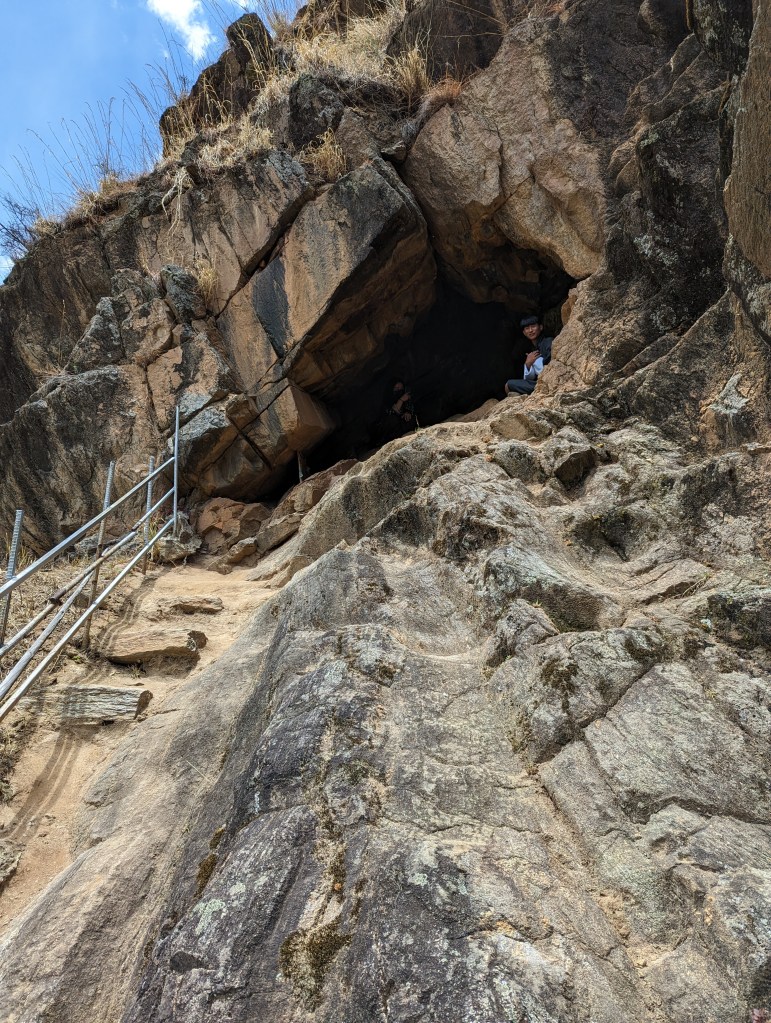
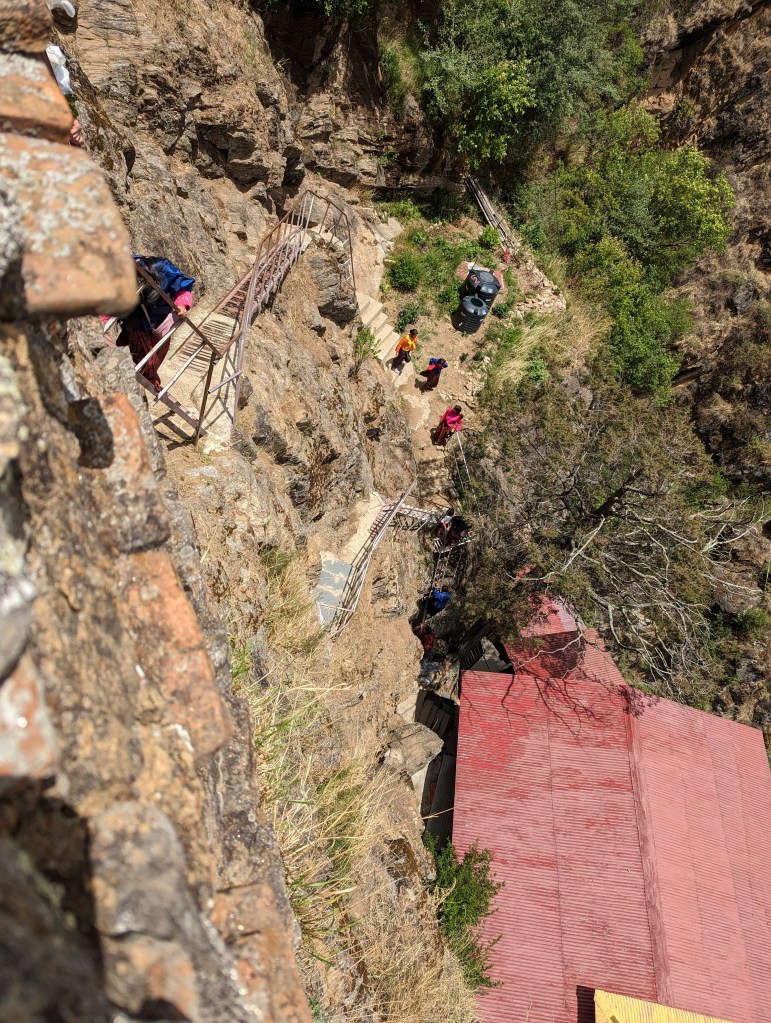
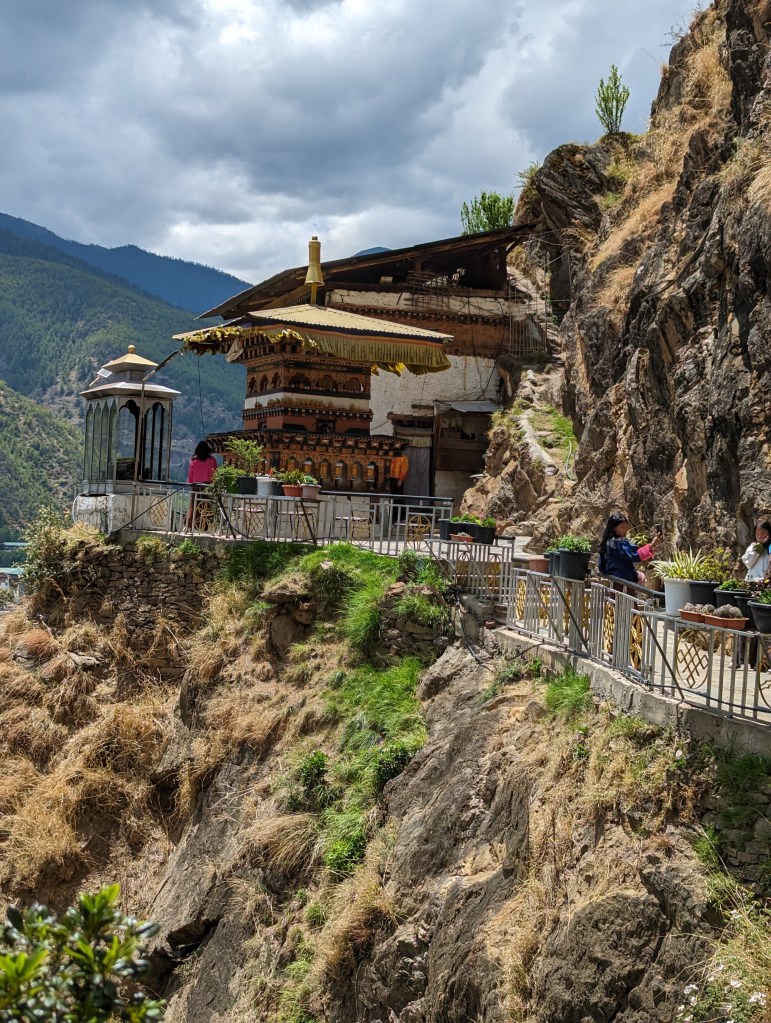
Tandin Nye. From here, we walked much further up the road to Tandin Nye Lhakhang. In 2019 we had become lost in our search for the upper complex but the way was clearer this visit and we had the good fortune of the company and guidance of some young ladies.
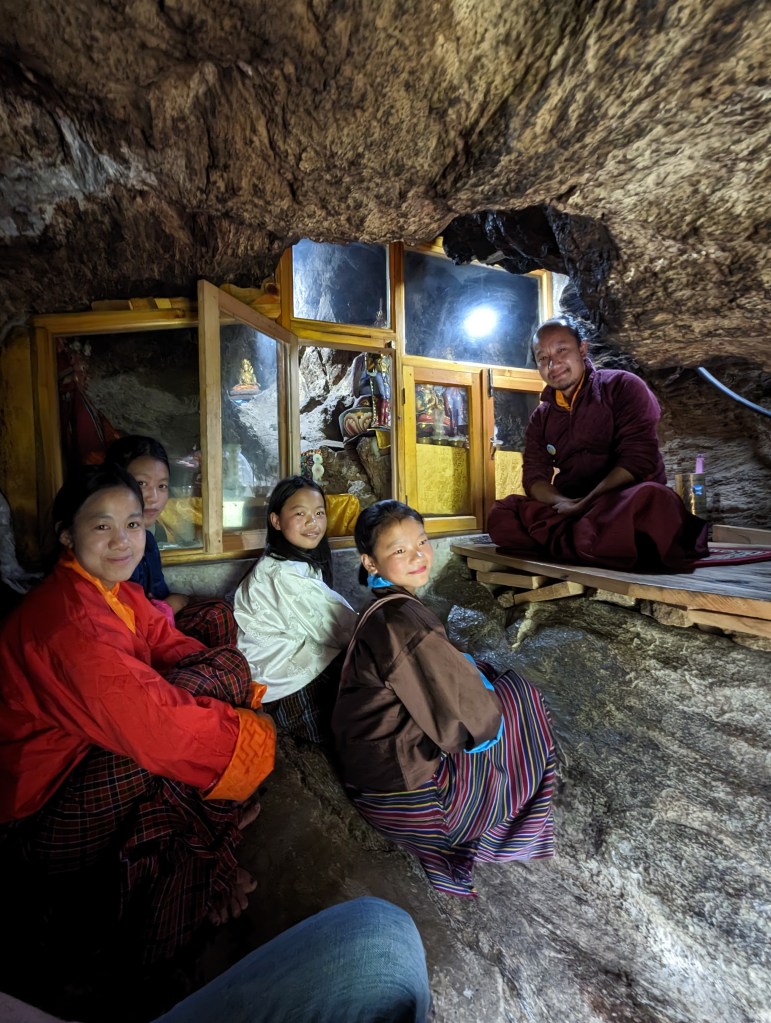
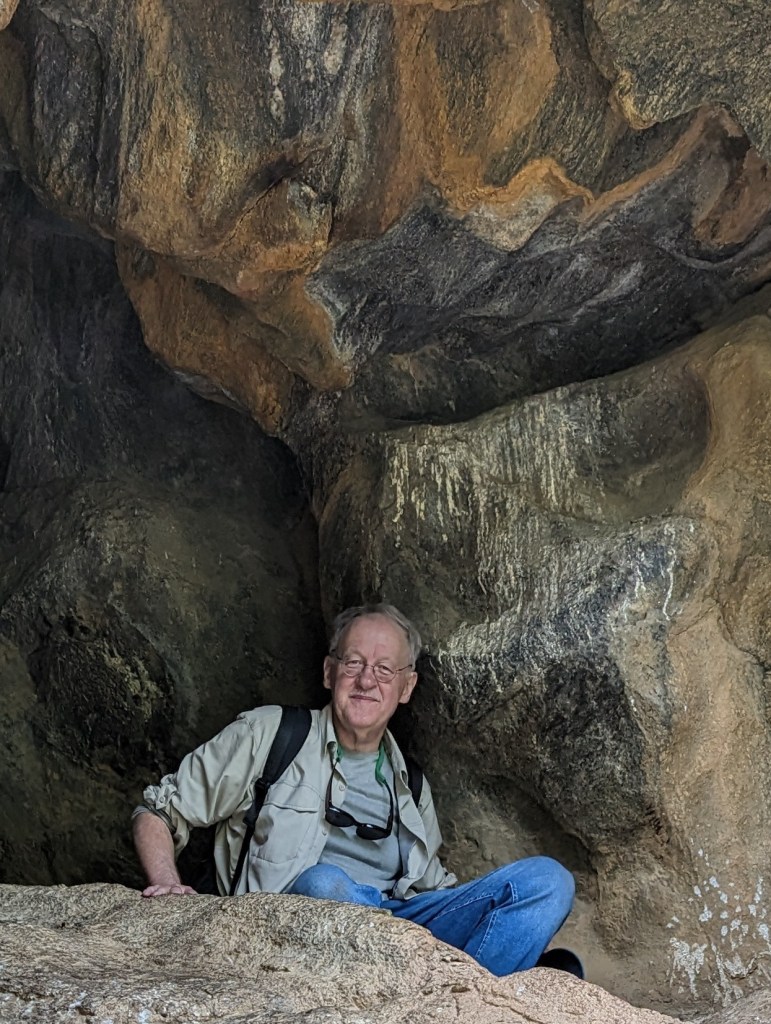
It was inspiring to see that these students had taken the initiative to hike the long distance to Tandin Nye Lhakhang and sit in rapt attention to the monk who explained the history and religious significance of the site to them. Of course, his teachings were in Dzongkha, but much could be absorbed spiritually by simply being there. This is the primary meditation cave.
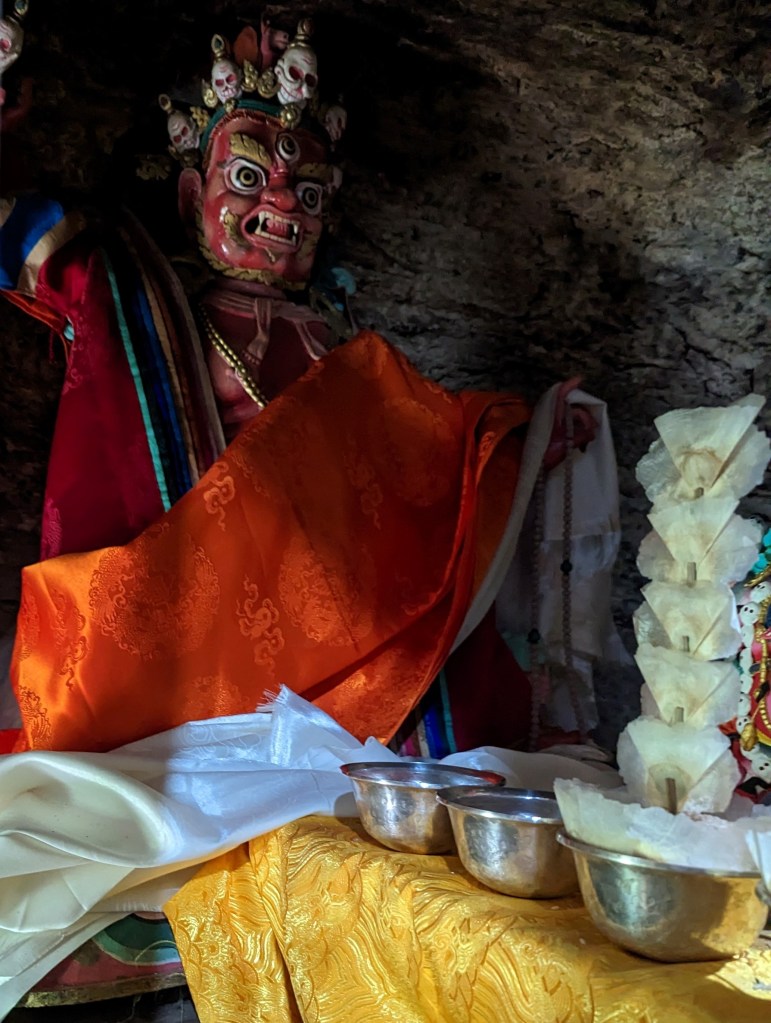
In the eight century, Padmasambava (Guru Rinpoche) meditated here in this cave on the practice of Tandin, to subdue the evil forces blocking the introduction of Buddhism.
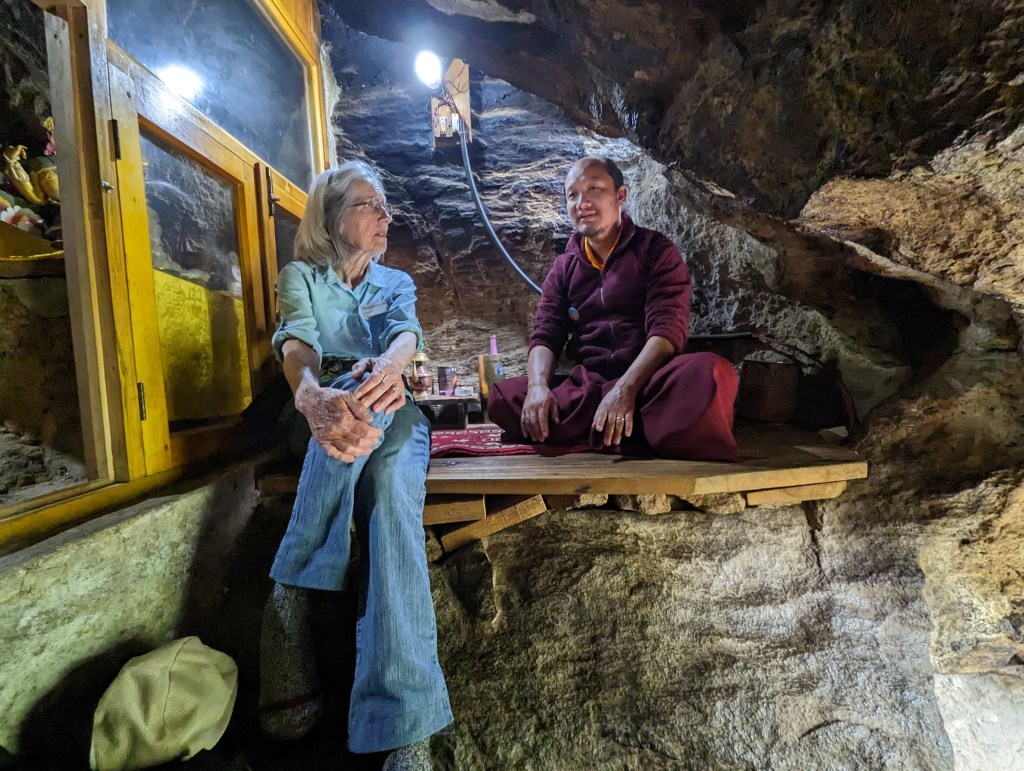
As we often found true, folks often spoke much better English than they initially acknowledged. This kind and articulate monk was our guide for the remainder of the visit. We felt truly privileged.
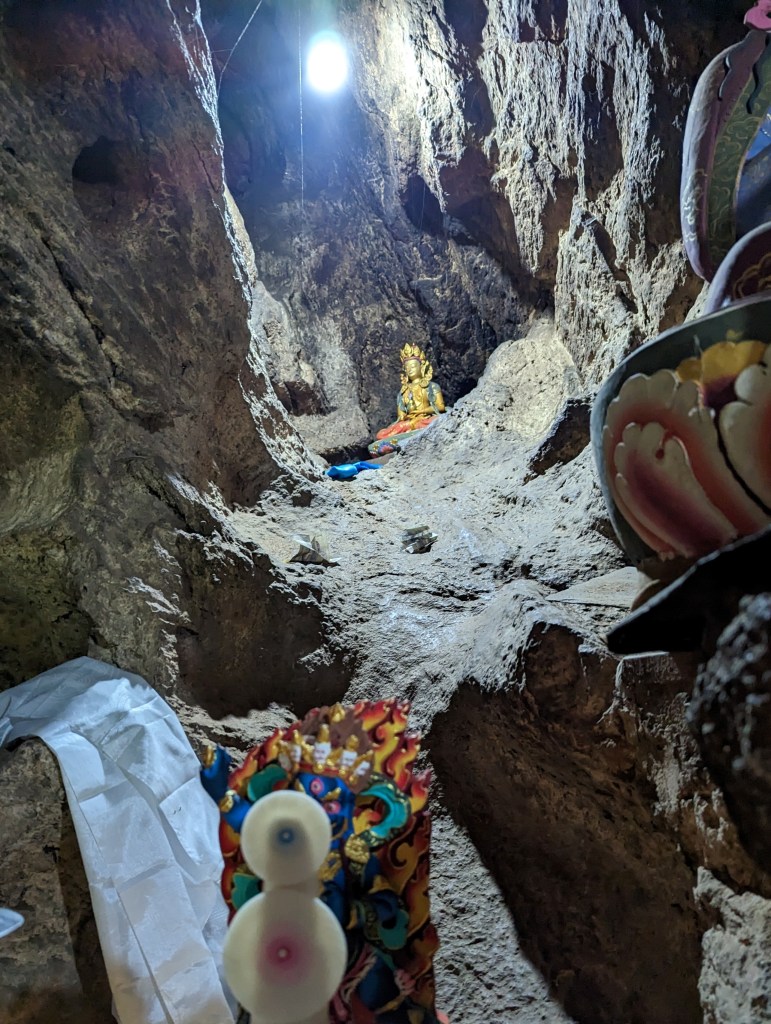
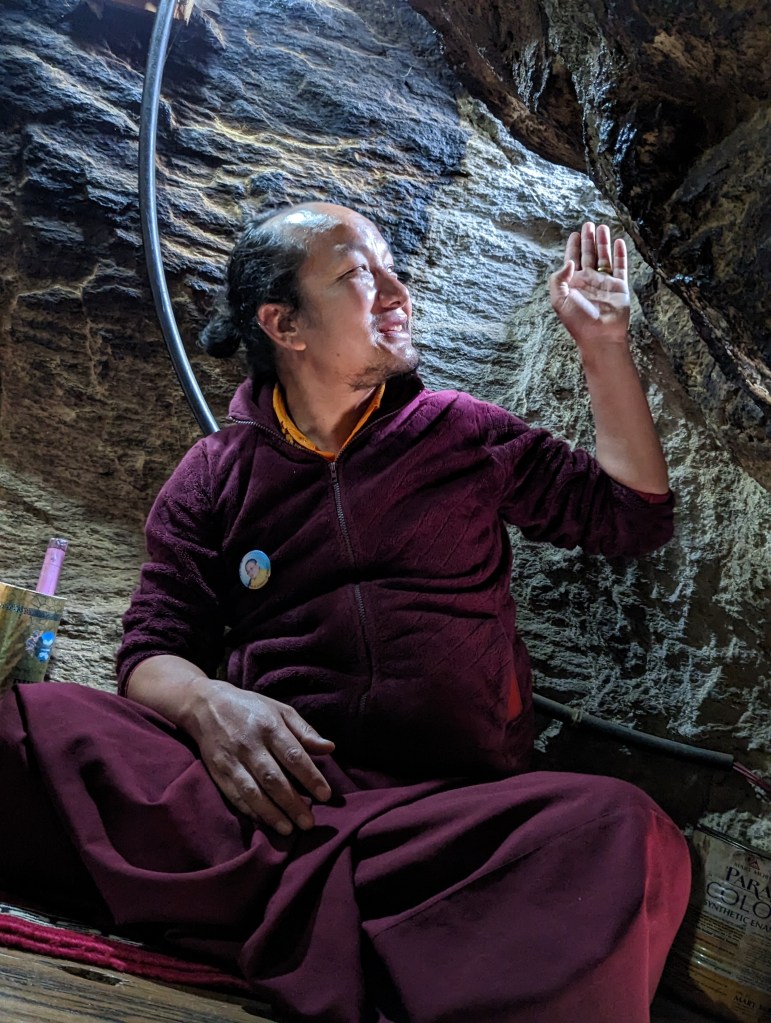
A standard monastic retreat is completed in three years, three months and three days. It is important to leave the retreat site by going upward to preserve the full benefit of the retreat. The monk points to the cave exit above. Important religious figures from the thirteenth, seventeenth and twentieth centuries have all completed retreats here. It was following the twentieth century retreat of a treasure revealer who had a vision of Tandin that the Drubkhangs, the buildings around the caves were completed and Tandin Nye established.
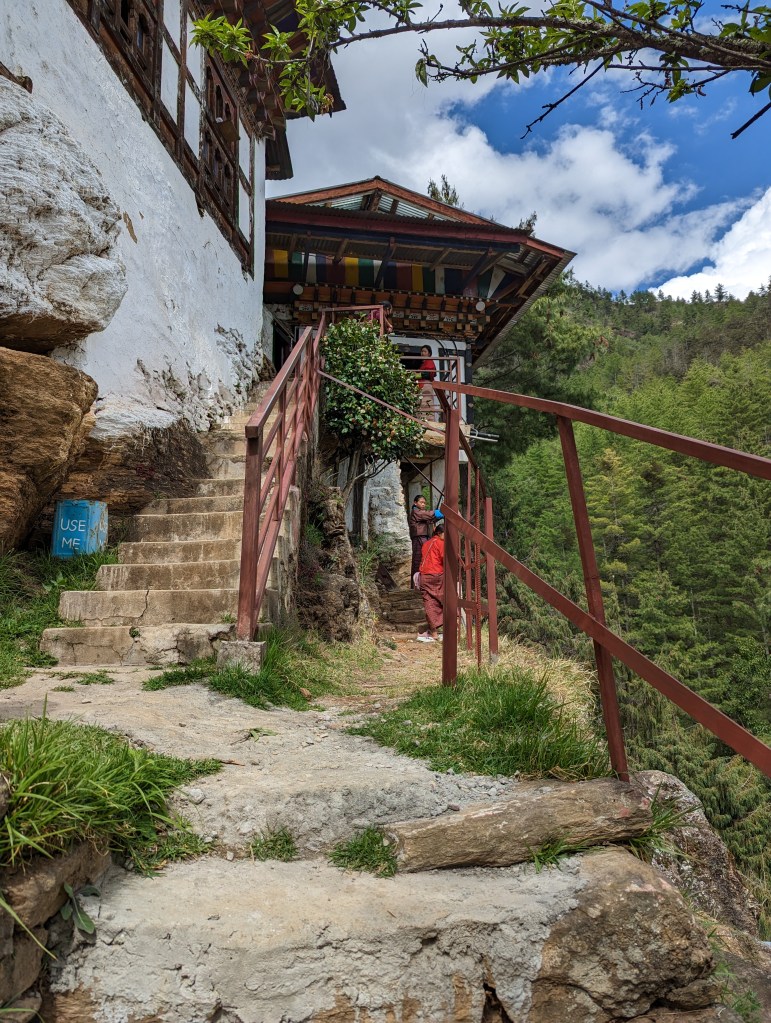
The path to the upper caves and the temple of Tara
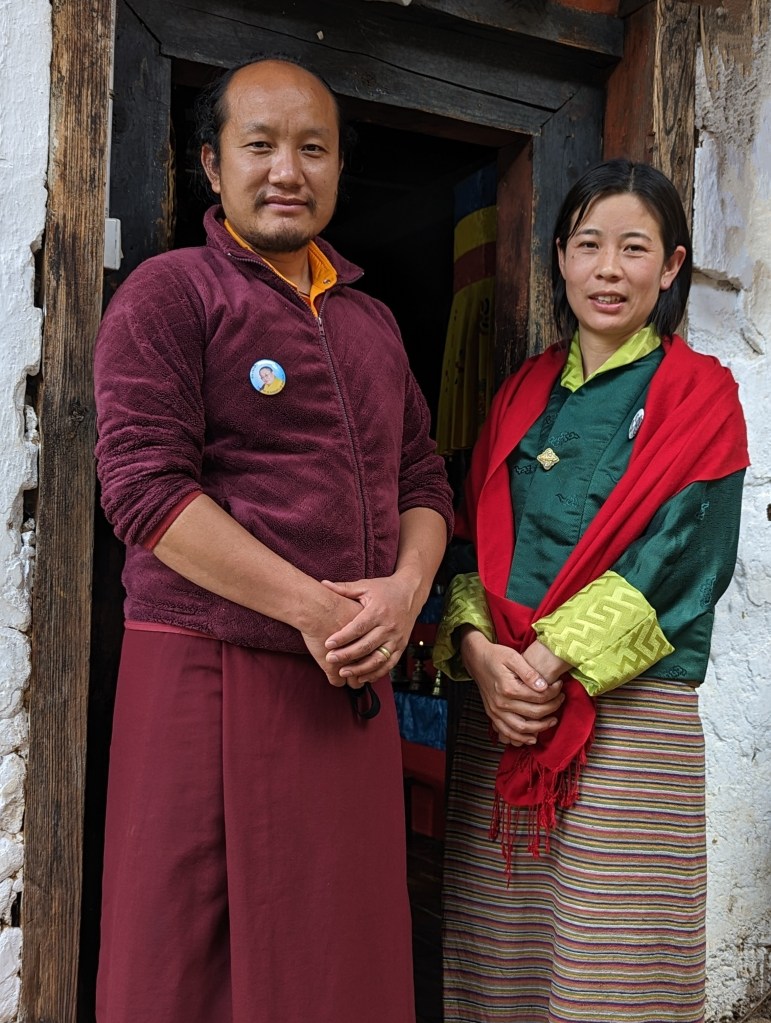
Of note, we are strangers to this country and this culture. We do are best to accurately represent the complex and rich history and people, but our knowledge is incomplete and we welcome any corrections or assistance.
 Our Seasons in Shangri la
Fascinating pictures and explanation. Must have been quite a climb to get there.
LikeLike
Phenomenal! What an adventure!
LikeLike
Still more beautiful photos of amazing landscapes, temples, and people. Thanks, Steve.
LikeLike
What an extraordinary pilgrimage and experience. Thank you for posting such beautiful photos and explanations. I can see what a privilege it was for you both to experience.
LikeLike