Taken with Takins

March 21st was World Down Syndrome Day. To celebrate, Margaret accompanied the students and staff of the Draktsho Vocational Training Centre for Children and Youth with Disabilities to the Royal Takin Preserve on the outskirts of Thimphu.

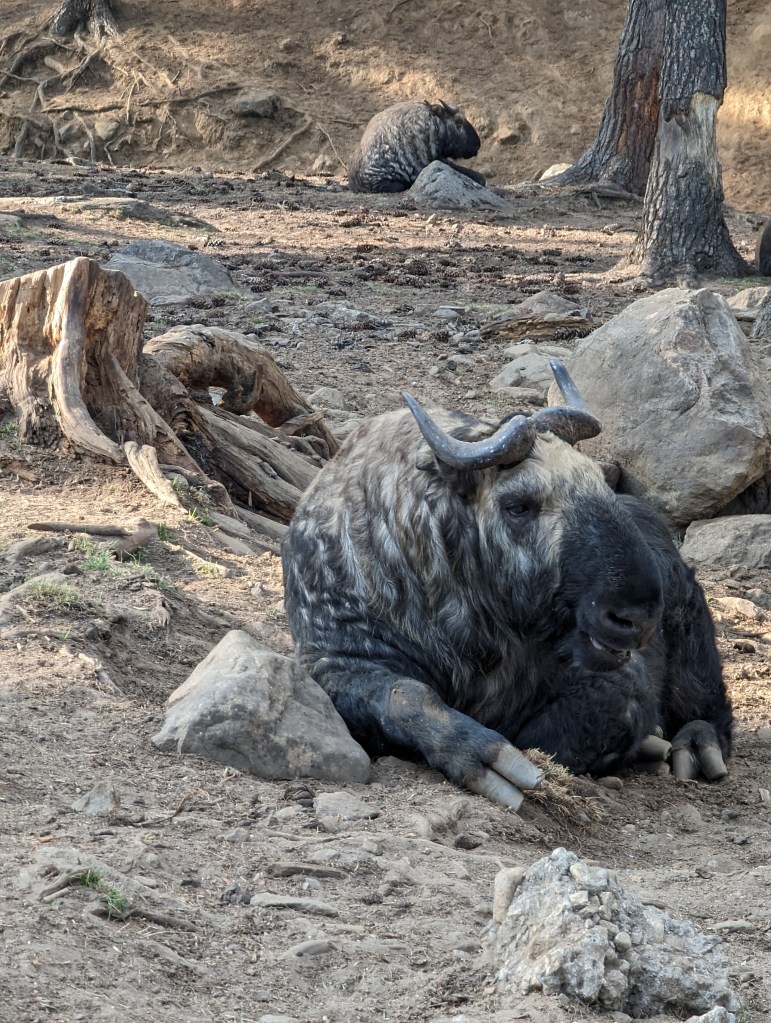
Takins, known in Bhutan as Drong Gimtse are the national animal of Bhutan and the Preserve was established in 1974 as a genetic reservoir for the species. It has subsequently been expanded to include many other native mammals and birds.
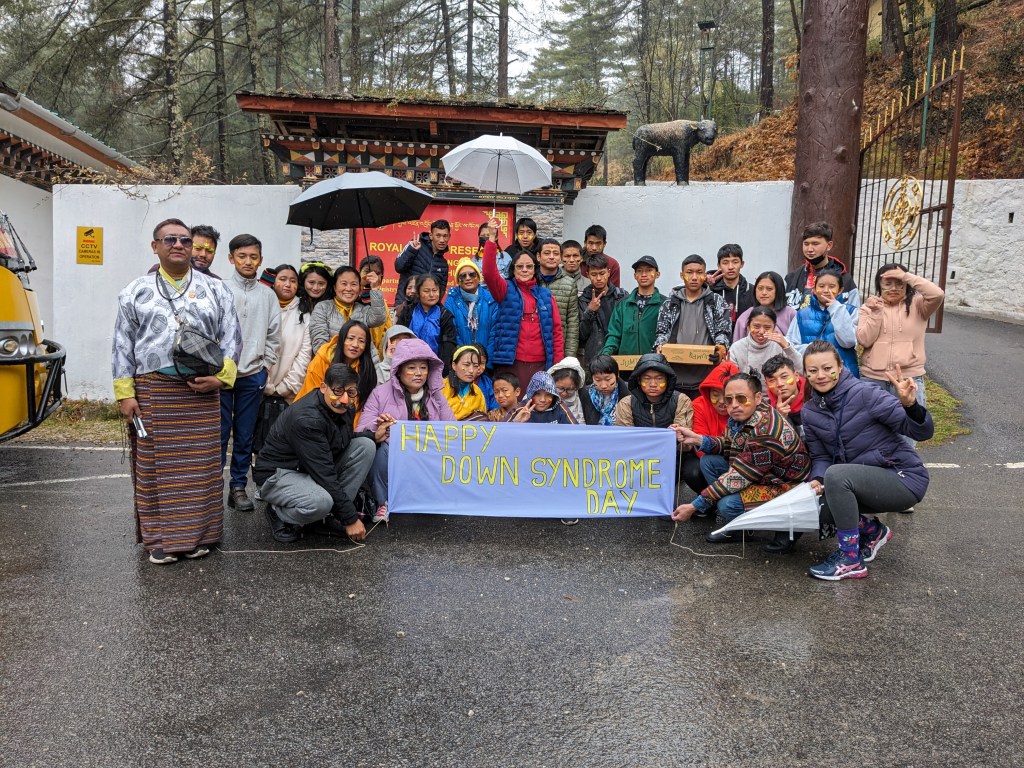
Staff and students from Draktsho. This is Margaret’s second year as a volunteer.
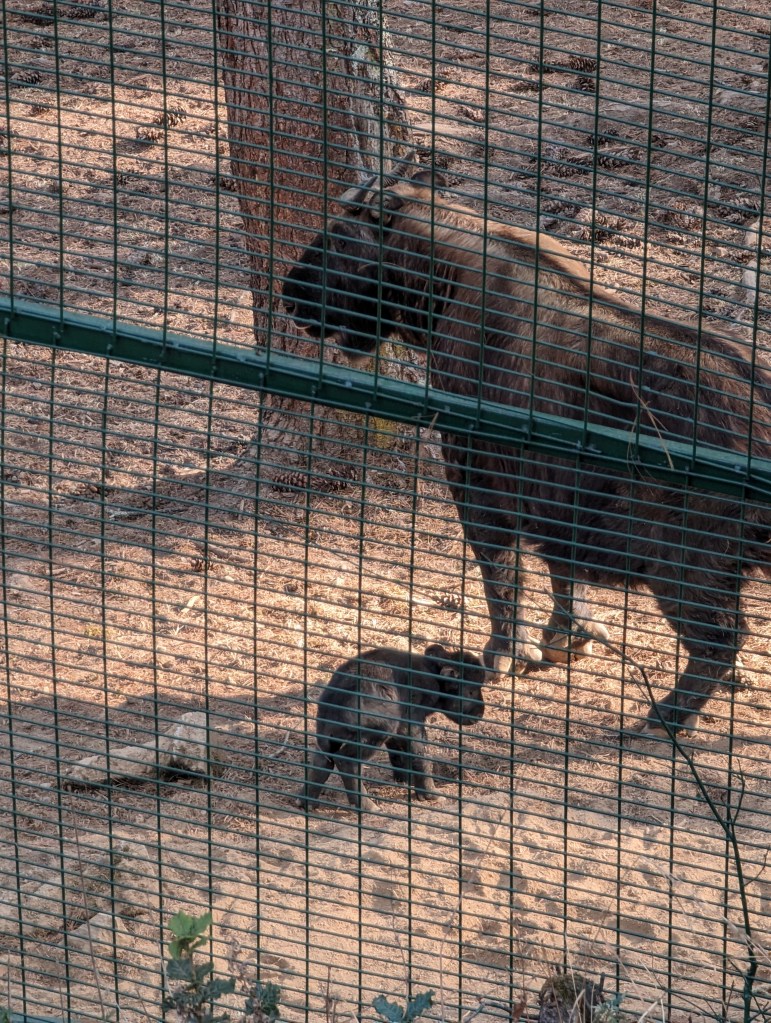
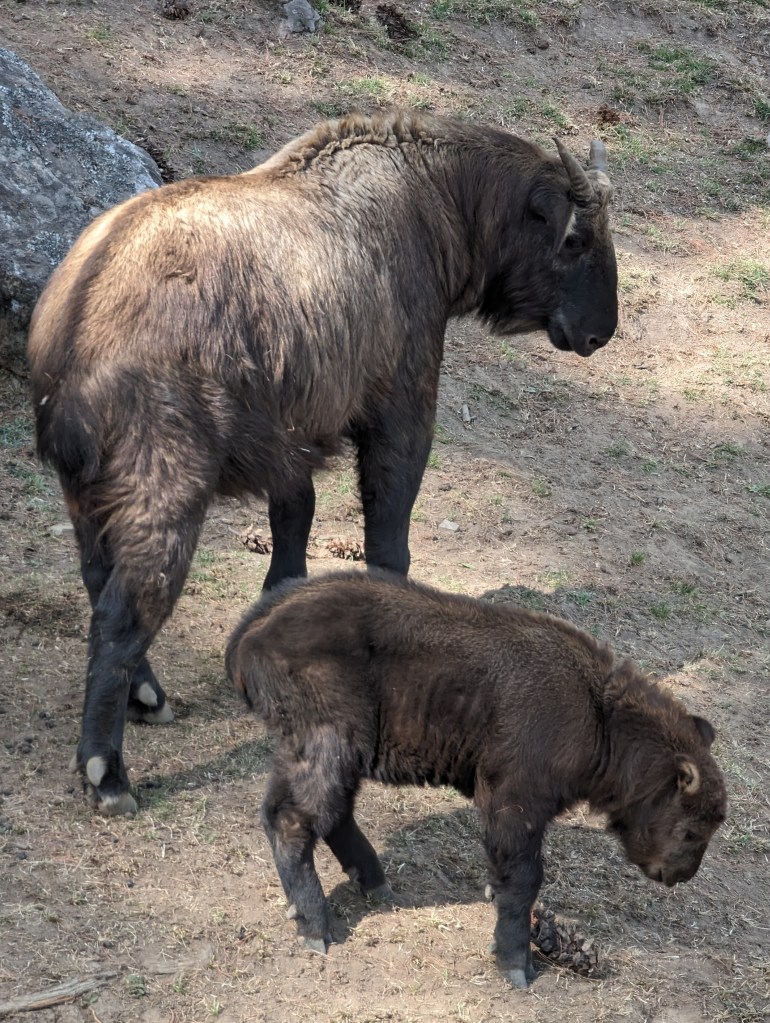
Mother and Child. Bororcas taxicolor whitei

According to Bhutanese folklore, the takin was the creation of one of Bhutan’s most renown saints, Lama Drukpa Kinley, also known as the Divine Madman (1455-1529). When challenged by his devotees to demonstrate his divine powers by performing a miracle, he asked for a feast in his honor to include a cow and a goat. Having devoured both animals, he proceeded to attach the skull of the goat to the skeleton of the cow, bringing a new animal to life and setting it free to graze in the mountains. Young takins born in the preserve are relocated to distant protected compounds and reintroduced into the wild in the remote, mountainous terrain, pine forests and alpine meadows that are their natural habitat. They are social animals, usually living in groups, and prey for tigers and Asiatic wild dogs. Males can weigh as much as 850 kg, females as much as 500 kg.
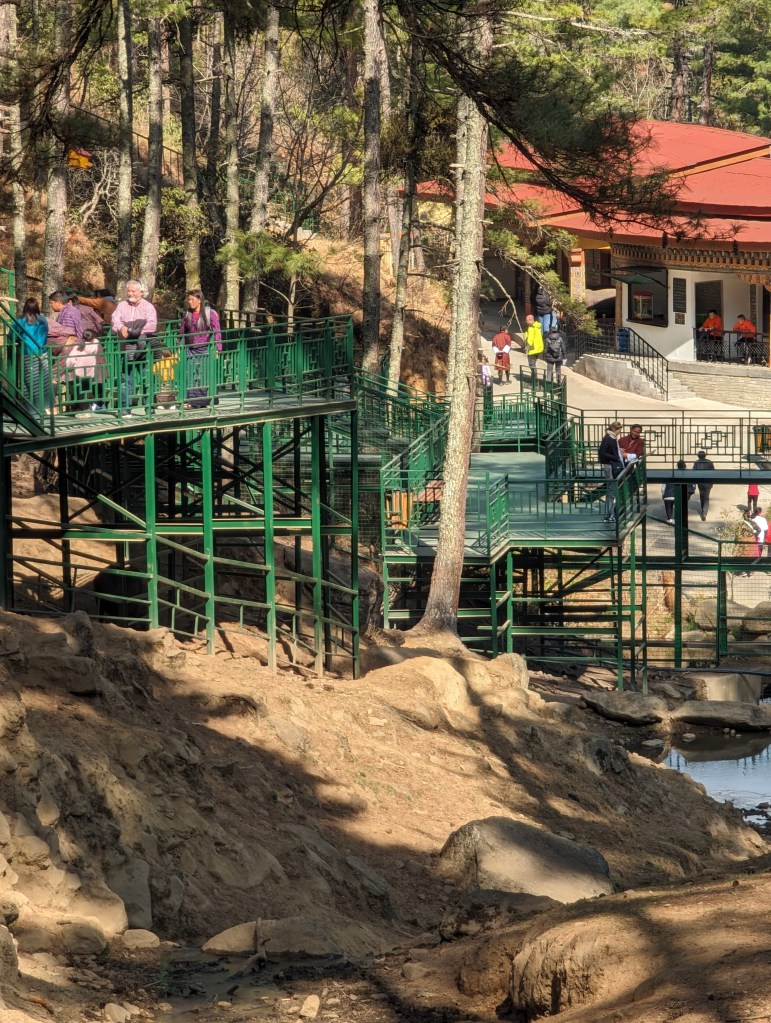

Our first visit to the Takin Preserve was in 2019. Construction had started on a raised walkway encircling the entire compound when we visited in 2023 and it has since been completed, enabling much better access to the many native species protected here and generating a substantial increase in tourism visits. Admission for Bhutanese is about 60 cents, tourists about 6 USD. As volunteers, we are charged the local price.
Students preparing for the outing, faces painted with Bhutanese flags.
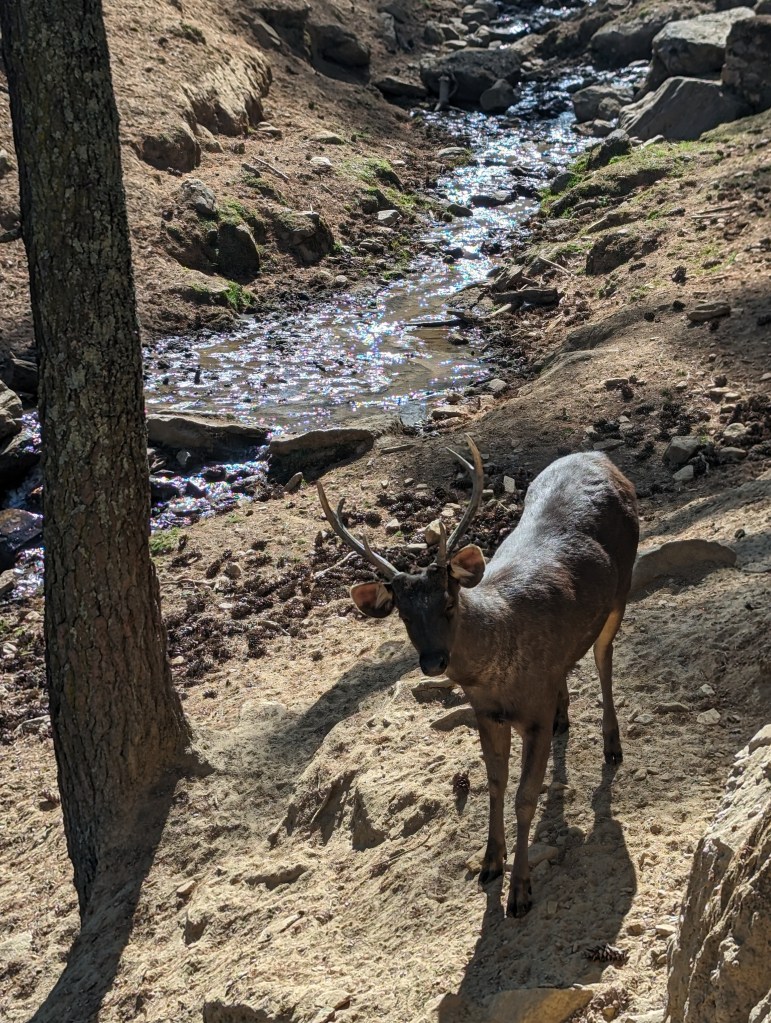
Sambar deer. Found at altitudes up to 3700 meters, sambar deer are the primary prey for tiger, leopard and Asiatic wild dog. They prefer dense tree cover on the steep slopes of both deciduous and broadleaf forests. Over seventy percent of the country of Bhutan remains forested.
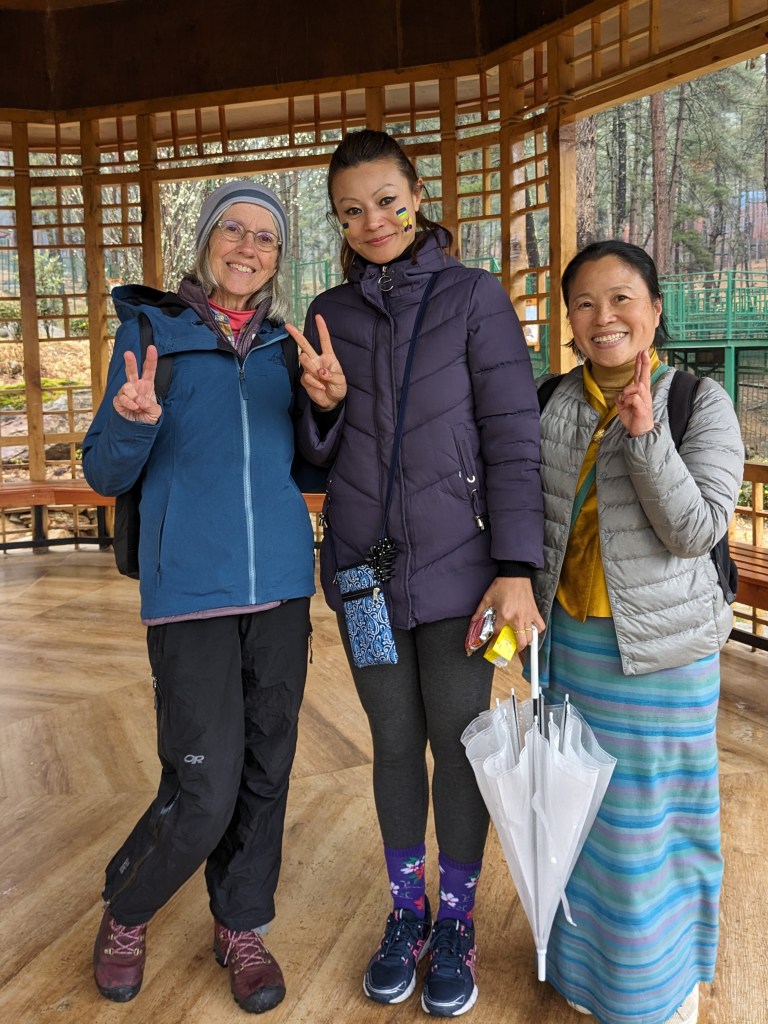
There are pavilions, picnic areas, playgrounds and a cafe on the grounds. Here, Margaret poses with Deki Zam, the director of Draktsho, and Mutsuko, the chief seamstress with whom Margaret works. Mutsuko is from Japan, a volunteer with the Japanese International Cooperation Agency.
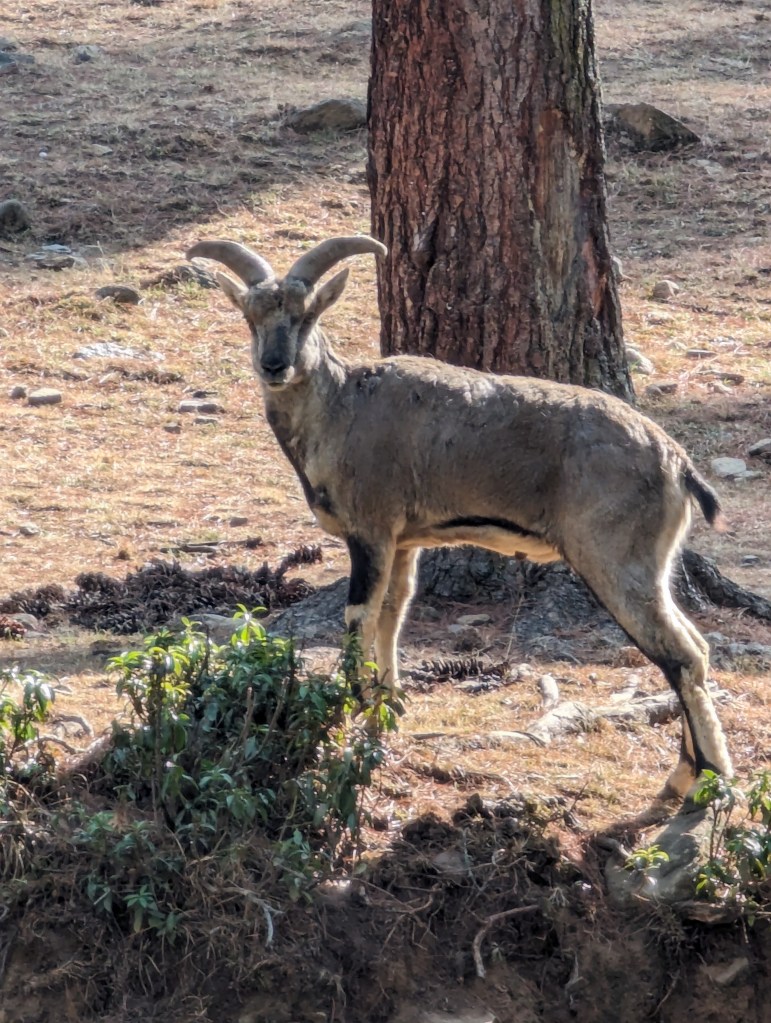
Blue Sheep (Pseudois nayaur). Found in the northern parts of Bhutan, Blue Sheep live on the slopes of steep alpine meadow between 3500 and 5000 meters. They are the main prey for snow leopards.
Mama takin and newborn. So tiny and vulnerable.
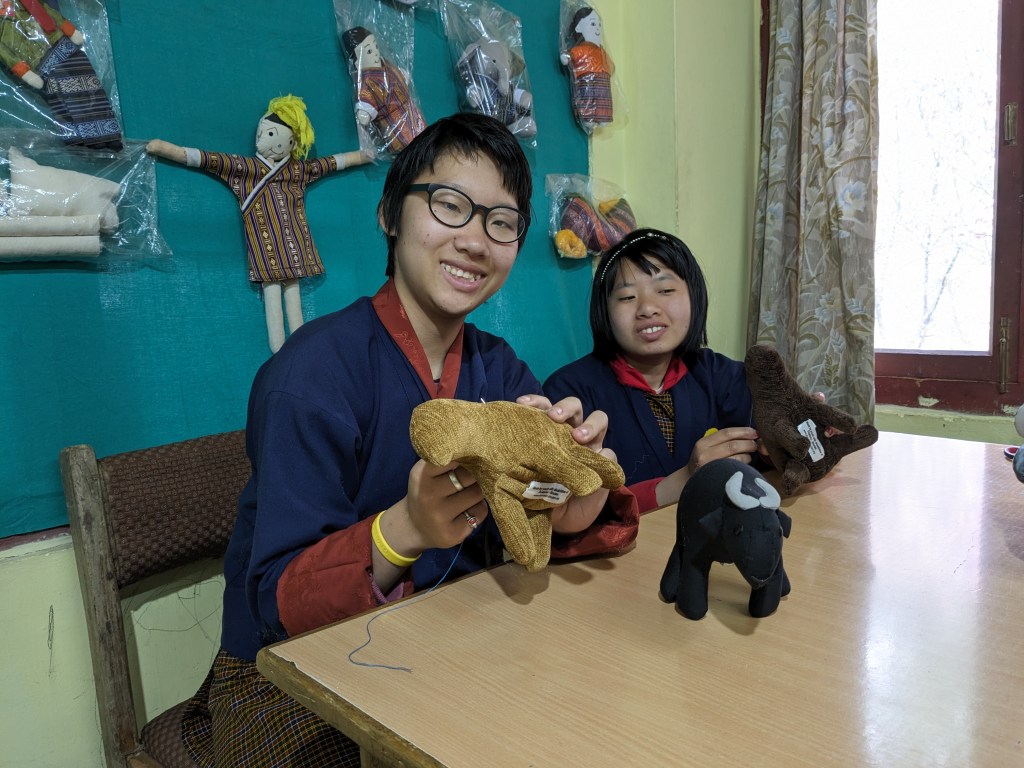
A major focus of the Draktsho curriculum is teaching students the traditional arts of Bhutan. Back at the school, these students are making toy takins for sale as souvenirs.

2 Comments

Leave a reply to Jay Federman Cancel reply