Haa!

At the Fair. The Haa Spring Festival

Haa is the smallest of the twenty districts, dzongkhags, of Bhutan. In northwestern Bhutan, adjacent to the Indian state of Sikkim and the contested border with Chinese occupied Tibet, making it of critical strategic importance to India. To support an Indian Army outpost and Bhutan military training facility in the northernmost part of the Haa Valley, the army constructed a road traveling southwest from Paro, a paved, single lane road travel 30 torturous kilometers with continuous switchbacks, gaining nearly 5500 ft in altitude to the highest motorable pass in Bhutan, Chelela, at 13,083feet, and descending nearly as much into the valley.
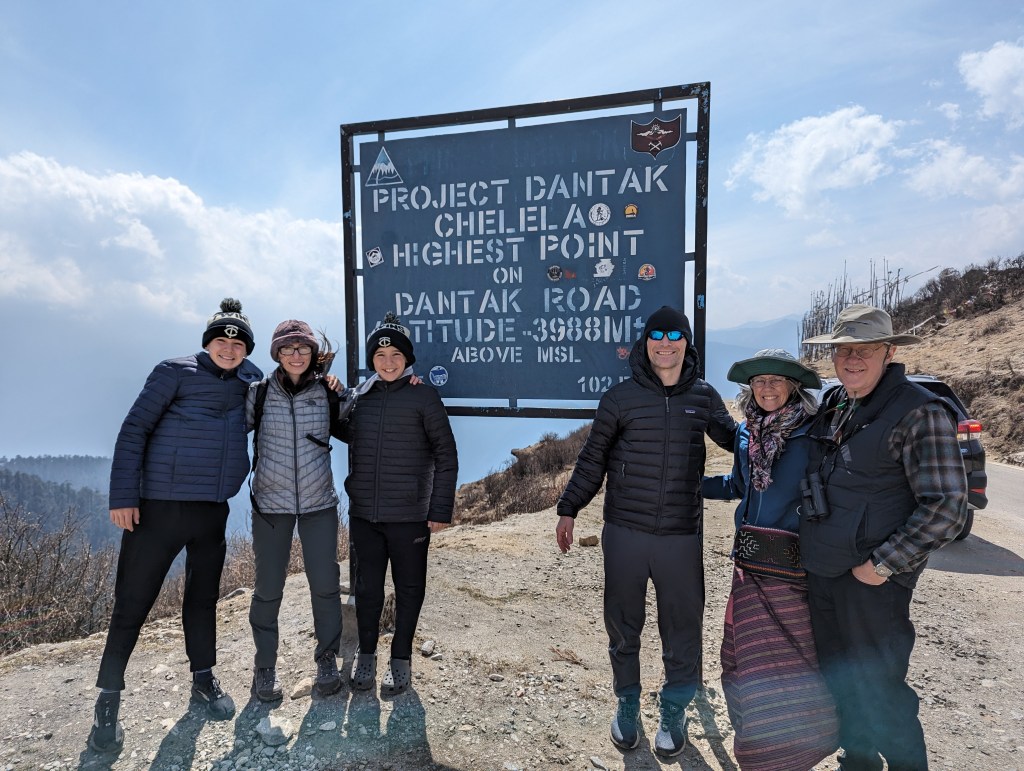
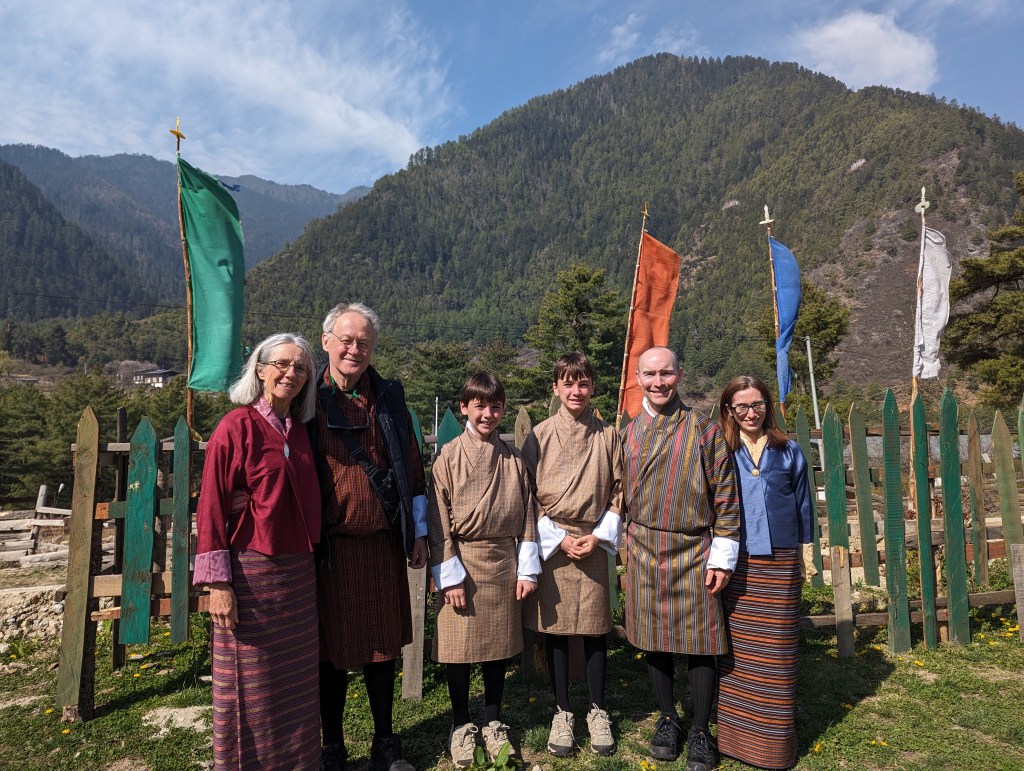
Atop the pass with our fellow travelers and HVO volunteers, John and Alexia Knapp, and their sons Matthew and Alex.

Hiking up from the pass, we encountered numerous picnickers descending from a ritual and passed several wind driven prayer wheels, each wheel filled with tens of thousands of written prayers, going out on the wind for the benefit of the world.

Golden langurs along the road, hoping for a handout. Not really known in the west until the 1950’s, these old world monkeys have a very limited geographical range and have been considered sacred in Bhutan. We stopped for photos as they quickly jumped on the cars, trying every window and door to gain entry.
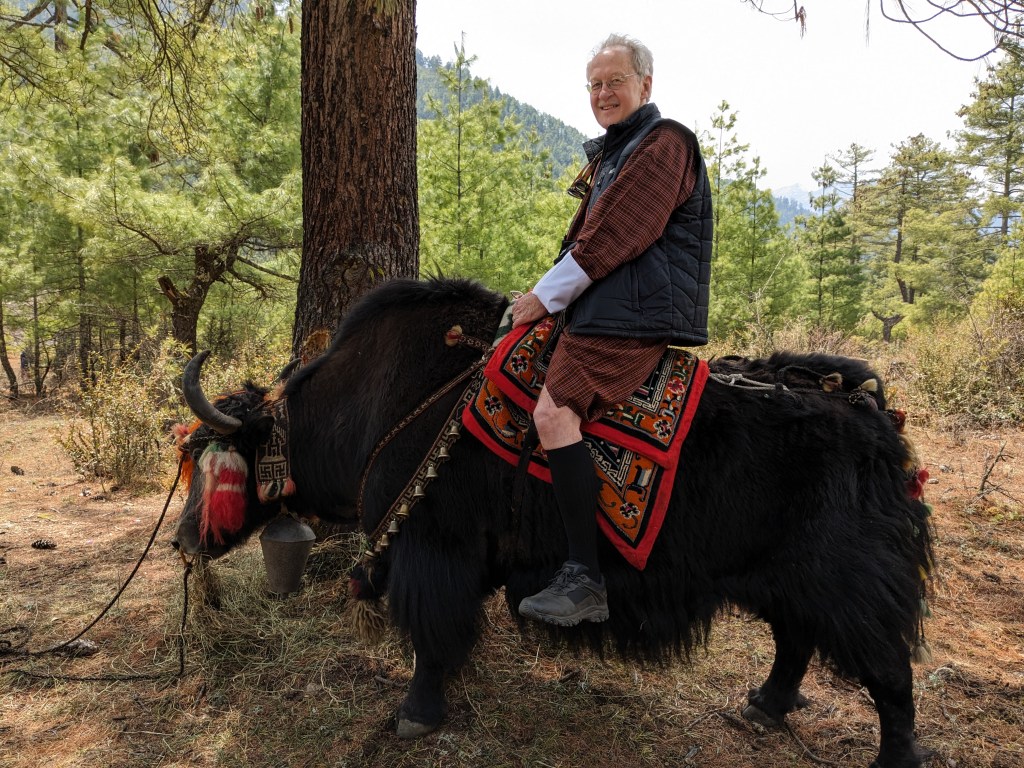
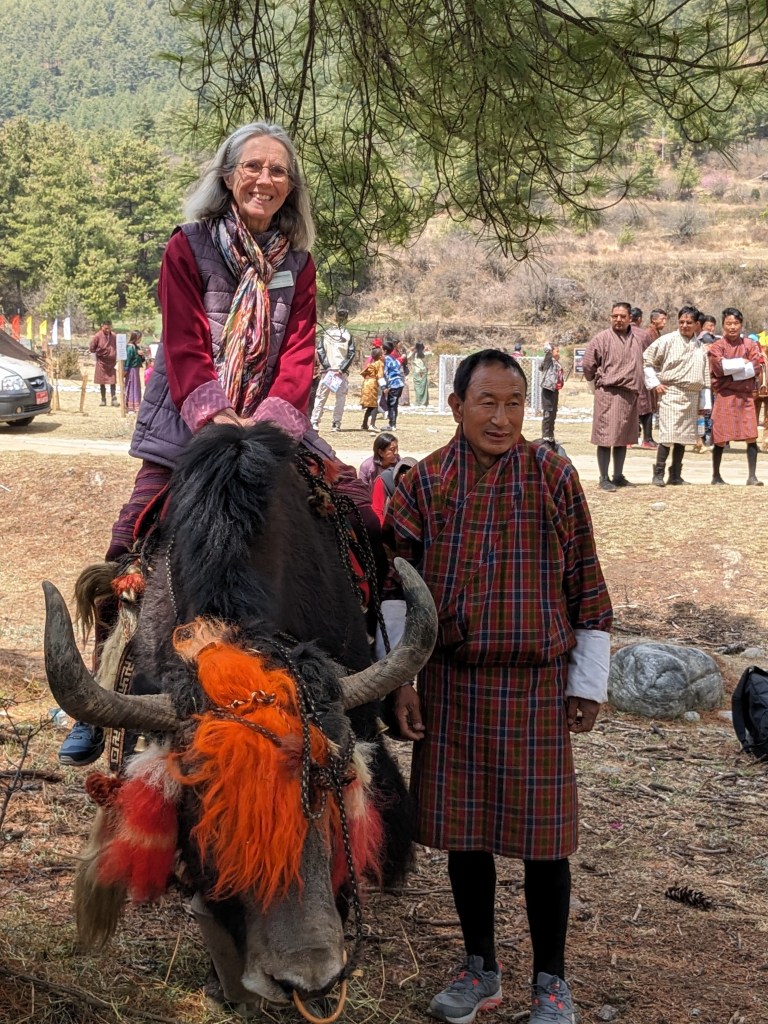
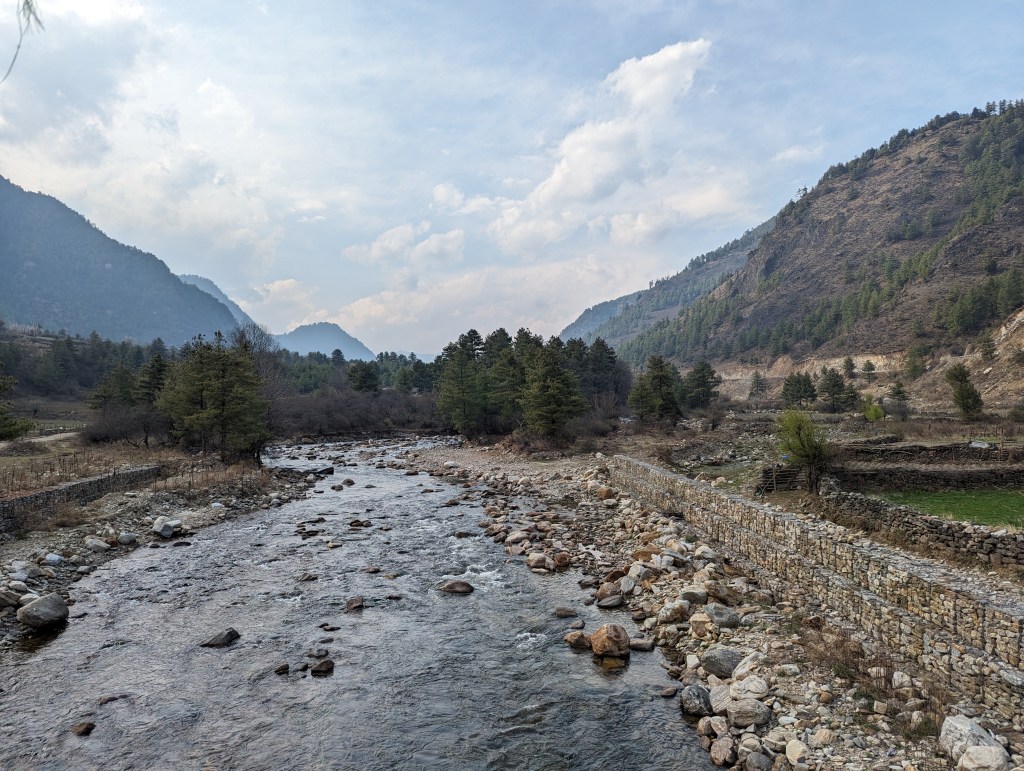
The Haa Valley. High altitude crops such as wheat, barley, millet and potatoes are grown in the fertile soil. Every arable bit of land seemed to be utilized, with stone walls, fences and scarecrows to deter wildlife. Yaks are an essential part of the subsistence and market economies. Most of the yaks had already started their summer migration up into the surrounding mountains.
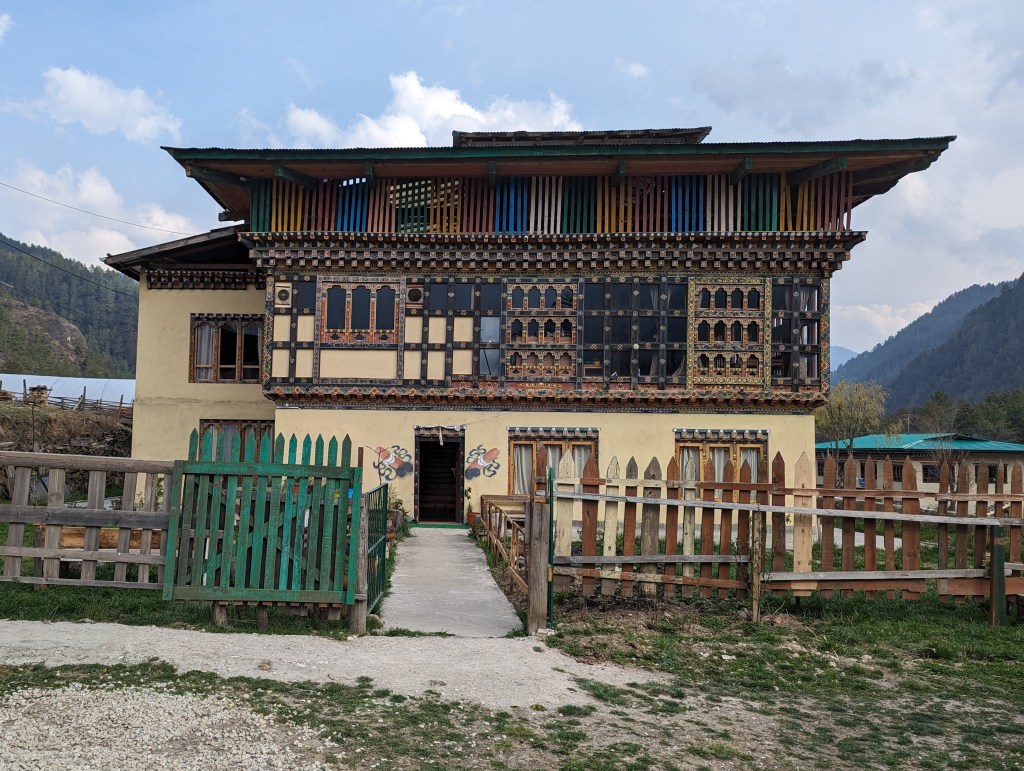
Our home for the weekend. For generations, this was a family home. With the urban migration of young people, families are shrinking. During the COVID pandemic, the Bhutan government took advantage of the absence of tourists to build up tourism infrastructure. This included financing and certification of homestays to prepare for the return of tourists and to supplement the income of rural people, enabling them to stay in their homes. Renovations included upgrading electric, heat and plumbing. Compared to homestays during our previous visits, this homestay was downright luxurious, with a bathroom, including a flush toilet and shower adjacent to every bedroom, and a comfortable nighttime temperature.
Ready to depart for the festival. The Knapps will be in Bhutan for nearly four months as Health Volunteers Overseas physicians. John is an opthamologist, Alexia a dermatologist. Alex and Matthew are attending school in Thimphu, seen here in their school uniforms.
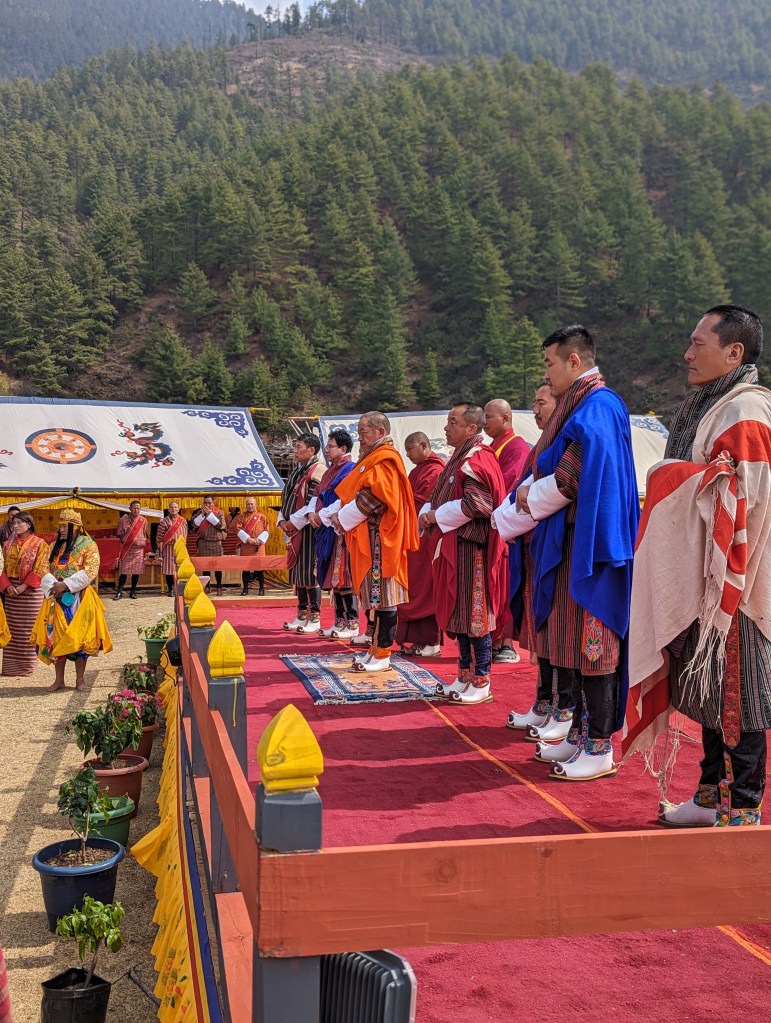
Opening ceremonies with the Minister of Energy and Natural Resource (center in orange kabney) and various other legislators and local officials.
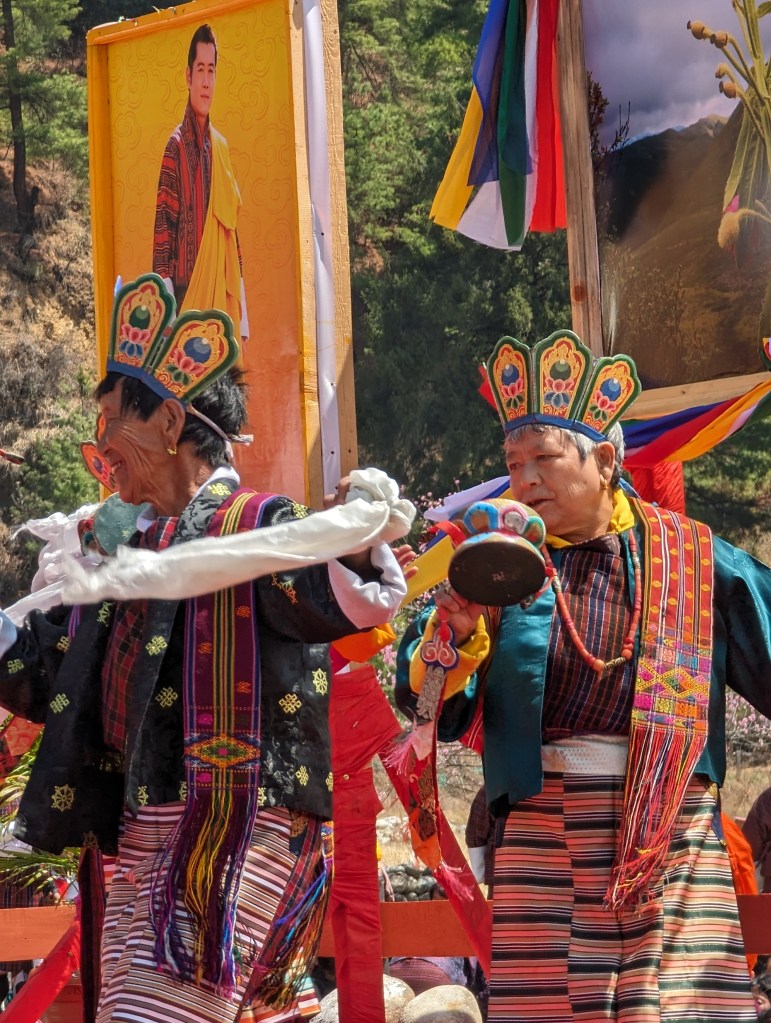
No event in Bhutan can be divorced from its religious heritage or its allegiance to the monarchy. Long before the introduction of Buddhism to Bhutan in the 8th Century, local deities prevailed in every village, valley, river, lake or mountain. Though the deities were subdued and subjugated, they never left and are still worshiped. The chief deity of the Haa Valley is Ap Chhundu. As local deities tend to be wrathful, they must be appeased and their blessings must be sought for any event of consequence such as planting, building, marrying or harvesting. After opening prayers and dances of Buddhist origins, the Ap Chhandu dances followed. Age didn’t stop this troupe from an enthusiastic and athletic performance of a dance with shamanistic origins.
The more traditional Buddhist dance at the opening ceremony.
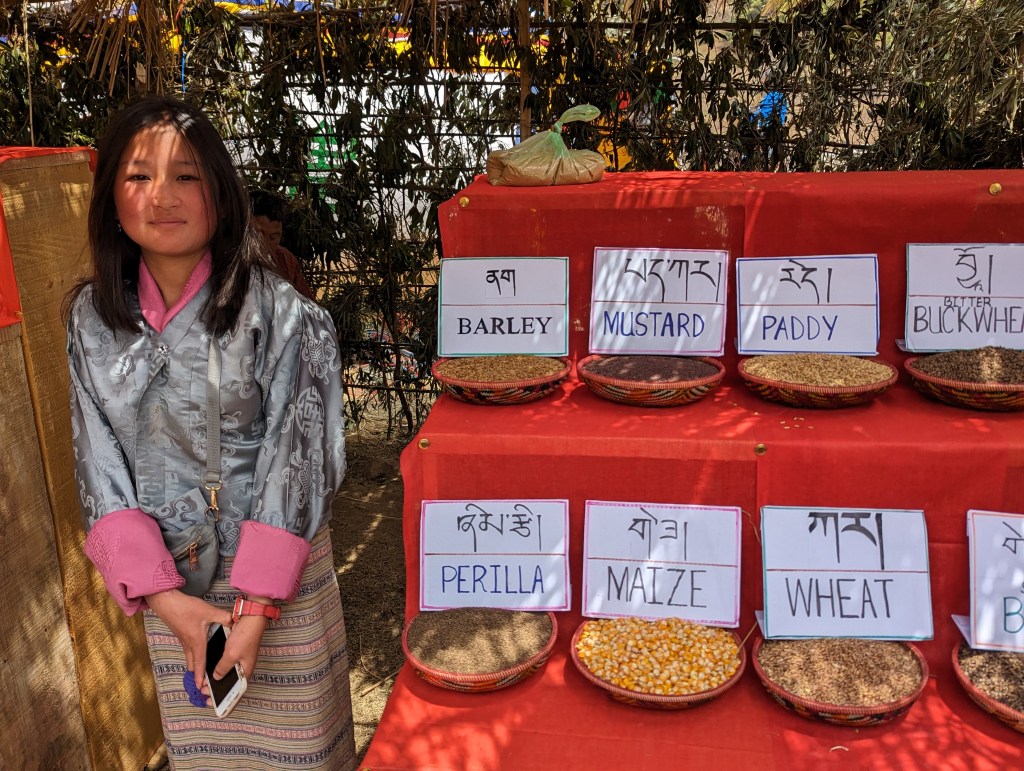
Formerly a Summer event, the Haa festival was moved to Spring this year to avoid the summer rains. Though still with religious elements, unlike a tshechu, the festival has more of a county fair atmosphere, with farmers and herders displaying their wares and food concessions hawking yak cheeses, buckwheat dumplings and pancakes, and innovative trial products such as beetroot wine (sweet, syrupy and earthy) and dried candied carrots.
Pony rides at the fair.
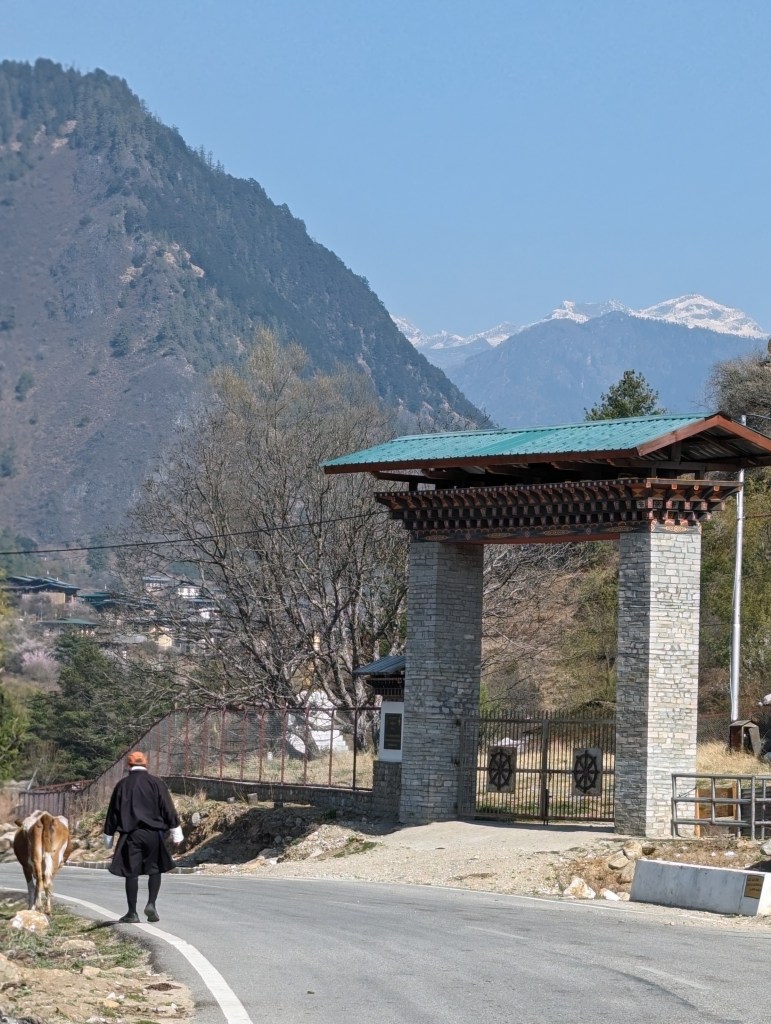
With the yaks heading up to summer pasture, dairy cows still freely roamed the streets of settlements throughout the valley. The arch marks the entrance to the district veterinary hospital, a few houses down from our homestay.

Back at Chelela Pass. Our driver, Tobgyal, and guide, Roshan, making a smoke offering. The smoke purifies the travelers of any accumulated bad luck or karma from the journey and offers universal blessings as well. Smoke offerings are also customary before entering your home after a journey. Tobgyal is a very knowledgeable native of Paro, though with limited English. Roshan trained as a guide after teaching IT for several years in Thimphu.

2 Comments

  1. Thank you for the wonderful photos and descriptions of your journey. The smoke offering is very much like our sage smudging cleansing ceremony

    Like

  2. so nice to get your post today.Looks like a most wonderful journey!Love the photos and the cultural education.

    Like

Leave a reply to Dianne Sonnenberg Cancel reply