Tang, a most beautiful valley

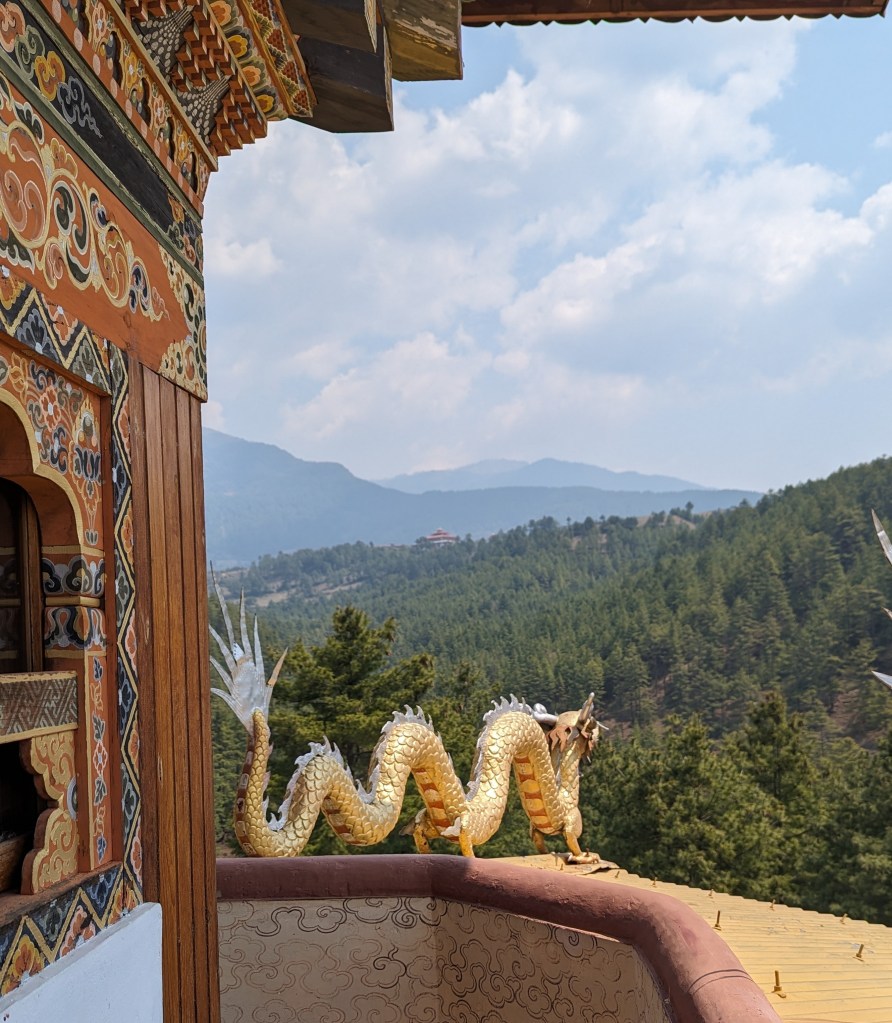
We started our week in Bumthang with a visit to the first of its four valleys, Tang, and it is hard to imagine a more beautiful place. After a visit to the National Small Ruminants Research and Development Center, we headed uphill to Zangtho Pelri Lhakhang, the “temple of paradise.”
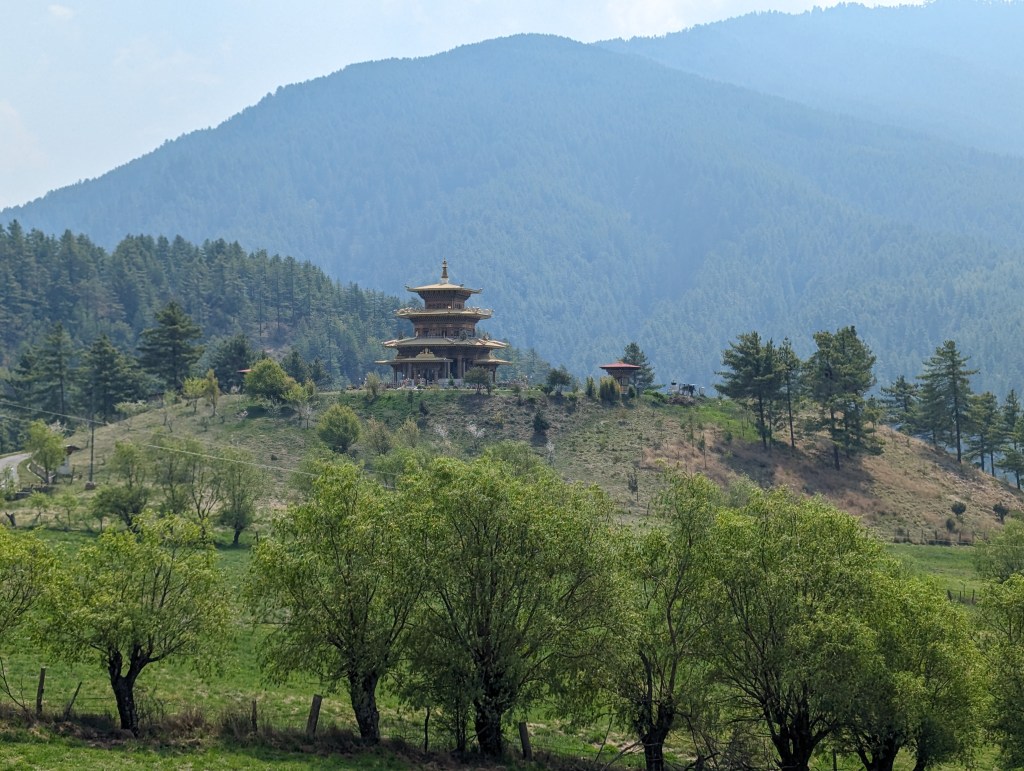
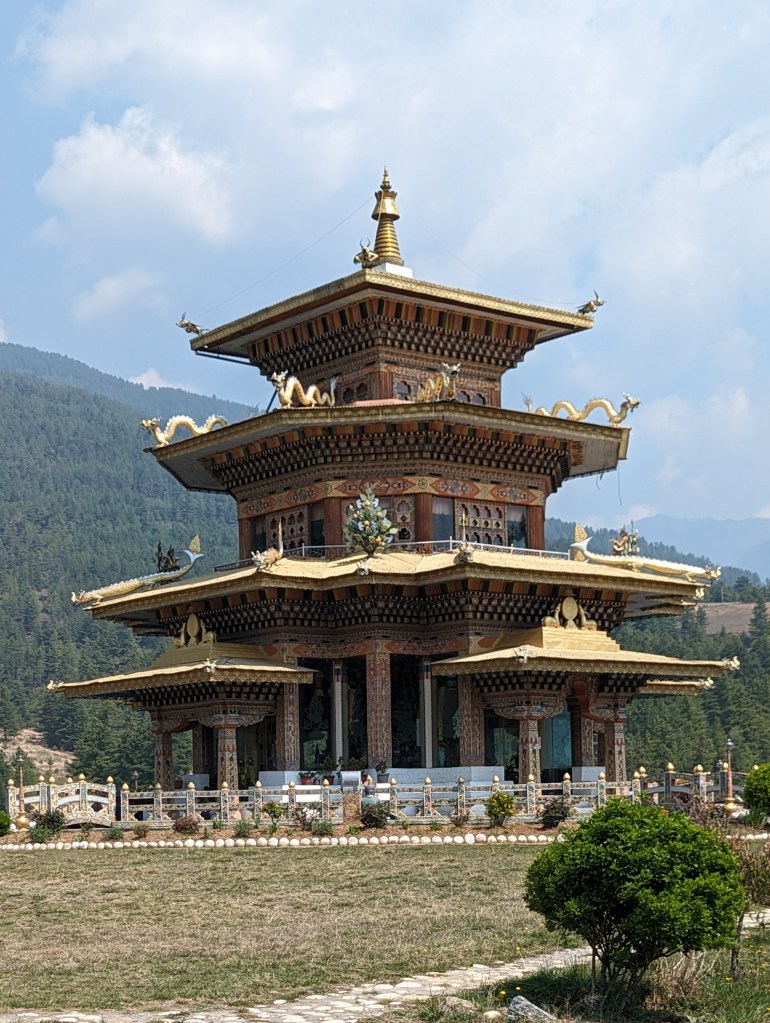
Zangtho Pelri Lhakhang viewed from the sheep breeding station.
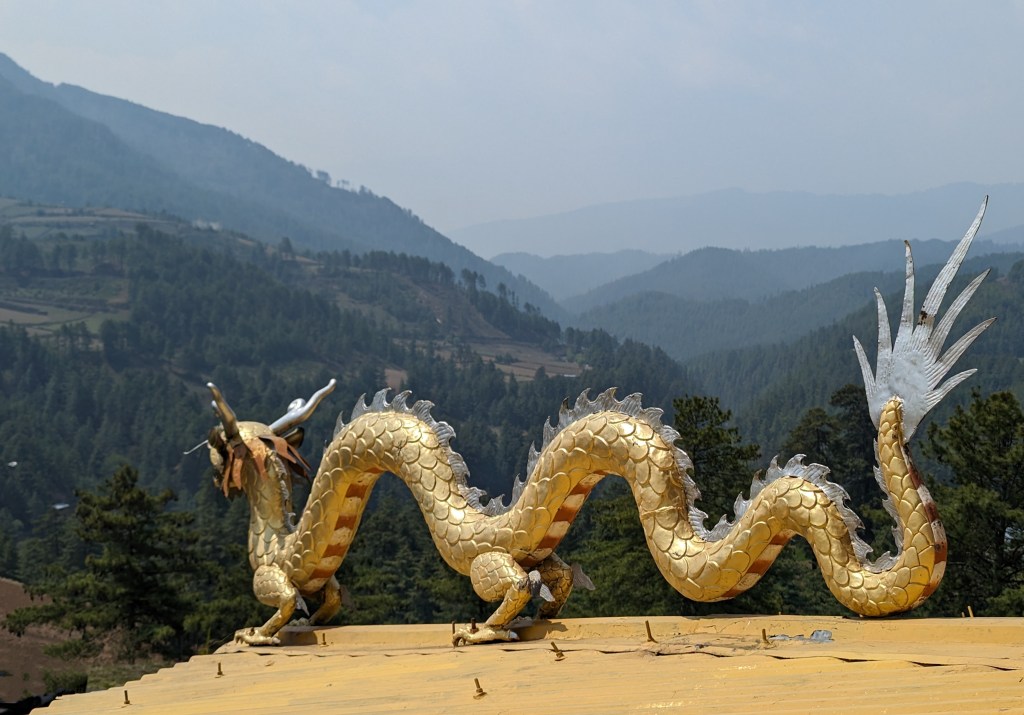
Built between 2008 and 2013 in honor of the Fifth King, Jigme Khesar Namgyel Wangchuck, commissioned by a royal grandmother, Zangtho Pelri Lhakhang is a stunning contemporary temple. With the usual assortment of buddhas, bodhisattvas, saints, and deities in various manifestations, it differs from other temples with its abundance of natural lighting. Sunlight through large panels of glass etched with pictures in lieu of thangka paintings, nourishes indoor plants and flowers.
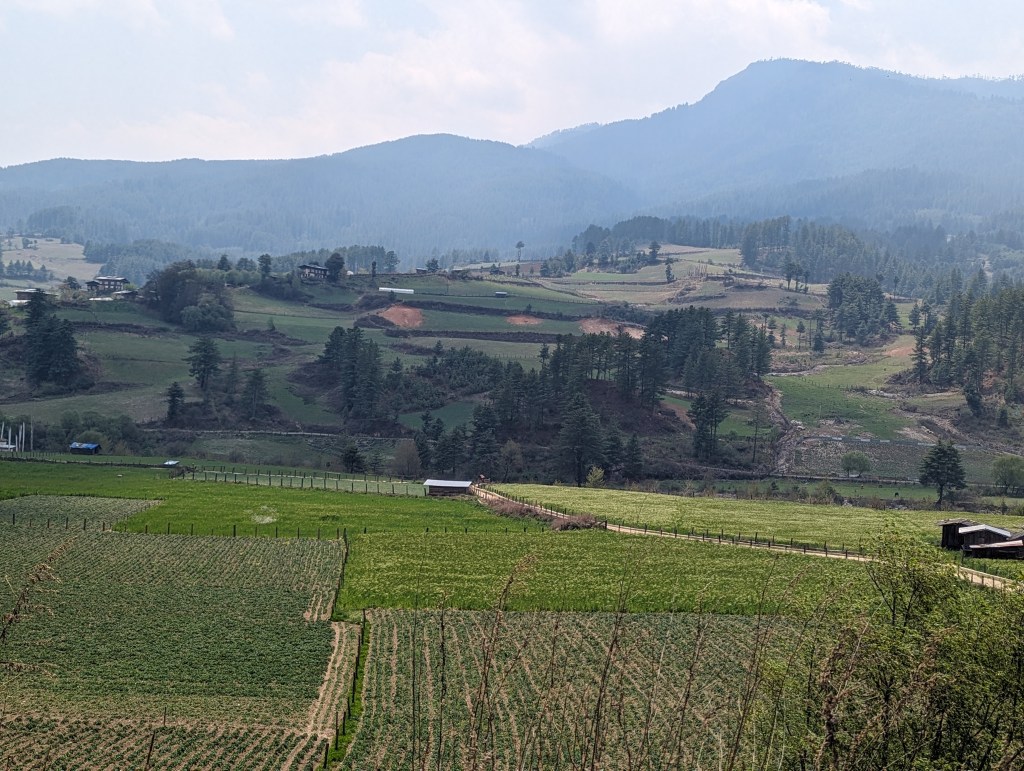
The lush green valleys of Bumthang are known for the production of dairy products, buckwheat, both sweet and bitter, wheat, potatoes and apples. With warming of the climate, rice cultivation has also been introduced. The village atop the hill is home to the Ogyen Choling Museum. The ancestral home of author, Kunzang Choden, the museum is a four-story tribute to traditional life in Bhutan, including the structure of serfdom, the skilled trades, agriculture, family life and warfare. The cluster of hilltop structures are typical, even today, of villages throughout Bhutan.

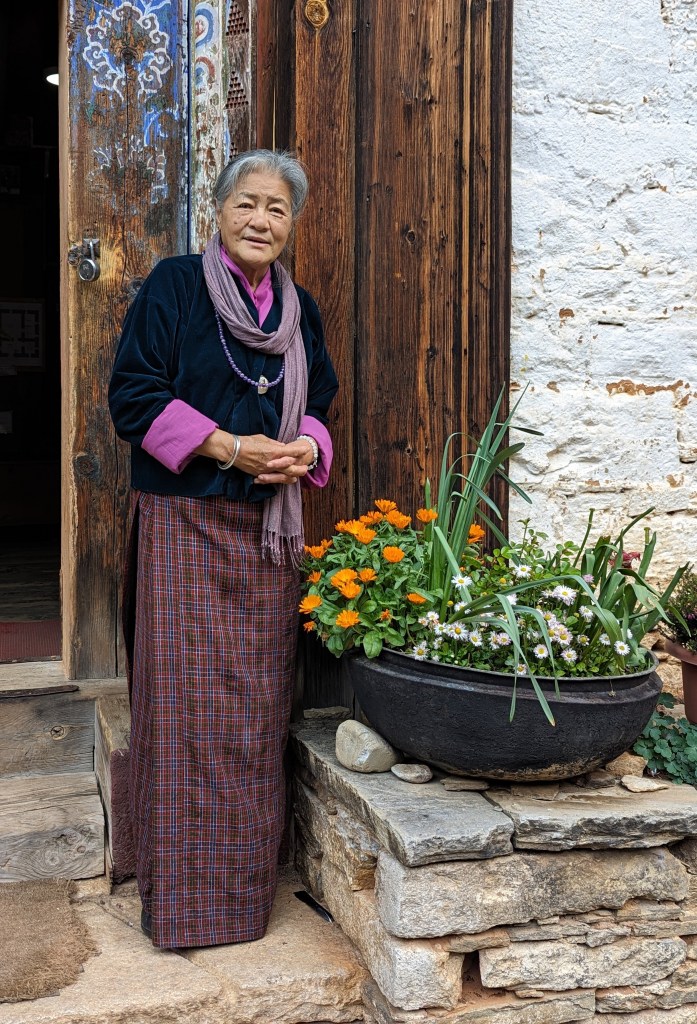
Kunzang Choden, storyteller and author, is the twentieth generation of her family to occupy the family homestead. With the abolishment of slavery and serfdom in 1958 by the third king, Jigme Dorji Wangchuck, granting citizenship and redistribution of land to former slaves and serfs, the historic feudal economy of Bhutan became a thing of the past. With land holdings limited to 25 acres, the family home could no longer be supported by the products of landholding, ultimately leading to conversion of the main house to a wonderful museum and the opening of comfortable and popular lodging. Kunzang Choden married a Swiss agronomist who runs the operation with her. While visiting and lunching with Kunzang, we met members of a writer’s workshop that visits annually for a retreat.
Potato fields
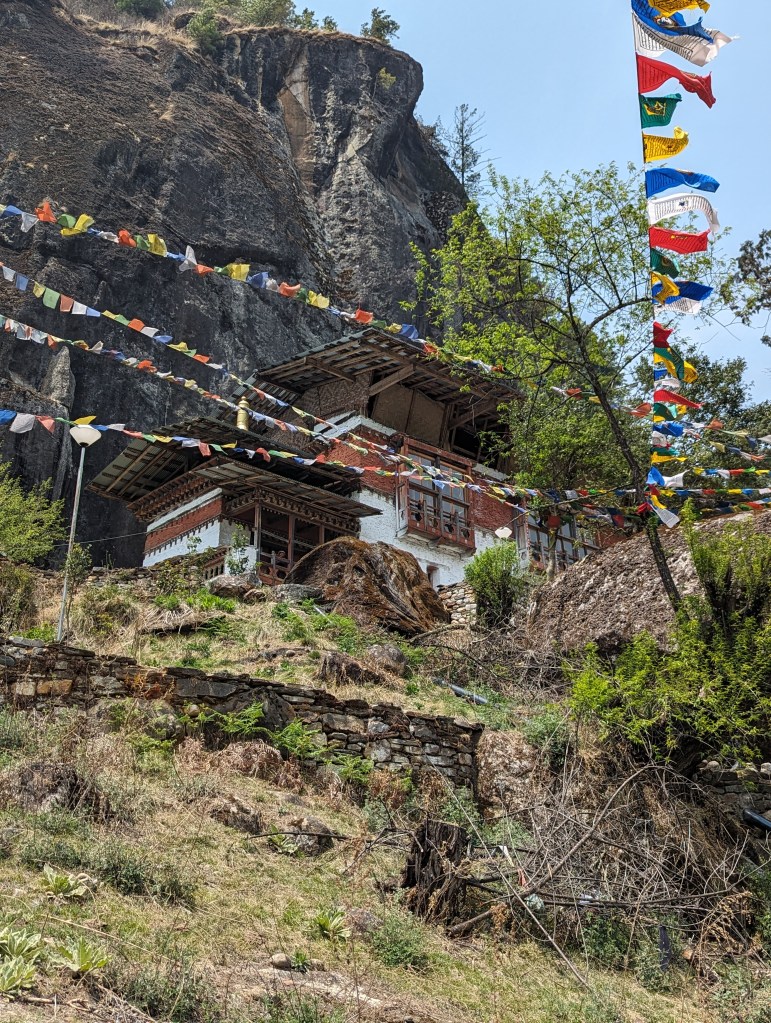
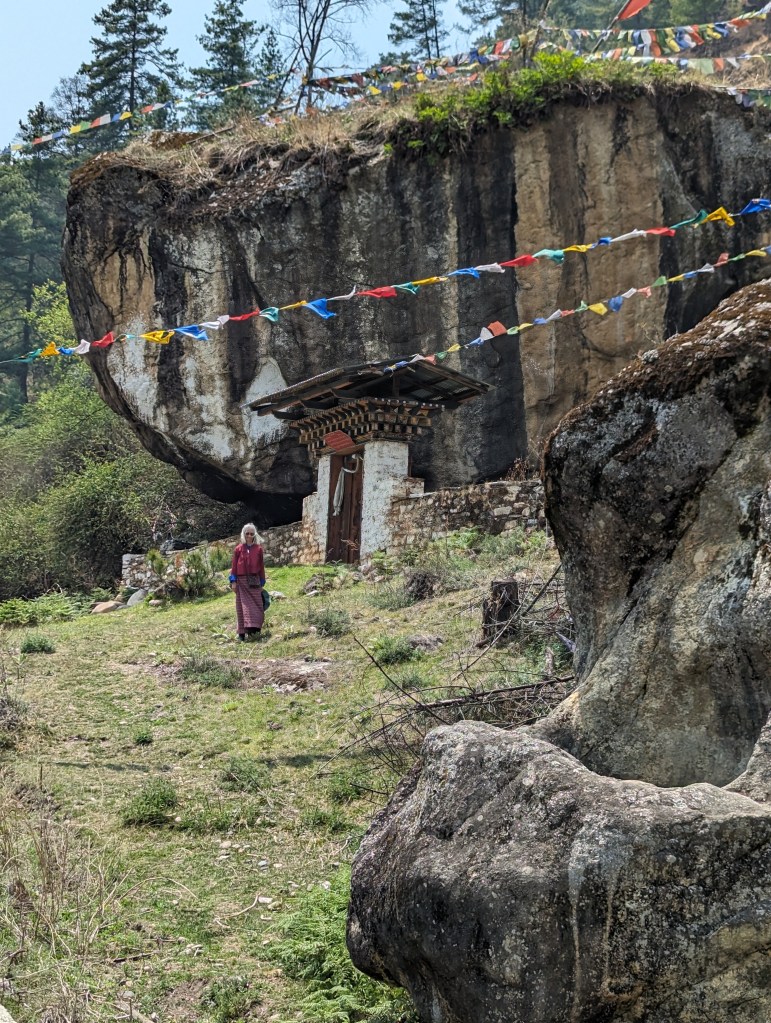
Daa Rimochen Lhakhang. Built in the fourteenth century by Terton King Pema Lingpa, Guru Rinpoche, the second Buddha, meditated here in the eighth century and predicted that Pema Lingpa would build a temple on this site. We were, as always in Bhutan, welcomed here.
The rocks below the temple are felt to be male and female Garudas, eagle-like deities adopted by Vajrayana Buddhism from Hinduism. Behind Margaret is the upturned beak of one, the other in the foreground. The prominent stripes in the rock faces loan the temple its name, Daa Rimochen, “stripes of the tiger.”
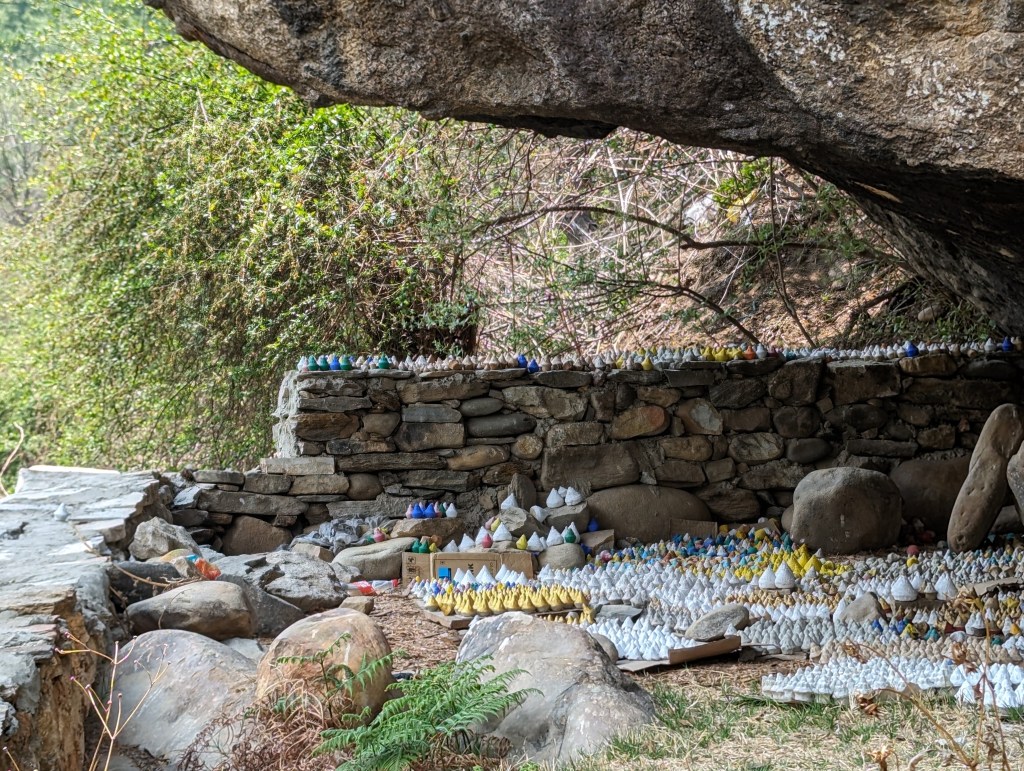
Tsa tsas, votive offerings made of clay with prayers within, are ubiquitous in Bhutan. Here they shelter beneath the male Garuda’s beak.
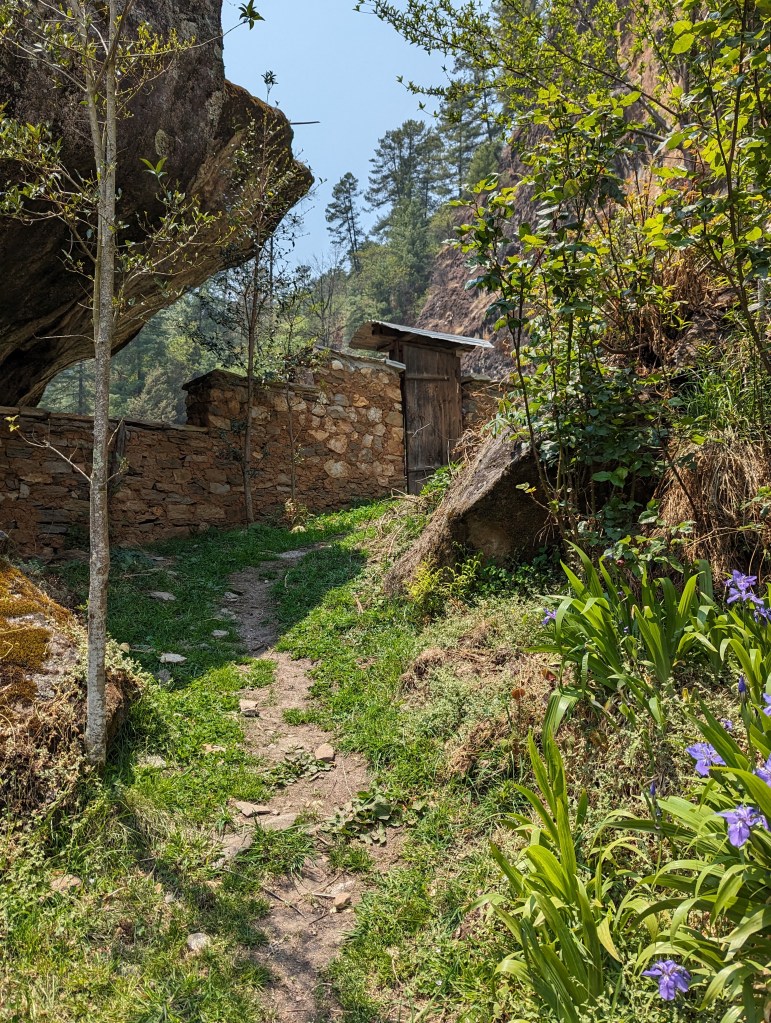
The path to the temple. Spring is so beautiful here.
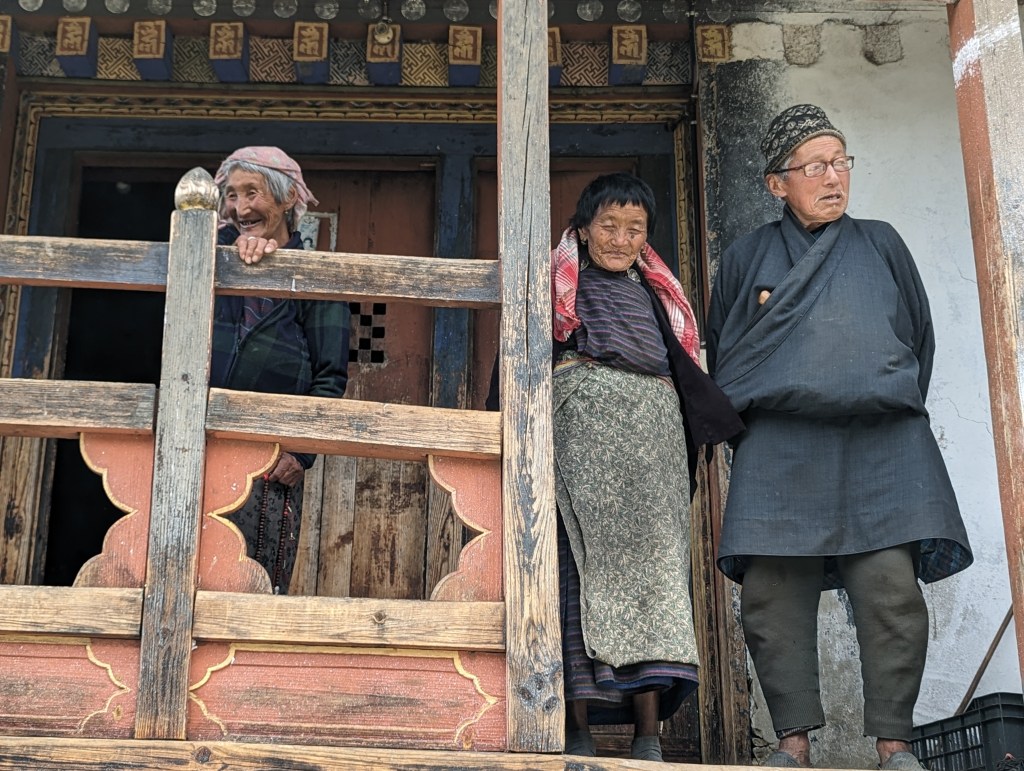
Elderly regulars at the temple, having fun as they teased one another about being photographed. The gentleman was a knowledgeable guide, pointing out the footprints of Guru Rinpoche’s consort and other imprints of significance in the massive stone wall behind the temple.
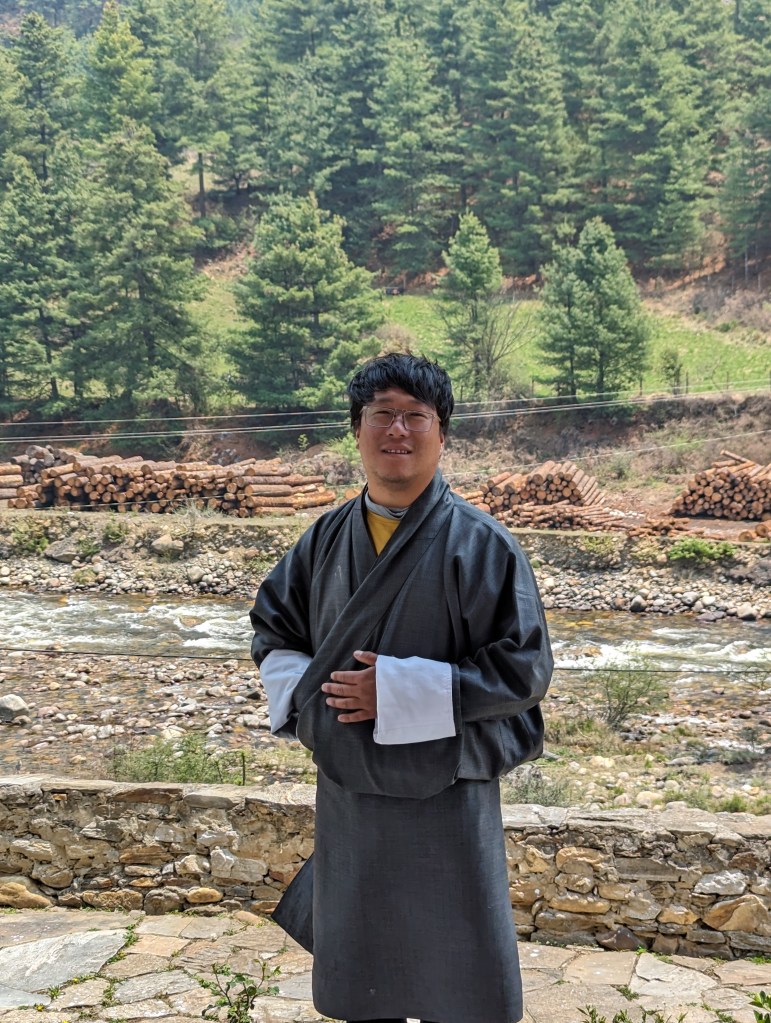
Sonam, our guide and good friend. Behind him is the Tangcchu, the valley river, and a logging operation. Logging is carefully regulated in Bhutan. Not seen are the prayer flags spanning the river. Our monk host at the temple had agreed to be photographed with the prayer flags. He had placed them by tying them to his waist and swimming across the river. He was inundated at the last minute with visiting monks on a pilgrimage and detained.
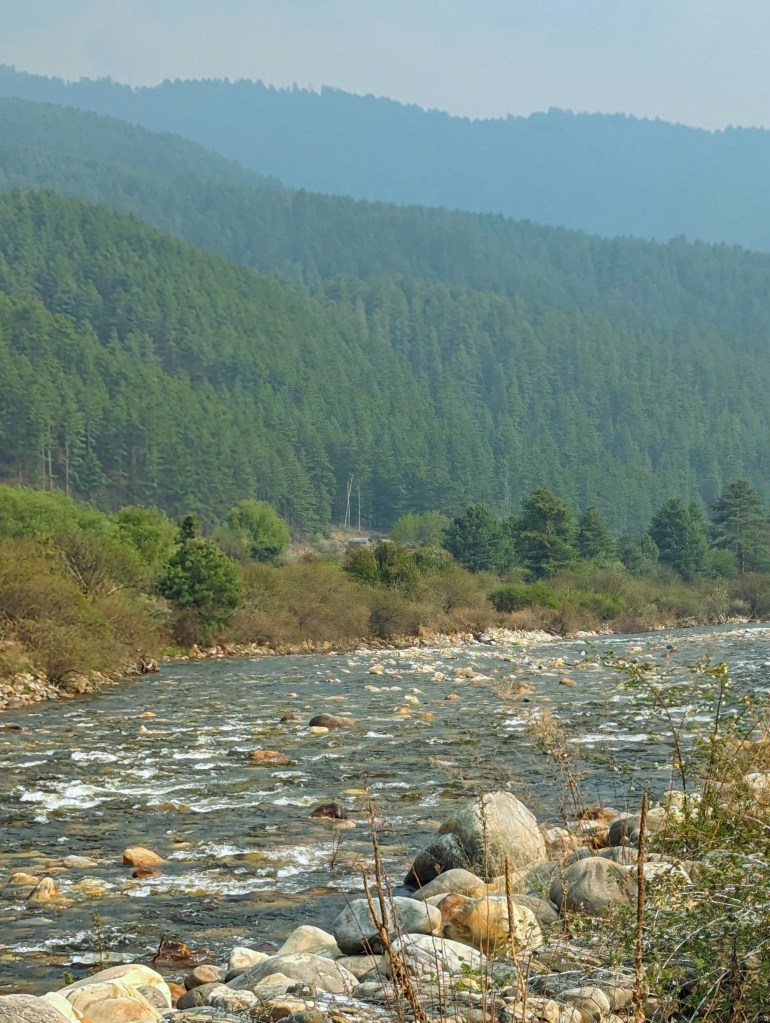
The Tangchhu. After a walk along the river, we stumbled upon the students of the Tang Valley Central School rehearsing for their cultural dance competition. Below is a sample. We love Bhutanese dance, so we had no choice but to return to Tang Valley the following day.
Stay tuned for Tang Valley, Day Two, starting with the Tang Valley Central School cultural competition.

4 Comments

Leave a reply to sjsonnenbergmd Cancel reply