The Happiness Farm

High above the Paro Chhu is The Happiness Farm, an innovative farm-to-table restaurant and hotel, and a peaceful getaway from the hubbub of the capital an hour and a half away.
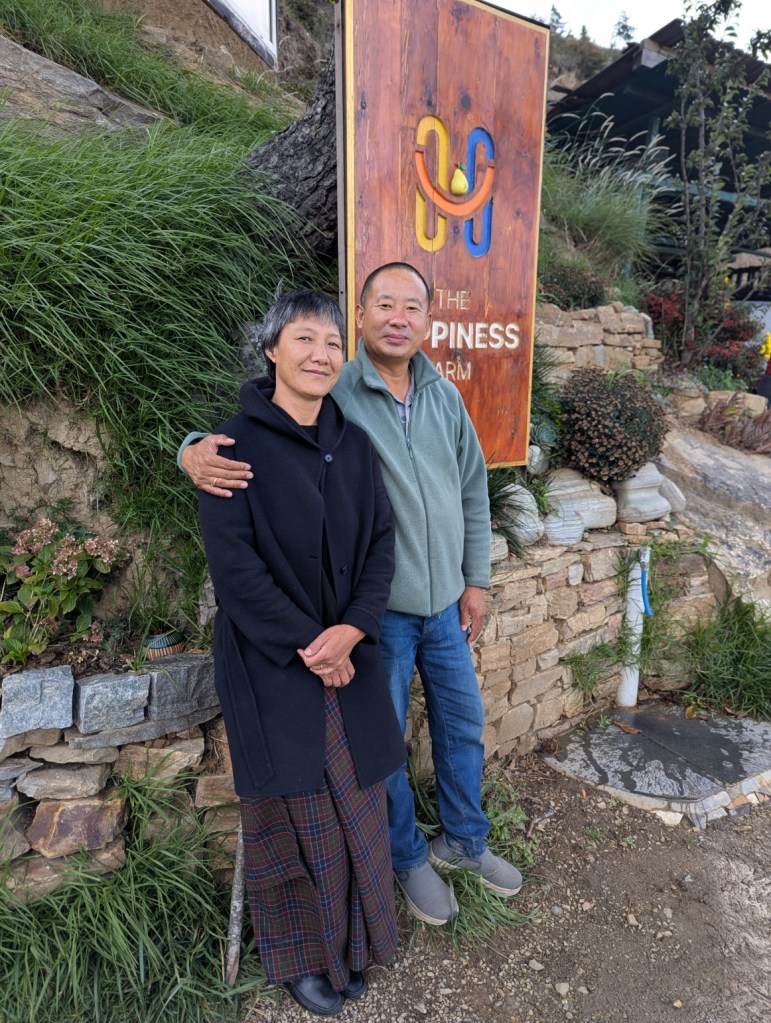
Kezang Wangmo and Dorji

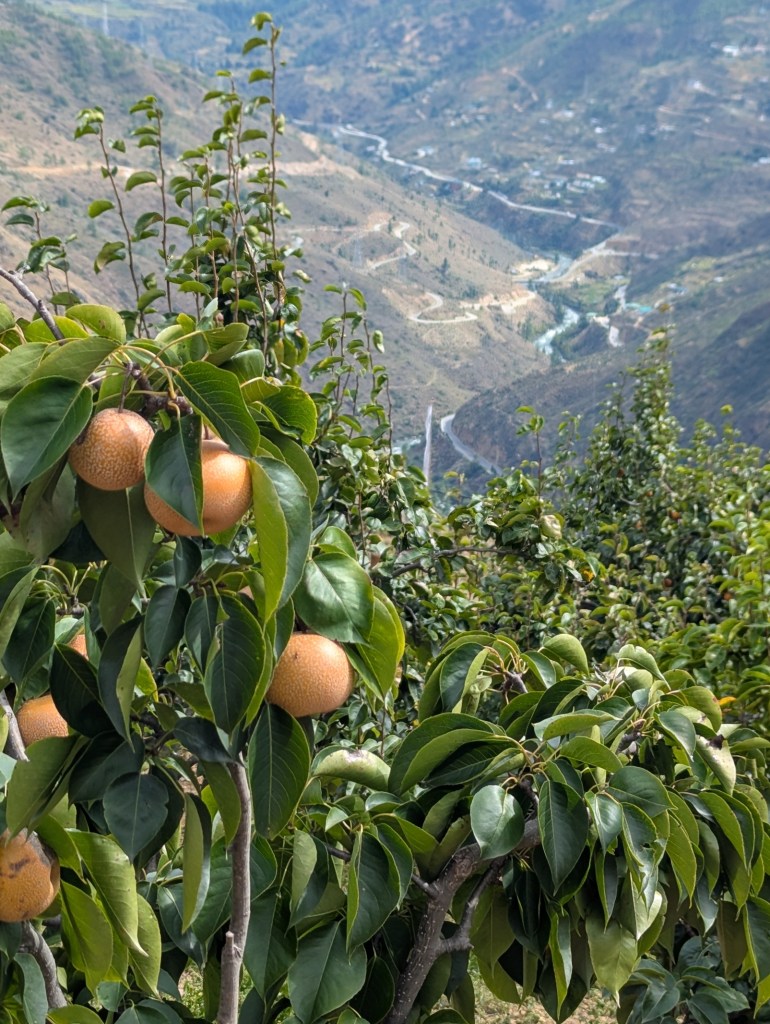
Born in Trashigang, an eastern province of Bhutan, on completion of his undergraduate degree at Sherubtse College, Dorji aspired to become a farmer but, with no land available to him, he entered the Public Service, completed an MBA in Australia and went on to direct the Bhutan Trust Foundation for Environmental Conservation. The aspiration to farm persisted though and seventeen years ago Kezang’s parents, his in-laws, gifted them five acres of land acquired by her grandparents and he became a weekend farmer, commuting from Thimphu and pioneering the introduction of Asian Pears to Bhutan.
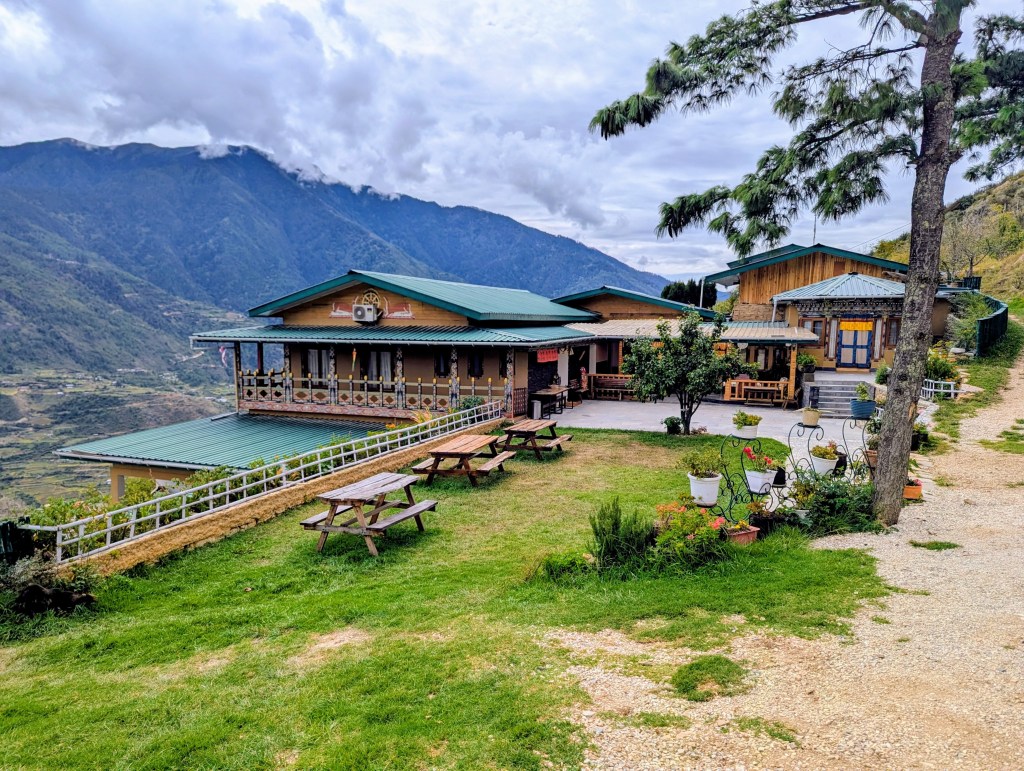
The hotel at the Happiness Farm

When the COVID pandemic closed Bhutan to the world, Dorji describes having felt it was the end of the world as he knew it. The price of imported food became exorbitant, unaffordable for many Bhutanese. After waiting three hours in a queue to purchase a half kg of chilies from India, he was inspired to purchase additional farmland in Punaka, a neighboring province, where the climate was suitable for a wider variety of fruits and vegetables, twenty in all, including avocados, dragonfruit, oranges, lemons and pineapples. He left public service after eighteen years and, with the support of Kezang, decided to build a hotel and open the farm to guests.
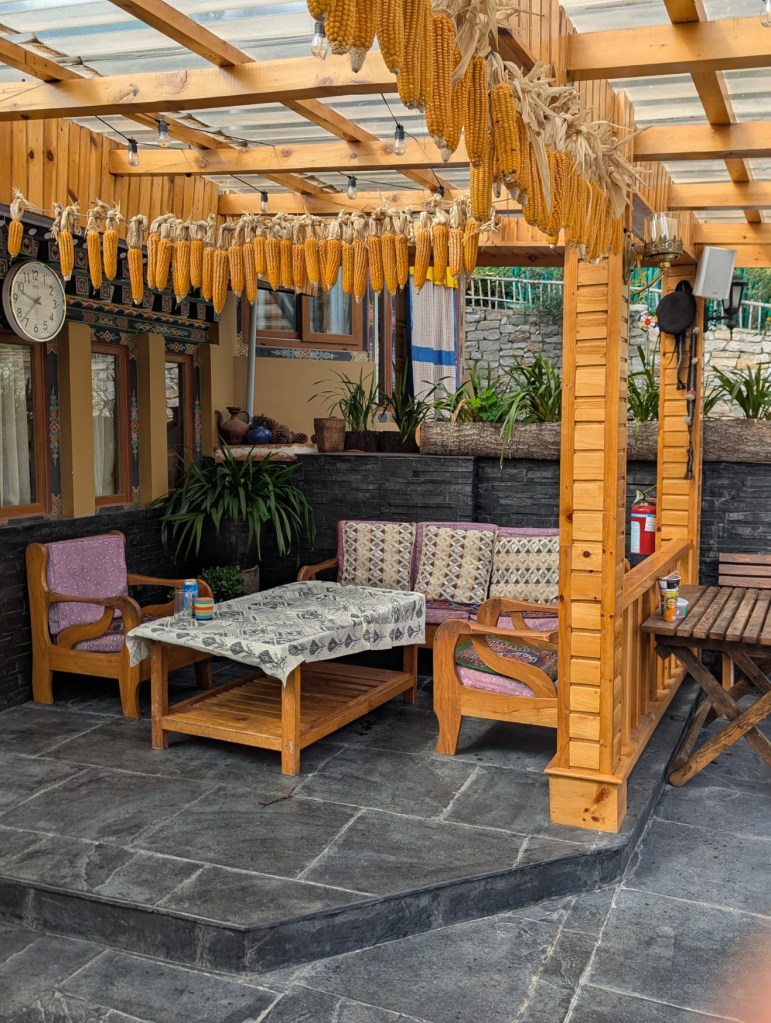
One of several comfortable gathering spaces. Several families from the capital visited during our three days stay. One unique feature of the Happiness Farm that Dorji and Kezang are proud of is the charging of a uniform rate for all guests, their “one world, one people” policy. Elsewhere in Bhutan hotel rates are tiered, Bhutanese citizens receiving the lowest rate, followed by regional tourists, international tourists charged considerably more.
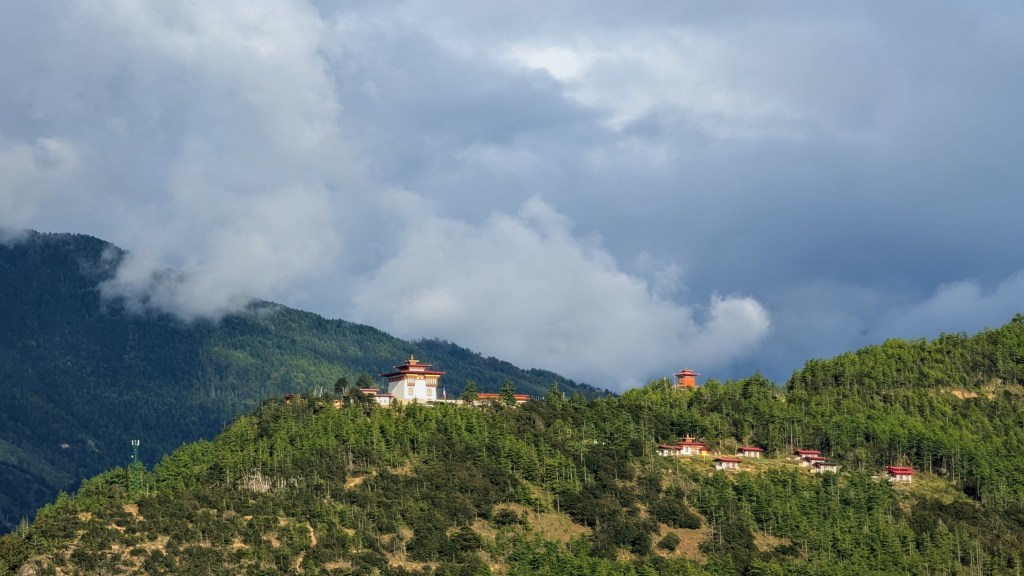
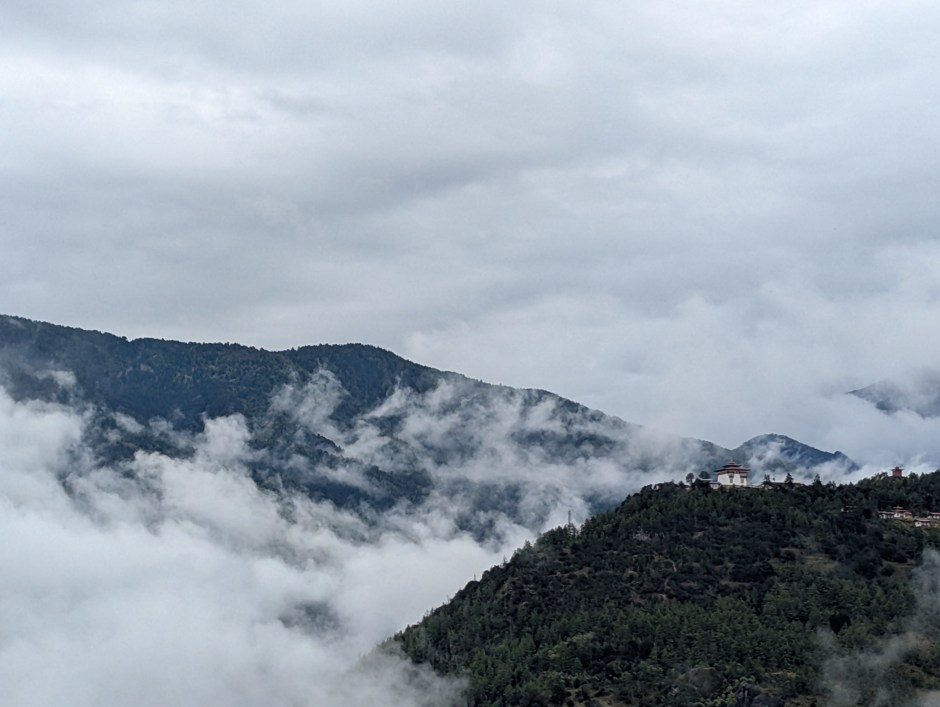
Dawn on a cloudy day, a monastery across the valley is viewed from the balcony of our comfortable room. Initially building as a weekend getaway for his family, Dorji decided to build for guests, personally supervising the construction from his temporary home in a cowshed. The hotel business in Bhutan is competitive and has yet to recover from the impact of COVID on tourism, but Dorji told us “Sometimes you have to take risks.” He believed that building on the foundations of a modern facility with clean rooms, showers with plentiful hot water, great food and a million dollar view, he could pull it off. Margaret and I can attest that he has.
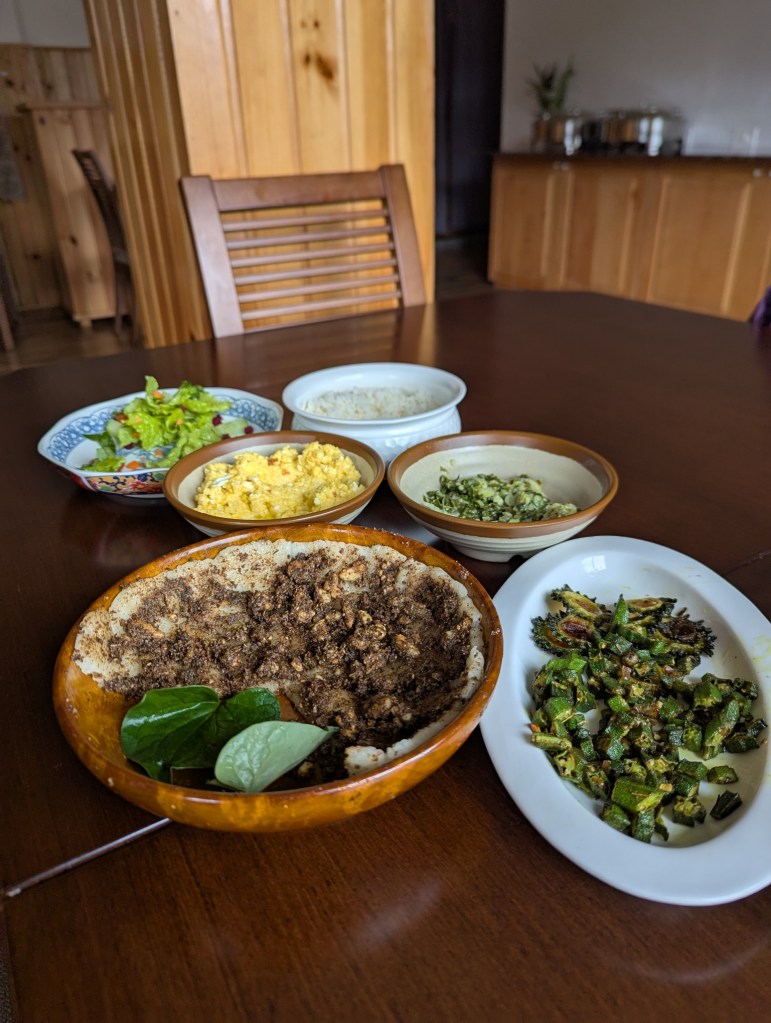
Food at The Happiness Farm is organic, sustainable, and local, grown on one of the two farms or from the surrounding communities. Lunch above included rice, salad with lettuce and vegetables grown interspersed among the apple, pear and walnut trees, fried butter cheese, spinach datsi, bitter gourd, okra and a very special traditional “pizza” with a pressed sticky rice crust topped with buttered perilla seed, walnuts and herbs. Not shown is a dessert of dragonfruit from the Punaka farm. Margaret and I agree this may have been the one of the best traditional Bhutanese meal we have had the pleasure of eating in any of our four visits to Bhutan.
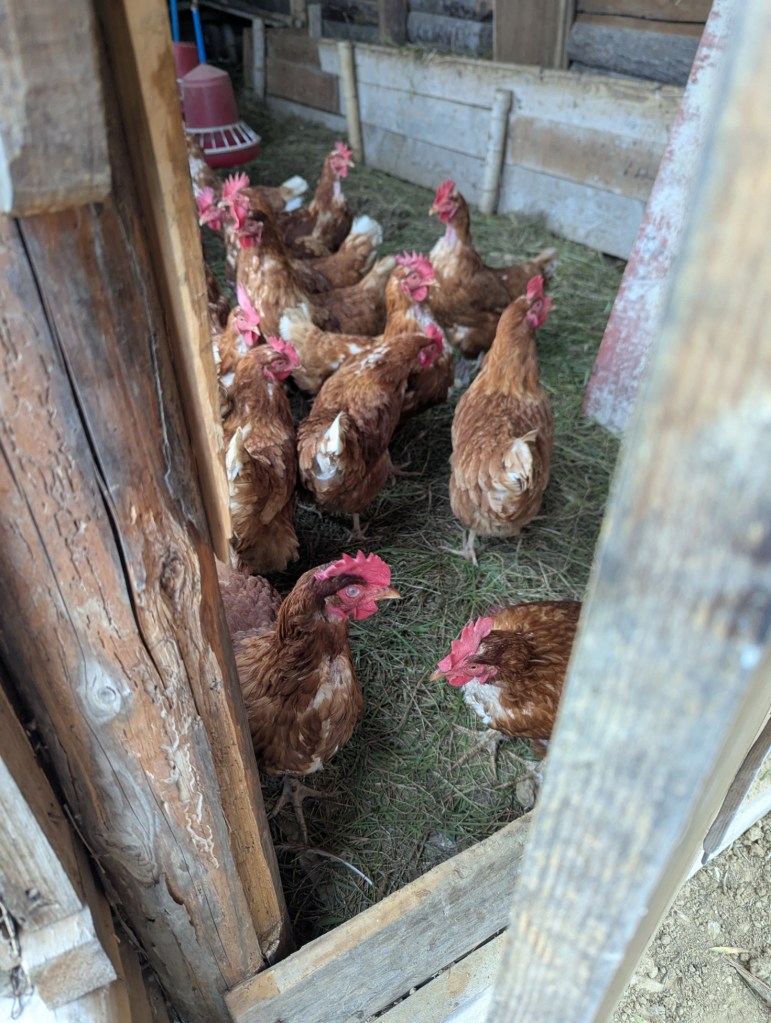
“Dorji’s girls.” You can collect your own eggs for breakfast. Dorji and Kezang have, as part of their mission, showing children where their food comes from and hope with time to incorporate a formal educational program into the Happiness Farm.
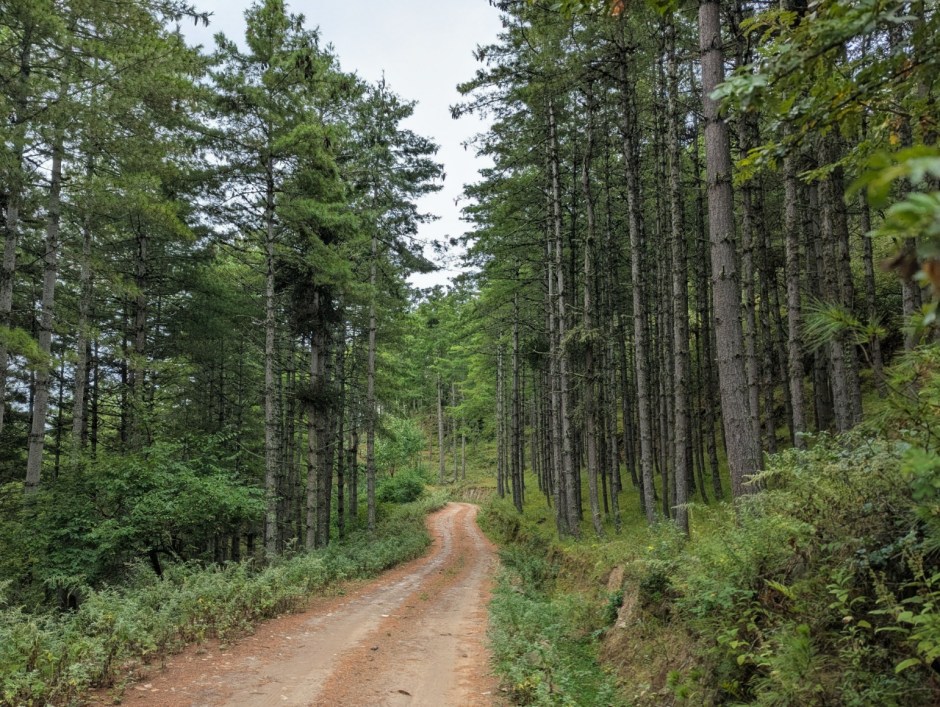
The blue pine forest on the north side of the mountain reminded us of our home in the Adirondack Mountains of New York.

The orchards of the Happiness Farm are on the south side of the mountain. Arid and sunny, wheat is the crop traditionally grown. The neighbors were skeptical initially when Dorji introduced apples and pears but have adopted these more profitable crops since. Starting out on a lovely hike to a monastery above the farm, we were amazed to see, over a 4.5 km hike with a 440 meter elevation gain, how the micro-climate and ecosystems changed. Drought tolerant sage, artemesia, and barberry on the steep mountainside gradually gave way to a low forest of holly and dwarfed blue pine, with roadside flowers of white and pale yellow everlasting. Deciduous trees began to appear with an under-story of roses laden with hips and sumac, leaves reddening with autumn. Up, up, up, and as we rounded the mountain to the north slope, the air cooled and we were surrounded by deep, lush blue pine forest, purple asters adding to the roadside color, lichen hanging from the pines as we climbed higher.
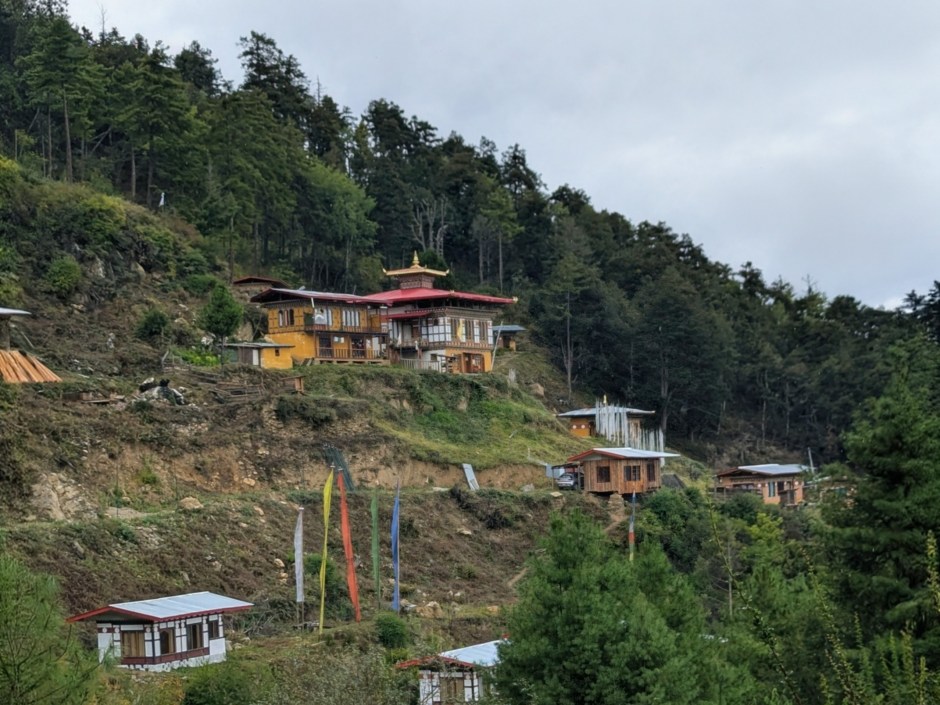
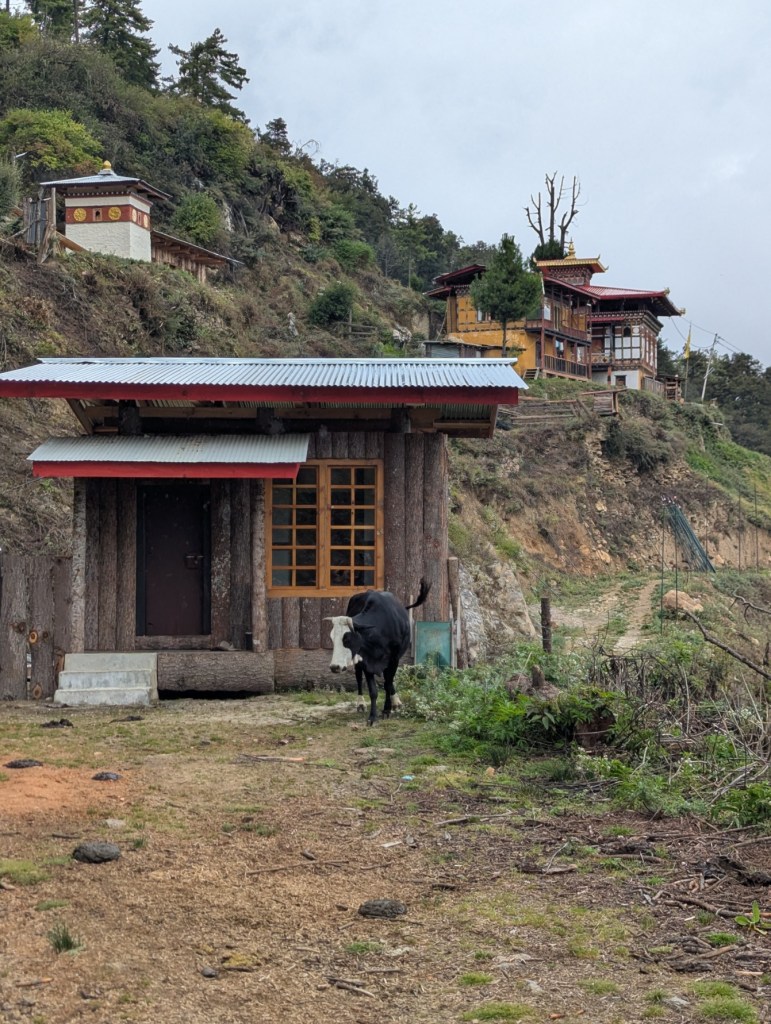
Dolakha Lhakhang, the monastery at the terminus of our morning hike.
Closed to us as the monks were in retreat, the gates were shut to this visitor as well.
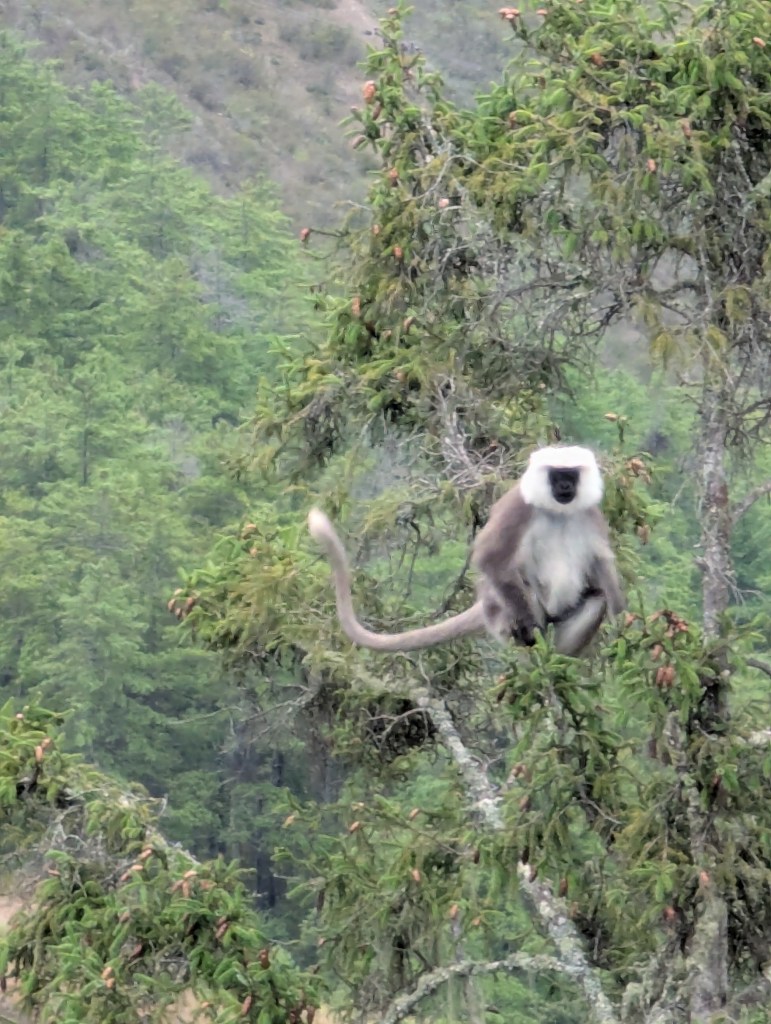
An auspicious encounter with a white capped langur on the return down the mountain. Among the many birds we saw were beautiful red billed blue magpies. Himalayan bears are common and the Happiness Farm offers a bear viewing weekend where infrared binoculars allow you to watch from a secure shelter as the bears come to raid the apple orchards. Otherwise, extensive rock walls and barb-wire, chain-link and electric fences protect the orchards and vegetable gardens.
Sunrise across the valley on our day of departure. The evening before we were in the clouds, the ground below our balcony invisible.

3 Comments

  1. Dear Steve and Margaret,

    What a wonderful sharing of an extraordinary place. The views were right out of Nat Geo! How fortunate you are. Love all the descriptions of plants and animals/birds. Thought of Margaret often this week with the passing of Jane Goodall.

    love

    Cindy

    Like

  2. This looks like a most wonderful place and quite enjoyable. Such a get away George and I would enjoy just now!
    Be Well, Diane

    Like

Leave a reply to Diane Bryjak Cancel reply